
Reflector telescopes



Not sure which telescope suits you? We are stargazers ourselves and happy to help.
Send us a WhatsApp messageWe reply on weekdays between 9:00 and 17:00.
Showing 41–60 of 167 resultsSorted by popularity

- 1.379,00 Select options This product has multiple variants. The options may be chosen on the product page



Showing 41–60 of 167 resultsSorted by popularity
Reflector telescope: the most aperture for your money
A reflector telescope, commonly known as a reflecting telescope or Newtonian, collects light with a concave primary mirror instead of a lens. Mirrors are cheaper to make than large lenses and do not suffer from chromatic aberration. Therefore, with a reflector, you get two to three times as much aperture per euro as with a refractor. For visual observation of nebulae and galaxies, that is decisive. Almost all Dobsons are reflectors; in addition, we sell Newtonians on equatorial mounts, on GoTo mounts, and as optical tubes only.
Four versions, four goals
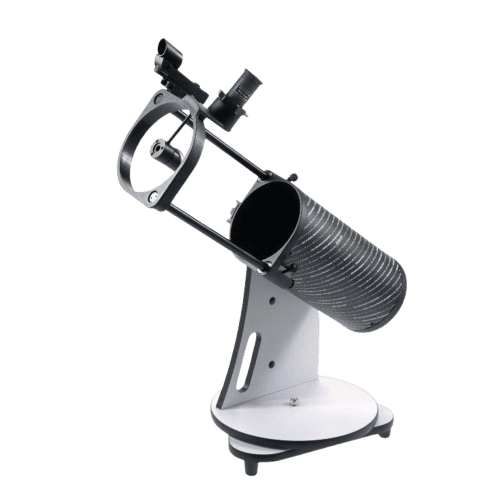
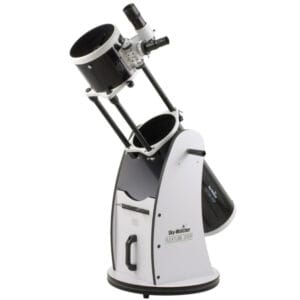
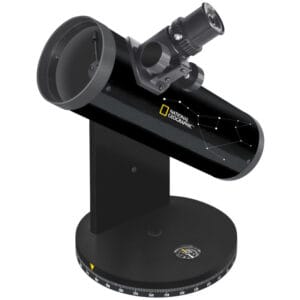
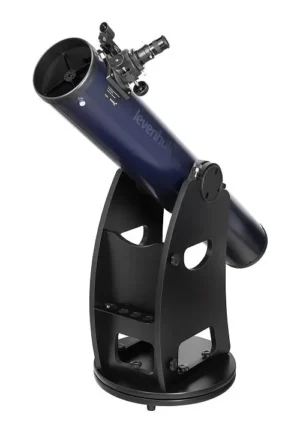
- Dobson. Newtonian on a simple altazimuth mount. For visual observing, the best choice. Five of our ten best-selling telescopes are Dobsons.
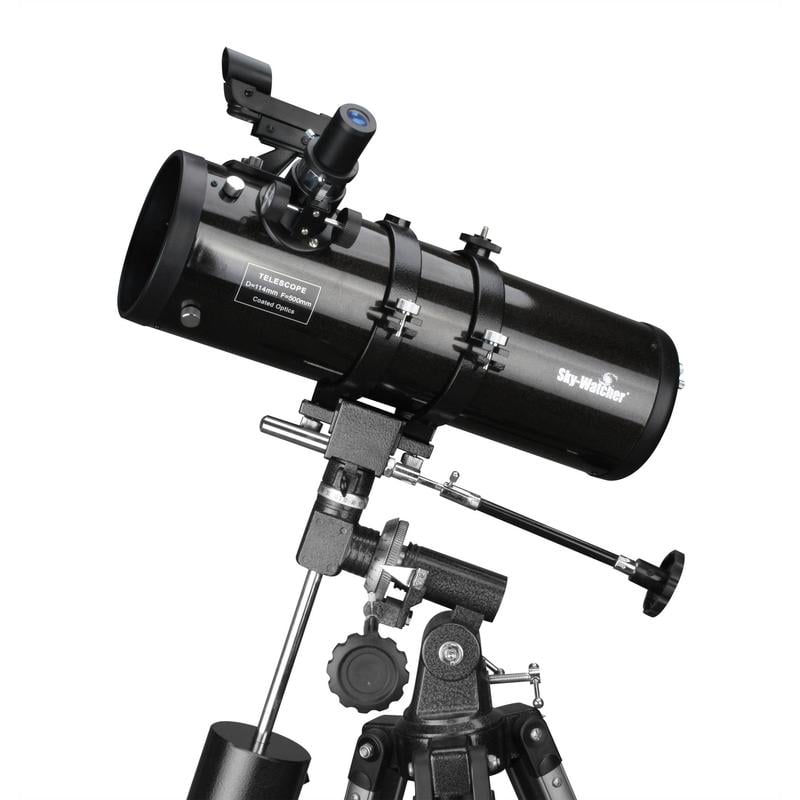
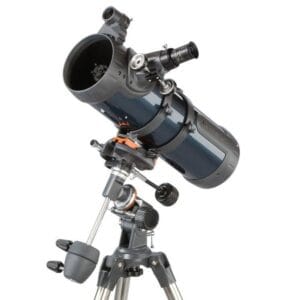
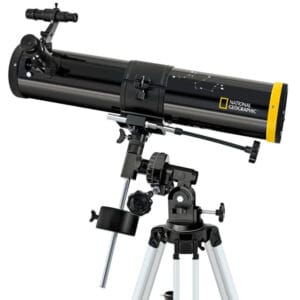
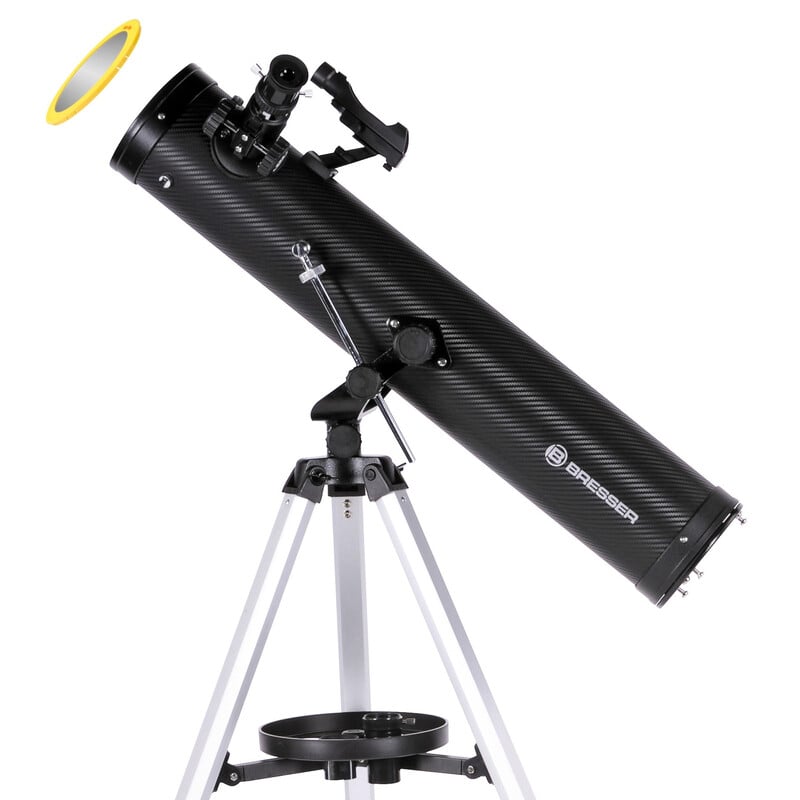
- Manual reflector on EQ or AZ. Newtonian on a tripod with an equatorial or alt-azimuth mount. Classic, beginner-friendly, and upgradable with a tracking motor.
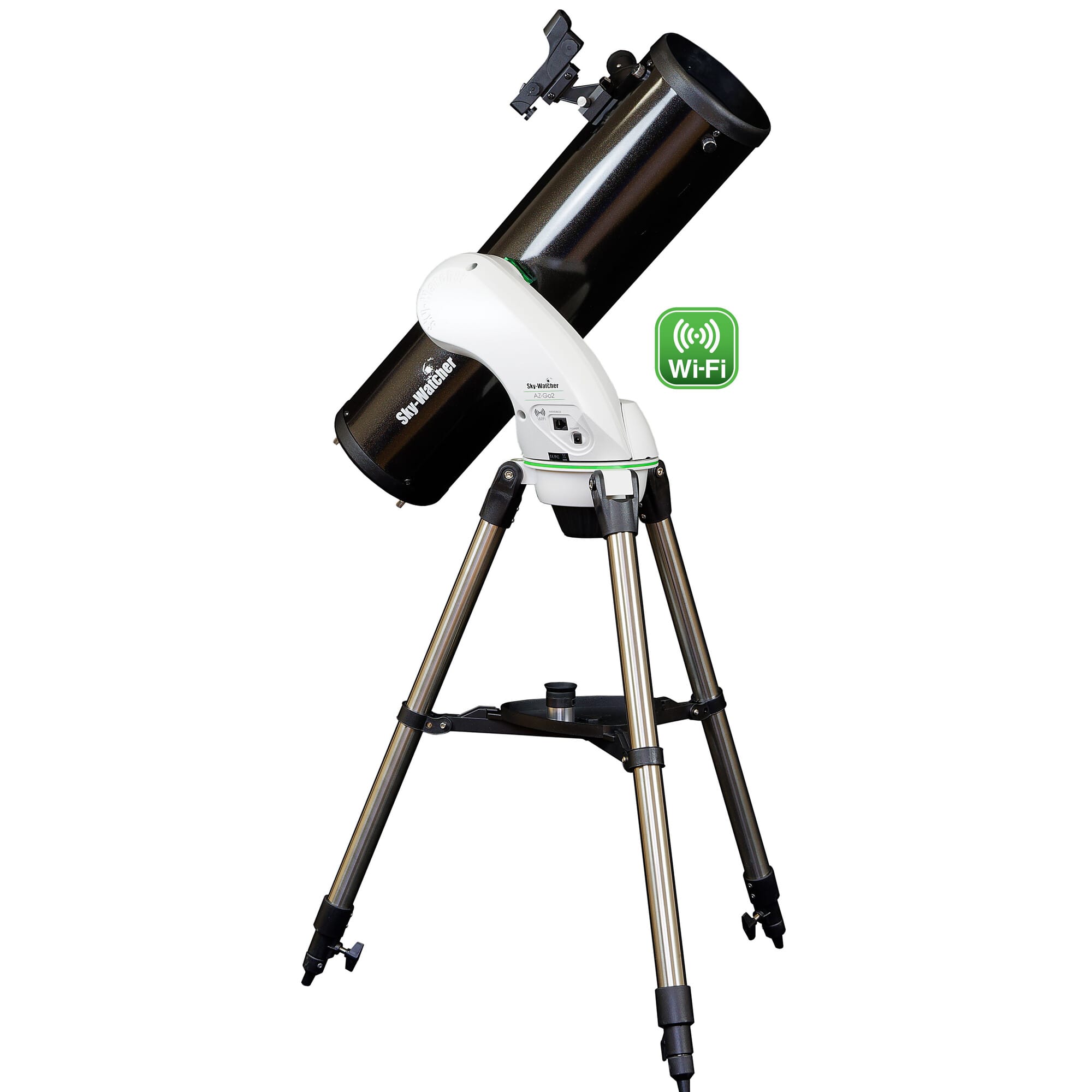
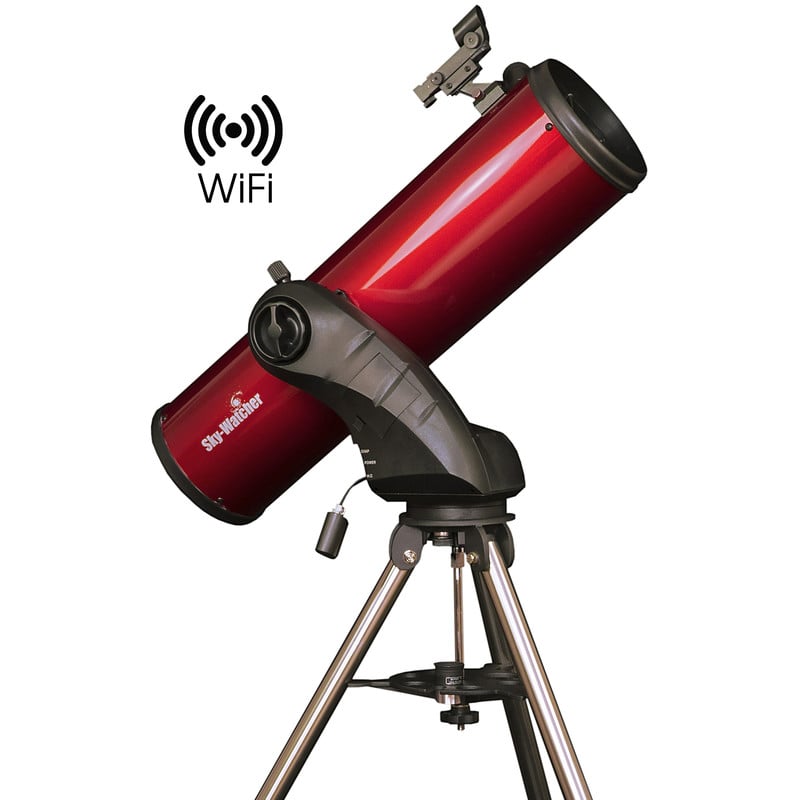
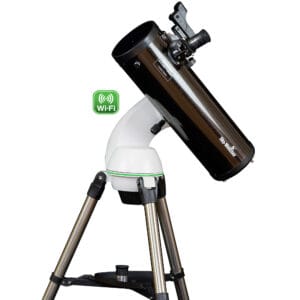
- GoTo reflector. Newtonian on a motorized mount that automatically locates and tracks objects. The bridge to astrophotography.
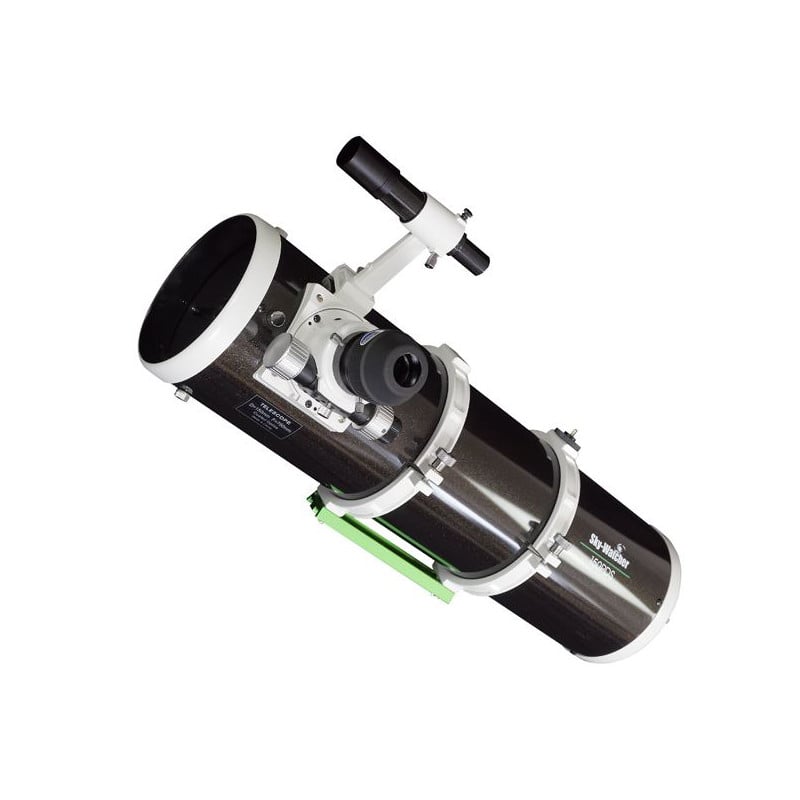
- Newton OTA. Only the tube, for those who already have a mount or are looking for a photographic Newtonian such as the Explorer PDS or Quattro.
What you look out for
- Opening. 114 mm is the minimum we recommend, 150 mm the best price-performance ratio, 200 mm the point where deep-sky truly begins.
- Focal ratio. f/8 (for example 150/1200) is forgiving and strong on planets. f/5 (150/750) provides a wider field of view and is suitable for astrophotography, but requires better eyepieces and good collimation.
- Parabolic mirrors. Starting at f/5, the primary mirror must be parabolic. Sky-Watcher indicates this with a "P" in the name (130P, 150P). Spherical mirrors with a short focal length result in blurred stars.
- Collimation. Every Newton needs to be aligned occasionally. A laser collimator that makes it a two-minute job.
Our recommendations
- Visual, beginner: Sky-Watcher Heritage-150P FlexTube.
- Visual, serious: Sky-Watcher Skyliner-200P Classic.
- Visual plus first photos: Sky-Watcher Explorer-150PDS on EQ3-2.
- Photography: Sky-Watcher Explorer-200PDS as a standalone tube on an EQ5 or HEQ5.
Reflector or refractor?
Choose a reflector if you want to see as much as possible for your budget and don't mind occasional collimation. Choose a refractor if you want to look maintenance-free, primarily observe the moon and planets, or want to photograph with a small, lightweight tube. If you are in doubt, the Choice assistant Whether the Beginner's Guide. Note: Sky-Watcher, Omegon, Bresser, Celestron. Shipping throughout Europe.