
Would you like to know when the next full moon will be visible in the sky? In this complete moon calendar for 2026, you'll find all the dates and names of this year's full moons. Whether you simply want to enjoy a clear evening, go out for some photography, or explore craters with a telescope: with this overview, you won't miss any astronomical highlights.
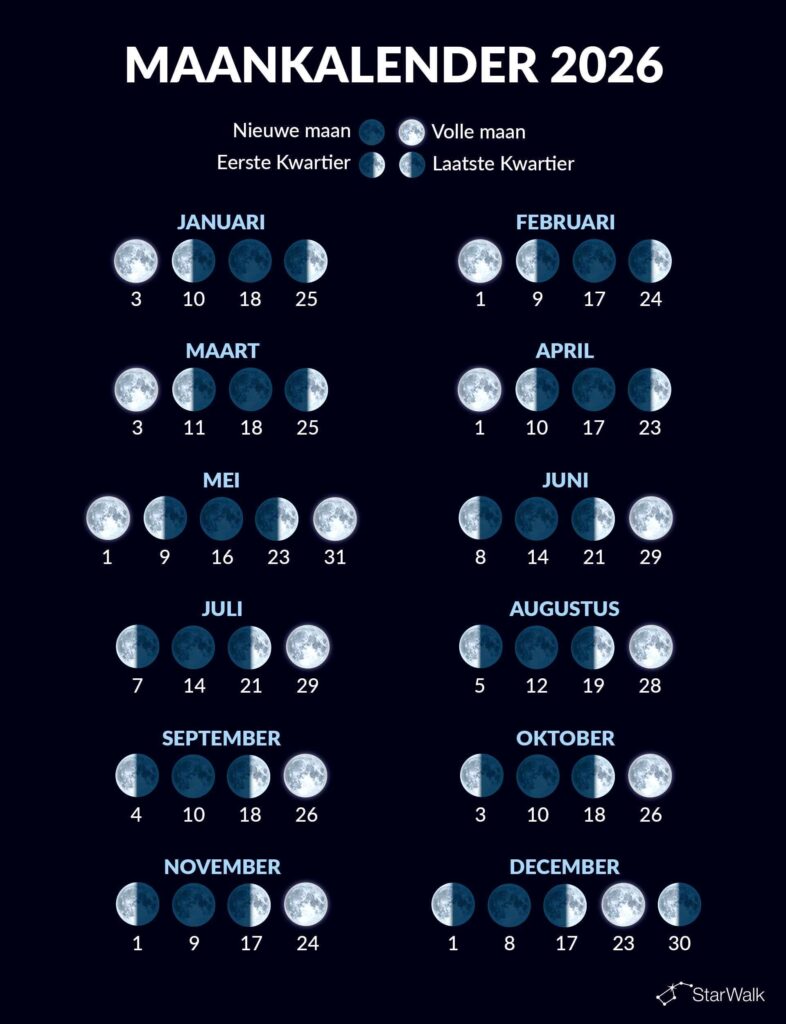
The Full Moons of 2026: A Complete Overview in a Moon Calendar
Below are the exact dates of all full moons in 2026, including their traditional (often Indian) names and any astronomical details, such as a supermoon or a rare blue moon.
| Date (2026) | Full moon name | Details |
| January 3 | Wolf Moon Wolf Moon | The first full moon of the new year. |
| February 1 | Snow Moon Snow Moon | Often beautifully clear on cold winter evenings. |
| March 3 | Wormwood (Full Worm Moon) | Traditionally ushers in the arrival of spring. |
| April 2 | Pink Moon Pink Moon (film) | Named after the bloom of early spring flowers. |
| May 1 | Flower Moon (Flower Moon) | It looks beautiful high in the sky. |
| May 31 | Blue Moon Blue Moon | Unique! The second full moon in a calendar month. |
| June 30 | Strawberry Moon Strawberry Moon | Often low on the horizon with a warm, golden glow. |
| July 29 | Bookman Buck Moon | In the middle of summer; perfect for a mild evening outdoors. |
| August 28 supermoon | Sturgeonman Sturgeon Moon | Superman! Closer to Earth and appears larger and brighter. |
| September 26 supermoon | Harvest Moon Harvest Moon | Superman! The most famous full moon of the autumn season. |
| October 26 | Hunter's moon Hunter's Moon | The ideal moon for early evening observations. |
| November 24 | Beaverman (Beaver Moon) | The start of the real, dark winter season. |
| December 23 | Cold Moon (Cold Moon) | An atmospheric, bright moon during Christmas. |
These names originally come from Native American tribes and early European colonists. They used the moon as a natural calendar. Each full moon was given a name based on what was happening in nature that month, such as animal behavior (Wolf Moon) or the agricultural cycle (Harvest Moon). Additionally, you'll find any astronomical special features in the overview, such as a supermoon or a rare blue moon.
Observing the Moon with a telescope: What kind of telescope do you need?
The moon is by far the most impressive and rewarding object in the night sky to view through a telescope. Even with a basic model, you can see the gigantic impact craters, deep mountain ranges, and the dark maria (the old, flat volcanic seas of the moon) to see them sharply.
Many people think you need to spend thousands of euros to unravel the mysteries of the universe, but nothing could be further from the truth. With a simple refractor telescope you can have months of fun.
Around/under 100 euros: Sky-Watcher Capricorn 70 EQ1

Want to enjoy a spectacular view of the moon for just a few tens of euros? Then the Capricorn 70 is your match. Despite its low price, this telescope has surprisingly powerful optics that allow you to clearly see the larger craters and lunar seas. It comes with a stable mount that allows you to accurately track the moon's orbit. An absolute recommendation for families and budding explorers.
Between 100 and 200 Euro: Sky-Watcher Mercury line (Mercury 707 AZ2)
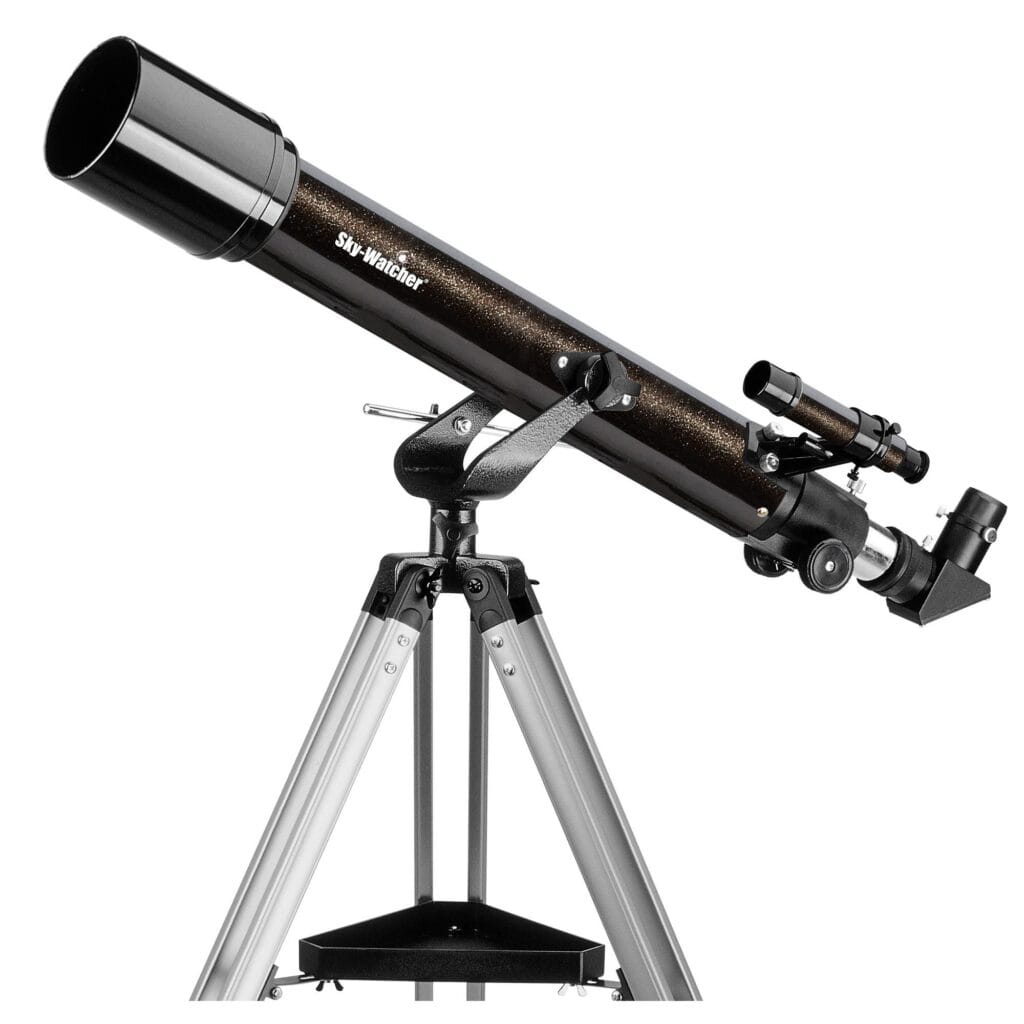
This is the perfect golden mean and, not surprisingly, one of our best-selling models. The Mercury 707 offers a fantastic balance between sharpness, light gathering, and ease of use. The AZ2 mount is super intuitive (just like a camera tripod), allowing you to point the telescope at the moon or bright planets like Jupiter within a minute. Ideal for hours and months of viewing pleasure!
3. Above 200 euros: Sky-Watcher Evostar 90 AZ3 (Premium choice)
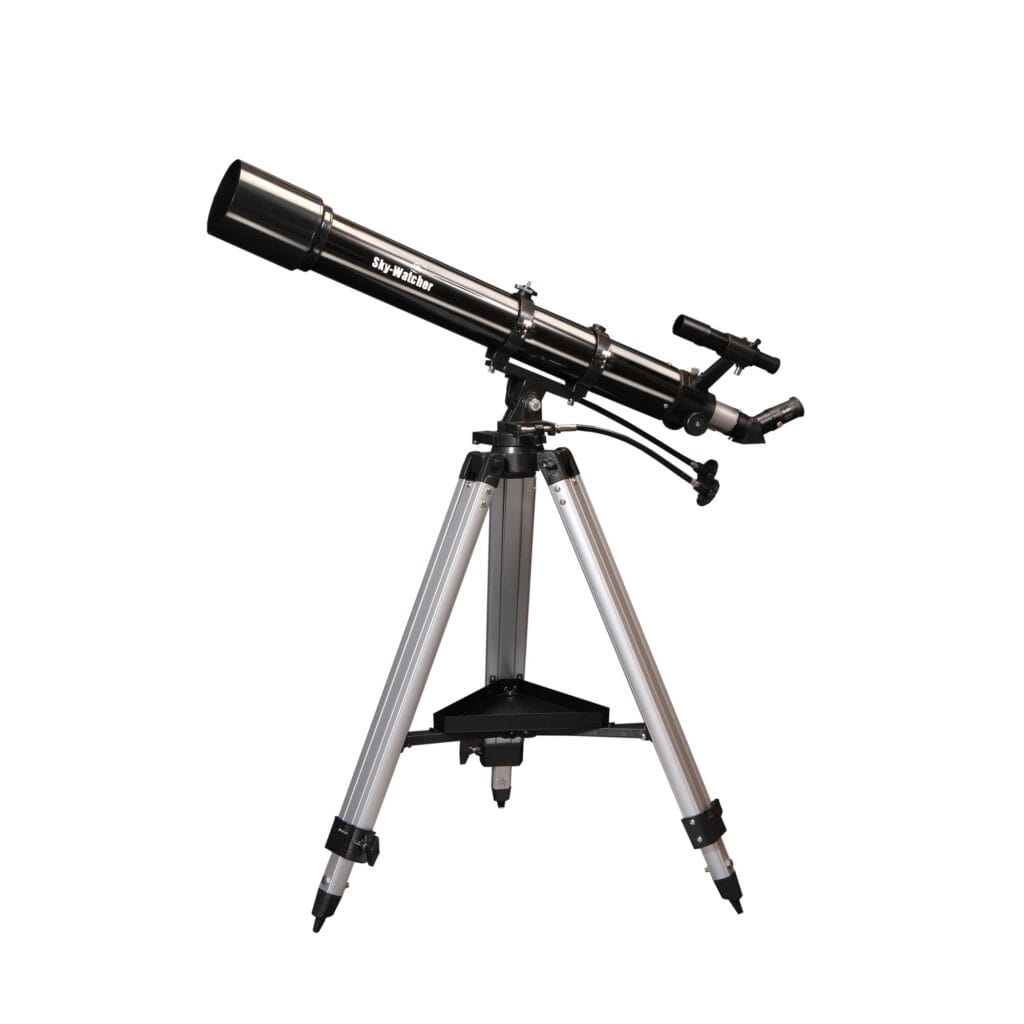
Do you want the best comfort and maximum detail? The Evostar 90 is a premium refractor telescope with a larger aperture of 90mm. This allows it to gather significantly more light, resulting in beautifully high-contrast and crystal-clear images of crater rims and planets. Because it is a lens telescope, it has zero maintenance It's also incredibly light and compact, making it super easy to take with you to the campsite or a dark nature reserve.
The indispensable moon accessory: The Polarizing Filter
When you go to look at the moon when it's nearly or completely full, you'll run into a big problem right away: the moon is very bright!
Looking at a full moon through a telescope without a filter is like looking directly into a bright, large lamp. It's not harmful, but you'll be instantly dazzled, and your eyes will quickly get tired. However, the biggest drawback is that due to the immense overexposure, all the subtle details, shadows, and contrasts in the craters completely disappear. The image essentially 'bleaches' out.
The solution: A variable polarizing filter
A polarizing filter is a compact telescope accessory which you can screw onto the bottom of your eyepiece in a snap. The filter essentially acts as a high-quality, adjustable pair of sunglasses for your telescope. By simply turning the filter, you can determine how much light is transmitted (usually continuously adjustable between 1% and 40%).
Are you trying to decide between a fixed moon filter (13% or 25%) and a variable polarizing filter? In our guide to the best moon filter for your telescope Read which filter and which size fit your viewer.
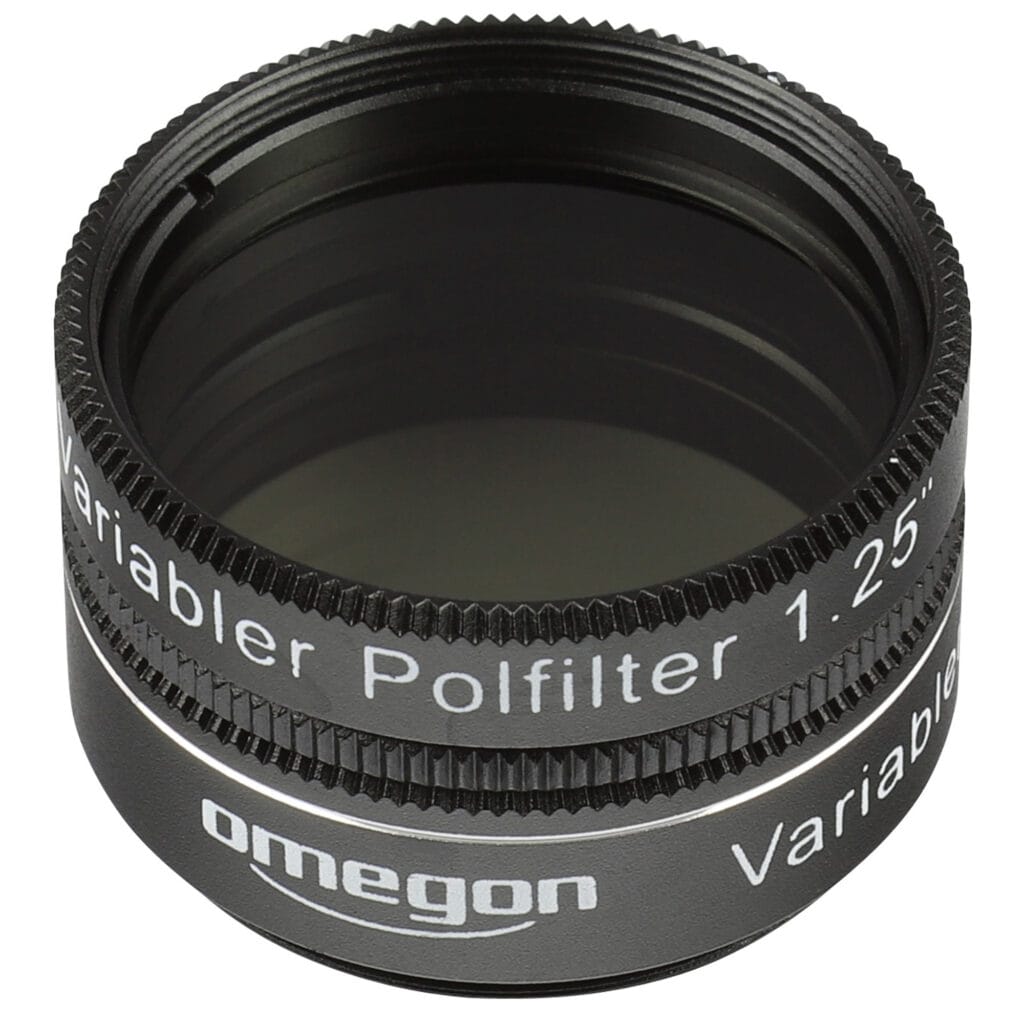
Why this filter is indispensable:
- Protects your eyes: No more squinting eyes from the bright moonlight. You look at the moon completely relaxed.
- Brings details to life By dimming the bright light, the shadows along the crater walls immediately pop out. The moon instantly gets depth and texture!
- Adjustable variable: You get clarity on the moon phase in no time. Ideal for a bright supermoon, but also for a subtle crescent moon.
- Universal fit This 1.25" filter easily screws onto the bottom of almost any standard telescope eyepiece.