
Smart telescopes
Not sure which smart telescope suits you? We are stargazers ourselves and happy to help.
Send us a WhatsApp messageWe reply on weekdays between 9:00 and 17:00.
Showing all 14 resultsSorted by popularity

- Price range: 1.499,00 through 1.669,00 Select options This product has multiple variants. The options may be chosen on the product page
- Price range: 189,00 through 299,00 Select options This product has multiple variants. The options may be chosen on the product page
 Price range: 1.590,00 through 1.790,00 Select options This product has multiple variants. The options may be chosen on the product page
- 4.699,00 Select options This product has multiple variants. The options may be chosen on the product page
- Price range: 2.599,00 through 2.958,00 Select options This product has multiple variants. The options may be chosen on the product page

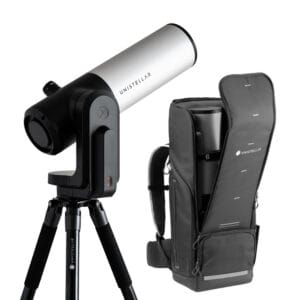
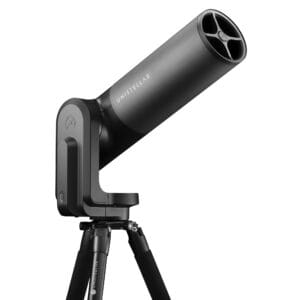
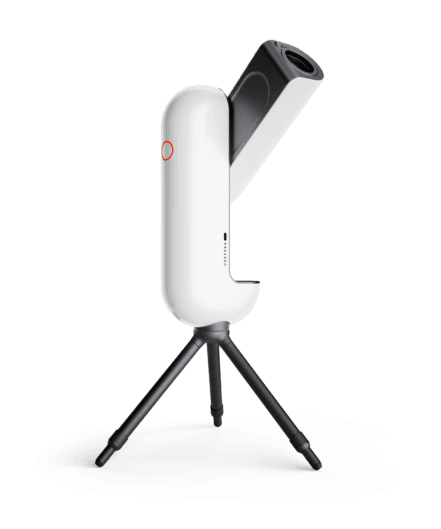
Showing all 14 resultsSorted by popularity
Buying a smart telescope: which one is right for you?
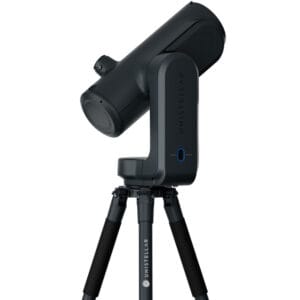
A smart telescope combines a small telescope, a camera, and a computer in a single unit. You select an object in the app, and the telescope locates it, tracks it, and stacks photos to create a color image. You view the image on your phone or tablet, not through an eyepiece. This model, the 40%, is available in our store and is the best choice for anyone living in a city or town with streetlights.
What a smart telescope can and cannot do
- Hello nebulae, galaxies and star clusters in color, even from a light-polluted garden. The moon and the sun (with included solar filter) in detail. Set up in two minutes, without alignment.
- Not Planets in close-up. Saturn and Jupiter appear small due to the short brand point distance. If you want to see planets, choose a Dobson or read smart telescope or classical Dobson.
Our recommendations
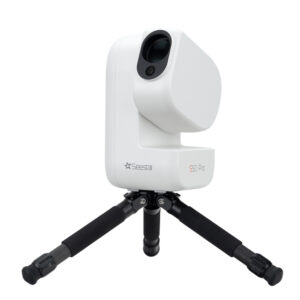
ZWO Seestar S30 Prothis year's best-selling model. Wide field of view, compact, and the strongest app. Our experience can be found in the Seestar S30 Pro review.
ZWO Seestar S50 Pro50 mm aperture, more detail on smaller objects, successor to the S50. If you are hesitating between the two, read Seestar S50 Pro vs S30 Pro.
DWARF 3 and DWARF minithe lightest alternative, with an extra wide-angle camera and a strong moon and sun mode. Comparison: Seestar S50 Pro vs DWARF 3 and DWARF 3 vs DWARF mini.
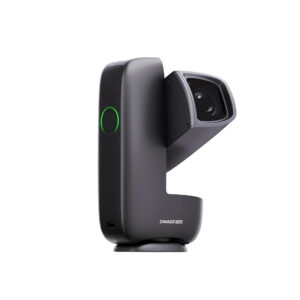
Dwarflab Draconew, and the step up for those who want more detail. 90 mm aperture, actively cooled sensor, exposures up to 300 seconds and a built-in guidescope, without a separate mount. Now available for pre-order, first deliveries around mid-November.
What you look out for
- Opening: 30 mm is ample for large nebulae; 50 mm provides more detail on small galaxies and globular clusters; 90 mm (Draco) brings out the most detail and the faintest objects.
- Field of view: a wide field (S30 Pro, DWARF) is nice for large objects and the Milky Way; a narrower field (S50 Pro, Draco) for small objects.
- Battery and power: Allow 4 to 6 hours per charge. A power bank extends it by one night.
- Accessories: a dew shield and a sturdy tripod are the two purchases that make the most difference. See accessories for your Seestar S30 and S30 Pro.
Why Choose Telescoop.nl
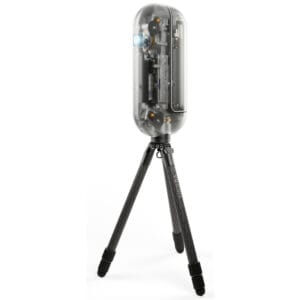
We sell Seestar, DWARF and Vaonis together and advise based on what you want to see, not based on brand. You can view a selection by appointment in Sneek. Shipping throughout Europe; in Belgium you pay with Bancontact. 30-day return period.
Frequently Asked Questions
Can I look through a smart telescope? No. The image appears through the app on your phone or tablet. That is also the advantage: everyone around you can watch along.
Does a smart telescope work in the city? Yes. By stacking photos and using a light pollution filter, he brings out nebulae that you cannot see with the naked eye.
Seestar or DWARF? Seestar has the more mature app and the largest selection of accessories; DWARF is lighter and features the additional wide-angle camera. Both are in our comparisons above.