
Correction Filters
Not sure what fits your telescope? We are stargazers ourselves and happy to help.
Send us a WhatsApp messageWe reply on weekdays between 9:00 and 17:00.
Showing all 5 resultsSorted by popularity
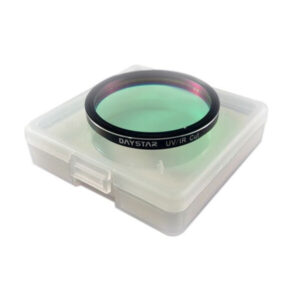


Showing all 5 resultsSorted by popularity
What does a UV/IR-cut filter do?
A UV/IR-cut filter is a correction filter that blocks ultraviolet and infrared light while letting visible light pass through. Your eye does not see UV and IR, but a camera's sensor does. Without a filter, this results in bloated, less sharp stars in your photos.
When do you need a UV/IR cut filter?
With a color camera or a modified DSLR without a built-in filter, this is the first filter you need. Check with your astrocamera whether there is already a UV/IR cut filter in front of the sensor.
At a refractor infrared light refracts differently than visible light. That causes purple or red edges around bright stars. A UV/IR cut filter largely removes that.
Also when filming planets, blocking infrared results in a calmer image with more contrast.
What should you look for when choosing a correction filter?
Most astrocameras and Barlow lenses have 1.25-inch filter threads, so a 1.25-inch filter often fits directly onto the nosepiece of your camera or barlow lens.
The filter must transmit visible light, from approximately 400 to 700 nm, almost completely, including the H-alpha line at 656 nm. Then you no longer need to expose for a longer time.
If you are working with a monochrome camera and LRGB or narrowband filters, you usually do not need this filter. Look instead at the imaging filters.