
Solar telescopes
Not sure which telescope suits you? We are stargazers ourselves and happy to help.
Send us a WhatsApp messageWe reply on weekdays between 9:00 and 17:00.
Showing all 13 resultsSorted by popularity


Showing all 13 resultsSorted by popularity
Solar telescope: the only star you can study during the day
A solar telescope is a telescope that is factory-built to safely view the Sun. There are two types. A white-light solar telescope has a permanently mounted filter that blocks 99.999% of the light and reveals sunspots and the granular structure of the Sun’s surface. An H-alpha solar telescope filters out a single narrow wavelength of hydrogen, revealing the chromosphere: prominences at the edge, filaments, and flare fields on the disk. The Sun changes from day to day, making this the most dynamic form of observation there is.
Safety first
Never look at the sun through a telescope, binoculars, or finder scope without a filter that complies with ISO 12312-2 placed in front of the optics. Eyepiece filters and homemade solutions are dangerous. All solar telescopes in this category have their filter permanently built in; in an H-alpha telescope, the energy rejection filter is at the front and the blocking filter is in the star diagonal. Never remove them. Also, put the cap on the finder scope.
White light or H-alpha?
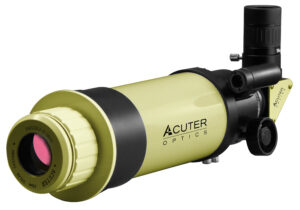
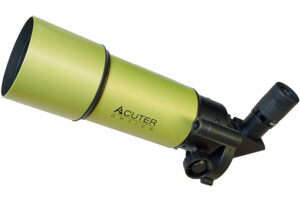
- White light. Affordable, simple, sharp on sunspots. The Acuter Solarus-80 is an 80 mm refractor with a permanently mounted, certified filter. Put it on a photo tripod or an AZ mount and look.
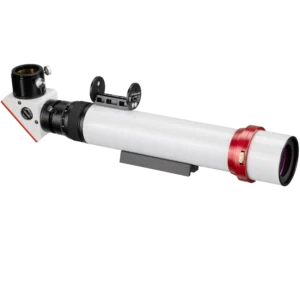
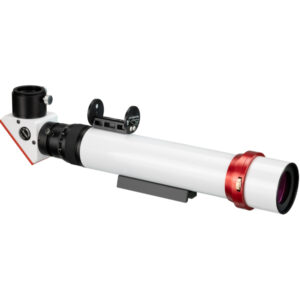
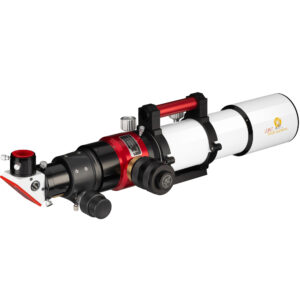
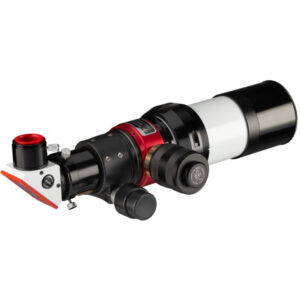
- H-alpha, entry-level. The Lunt LS40THa B500 is a 40 mm H-alpha telescope that fits on a photo tripod. Prominences from day one. With B1200 blocking filter also suitable for photography.
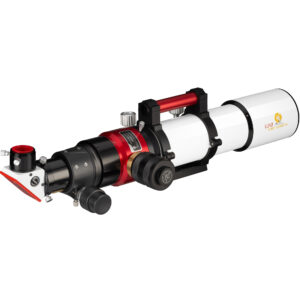
- H-alpha, all-round. The Lunt LS60MT is modular: H-alpha by day, and a night telescope without the filter modules. Choose B600 for visual and B1200 for photography.
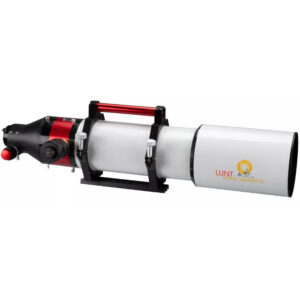
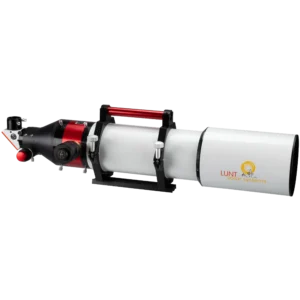
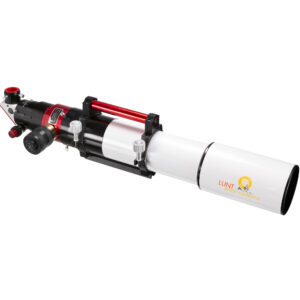
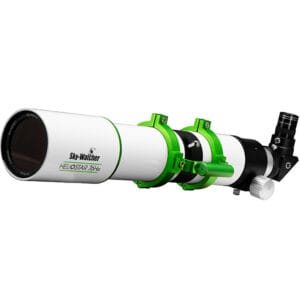
- H-alpha, large. The Sky-Watcher Heliostar 100 and the Lunt LS80MT, LS100MT and LS130MT For anyone who wants detail in filaments and torch fields, even at high magnification.
The blocking filter: B500, B600, B1200 or B3400?
With Lunt, the number indicates the diameter of the blocking filter in hundredths of a millimeter: B1200 is 12 mm. B500 and B600 are sufficient for visual use at short brand focal lengths. B1200 is required as soon as you use a camera or have a longer focal length; otherwise, the disk will vignette. B1800 and B3400 are for large sensors and the largest apertures. If in doubt, choose one size larger: you can always use a blocking filter on a smaller telescope later, but not the other way around.
For whom yes and for whom no
Who: anyone who wants to observe during the day, anyone who lives in a city with a bright night sky, schools and associations, and anyone who wants to see the sun in motion. Not: anyone who mainly observes at night and is looking for a single telescope. For the sun with an existing telescope, a separate objective filter is the cheaper choice; you can find those at accessories. Brand pages: Lunt Solar Systems, Acuter and Sky-Watcher.