
Laser Collimators
Not sure what fits your telescope? We are stargazers ourselves and happy to help.
Send us a WhatsApp messageWe reply on weekdays between 9:00 and 17:00.
Showing all 9 resultsSorted by popularity




Showing all 9 resultsSorted by popularity
What is a laser collimator?
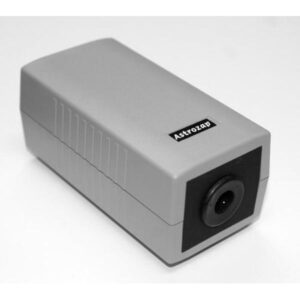
A laser collimator is a small laser device that you attach to the focus of your camera. Newton or Dobson Sticks out. The laser beam shows whether the head mirror and the rear mirror are aligned properly. This alignment is called collimation.
A Newton only gives a sharp image if the mirrors are exactly aligned. A fraction of a millimeter is the difference between a soft spot and the Cassini division in Saturn's rings, no matter how good your equipment is. eyepiece Also, after transport, the alignment often shifts a little, especially with a Dobson that you often take with you.
Why collimate with a laser?
You can see immediately where the beam hits the catch mirror and the main mirror, and where it returns to the collimator screen. That is faster than looking through a hole in a cap.
Because the laser itself emits light, you don’t need a flashlight in the dark. Handy if you need to adjust during a sighting night.
Here's how it works: adjust the viewfinder until the dot in the center of the main mirror falls, and then adjust the main mirror until the beam returns to the center of the viewfinder. Expect a few minutes.
What should you look for in a laser collimator?
The laser itself must also be straight. Better models have screws, often under caps, so you can control and adjust the beam yourself.
It should be centered in your viewfinder, 1.25 or 2 inches away from it. A laser that tilts will give an inaccurate measurement. If necessary, use a good parallax adapter.
An adjustable brightness helps. A too bright dot becomes a faint spot on the mirror and is then more difficult to place exactly.
Do you need a laser collimator?
With a fast Newton, f/4 or f/5, the alignment is very precise and a laser is almost indispensable. A refractor hardly ever needs to be collimated. If you are unsure between a laser and a classic Cheshire for your telescope, email or app us your model.