A telescope is only as stable as the tripod and mount it stands on. At 100x magnification, every vibration is also magnified 100 times. In this explanation, you can read about the difference between a tripod and a mount, the types available, and what to look out for when choosing.
Compare it to looking through a straw at an ant on the other side of a football field, while standing on a bouncy castle. A shaky tripod does exactly that to your image: the subject dances back and forth and the details disappear.
What is the difference between a tripod and a mount?
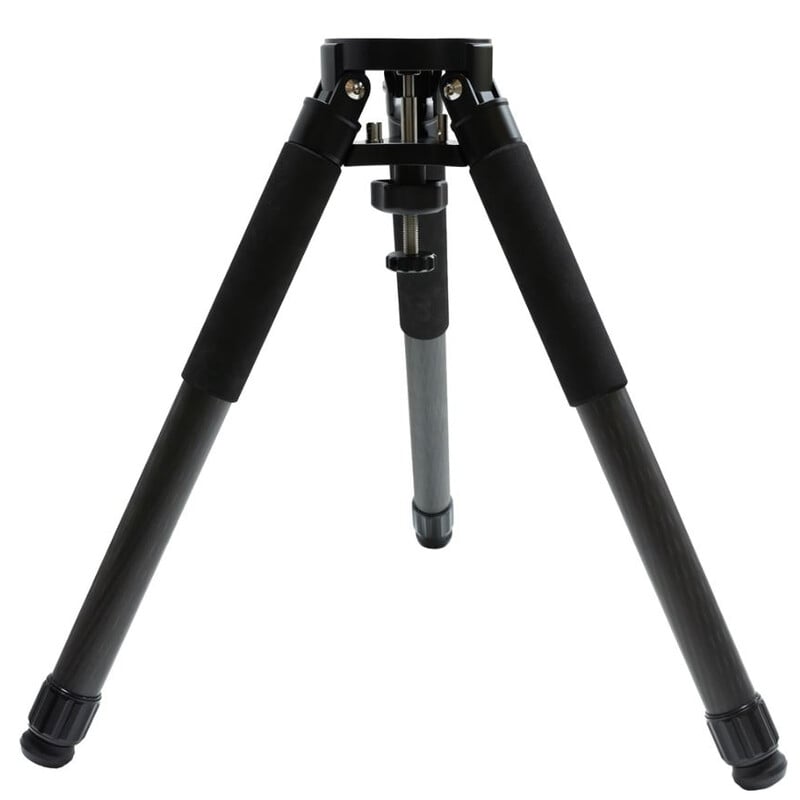
A tripod is the base: the three legs that stand on the ground. It absorbs vibrations from the ground and the wind. The stiffer the tripod, the faster the image becomes still again.
A mount is the mechanism on top of the tripod. With it, you aim the telescope and move it along with the stars. Some mounts do this by hand, others with motors and a computer.
What types of mounts are there?
Alt-azimuth mount
A azimuthal mount moves up and down and from left to right, just like a photo tripod. That is the most logical way of moving, and therefore ideal for beginners who quickly want to find the moon or a planet.
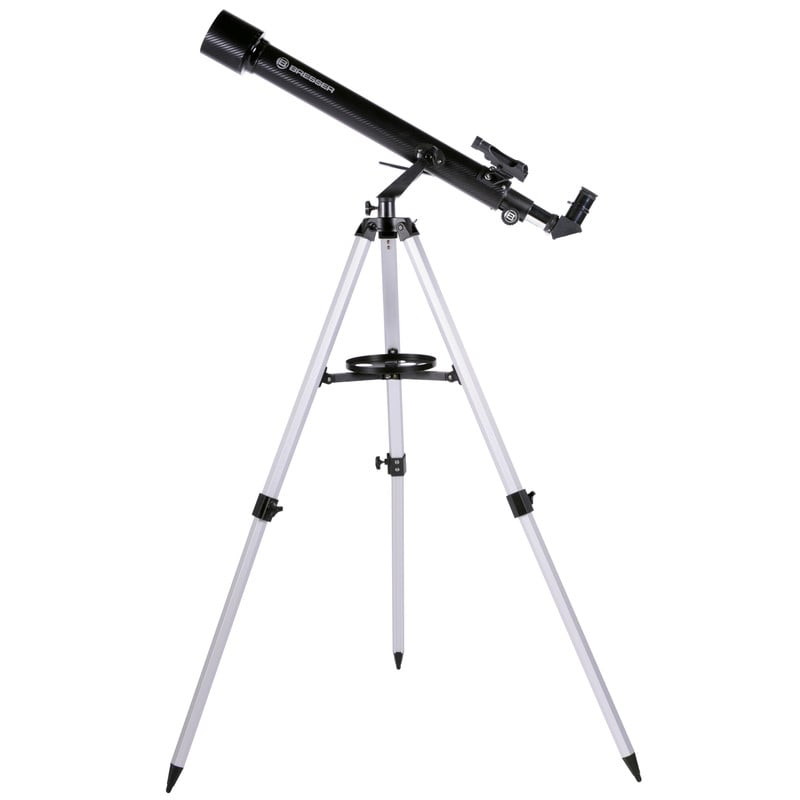
Well-known examples are the AZ-Pronto and the AZ-5. The downside: stars move in an arc across the sky, so you constantly have to adjust in two directions to keep an object in frame.
Equatorial mount
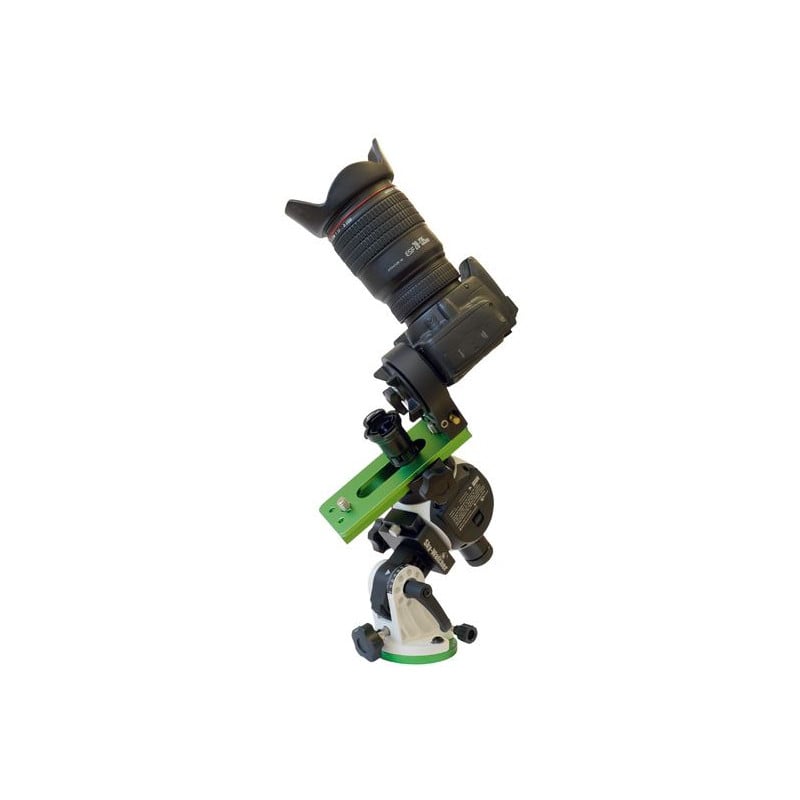
A equatorial mount tilt it, parallel to the Earth's axis. The mount then moves with the rotation of the Earth, so you only turn one axis to keep a star in view. With a motor, that happens automatically.

That makes equatorial mounting the basis for astrophotography and for looking at one object for a long time. It does take more work: you line it up on the celestial pole and balance the telescope with counterweights. For a camera with a lens, there is a compact one. camera tracking monitoring, such as the Star Adventurer 2i.
Dobson
A Dobson does not have a tripod. The telescope sits in a low wooden base that rests directly on the ground. The center of gravity is low, so the setup barely vibrates. For the same price you get a larger mirror than with a telescope on a tripod, and you are ready to observe within a few minutes.

Smart telescope
A smart telescope, such as the Seestar S30 Pro Whether the DWARF mini, has a built-in alt-azimuth mount with motors. You choose an object in the app and the telescope locates it automatically.
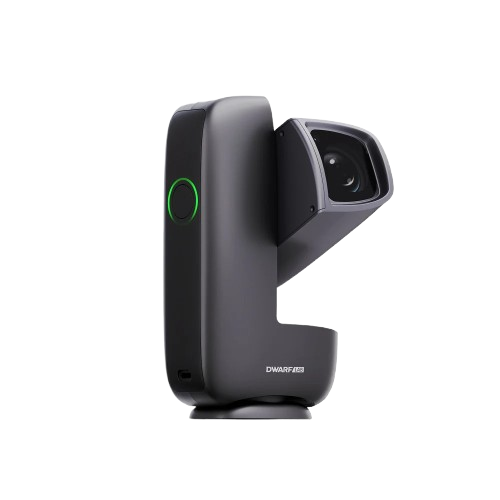
These telescopes often come with a small tripod. On a wobbly garden table or in the wind, that will result in blurry photos. A sturdier tripod with a 1/4 or 3/8 inch connection is then the upgrade that will benefit you the most.
What should you look for in a tripod?
What material do you choose?
- Aluminum light and affordable, often with entry-level models such as the Mercury-series. Aluminum transmits vibrations more easily, so the image takes longer to stabilize.
- Steel heavier mounts such as the HEQ5 and the EQ6-R Pro stand on stainless steel legs. Heavy to carry, but very stable.
- Carbon: light and yet rigid, and it dampens vibrations well. A carbon tripod like the ZWO TC40 fits in with compact installations such as the AM5 and AM3 that you often take with you.
Does the tripod fit your mount?
Not every tripod fits every mount. Tripods for equatorial mounts have a head for a specific type of mount. Small mounts and most smart telescopes use a photo thread. If it does not fit directly, check the mount accessories for an adapter. If a long refractor hits the legs when pointing straight up, a silver extension.
What surface are you putting the tripod on?
A tripod is only as good as the ground it stands on. A wooden deck or rooftop terrace acts like a sound box: every step you take is visible in the eyepiece. It is better to set up your tripod on solid ground or grass. If it has to be on a hard floor, damping vibration dampers Under the legs, the last vibrations.
How do you align an equatorial mount?
An equatorial mount tracks the stars properly only when its axis is parallel to the Earth's axis. That axis points toward the celestial pole, close to the North Star. This alignment is called polar alignment.
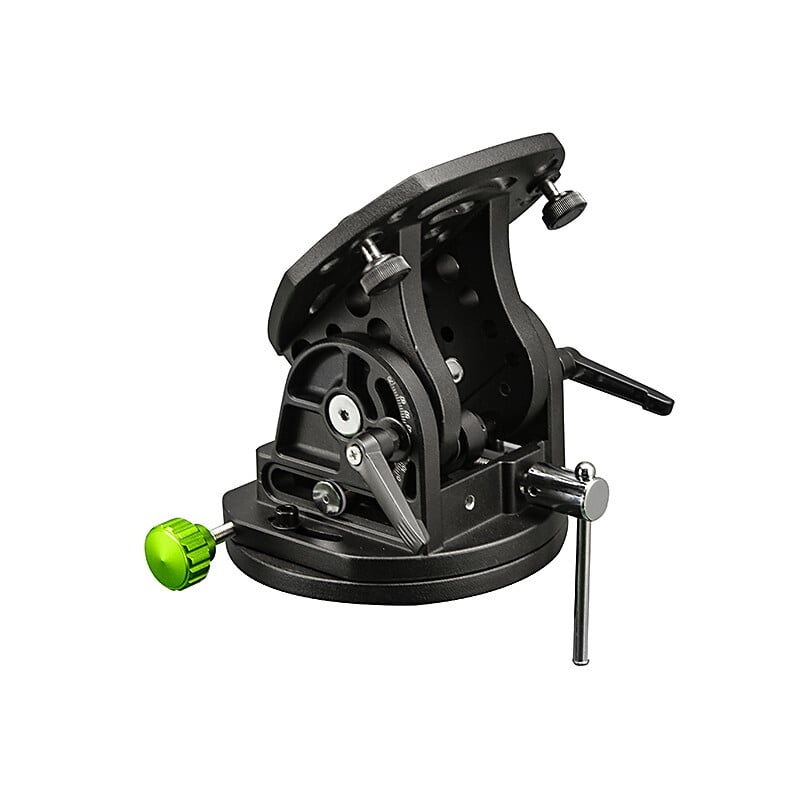
Traditionally, you do that with a pool finder: a small viewer in the mounting that allows you to place the polar star in the correct position. Small trackers like the Star Adventurer They need a wedge, a tilting plate that you use to adjust the angle.
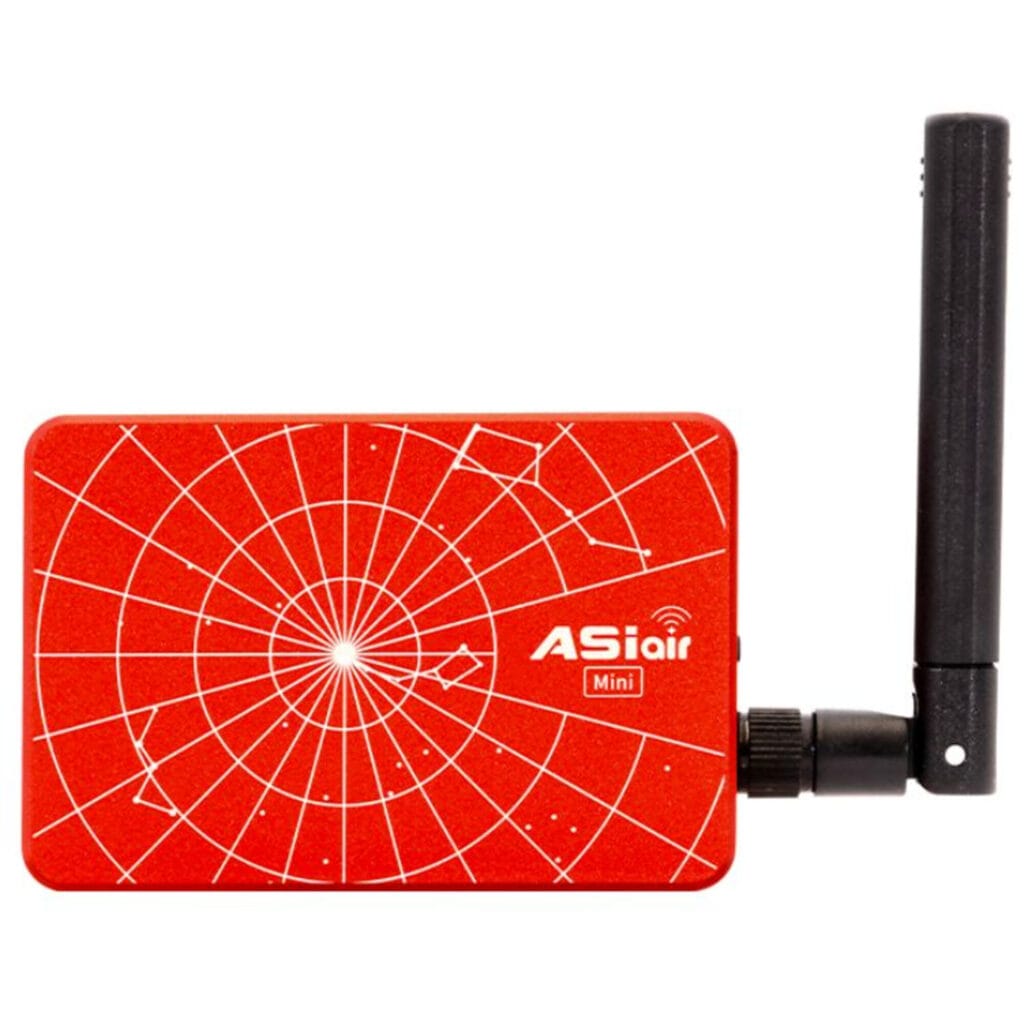
It is also possible with a camera. An astrocomputer like the ZWO ASIAIR takes a picture of the sky, recognizes the stars, and tells you which knobs to turn.
How does a mount track the stars?
A motorized mount turns the telescope at the same speed the Earth rotates. That is called tracking. Without tracking, at high magnification an object drifts out of view within a minute. For astrophotography it is indispensable: your camera sometimes collects light for minutes on end, and any shift results in streaks instead of points.
Worm gears and counterweights
Most classic mounts, such as the EQ-2 and HEQ5, work with worm gears: large gear wheels that are slowly rotated by a small motor. Two things are important in this regard.
- Balance: The telescope must be balanced with the counterweights. If one side is heavier, the motor has to work harder and the tracking runs less smoothly.
- Spelling: There is always a little space between the teeth, known as backlash. If you command the telescope to move in the opposite direction, it takes a moment for the teeth to engage again. When observing you hardly notice this, but in astrophotography you certainly do.
Classic settings of Sky-Watcher are reliable and carry a lot of weight for their price.
Strain wave (harmonic drive)
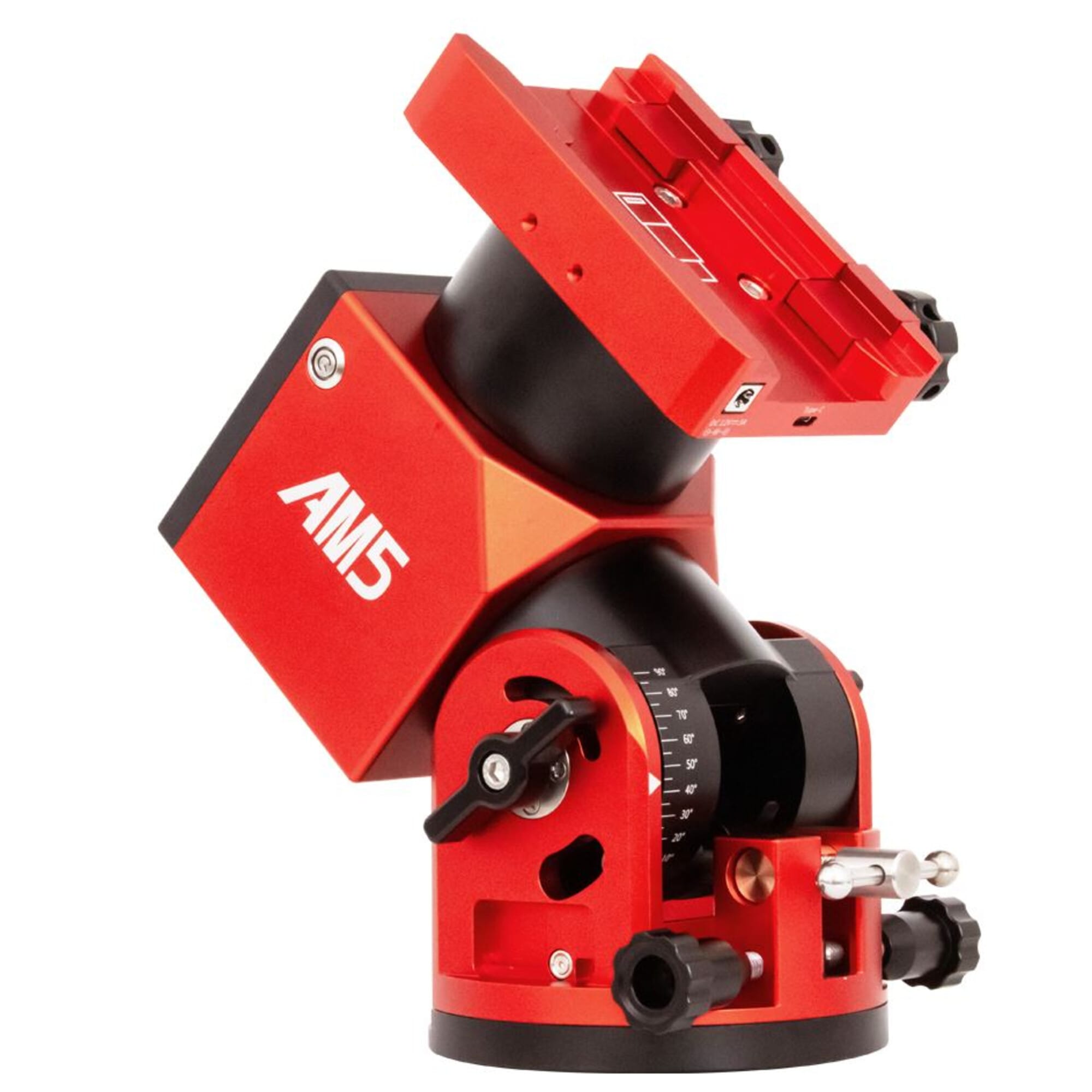
A strain wave gearing works without large gears, using a technique from robotics. Well-known examples are the ZWO AM5 and the compact AM3.
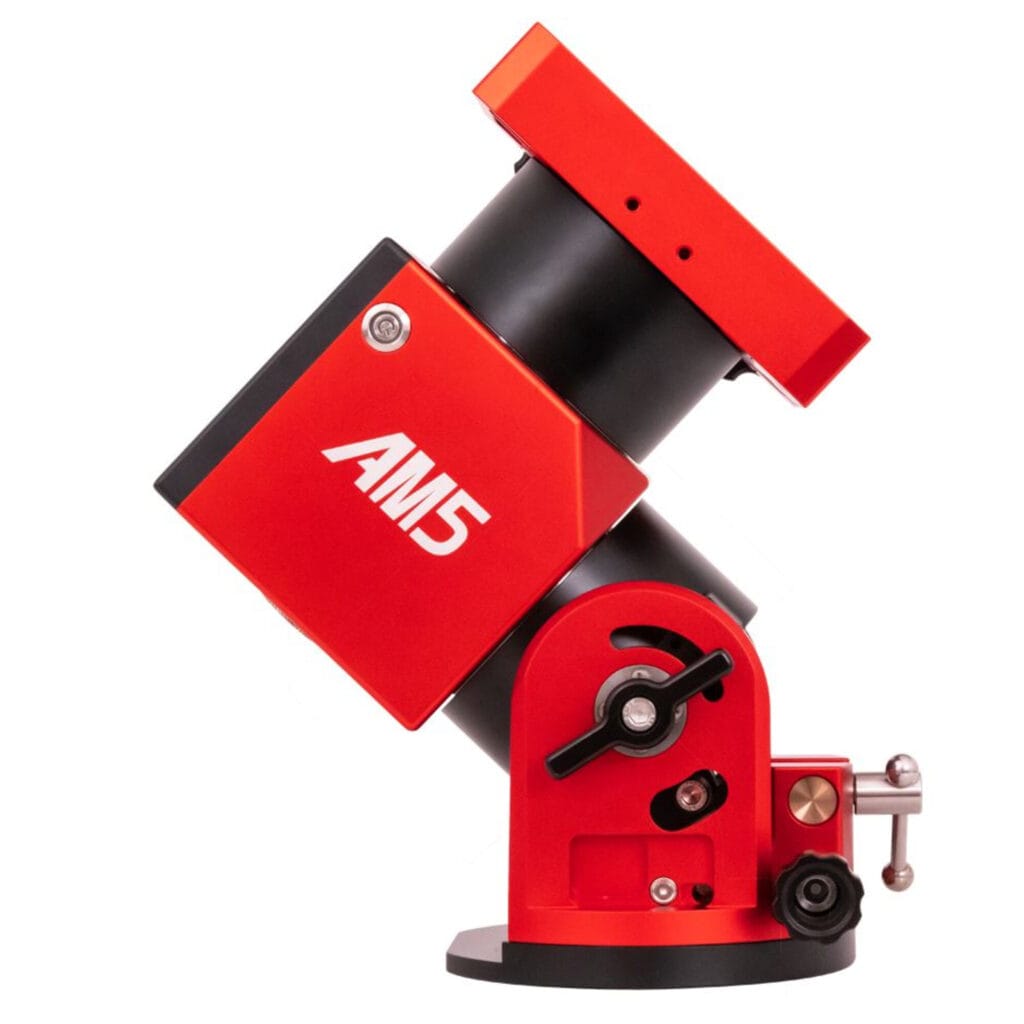
- Often no counterweight is needed, so much less heavy lifting.
- Compact: The AM5 carries more than twice its own weight.
- Virtually no play, so the mount responds immediately.
The disadvantage is that the tracking is inherently slightly less smooth than with a good worm gear mount. For long exposures, you therefore almost always use autoguiding.
What is autoguiding?
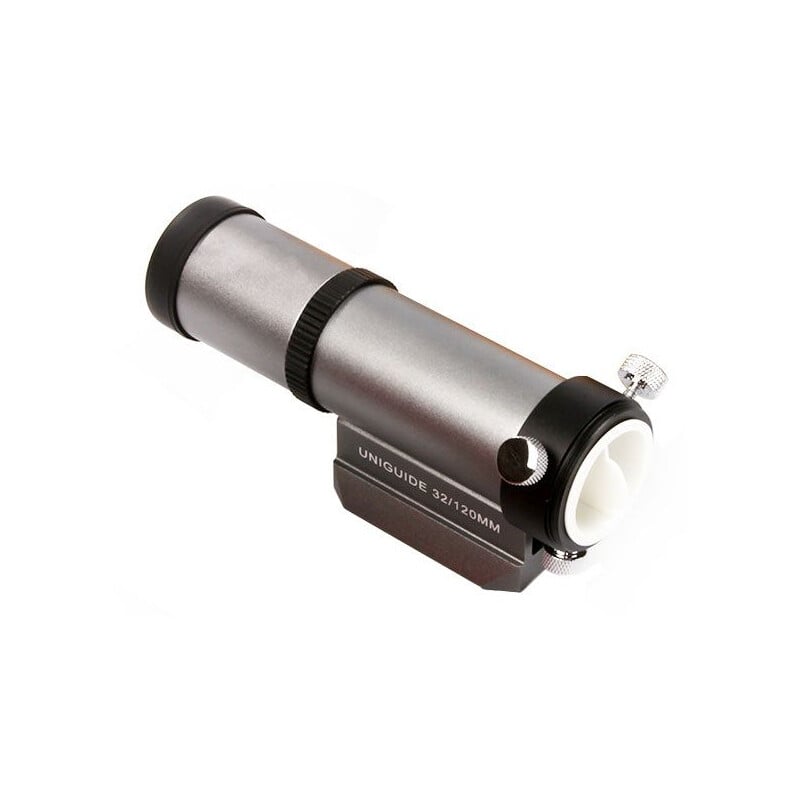
With autoguiding, a small guidescope with a guide camera to a single star. If that star shifts even a single pixel, the computer sends a correction to the mount. This happens every few seconds, ensuring that stars remain sharp points even during exposures of 10 minutes or longer.
Does a smart telescope have anything to do with this as well?
Yes. A smart telescope is on an alt-azimuth mount, and therefore the image slowly rotates during long exposures: stars at the edge appear to trace circles. With a polar wedge do you tilt the telescope so that it tracks the stars like an equatorial mount?.
How do you operate a GoTo mount?
A GoTo mount has a database of thousands of objects. For example, you select M42, the Orion Nebula, and the mount slews to it automatically. There are a few ways to control it.
Hand controller
The classic box with buttons on a cord. Always works, even in the cold and without Wi-Fi, but the screen is small. For many assemblies there are separate controllers and wifi modules.
App via WiFi
Mounts such as the Star Adventurer GTi and the Heritage 150P Virtuoso GTi have built-in wifi. You control them with an app on your phone or tablet and see on a star chart where you are turning.
Astrocomputer
The ZWO ASIAIR is a small box on your mount that controls the mounting, camera, and autoguiding together from a single app. It replaces the laptop in the field.
Without engine
Even a manual telescope can get help with searching. The Celestron StarSense Explorer uses your smartphone's camera to see where the telescope is pointing, and displays arrows on the screen. That technology is also in the StarSense Explorer Dobson.
Which combination suits you?
Take a quick look
Do you want to be outside within five minutes for the Moon or planets, without cables or alignment? Choose an altazimuth mount like the AZ-Pronto, or a Dobson like the Heritage 150P.
Starting with astrophotography
For your first photos of the Milky Way or the Orion Nebula with a camera or small telescope, a compact tracker, such as the Star Adventurer 2i or the Star Adventurer GTi, is suitable. Those still fit in a backpack.
A smart telescope
If you have a Seestar or DWARF, you will get the most sharpness out of a sturdier tripod with the right thread. If you want to expose for longer, a polar wedge is the next step.
How do you keep a tripod and mount in good condition?
- Dry after use: After a night outside, there is often dew on the legs. Wipe them off before collapsing them, or let them dry indoors while extended. This way, you won't trap moisture in the clamps.
- Do not tighten too much: Tightening clamps too hard does not provide extra stability, but can damage the rings. Hand-tight is tight enough.
- Keeping gears clean: Sand and dirt in the worm gears cost accuracy. Do not leave a mount open on the ground and store it covered.
- Safe transport: a steadfastness or tool bag prevents dents and scratches on the go.
Frequently Asked Questions
Can I use a camera tripod for my telescope?
Sometimes yes, for a lightweight smart telescope or a small travel binoculars, provided the tripod is sturdy and the thread fits. For a tabletop Dobson or an equatorial mount, no: a photo tripod is not built for that weight and will vibrate at every touch.
Do I need an equatorial mount for the moon and planets?
No. To look at the moon and planets, an altazimuth mount or a Dobson is easier and faster. An equatorial mount is especially worthwhile if you are going to take photographs.
How do I know if a tripod fits my mount?
Look at the connection: a head for a specific type of equatorial mount, or a 1/4 or 3/8-inch photo thread. Are you in doubt? Send us the model of your mount via email or WhatsApp.
Want to read more about the starry sky and your equipment? Check out the astronomy knowledge center. If you want to compare directly, view all tripods and mounts.
Want to browse by brand? The classic EQ mounts, from EQ3 to EQ6-R, are listed on the Sky-Watcher brand page. You can find mounts without counterweight, star trackers, and the CEM series on the iOptron brand page. The AM mounts and the ASIAIR are on the ZWO brand page, guidescopes and travel refractors on the William Optics brand page. If you often transport your mount, take a look at the padded bags per model at the Oklop brand page.