A star tracker, also called a startracker or skytracker, is a small motorized mount between your tripod and your camera. It rotates at the same speed as the starry sky, so stars remain dots in photos taken for one minute or longer instead of lines. How to use a tracker to take photos, you can read in photographing stars. This guide is about the choice: which model fits your camera and lens?
The short answer: if you mainly photograph the Milky Way and star fields with a wide-angle or standard lens, then a single-motor tracker is enough, like the Sky-Watcher Star Adventurer 2i Whether the iOptron SkyGuider Pro. If you want to photograph nebulas and galaxies with a telephoto lens or a small refractor, choose the Sky-Watcher Star Adventurer GTi. It searches for objects itself and has motors in both axes.
What is the difference between a star tracker and the Star Adventurer GTi?
The Star Adventurer 2i and the SkyGuider Pro have one motor, in the axis that rotates with the Earth. You orient the camera yourself, using a head mount or the declination bracket, and the tracker then captures the image.
The Star Adventurer GTi also has a motor in the second axis. As a result, it is a GoTo mount: in the SynScan app on your phone, you select an object and the mount automatically moves towards it. In autoguiding, the GTi drives in both axes. The 2i and the SkyGuider Pro only correct in full speed.
That difference is especially noticeable at a long focal brandlength. With a 24 mm lens on a full-frame camera, your field of view is approximately 74 by 53 degrees, so you can see what you’re aiming at. At 400 mm, that is still 5.2 by 3.4 degrees. The Andromeda galaxy is over 3 degrees long. At that focal brandlength, you need to focus precisely, and the GTi does that for you.
How do the Star Adventurer GTi, the 2i and the SkyGuider Pro compare?
| Star Adventurer GTi | Star Adventurer 2i Pro Pack | iOptron SkyGuider Pro | |
|---|---|---|---|
| Type | Equatorial GoTo mounting | Cameratracker | Cameratracker |
| Motors | Two, in both axes | One, in full bloom | One, in full bloom |
| Searches for objects yourself | Yes, via the SynScan app | No | No |
| Carrying capacity | 5 kg | 5 kg | 5 kg |
| Weight | Head 2.6 kg | 1.65 kg with declination bracket | 1.45 kg with base |
| Operation | WiFi and SynScan app | WiFi and app, plus buttons on the head | Buttons on the mounting |
| Nutrition | 8 x AA or 12 V | 4 x AA or USB | Built-in battery, up to 20 hours at 20 °C |
| Autoguiding (ST-4) | Yes, on both axes | Yes, in full force | Yes, in full force |
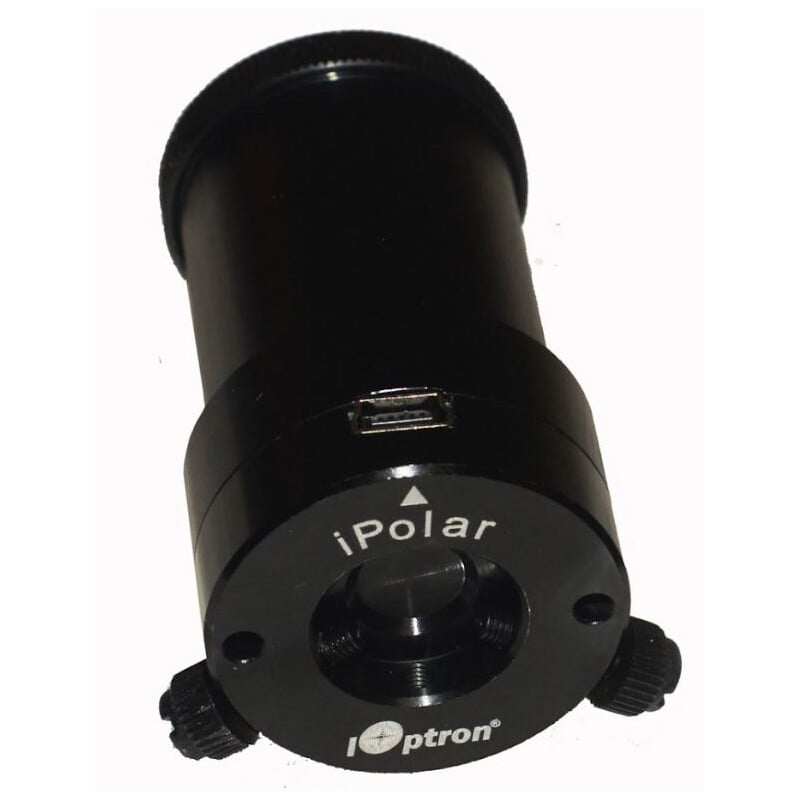
| Pole finder | Built-in and illuminated | Built-in | Lighted, or electronic in the iPolar set |
| Included | Counterweight and rod; the set also includes the tripod with extension arm | Pool height base, declination bracket, counterweight, ball head adapter | Base with fine adjustment, declination bracket, counterweight of 1.35 kg, bag |
| Price | Head € 629, with tripod € 729 | € 475 | € 489, iPolar set € 669 |
All three carry the same weight. They differ mainly in how they are set up: the GTi does it itself, while the other two are operated manually. The GTi and the 2i can use a cable to operate the shutter of your camera. With the SkyGuider Pro, you use your camera’s interval function or a separate interval meter.
Which star tracker fits your lens?
The longer the focal brandlength, the more noticeable every small error in alignment and tracking becomes. Therefore, the choice depends primarily on your lens.
- Wide-angle up to about 35 mm, For the Milky Way and nightscapes: any tracker will do. Light weight is most important, so choose the Star Adventurer 2i or the SkyGuider Pro. Both have a half tracking speed, which keeps the foreground sharper.
- Telephoto lenses from 85 to 200 mm, For the Orion Nebula, the Andromeda Galaxy and the Pleiades: you need a declination bracket and a counterweight. These are included in the 2i Pro Pack and the SkyGuider Pro.
- From 200 mm, or a small refractorChoose the Star Adventurer GTi. Your field of view is then so small that GoTo saves a lot of searching work, and guiding in both axes keeps the stars centered during minutes-long exposures.
How much weight can a star tracker carry?
The GTi, the 2i and the SkyGuider Pro each carry 5 kg. Add up everything that comes on the tracker: the camera, lens, ball head or dovetail plate and, if you are guiding, the guidescope with the guide camera. A system camera weighing 650 grams with a telephoto lens of 2.1 kilograms adds up to about 2.8 kilograms, so well within the limit.
Position the counterweight so that the camera and the counterweight are balanced. A tracker that is balanced and not at its maximum will track more quietly. If you want to carry more than 5 kg, you need a heavier mounting system. The difference between the types is shown in tripods and mounts explained.
What else do you need besides the star tracker?
- A tripod. The GTi head, the 2i Pro Pack and the SkyGuider Pro are supplied without a tripod. They fit on a tripod with a 3/8 inch connection, like the Sky-Watcher tripod for Star Adventurer 1.8 kg. The GTi set has its own tripod with extension for the suction cup.
- Something to mount your camera on. The 2i Pro Pack includes an adapter for your own ball head. The SkyGuider Pro has a declination bracket with camera attachment. The GTi does not have a plate with a photo screw: you use a short Vixen-style dovetail plate with a 1/4 inch screw, or you attach a telephoto lens with a tripod ring directly to a dovetail.
- Power for the whole night. The GTi runs on 8 AA batteries or 12 V. In cold temperatures batteries run out quickly, so a 12 V power supply is better for a whole night. The 2i also works with a USB power bank. The SkyGuider Pro is charged via micro-USB.
- Good pool alignment. All three have a polarizer. Tools for aligning more quickly and accurately can be found in the pool seekers.
Which star tracker do we recommend?
Our choice is the Star Adventurer GTi with tripod. These are the reasons:
- He searches for objects himself. On a telelens or small refractor, you don't have to search for them in an image of a few degrees.
- With a second motor, he drives both axes in guiding mode. This also corrects deviations in the second axis, which become visible at longer branddistances.
- You can grow with it. Start with the camera and lens, and later add a small refractor with an astro camera. The carrying capacity remains 5 kg.
- The set is complete with a tripod, a zoom lens and a counterweight of 2.3 kg.
If you already have a sturdy tripod with a 3/8 inch connection, then the GTi without a tripod That's enough. If you only photograph the Milky Way with a wide-angle lens and count every gram in your backpack, then the Star Adventurer 2i Pro Pack Whether the SkyGuider Pro Better. Choose the 2i if you want to control the tracker and your camera from your phone. Choose the SkyGuider Pro if you prefer a built-in battery and don't want to need an app. All models are listed together on the page. star trackers.
Frequently asked questions about star trackers
Can a star tracker track the sun?
Yes. The Star Adventurer GTi has a tracking speed for the sun. In the SynScan app, first under Settings, Advanced, turn on the Observe Sun option; otherwise, the app hides the sun. During the day, you cannot align the pole star. Set the tripod to a level, orient the mount with a compass to the north, and set the pole elevation to your latitude, in the Netherlands 51 to 53 degrees and in Belgium approximately 50 to 51 degrees. That is accurate enough to keep the sun in focus. Always use a sun filter before the lens, even if you are just aiming for a moment.
How do I set my camera up on the Star Adventurer GTi?
On top of the GTi is a Vixen clamp. You insert a short dovetail plate with a 1/4 inch screw, and you screw your camera onto it. If your telephoto lens has a tripod ring, then put the ring on the plate instead of the camera; that keeps everything better balanced. You don’t need an L-bracket on the GTi. That’s meant to give an ordinary Star Adventurer a second axis, and the GTi already has that.
Do I need car guidance?
Not for wide-angle shots of the Milky Way. With a telephoto lens from about 200 mm and exposures of several minutes, guiding makes the difference between round and elongated stars. You need a small guidecope with a guide camera and a laptop with guiding software. All three trackers have an ST-4 port; only the GTi corrects in both axes.
Can I put a small telescope on a star tracker?
Yes, as long as everything stays within 5 kg. A small achromatic refractor from 60 to 72 mm with a camera fits on the GTi, the 2i and the SkyGuider Pro. On the GTi it is easiest, because it finds the object itself. How to connect a camera to a telescope, you can read in Connecting the camera to your telescope.
What is the difference between the SkyGuider Pro and the SkyTracker Pro?
The iOptron SkyTracker Pro It is the simpler version. It weighs 3 kg, has an illuminated viewfinder and a built-in battery that is rated for more than 24 hours at 20 °C. It does not include a declination bracket or a counterweight. It is sufficient for a camera with a lightweight lens; for a telephoto lens, choose the SkyGuider Pro.
Do I need to be able to see the Pole Star to align it?
With the GTi, the 2i and the regular SkyGuider Pro, you can see through the polarizer and set the Polarster to the position indicated by the app or the wire grid. With the SkyGuider Pro iPolar set, you can measure the line using a small camera in the polar axis and software on your laptop, without having to turn through a viewfinder.
Read more
Once you have your tracker inside, start by photographing stars. Then you read in What is stacking in astrophotography How to combine dozens of shots into one photo with less noise.