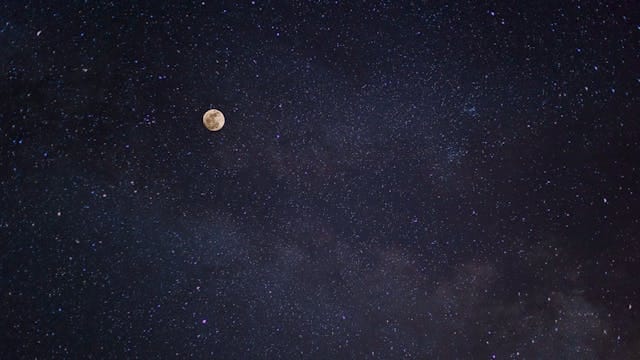
Photographing stars explained by Telescoop.nl
Star photography is one of the most accessible and enchanting forms of stargazing. Basically, it requires very little: a dark sky, a camera or smart telescope, and a little patience. Yet almost everyone who starts soon finds that the results fall short of expectations. Stars are small, dim and difficult to get in focus. In this article you will learn what works, where beginners often get stuck and why smart telescopes in combination with your smartphone are now the solution to capture beautiful constellations without technical knowledge.
Why photographing stars remains tricky
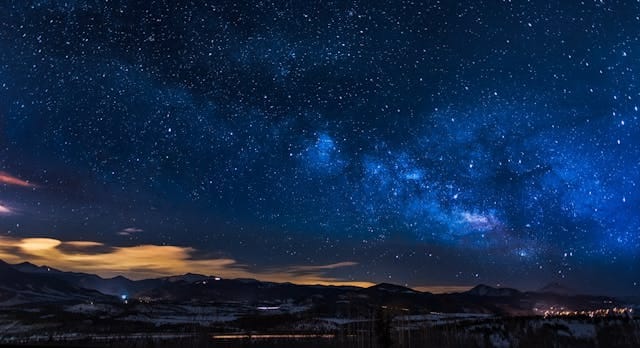
Anyone who has ever tried to capture the Milky Way with an ordinary camera on a tripod quickly realizes how difficult it is. Your picture will get blurred quickly, the stars will become dashes instead of dots, and often there is noise in the image. Add in the bright light from a lamppost or the moon, and most beginners drop out disappointed.
Until recently, you really only had two choices: either buy an expensive tracker that tracks the movement of the sky, or spend hours at the computer piecing together dozens of images. For someone who just wants to take a nice picture of the stars, that often felt like a big hurdle.
Smart telescopes: a new standard
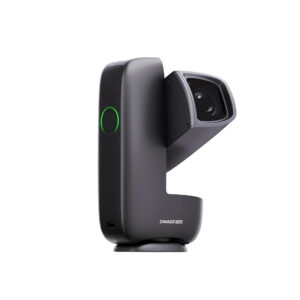
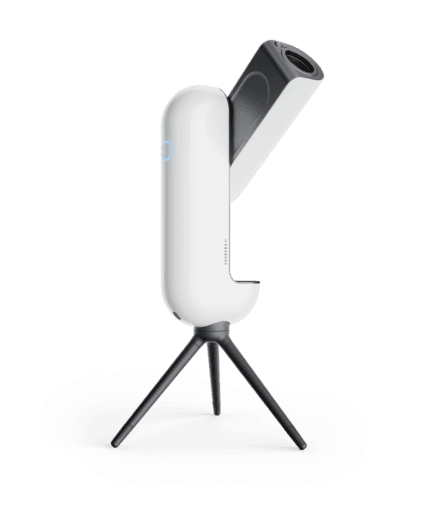
For several years now, there have been compact smart telescopes on the market that do much of this work automatically. Consider the Seestar S30 Pro, the Seestar S50 Pro and the DWARF Mini. These devices combine a telescope, camera and tracking mechanism in one housing. Through an app on your phone, you simply select “Milky Way” or “star field,” and the telescope itself aligns, tracks and stacks images.
The big advantage:
- No fussing with shutter speeds and ISO.
- No complicated pole alignment like trackers.
- Photos are instantly viewable, shareable or saveable.
Where you used to spend evenings working on technique, now you see results within 15 minutes.
What you capture with a smart telescope
Everyone thinks of star photography, literally “shooting stars,” but in practice you get more:
- Starfields: the Pleiades, Hyades or just a rich part of the Milky Way.
- Open clusters: like the Double Cluster in Perseus, a spectacular target for a Seestar.
- Mists: Orion in winter or the North American Nebula in summer are easy to photograph, even from the Netherlands.
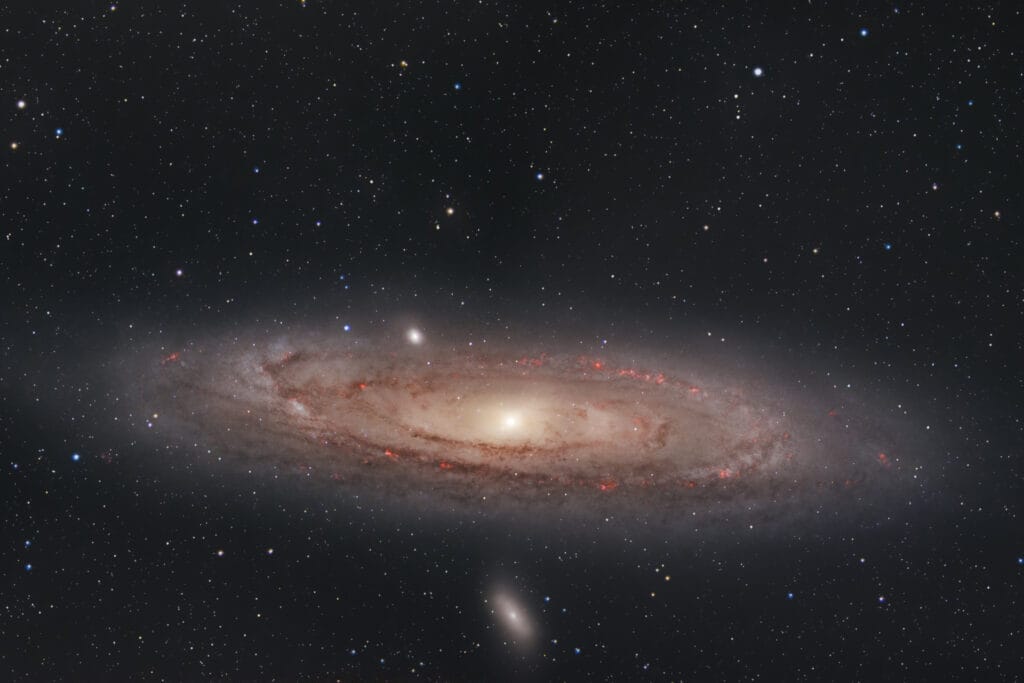
- Bright galaxies: consider Andromeda, which shows structure even at relatively short exposures.
For planets, a smart telescope does not work as well because they are small discs that require more magnification. But for anyone who wants to capture mostly stars and galaxy fields, this is the easiest solution.
When do you go outside?
The time of day is crucial. For star photography, you need dark conditions. That means:
- New Moon: no distracting moonlight.
- Dark location: outside the city, preferably in a natural area.
- Clear sky: even thin veil clouds blur details.
A clever detail: smart telescopes like the Seestar have built-in filters and algorithms that still extract a surprising amount from the sky even under light pollution. So you don't always have to go to a dark park in Drenthe; photography is also possible from your garden or balcony.
Case study: first pictures with a Seestar
Suppose you put the Seestar S30 on your balcony in Utrecht. You open the app and choose Orion. Within seconds, the telescope is properly aimed. The first frames show a gray haze with a few stars. But as the telescope stacks more pictures, structures appear that you never see with the naked eye: the wings of the Orion Nebula, gas clouds and star formation. Within 10 minutes, you have a photo you can share right away.
With a DSLR, this took you an hour, plus another hour at the computer.
DSLR versus smart telescope
Many photographers wonder: can't I just shoot stars with my current camera? Of course you can, but the differences are great.
- Camera + tripod: approachable, but limited to short shutter speeds and little detail.
- Camera + star tracker: many more possibilities, but requires technical knowledge and time.
- Smart telescope: no learning curve, instant results, optimized for astrophotography.
So the choice depends on your goal. Do you want to learn technically and set everything up yourself? Then a DSLR with tracker fits. Do you mainly want to enjoy and immediately share results? Then a smart telescope is the best option.
Smart telescopes on the rise
The market is growing rapidly. The Seestar S30 is popular because of its price and simplicity. Within five minutes, it is up and running and taking your first shots. The DWARF Mini is the lightest and cheapest of the three, with an extra wide-angle lens that allows you to capture large objects and the Milky Way as well. And the Seestar S50 offers more light capture and detail, suitable for those who want to take the step further.
At Telescoop.nl, we have already noticed that customers who start star photography often start with the S30 and later upgrade to the S50. The beauty: the controls remain identical, making the transition smooth. Currently, the S30 is also heavily discounted with us!
Application and expectations
Star photography is all about patience and realistic expectations. You won't make images like the Hubble or James Webb telescope, but you will get pictures that clearly show star clusters, nebulae and the structure of the Milky Way. For many beginners, this is a magical experience.
If you want to go further, you can edit photos in software like Photoshop or free packages like DSS (DeepSkyStacker)/Autostakkert. Smart telescopes already provide stacked files, making editing optional rather than necessary.
Conclusion
Star photography is more accessible than ever. Where it used to be a high-entry technical field, smart telescopes allow anyone with a smartphone to see results within minutes. For those looking to get started, the Seestar S30 a logical choice: compact, affordable and ready to use immediately. Those looking for more detail look to the Seestar S50 Pro Whether the DWARF Draco.
Check out the best smart scopes for photographing the night sky below:
-
 DWARF mini smart telescope429,00
 -
 Vaonis Vespera IIPrice range: 1.590,00 through 1.790,00