
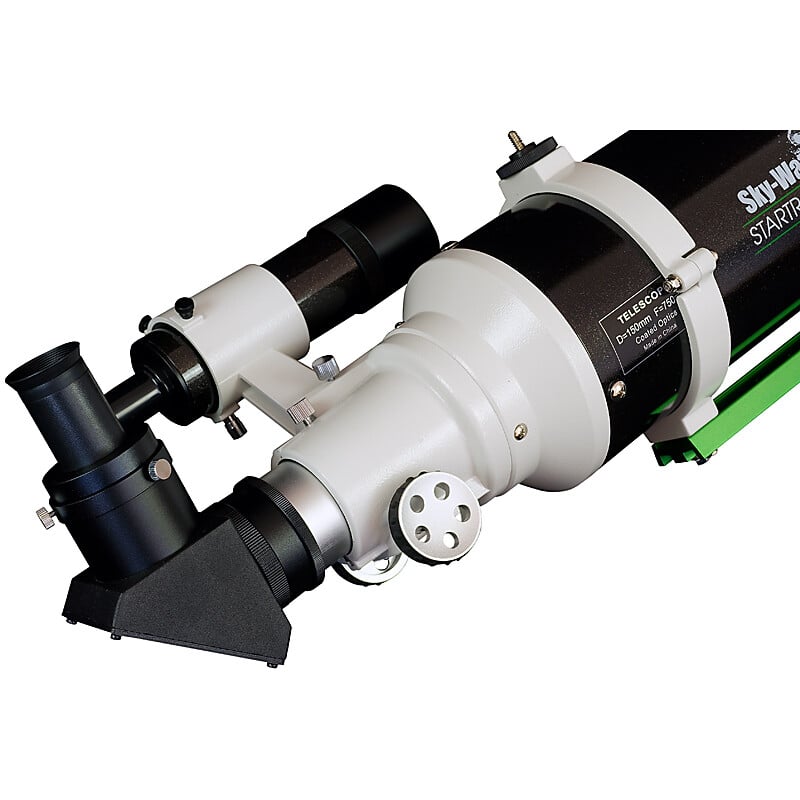


Sky-Watcher Startravel-150 (OTA): the widefield light bucket
The Sky-Watcher Startravel-150 OTA is the largest in the line: a 150/750mm refractor (f/5) that throws the maximum amount of light into the wide field. A six-inch lens for star fields, comet hunting, and bright nebulae, complete with eyepieces and finder. Expect an EQ5-class mount for this tube.
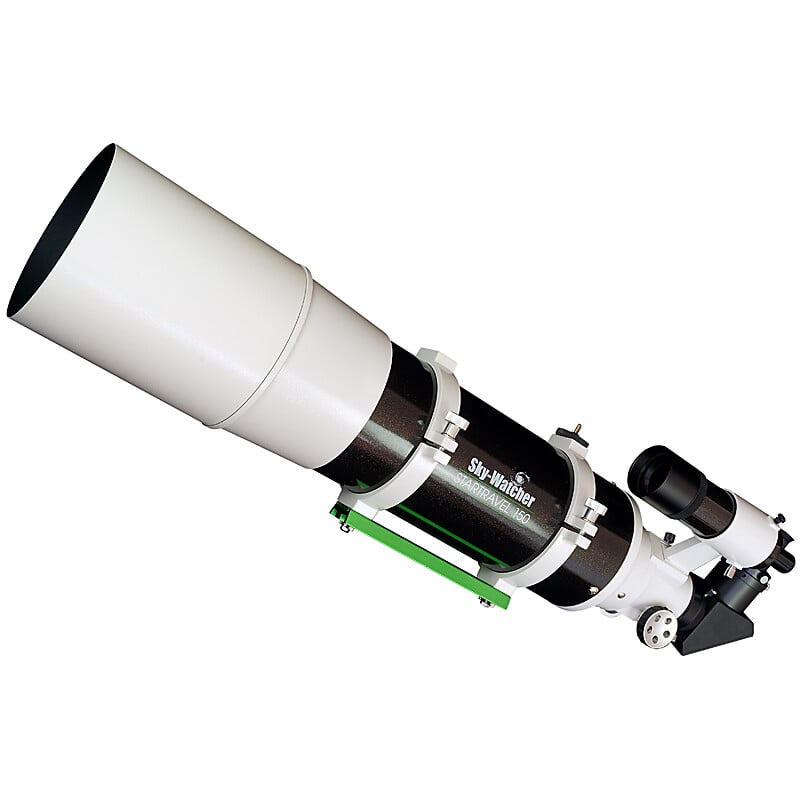
What do you see through a Startravel?
Vast star fields dotted with pinpricks of light, the Pleiades fully in view, the Milky Way stretching like a ribbon across a dark sky, and bright nebulae such as Orion surrounding them. The moon looks surprisingly good, and bright planets are visible at their largest. During the day, the diagonal prism turns it into a powerful nature viewer for birds and landscapes.
Rich Field: Heaven on a Grand Scale
Star travel refractors are built for broad use: short focal length, wide field of view, and plenty of light per observation. Entire constellations, vast star fields, the Pleiades in one view, and comet hunting: that's their territory. With an erect image diagonal, they also make excellent daytime binoculars. One thing they are intentionally not: high-magnification planet specialists.
This is how to get the most out of this telescope
- Ready in ten minutes: A refractor lens has hardly any cooldown time, and the closed tube means no collimation. Set up and look.
- Know what a fast achromat is: At f/5, you'll see a distinct purple-blue edge around bright objects like Venus, Sirius, and the moon's edge. This is hardly noticeable in wide star fields, for which this lens was made; for high magnifications and photography, you'd choose an ED refractor. That's the honest agreement behind this price.
- Look up at the dark sky Correct, widefield viewing gains immensely with low light pollution; this is an excellent telescope to take along.
- Magnification: the 10mm eyepiece gives 75x; a 6 mm eyepiece (125x) can work for the moon. The purple fringe around bright objects is most clearly visible at this magnification: that belongs with a six-inch f/5 achromat.
- Never look directly at the sun without protection., not even for a moment: only with a certified solar filter on the front.
For whom yes and for whom no
Hello the wide-field enthusiast seeking maximum light per euro and familiar with the achromat arrangement.
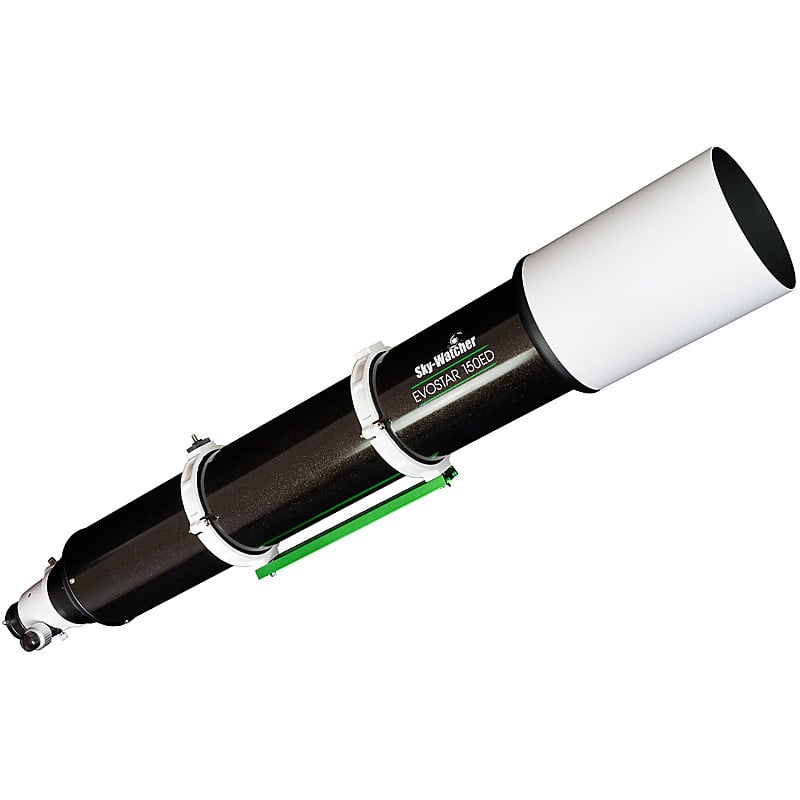
Not For high-magnification planet detail, a Maksutov or long refractor is the better choice, and deep-sky photography suits an ED refractor or the smart telescopes. If you want this size without a color edge, the Evostar 150ED is the (considerably more expensive) route; Our Telescope Buying Guide for Beginners Place the types side by side.
Featured accessories
These accessories add the most after purchase:
- Moon Filter 25%: the Omegon Moon Filter 25% (1.25 inches) dampens the bright moonlight and increases the contrast. More explanation in our Moon filter guide.
- A 6mm planetary eyepiece: the Sky-Watcher 6mm Planetary UWA Eyepiece gives 125x for lunar and planetary evenings. If you want to go one step higher, there is also the 5 mm version (150x).
- Smartphone adapter: clamp your phone to the eyepiece for moon photos and nature shots. The Sky-Watcher SmartPhoto+ adapter comes with a special 20 mm photo eyepiece.
- Carrier bag The 150/1200 refractor tube offers ample space for this. View the carrier bags.
Technical specifications
| Feature | Description |
|---|---|
| Design | Achromat |
| Type | Refractor |
| Aperture (mm) | 150 |
| Focal length (mm) | 750 |
| Focal Ratio (f/) | 5 |
| Resolution | 0,77″ |
| Limit value (mag) | 12,7 |
| Light output | 460× |
| Max. useful magnification | 300× |
| Tube weight (kg) | 6,6 |
| Tube construction | Full tube |
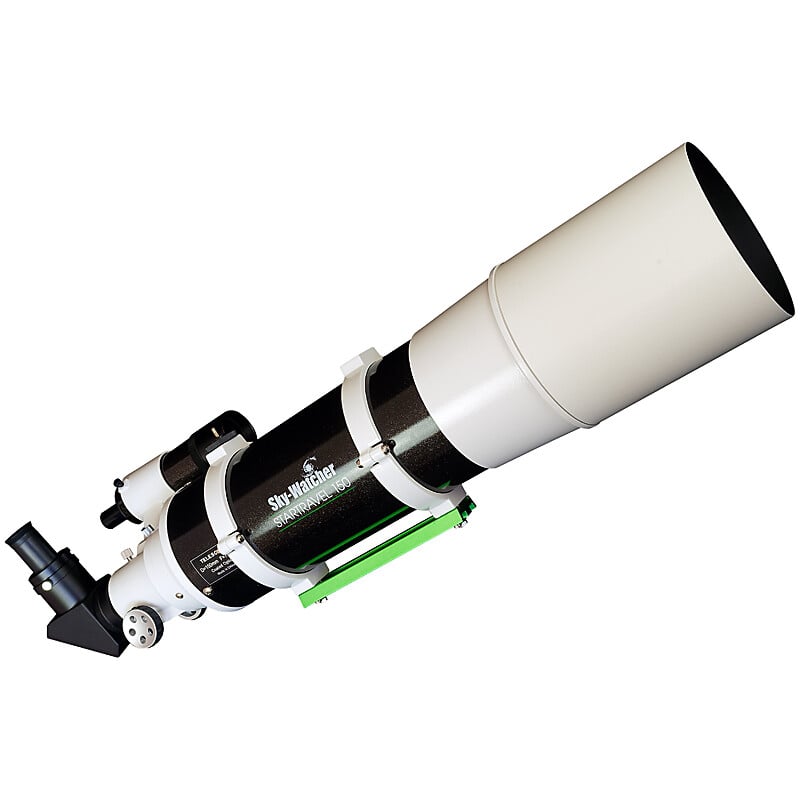
Included in the box
- Sky-Watcher Startravel-150 Optical Tube Assembly (OTA, without mount)
- Included eyepieces and finder (see specifications)
- Free: Stargazer's Handbook by Telescoop.nl (16 pages, Dutch language)
Free Stargazers' Handbook
Every Sky-Watcher telescope from Telescoop.nl comes with our own Stargazer’s Handbook in the box. It’s a 16-page booklet that helps you get started on your first few nights: how to align the finder scope, what magnification to start with, why the image sometimes wobbles, and when a telescope does or doesn’t need to be collimated. It’s not a thick book—just the essentials you really need when you’re starting out.
Honest advice from observers
We sell and use the Sky-Watcher line ourselves. In our Sky-Watcher brand guide We'll explain which series are strong and which you'd rather skip. View the full range on our Sky-Watcher brand page. Order before 11:59 PM for fast delivery, in the Netherlands and Belgium.

Reviews
There are no reviews yet.