SkyWatcher telescopes have been known for years as reliable telescopes for both beginners As experienced observers, those who delve into the telescope merk and its functions will soon hear words of praise: good optics, sturdy & popular Dobsons, competitive price-quality. But in practice, as with Bresser, Celestron and Omegon, for example, there appears to be a clear difference between the strong lines and the models you get less pleasure from.
This blog is based on what we see and hear from customers on a daily/weekly basis, what the international community says, and where SkyWatcher really excels ... and where it doesn't. Below you will find a breakdown for each model.
SkyWatcher Heritage: Skywatcher telescopes with surprising content
The Heritage series and especially the 130P and 150P have been a favorite for some time within the beginner community as well as among experienced observers looking for a second, lightweight telescope (or who once started with them). The appeal lies not only in the low price but also, and especially, in the optics. The parabolic mirror delivers images that you would normally only find in more expensive models.
Anyone looking through a Heritage for the first time immediately understands why these scopes receive so much praise. Saturn shows its rings clearly, but more clearly with the 150p. Jupiter shows more than just cloud bands, and the Orion Nebula finally takes on the shape you recognize in photographs. This is exactly the kind of experience that gets a beginner excited, and it happens more often with Heritage scopes than with almost any other telescope in the same price range.
Do you want to know exactly what you see through the 130P, what its limits are, and what accessories come with it? Then read our extensive Heritage 130P review.
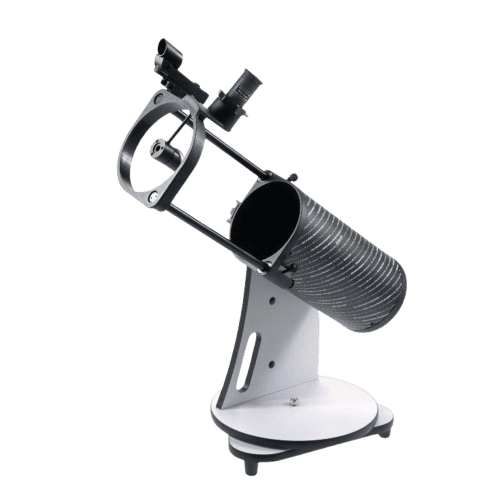
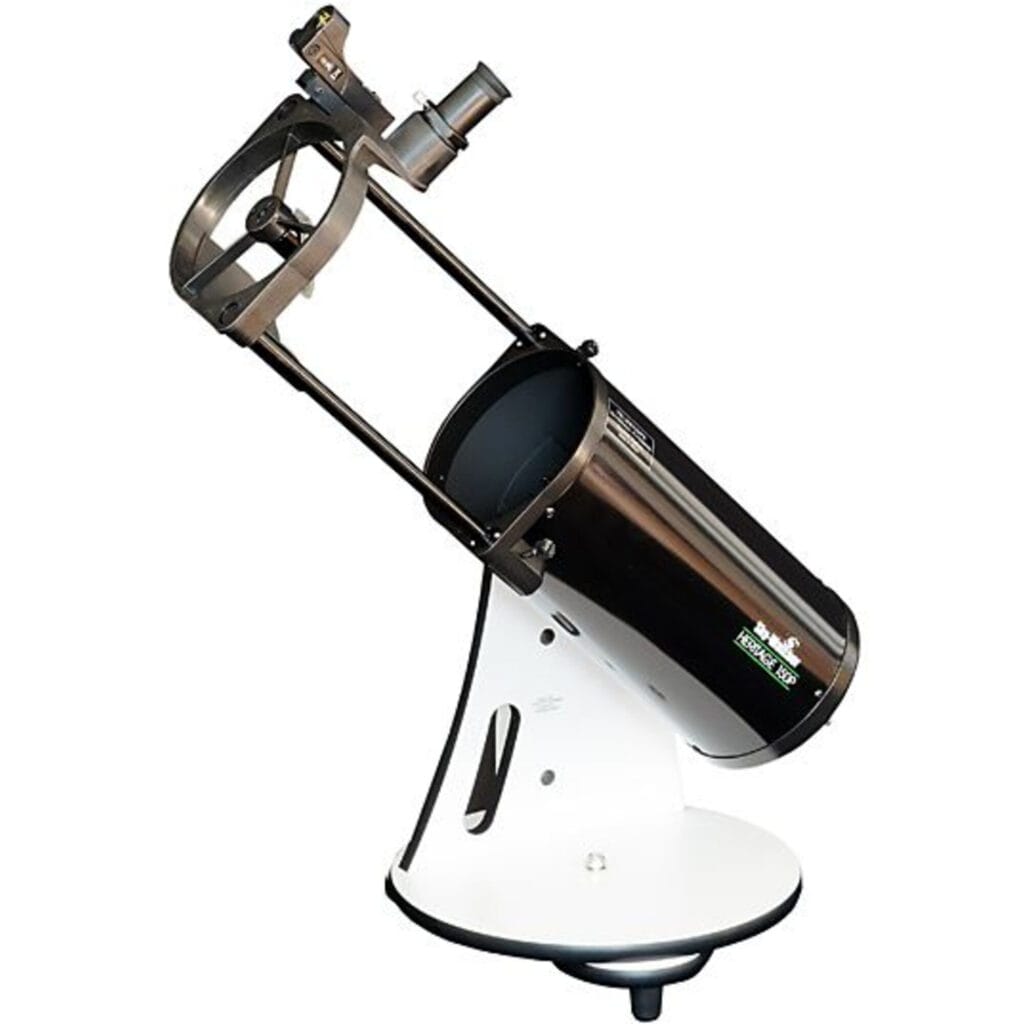
The charm of the Heritage also lies in its design. The foldable tube makes it extremely portable and practical for travel or frequent setups, but it also means the tube is open. In practice, this means you'll see slightly more light pollution in urban environments and occasionally have to collimate. These are no big deal, as long as you know what you are buying. What you get in return is a viewer that you literally carry in one hand and yet gives excellent images you won't soon forget.
The Heritage models are therefore known as the best telescopes under €300-€400 for good reason, offering an unprecedented combination of mobility, light output and optical quality. And above all, they provide an image of planets and nebulae that motivates you to go further.
SkyWatcher Classic series: the powerhouses and telescopes for life

The Classic Dobsons form the backbone of SkyWatcher's reputation. These are the telescopes that hobbyists worldwide repeatedly return to, and are not without reason called telescopes for life by experts. The reason is simple: you get huge aperture, a stable telescope, and simply good quality optics. With Dobsons, you get the most aperture for the money spent. Where the Heritage models are compact, the Classics are more serious instruments and can last a lifetime.
The 150/1200 and 200/1200 have been bestsellers for years because they do exactly what a telescope should do: gather as much light as possible and bring that light to your eye as cleanly as possible. The 200 mm Dobson has become an icon. Not only do you see Jupiter sharply, you also see more subtle details such as color differences in the bands of clouds and shadows of moons drawing little black dots on the planet...Saturn's rings are also very visible. Deep-sky objects (i.e., galaxies and gas clouds, or nebulae) really come alive with these models.
The mount is just as important. The wooden Dobson base is not high-tech, but that is exactly why it works. It stands firmly, vibrates minimally and tracks smoothly. For beginners, that makes the difference between “awkward aiming” and “oh, this actually makes perfect sense.” For advanced users, it means these scopes will last and perform for years!
A Classic Dobson is neither compact nor light, but that is not what you buy it for. You buy it because it delivers optically what others promise only on the box.... Should you have the money and space, we recommend: this is a no-brainer! If you want a cheaper alternative, then the Omegon an excellent choice.
SkyWatcher telescopes: the SkyMax series, planets at their best
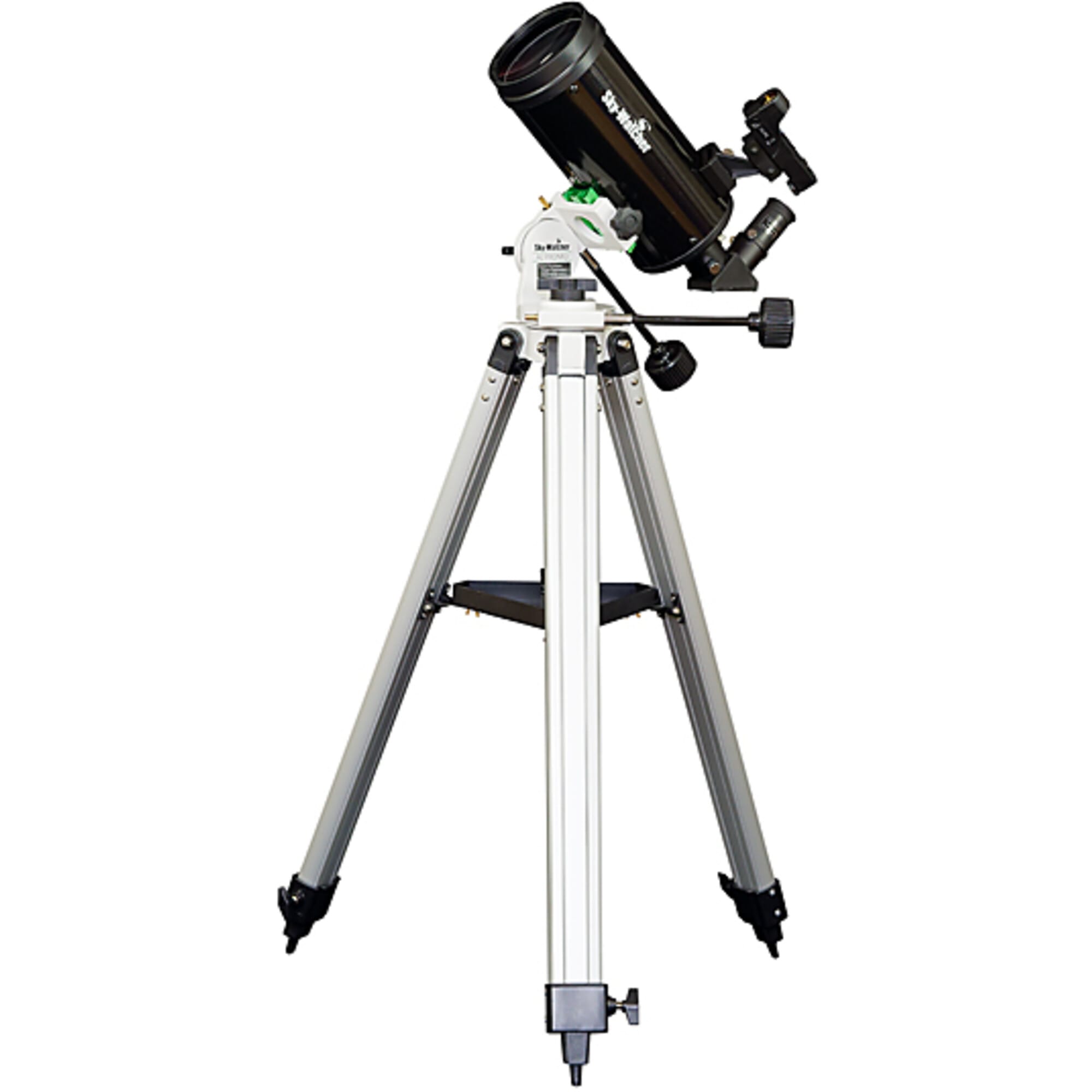
The SkyMax series, the Maksutov-Cassegrains, These are perhaps the most underrated line within SkyWatcher. They are built for something else: planets and stars. You can choose between automatic search & tracking, or manual search, or via an app. They have it all!
The long focal lengths of the SkyMax models make magnifications of 150x to 200x easily achievable without the image becoming blurry. The tube is closed, resulting in a calmer image that is less susceptible to dust and moisture. This makes a SkyMax a favorite among observers who are not interested in large Dobsons but want to see everything Saturn, Jupiter, Mars/Venus, and the Moon have to offer.
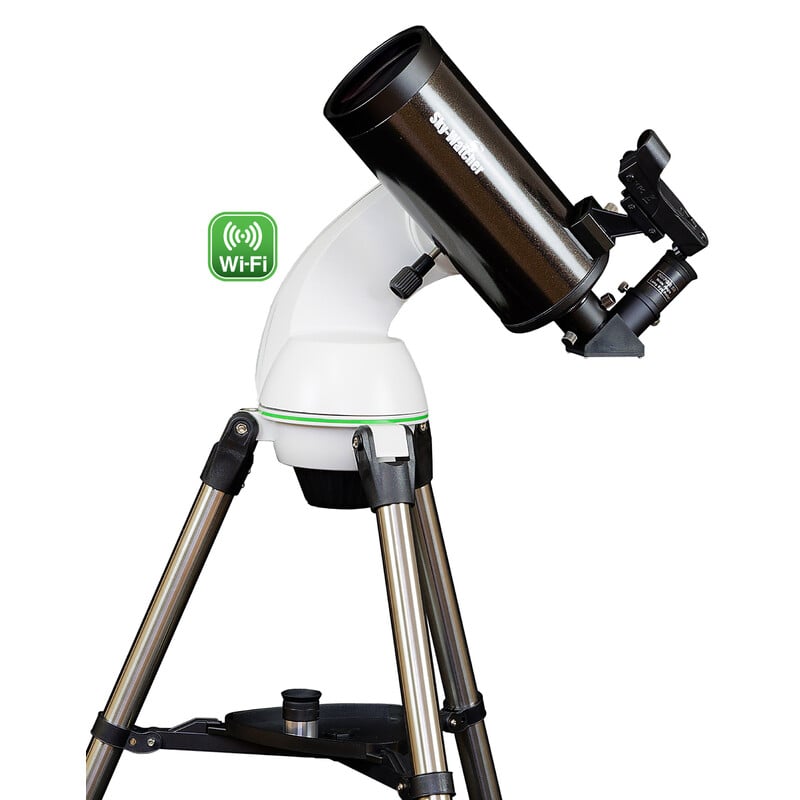

A SkyMax 102 or 127 The Moon with its razor-sharp craters, surprising with details you've really never seen before, is a bit like walking on the Moon yourself. It shows on Jupiter small dark knots, shadows and color differences that are cheaper to make than on the Moon. refractors lost. Jupiter itself can also be seen very well with it; after all, Maksutovs are renowned for their quality when it comes to planets. For double stars, such as Albireo or Castor, these Maksutovs are even difficult to beat in their price range.
Of course, this telescope also has its own ‘disadvantages. Namely, a Maksutov has a narrower field of view, which makes large nebulae or open star clusters less prominent. Those objects are in fact very large, and so you can see less of them at once. But if you are primarily looking at planetary objects, you will get more sharpness than with any Newton or refractor of the same price range. You can also expand the Go-To Skymax telescope with a astrocamera.
Skywatcher telescopes, entry-level refractors: optics that are better than the tripod suggests
The biggest misconception about SkyWatcher comes from their entry-level refractors, usually supplied on an AZ2 or AZ3 mount. The lenses in these scopes are often not bad at all. The 70/700 and 90/900 have usable optics for moon and planets. The problems arise elsewhere: in the accessories.
The tripod is usually the weakest point. Aluminum legs with thin joints vibrate at the slightest touch, making focusing a frustrating experience. The image jumps, wobbles or blurs just as you try to bring Saturn into focus. The included diagonals and eyepieces add to this: they are designed to make the set appear “complete,” but limit the true potential of the lens.

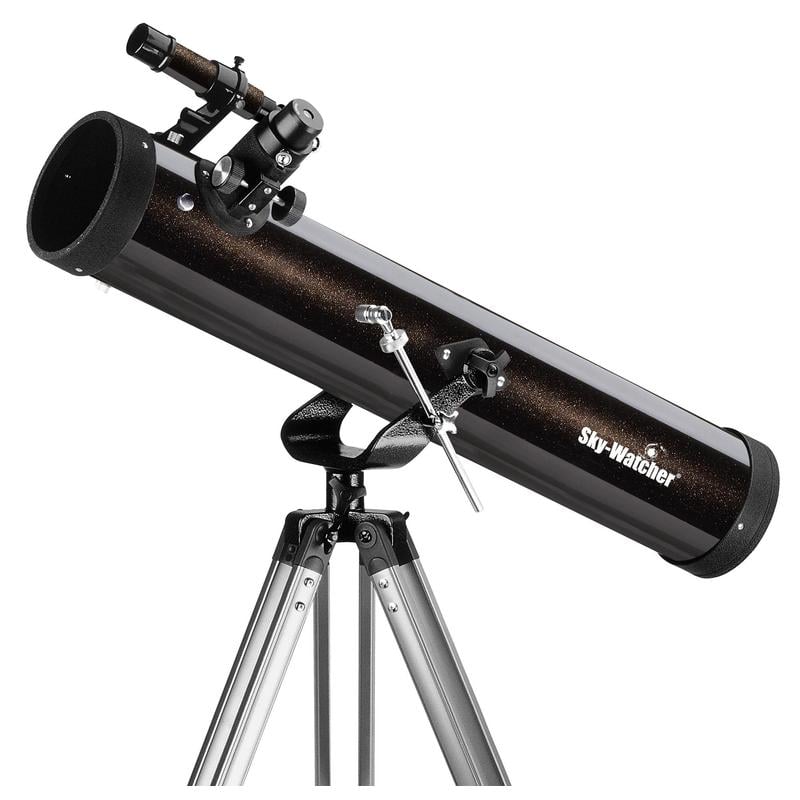
This leads beginners to think that stargazing is more difficult than it is, when in reality the problem lies with the tripod. A 90/900 on a stable tripod does remarkably well. But those who buy only an AZ2 set rarely retain pleasure.
So entry-level refractors can certainly work, and we see many satisfied users, but only with realistic expectations: the moon fantastic, Jupiter and Saturn bright but modest in detail, deep-sky limited to bright nebulous spots. The optics suffice, the tripod inhibits.
Our experience as specialists
When you spend years working with SkyWatcher telescopes on a daily basis, certain patterns stand out that exactly match what the international community has been saying for years. Without question, the Dobson models are at the heart of the brand's reputation. They are optically reliable, consistently deliver clear images and remain mechanically stable even when used heavily. It's the reason they remain so hugely popular. Our advice is: just buy the biggest Dobson that fits your budget and situation.
The compact Heritage viewers deserve their own place in that picture. Despite their modest size, they perform optically above their price range. For many beginners, this is the first telescope where they are truly surprised by what is possible, and that experience is exactly what you need as a beginner.
The Evostar line often gets less attention than it deserves. For those primarily viewing planets, these refractors offer a sharp and quiet image that you normally only encounter in more expensive systems. It is a series that does its work quietly, but that makes it well suited precisely for observers who want to see detail without fuss.
As you have read, not all SkyWatcher telescope series are created equal. The entry-level refractors have optics that are functional and usable, but are held back by their tripod. This is not a shortcoming of the lens, but rather of a tripod that is not stable. Also, the standard eyepieces are usually sufficient for the first few months, but soon prompt users to upgrade once they gain more experience and their expectations grow.
What we recommend
If you want to buy a SkyWatcher telescope and you want value for money, there is one line that almost always gives the best results: the Dobson series. Both the Classic and the Heritage. Within that series, you simply choose the model that fits your budget. The bigger the mirror, the more you see, and that rule applies to Dobson telescopes from renowned brands, almost perfectly reliable.
For those who are just starting out but want to take a serious look, the Heritage 130P or Heritage 150P the best compact choice. They are light, quickly ready for use and optically surprisingly strong. They are scopes that immediately show what stargazing is all about.
If you have more budget and space, always go for a Classic Dobson. The 150/1200 is an excellent all-rounder, while the 200/1200 is the well-known “sweet spot”: big enough for impressive deep-sky and sharp enough for planets. Anything above that 200 mm delivers even more image, as long as you're willing to factor size into your decision.
Briefly:
Buy the biggest Dobson you can afford and have practical use for. With SkyWatcher, that is without exception the best ratio of price to performance. Heritage if you want compact. Classic if you want maximum image quality. That way you avoid disappointment and get a telescope that will last you for years.
Ready to choose? View the full Sky-Watcher range in our webshop, first read our complete Buyer's guide for beginners If you're still deciding between brands and types.