Looking for an honest Sky-Watcher Heritage 130P reviewThen you're in the right place. The Sky-Watcher Heritage 130P FlexTube is one of the best-selling telescopes in our store. It's compact, affordable, and optically surprisingly powerful. But it also has a few clear limitations. In this review, you'll read what you can really see through this telescope, who it is and isn't suitable for, and which accessories make a difference. Based on our own experience and the feedback from hundreds of customers.

Our judgment in brief
Score: 4.5 / 5. In our opinion, the Heritage 130P is the best telescope under €300 for visual observation. The 130 mm parabolic mirror delivers images you'd normally only find in more expensive models. Its collapsible FlexTube design makes it uniquely portable. The drawbacks are minor but fair: you'll need a table or stool, the open tube catches stray light in the city, and the focuser is basic. For beginners, families, and travelers, this is a top choice. Check the current price and delivery time at Product page for the Heritage 130P.
Who is the Heritage 130P for?
Well suited for: Beginners who want to start seriously without technology. Families with children who want to watch together. Travelers and balcony observers looking for a compact telescope. Advanced users who want a lightweight second telescope.
Not suitable for: astrophotographers. This is a visual instrument. Do you want to take pictures of nebulae and galaxies? Then look at the smart telescopes. Are you looking for the best possible image quality and do you have the space? Then a larger Dobson from our Dobson assortment the better choice.
Heritage 130P Review: What Can You Really See Through It?
The 130 mm aperture captures over 300% more light than the human eye. The primary mirror has a parabolic shape. This is not a given in this price range, and you can see the difference immediately. The borosilicate glass mirror also features Sky-Watchers’ RAQ™ coating for extra contrast.
- The moon: razor-sharp craters, mountain ranges, and shadow lines along the terminator. This remains the most popular target, and rightly so.
- Saturn: The rings are clearly visible, separate from the planet.
- Jupiter: bands of clouds and the four large moons, which you can see shifting from night to night.
- Deep-sky: The Orion Nebula really comes into view, the Pleiades fill the field of view, and under a dark sky you can find the Andromeda Nebula and bright star clusters.
The short focal length of 650 mm (f/5) provides a wide field of view. This makes finding objects easy and large objects like star clusters extra impressive. The realistic maximum magnification in practice is around 200x under good conditions.
The FlexTube Design: The Big Advantage
When retracted, the telescope is only 37 cm high. This allows it to fit in a backpack, suitcase, or closet. The complete instrument weighs about 6 kilos. Extending it literally takes seconds: pull the rods up and you are ready. For a telescope with this aperture, nothing like it can be found on the market.

The design has one notable drawback: the tube is open. As a result, in the city, you’ll pick up a bit more stray light from streetlights. A homemade or store-bought light shroud largely solves this problem. Dust and dew also reach the mirror more easily, so store it with the tube retracted.
Operation: Place and watch
The tabletop Dobson mount is the secret behind its ease of use. No tripod, no electronics, no batteries. You place the telescope on a garden table or sturdy stool, aim it with the red-dot finder, and look through it. The movements are smooth and intuitive. Kids get the hang of it in a minute.
Please note: you’ll always need a stable mount. Sitting on the ground next to it is awkward. And like any Newtonian reflector, it needs to be collimated (aligning the mirrors) from time to time. That sounds more complicated than it is. With a Cheshire eyepiece, you can learn how to do it in a single evening, and our Telescope Buying Guide for Beginners explains the basis.
What's in the box, and what are you missing?
Included: a 25 mm eyepiece (26x magnification, for a general view), a 10 mm eyepiece (65x, for detail), a red-dot finder, and a collimation cap. With these, you can get started right away on your first night. The complete technical specifications can be found at the Official Sky-Watcher Product Page.
Two additions complete this telescope. A short eyepiece of around 6mm brings the magnification to over 100x. That's when you can truly extract detail from the moon and planets. We recommend the Sky-Watcher 6mm Planetary UWA Eyepiece. To align the mirrors, you need to Sky-Watcher Cheshire Collimation Eyepiece the simplest and most reliable solution.
Pros and cons at a glance
| Plus points | Cons |
|---|---|
| Parabolic mirror: top optics in this price range | Table or stool needed as a surface |
| Retracted to only 37 cm: fits in a backpack | Open pipe catches stray light in the city |
| Ready to use in less than a minute | Simple helical focuser |
| Complete package: two eyepieces, viewfinder, collimation cap | Not suitable for serious astrophotography |
| Light (approx. 6 kg) and without electronics or batteries | Regular collimation is part of the process |
The Heritage 130P—or maybe a different model?
Are you unsure about the bigger brother? The Sky-Watcher Heritage 150P FlexTube features the same design with a 150 mm mirror. That extra aperture delivers noticeably more detail, at a higher price and with slightly more volume. Are you looking for something on a smaller budget? Then check out our guide to The best telescopes under €300. Want to learn more about the brand? Read our honest guide to Sky-Watcher telescopes or view the complete range at Sky-Watcher brand page.
Price and availability
The Sky-Watcher Heritage 130P FlexTube costs €265 with us. Due to its popularity, it is often only available for backorder. On the product page You see the current status, and you can always ask us about the delivery time. You order with a 30-day reflection period and advice from personal experience. Our Belgian customers also order easily, with Bancontact and delivery within two working days.
Frequently Asked Questions about the Heritage 130P
Is the Heritage 130P suitable for beginners?
Yes, this is one of the best beginner telescopes out there. You don't need any technical knowledge: set it up, point it, and look. The optical quality ensures that your first observations are immediately motivating.
Can I take photos with the Heritage 130P?
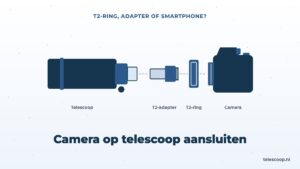
Quick photos of the moon with a smartphone adapter work fine. This telescope is not designed for serious astrophotography. Smart telescopes or a setup with a tracking mount are more suitable for that.
Do I need to collimate the Heritage 130P?
Yes, like any Newtonian reflector. With the collapsible tube, you best check the alignment for each session. This is done in a few minutes with the included collimation cap or a Cheshire eyepiece.
What's the difference with the Heritage 150P?
The 150P has a 150 mm mirror instead of 130 mm. This allows it to capture more light and show more detail, but it is larger and more expensive. The design and operation are otherwise virtually identical.
Conclusion: deserved bestseller
The Sky-Watcher Heritage 130P FlexTube fully deserves its reputation. Nowhere else do you get this combination of optical quality, portability, and ease of use for this money. The drawbacks are known and manageable. Anyone who wants to do visual stargazing and stay under €300 can't make a better choice, in our opinion. Check out the Heritage 130P on our product page of loop first our telescopes for beginners so if you're still doubting.