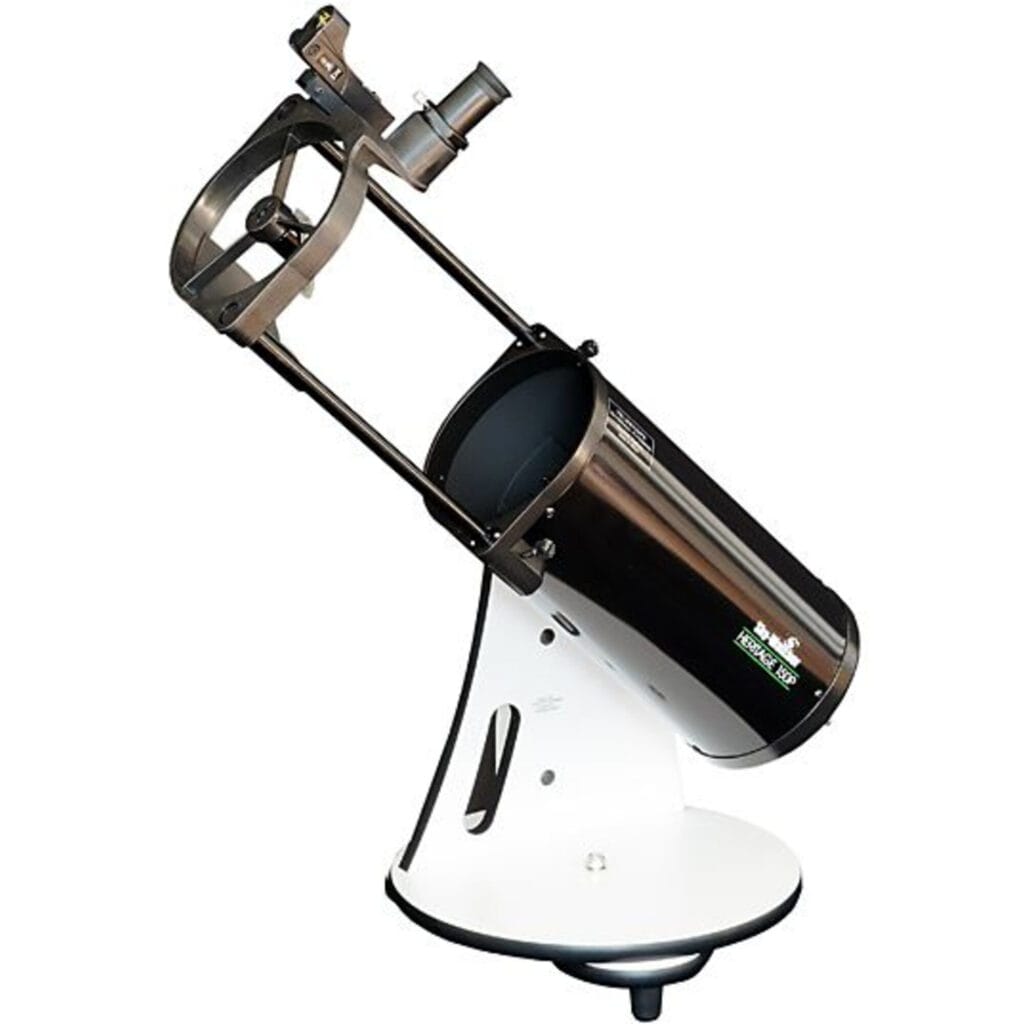
The Heritage 130P vs 150PThis is the most commonly asked choice question around our best-selling table-top Dobsonians. Both telescopes share the same clever FlexTube design and the same optical quality. The difference lies in two things: mirror size and format. In this comparison, we'll put them side-by-side fairly, based on our own experience and what customers tell us. By the end, you'll know exactly which of the two is right for your situation.
Still unsure between these models? We are stargazers ourselves and happy to help.
Send us a WhatsApp messageWe reply on weekdays between 9:00 and 17:00.

The short answer
Choose the Heritage 150P if you have the budget and the slightly larger size isn't a problem. The 150 mm mirror captures about 33% more light than the 130 mm model, and you can see that difference in every object. Choose the Heritage 130P whether maximum portability or the lowest price is a priority. You can't really go wrong: they're the same telescopes in two sizes.
Heritage 130P vs 150P: The Comparison Table
| Heritage 130P | Heritage 150P | |
|---|---|---|
| Mirror opening | 130 mm (5.1″) | 150 mm (6″) |
| Focal length | 650 mm (f/5) | 750 mm (f/5) |
| Light output | Reference | ± 33% more light |
| Eyepiece magnification | 26x and 65x | 30x and 75x |
| Total weight | ± 6.1 kg | ± 8.5 kg |
| Mount | Table-Dobson, manual | Table-Dobson, manual |
| Foldable (FlexTube) | Yes | Yes |
| Included | 25 & 10 mm eyepiece, red-dot finder, collimation cap | 25 & 10 mm eyepiece, red-dot finder, collimation cap |
| Price | €265 | €345 |
What is the same?
More than you might think. Both telescopes have a borosilicate glass parabolic primary mirror with Sky-Watcher's RAQ™ coating. Both are f/5, so with a wide field of view. Both are on the same manual tabletop Dobsonian mount and have the collapsible FlexTube design. The included package is identical: two eyepieces, a red-dot finder, and a collimation cap. The operation also feels the same: place it on a table, point, and look.

Difference 1: What you see
This is the most important difference. The 150 mm mirror captures about a third more light than the 130 mm. In practice, that means: Saturn shows its rings more clearly, star clusters resolve further into individual stars, and nebulae show more structure. Objects that are “just visible” in the 130P become “clearly visible” in the 150P. With reflecting telescopes, aperture is simply the most important factor: every extra millimeter of glass is a gain that no eyepiece can compensate for.
Honestly, the difference is a step, not a world of difference. Anyone looking through the 130P will not lack anything for a great first experience. What you see exactly through the smaller of the two, you can read in our extensive Heritage 130P review.
Difference 2: Size and weight
The 130P weighs about 6 kilos complete and is only 37 cm high when retracted. That is backpack size. The 150P weighs about 8.5 kilos and is a size larger in every direction. Still very portable, but more “car back seat” than “backpack”. Do you often take the telescope on trips, to the balcony, or to a dark spot outside the city? Then every kilo counts. Will it mainly stay in the garden or in one fixed spot? Then the weight difference is negligible.
Difference 3: The Price
The 130P costs €265, the 150P costs €345. The difference is €80. Converted, you pay that €80 for a third more light, and in the telescope world that is an excellent deal. By comparison: that same jump in image quality via better eyepieces costs you more and yields less. If the budget allows, the 150P is therefore the better buy per euro.
For whom is which?
Choose the Heritage 130P if: your budget is around €250 to €300, you take the telescope with you often (travel, balcony, camping), or you are buying it for a child or as a gift. View the Heritage 130P on our product page.
Choose the Heritage 150P if: If you want the best images from this series, primarily use the telescope at home, and don't mind paying an extra €80. Check out the Heritage 150P on our product page.
Choose neither if: If you're looking for the best possible image quality and have room for a larger instrument, then an 8-inch floor-standing model from our Dobson assortment the logical step. And do you want to take photos instead of watching? Then you've come to the right smart telescopes better.
Frequently Asked Questions
Is the 150P harder to use than the 130P?
No. The operation is identical: set it up, aim with the red-dot finder, and look. The only practical difference is that the 150P lifts slightly more and requires a bit more storage space.
Do both models require a table or riser?
Yes. They are both tabletop Dobsons. A sturdy garden table, stool, or chest is sufficient. Sitting on the ground next to it is awkward.
Are the accessories interchangeable?
Yes. Both use 1.25″ eyepieces and the same collimation tools. An extra eyepiece or Cheshire collimator that you buy for one will also fit the other.
Conclusion
The Heritage 130P and 150P are the same excellent telescope in two sizes. Our rule of thumb is that of any Dobsonian buyer: get the largest one your budget and situation allow. For most hesitant buyers, that is the 150Pthe €80 extra pays for itself every clear night. If portability or price carries more weight, then the 130P a choice you won't regret either. Still unsure about the brand or the series? Then read our honest guide about Sky-Watcher telescopes or view the full range on the Sky-Watcher brand page.
Have you chosen? Then read which one accessories for your Heritage 130P and 150P Making the biggest difference, starting with a laser collimator. If you are unsure about the step up to 8 inches, then this helps. Skyliner 200P vs Omegon Advanced X 203 you further. All Heritage models are on the Sky-Watcher brand page.