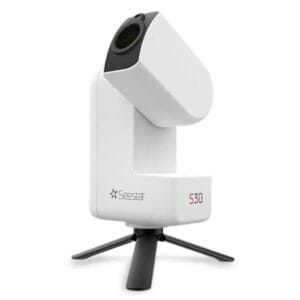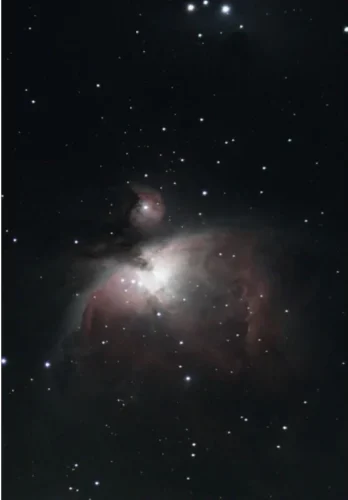
Update October 2026: Both devices in this comparison are no longer available. The Seestar S50 has been replaced by the Seestar S50 Pro; how it handles the DWARF 3 you can read in Seestar S50 Pro vs DWARF 3. The DWARF 3 is no longer being produced: if you are looking for a compact DWARF, look at the DWARF Mini, and if you want more details, go to DWARF Draco. The comparison below is for those who already have one of these or are considering buying a second-hand one.
We so often get the question: DWARF 3 vs Seestar S50, which one should we choose?
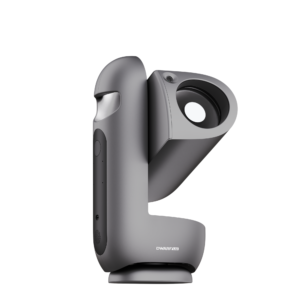
The DWARF 3 and the Seestar S50 are both smart telescopes on paper, but in practice they serve two completely different types of users. Where one is all about freedom, control and wide images, the other focuses on instant results and detail.
Still unsure between these models? We are stargazers ourselves and happy to help.
Send us a WhatsApp messageWe reply on weekdays between 9:00 and 17:00.
DWARF 3 vs. Seestar S50: Price and what you can do with it right away
The DWARF 3 cost €529 with us and came with a travel case, sun filters and a large 10,000 mAh battery. A tripod is missing, so you have to add that yourself before you can start.
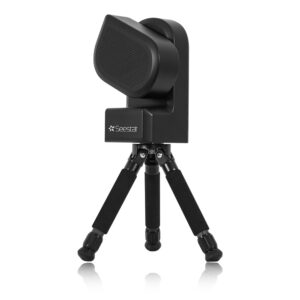
The Seestar S50 was something above that price for us, around €629, but on the other hand, you could get started right out of the box. A tripod, solar filter, travel bag, and 64 GB of internal storage were all included.
What immediately stands out: the DWARF 3 is better equipped for longer sessions thanks to the larger battery and 128 GB storage, whereas the Seestar was attractive precisely because of the complete set included in the box. Those who don’t want to fiddle with the individual components felt more at home with the Seestar S50.
DWARF 3 vs. Seestar S50: Optics and character of both telescopes
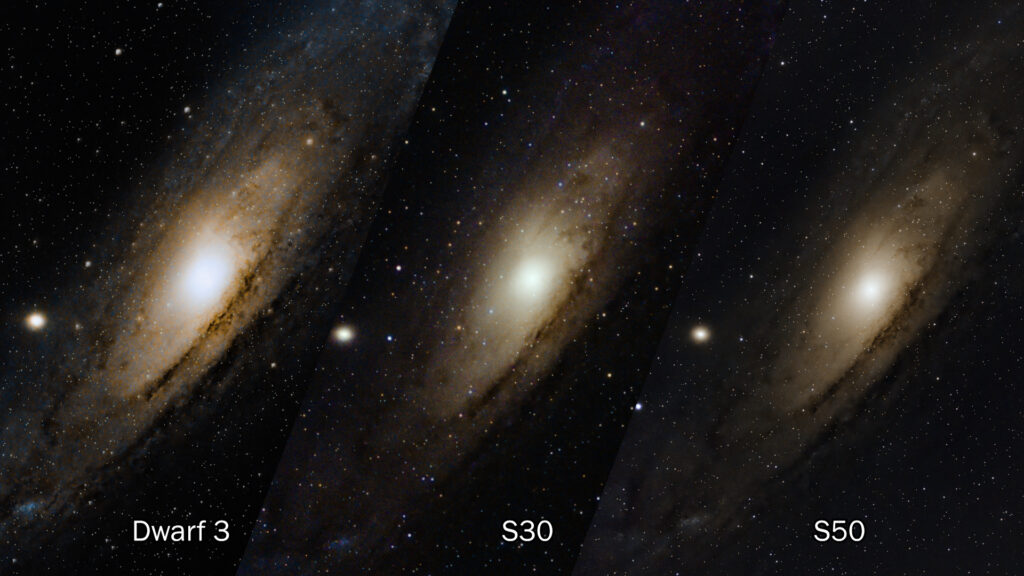
The DWARF 3 works with a 35mm telephoto lens and a modern 8.3-megapixel Sony IMX678 sensor. This provides a wide field of view, making large objects like the Andromeda Galaxy beautifully showcased.
The Seestar S50 takes a very different direction: a focal length of 250 mm and a 2 megapixel IMX462 sensor. That sounds lower in megapixels, but the longer focal length actually makes small objects appear sharper and more detailed.
In practice, you see that difference immediately. The DWARF 3 feels like a wide-angle camera that opens up the sky. The Seestar S50 feels like a telephoto lens that brings you closer to the action.
Solar photography: two styles of the same subject
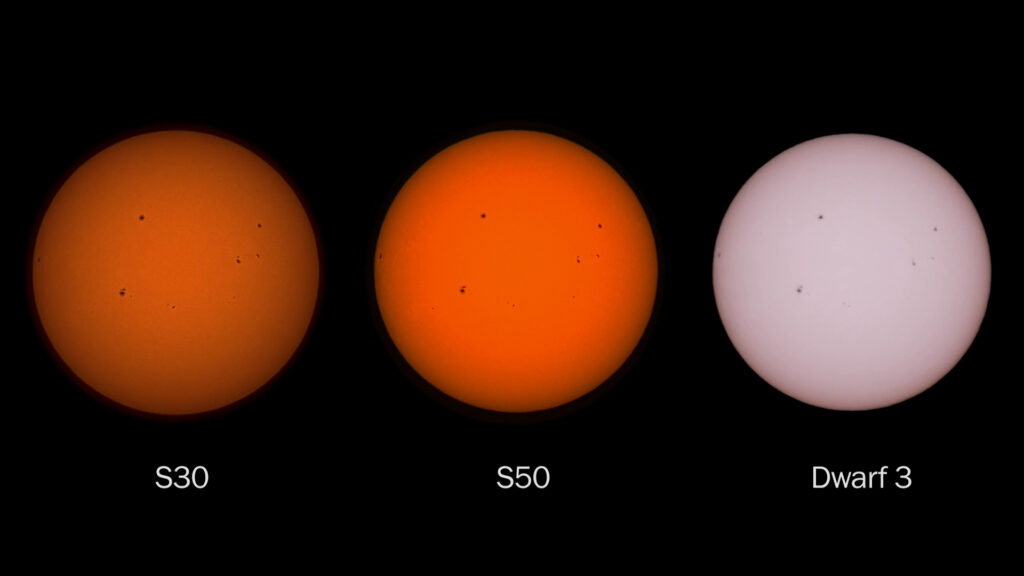
Both the DWARF 3 and the Seestar S50 come standard with a solar filter, making them both suitable for photographing sunspots. With the DWARF 3, you click the filter on magnetically, very quickly and intuitively, and the app lets you move through the image immediately.
The Seestar S50 delivers slightly more brightness and contrast, making sunspots stand out just a bit sharper. Those who like the fact that the camera automatically focuses and shows a nice image right away will immediately like that difference.
Moon observation: detail vs. flexibility
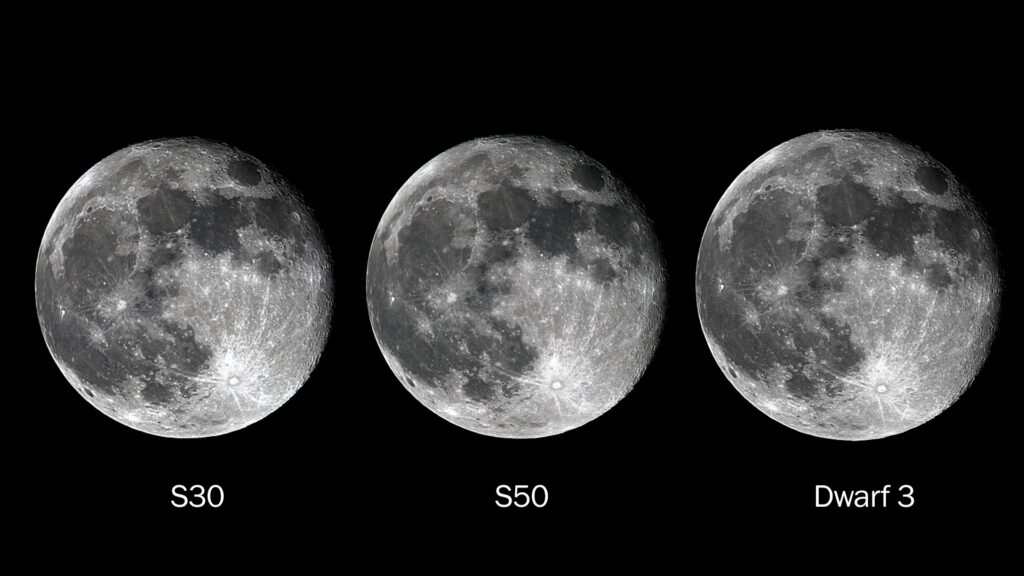
Both models provide strong, automatically stacked images of the moon. The Seestar S50 shows just a little more detail in crater walls and terminator lines thanks to its larger aperture.
The DWARF 3 compensates for that with flexibility. You can adjust settings, vary exposures, and the automatic tracking combines steadiness with more control over your final photo.
Therefore, the Seestar S50 feels more like “click and enjoy,” while the DWARF 3 offers more room to play with settings and editing.
Deep-sky astrophotography
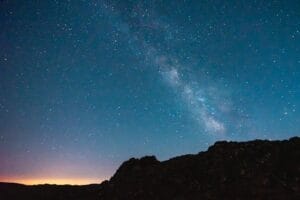
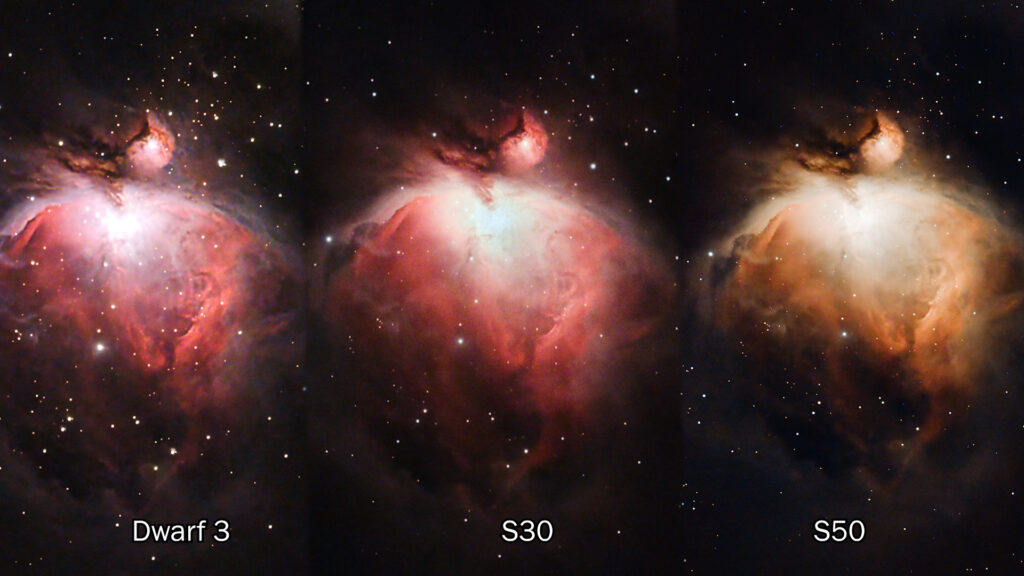
Once you venture into deep sky objects, nebulae, star clusters, galaxies, the DWARF 3 really comes into its own. This is because you can use the DWARF 3 in EQ mode, allowing for longer exposures without field rotation. The longer you can expose, the more nebula structure becomes visible! Scroll down for the examples.
With the Seestar S50, there is no such option. The telescope operates in Alt-Az setup and is therefore limited to short exposures of 10-30 seconds. In urban areas, this actually often produces neat, sharp stars, but in long sessions you lose detail due to field rotation.
In tests on objects such as the Andromeda Nebula, the Heart Nebula and the Pleiades, the DWARF 3 clearly showed deeper structures and more subtle details. In contrast, the Seestar gave more compact objects a surprisingly sharp appearance.
Dwarf 3 vs. Seestar S50: the planets
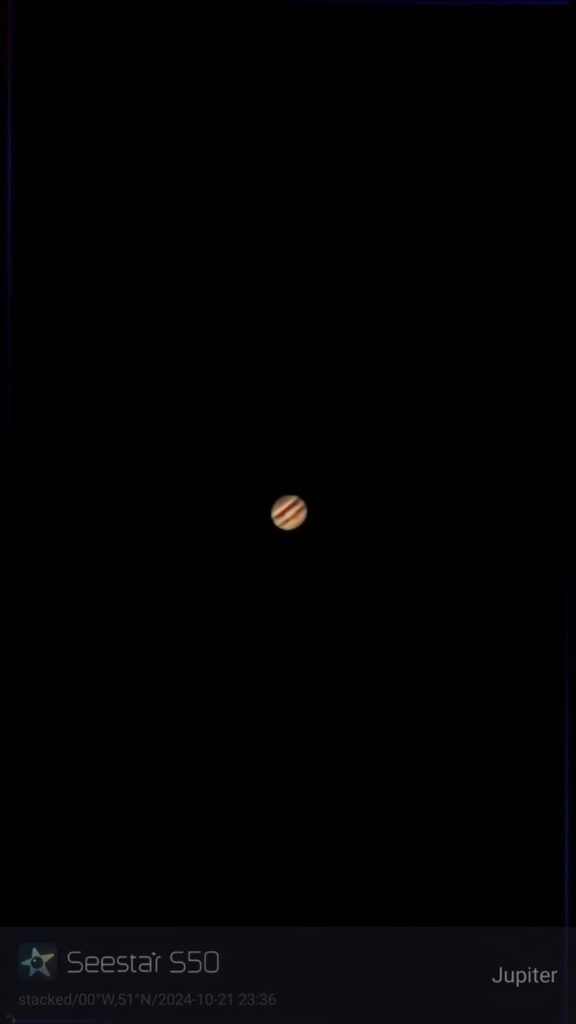
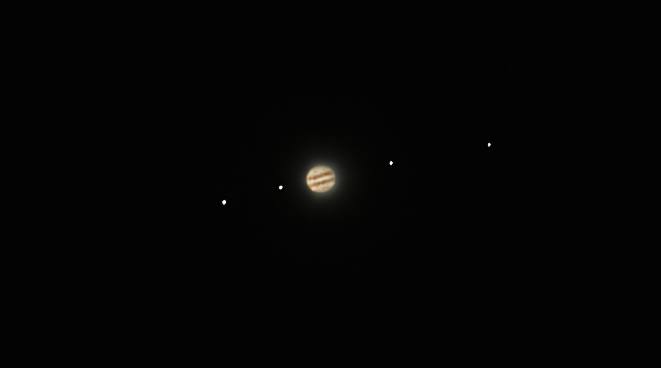
Both smart scopes are not made for planets, of course. They have a far too short focal length to deliver really good results. But for a beginner, the results below can already be quite something.
So we really want to emphasize that they are not made for planets. The pictures below were taken by experienced astrophotographers to test the limits of these two smart scopes.
User experience and apps
Anyone using the DWARF 3 will quickly realize that you have an instrument in your hands that invites you to learn. You move with a virtual joystick, set filters, and have access to tracking modes normally found only on larger setups. That gives freedom, but also requires just a little more patience.
The Seestar S50 is built precisely for simplicity. You open the app, choose an object, and within seconds everything is automatic: focusing, tracking, stacking. You can see the results quickly, without thinking about settings.
Filters, formats and storage
Both telescopes are equipped with useful built-in filters for astrophotography in light-polluted environments. The DWARF 3 offers multiple adjustable filters: a VIS filter for daytime, a Astro-filter for night use and a Duoband filter for emission nebulae such as the Heart and Veil Nebulae. The Seestar S50 also includes as standard a internal Duoband filter, which is essential for isolating hydrogen and oxygen emission in deep-sky objects.
In terms of storage, the DWARF 3 with 128 GB a clear advantage over the 64 GB of the Seestar S50. Both models support RAW formats such as FITS and AVI, and offer live stacking, but the DWARF 3 also allows for manual processing of individual frames which gives advanced photographers more control over image quality.
Final score: DWARF 3 vs Seestar S50
| Aspect | Winner |
|---|---|
| Wide angle & wide objects | DWARF 3 |
| Detail & sharpness | Seestar S50 |
| Battery & storage | DWARF 3 |
| Ease of use | Seestar S50 |
| Astrophotography potential | DWARF 3 |
| Suitable for beginners | Both |
| Still for sale today | Both no longer available; successors: DWARF Mini and Seestar S50 Pro |
The Seestar S50 was ideal for those who want to see beautiful results quickly without technical settings.
The DWARF 3 is perfect for those who want to go a step further, including EQ mode, more control and wider sky objects.
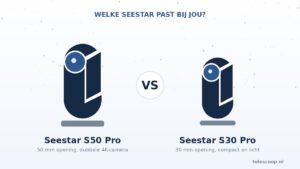
Important to know: The S50 is no longer available. If you want the detailed benefits of the S50, its successor is the Seestar S50 Pro the choice; the comparison with the DWARF 3 is given in Seestar S50 Pro vs DWARF 3. If you are primarily looking for the Seestar convenience in a smaller device, check out the Seestar S30 Pro. The full range can be found in our category. smart telescopes.
More comparisons to help you further
- DWARF 3 vs DWARF Mini: Do you stay with DWARFLAB? This way you can choose between the all-rounder and the compact deep-sky specialist.
- DWARF 3 vs Seestar S30 Pro: The DWARF 3 versus the compact Seestar with 4K image and wide-angle camera.
- Dwarf Mini vs. Seestar S30The instape segment, two 30 mm scopes with a completely different approach.
- All current models side-by-side? Check out our category smart telescopes.