The starry sky in October 2026 revolves around one planet: Saturn, which is in opposition on October 4 and is therefore at its brightest and largest throughout the month. There is plenty to see around this: a dark window of over a week around the new moon on October 10, Jupiter and Mars creeping towards each other in the morning, the Orionids on the mornings of October 21 and 22, and, after the end of summer on October 25, evenings that are completely dark as early as 19:00. You have to wait until early October for this. In this guide you will read about what you can see with the naked eye and what you should bring with you if you have binoculars or a telescope.
The Moon Phases of October 2026
The moon determines how dark your nights are, so plan your sessions around these dates:
| Last quarter | Saturday 3 October |
| New Moon | Saturday 10 October, 17:50 hours |
| First quarter | Sunday, October 18 |
| Full Moon (hunter's moon) | Monday 26 October, 05:12 (winter time) |
The full moon of October 26 is the hunter's moon: the first full moon after the harvest moon in September. Two days later, on October 28, the moon is at perigee, the point of its orbit closest to Earth (364,407 km). So these nights the moon appears slightly larger and brighter than usual. Want to look ahead to the rest of the year, with rising and moon names? You'll find them in our lunar calendar. If you are viewing the full moon through a telescope, use one moon filterWithout a filter, the image is so bright that your night vision is immediately lost.
Saturn in opposition: the planet of the month
On Sunday, October 4 at 14:29, Saturn will be in opposition: the Earth will be exactly between the sun and Saturn. That means three things for you as an observer. Saturn rises as the sun sets and remains in the sky all night. It is at its closest to Earth, over 1.26 billion kilometers, and is therefore at its brightest (magnitude +0.3) and largest (19.7 arcseconds). And around the opposition, the rings will glow a few days longer, because the ring particles then hide their own shadow right behind them.
You can find Saturn as a bright, yellowish “star” low in the east, in the border area between the Whale and the Fishes constellations. At the beginning of October it is at its highest around 01:35, about 40° above the southern horizon; at the end of October it is already around 22:40 (winter time). Preferably look at it late in the evening, when it is high and the view is quieter.
This year, the rings are particularly interesting. In 2025 they were almost at their side and were hardly visible for weeks. Since then, they have been tilting open again: in October 2026 we will see the rings at an angle of more than 7°. That is still narrow, but clearly recognizable as rings, and every year until 2032 the image will become more beautiful.
What do you see with it? With a 10x binoculars you can see that Saturn is not a round point but a long elongated spot: that is the rings. Any telescope with an aperture of about 70 mm or more shows the rings apart from the planet. With a Dobson telescope At 150 or 200 mm, you can also see the largest moon Titan as a “star” next to the planet in calm air; the shadow of the globe on the rings (which appears again in the weeks after opposition) and, on a good night, the dark Cassini division in the rings. Three tips: set your telescope outside half an hour beforehand so that the tube is at temperature; use a magnification between 100x and 200x; and wait until Saturn is high in the sky.
Anyone who has never looked at the planet before will get help on Saturday, October 24th: the nearly full moon (97%) will be about 6° from Saturn. Around 20:00 they will be high enough in the east to be easily found. In the same part of the sky, Neptune will be at its highest, having been in opposition on September 26th. With a magnitude of +7.8, you will need a telescope or a smart telescope for it, and in early October, without a distracting moon, it will be better to see it than on the day of the opposition itself.
The dark window: October 5 to 15
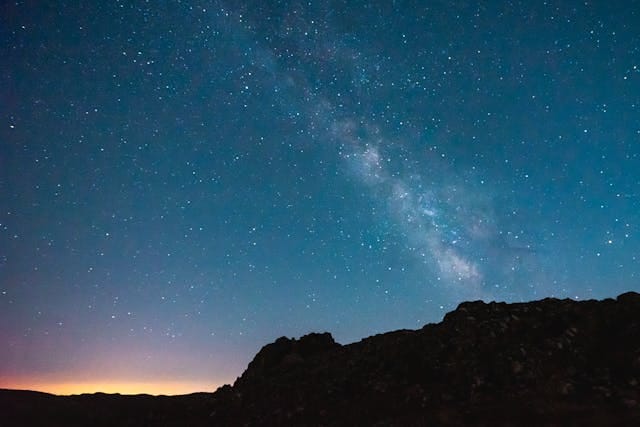
Around the new moon of October 10, the darkest nights of the month lie ahead, and that is the period for deep-sky observations. Early in the evening, the Milky Way still extends from the southwest through the zenith to the northeast, with the Swan high above you. Later in the evening, the autumn sky takes over: the Autumn Quadrant of Pegasus is in the south, Andromeda above it, and in the east the Pleiades appear, the first sign of the winter sky.
The Andromeda Nebula (M31) is better visible in October than in any other month. In early October it is almost at the zenith at around 01:30, at an altitude of 79°; in late October it is already around 22:45 (winter time). From a dark place, you can see it with the naked eye as a faint spot, with a astronomical binoculars As a long, bright-colored spot with a clear core, you can see the two companion galaxies M32 and M110 through a telescope. How to find it step by step can be read in our guide. View the Andromeda Nebula. Immediately next to it is the Triangulum Nebula (M33), one of the most difficult “easy” objects: large and faint, so look for it with binoculars or at the lowest magnification, and only under a really dark sky.
In Perseus is the Double Cluster (NGC 869 and 884): two open star clusters that fit in a single binoculars view and, at low magnification, are among the most beautiful autumn sights in a telescope. If you are in a really dark place and woke up early, you can see the zodiacal light in the east between about 5:00 and 6:00 a.m. This is a faint cone of light that runs obliquely up along the ecliptic. From October 8 onwards, you will no longer be bothered by the moon. October is one of the best months for this in the Netherlands and Belgium.
Another special target: on October 13, the asteroid Vesta will be in opposition, in the Whale, not far from Saturn. With a magnitude of +6.4, Vesta is the brightest asteroid and can be easily found with a regular binoculars. You do need a map or app though, because it looks like a regular star. Look for it for two consecutive nights and you will see it move between the stars.
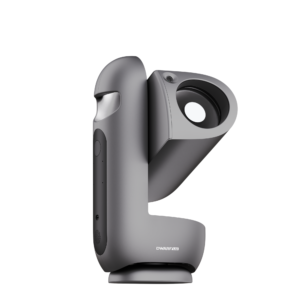
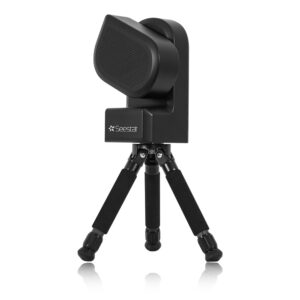
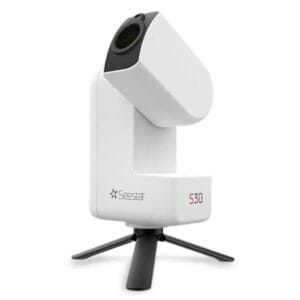
Do you want to capture M31, M33 and the Double Cluster instead of just looking at them? Then this window is the best time of the month for a good shot. smart telescope: more than a week without disturbing moonlight.
Jupiter and Mars in the morning, with the Moon on October 5 and 6
Jupiter is the brightest object of the late night (magnitude −1.7 to −1.9). It is located in Leo, just above Regulus, and rises around 3:00 am in early October; already by the end of October it will be rising around 0:30 am (winter time). On the morning of Tuesday 6 October, the waning lunar crescent (22%) will be at about 3° from Jupiter: look between 5:30 and 6:30 am in the east. With a telescope you can see the four Galilean moons as dots in a row, with a telescope the cloud bands.
Mars stands a little to the right of Jupiter in the sign of Cancer (at the end of October in Leo), and is still modest: magnitude +1.1 (at the end of October +0.9) and a disk of 5.5 to 6.5 arcseconds, too small for detail. On the morning of Monday, October 5, the Moon (32%) is about 1° away, a nice moment to learn to find Mars. Note how Mars shifts towards Jupiter during the rest of the month: on November 16 the two are about one degree apart, close to the Little Dipper. More about this in the November overview.
Venus and Mercury: not to be seen this month
Venus stood in September Still low in the evening twilight, but in October it cannot be seen from the Netherlands and Belgium: it sets from early October at the same time as or even before the sun sets. On Saturday 24 October at 05:45 Venus will be in a sub-conjunction: it will pass 40.8 million kilometers between the Earth and the Sun (6.5° south of the Sun, so no transit) and will change from the evening sky to the morning sky. Never point a telescope or binoculars at Venus when it is so close to the Sun. In early November it will appear as a morning star in the east.
Mercury reaches its greatest eastern elongation on October 12, but from our latitudes it is already below the horizon at the end of dusk. Skip this phenomenon.
Orionids: shooting stars on October 21 and 22
The Orionids are dust particles from the comet Halley. The peak falls around October 21, but the swarm has a broad peak: the mornings of Wednesday 21 and Thursday 22 October are both good, and the days around them are no worse. They are fast meteors, often with a trailing trail. Under perfect skies you would see about 20 per hour; in practice, with the radiant in Orion at 54° elevation around 6:00 AM, you get out of town earlier to about 10 per hour, plus some sporadic meteors.
The problem this year is the moon, which is already 70 to 80% illuminated. On the morning of October 21 it will set at 02:10, on the morning of October 22 at 03:26. So watch after sunset until about an hour or so, after which it will become too bright. Don’t aim your eyes directly at Orion but at something nearby, high in the southeast, and find a spot without streetlights: outside the city you see roughly four times as many meteors as inside. A reclining chair and warm clothing are more important than a telescope.
The Draconids peak on the night of Thursday 8 to Friday 9 October this year, without a disturbing moon. Be sure to look out on the evening of the 8th, because then the radiant will be highest in the Dragon constellation. Expect little of it (a handful per hour), but this swarm has surprised us more than once. All the major swarms of the year are listed in our Guide to the Perseids and Other Meteor Showers.
October 25: end of summer time
On the night of Saturday 24 to Sunday 25 October at 03:00 the clock will be turned back one hour to 02:00 winter time. For stargazers this is a gift: at the end of October it is already completely dark around 19:00, whereas at the beginning of October you had to wait until well after 21:00. All times after October 25 in this article are winter time.
Night of October 27 to 28: the moon moves in front of the Pleiades
Two days after the full moon, the Moon slides past the Pleiades. From Utrecht, three stars from the Pleiades disappear behind the illuminated Moon rim: Celaeno at 01:26, Taygeta at 01:33 and Maia at 01:57. Between 02:13 and 02:47 they reappear at the narrow dark rim. Elsewhere in the Netherlands and Belgium, the times shift a few minutes and other stars may be visible. The Moon will then be 62° high and illuminated by 95%, so it will be a bit of a search, but in a telescope at high magnification or a pair of binoculars on a tripod you will see the stars appear out of nowhere one by one.
What do you need for the October sky?
- Eyes only: Saturn as a bright “star” in the east, the Hunter’s Bow, the Orionids on the mornings of October 21 and 22, and the conjunctions of the Moon with Mars and Jupiter on October 5 and 6.
- Binoculars: The Andromeda Nebula, the Double Cluster, the Pleiades, Vesta, the moons of Jupiter and the moon in front of the Pleiades on October 28th. A 10×50 on a tripod is enough to get started.
- Telescope: The rings of Saturn, Titan, the cloud bands of Jupiter and Neptune. A Dobson gives the most opening per euro and therefore the most detail.
- Smart telescope: photos of M31, M33 and the Double Cluster in the dark window from October 5 to 15.
Not sure which instrument is right for you? Our Beginner's Guide We would be happy to discuss your choices with you by phone, email or WhatsApp. Have fun in the October sky and hopefully many clear nights.