Update October 2026: The DWARF 3 is no longer being manufactured and is no longer available. If you are looking for a compact DWARF next to the Seestar S50 Pro, check out the DWARF Mini. If you want a DWARF that matches the S50 Pro in terms of detail, then the DWARF Draco the choice; you can read that comparison in Seestar S50 Pro vs DWARF Draco. The comparison below is intended for those who already have a DWARF 3 or are considering buying one second-hand.
The Seestar S50 Pro vs DWARF 3: it is a comparison that many buyers of a smart telescope are making now. Logical, because both are fully automatic telescopes that you operate via an app, but they are in a different class. The Seestar S50 Pro (€999) opts for maximum image quality, the DWARF 3 (€529) for maximum compactness and a lower price. In this comparison, we put them side by side fairly, based on the specifications and the initial experiences of international reviewers and users.
Still unsure between these models? We are stargazers ourselves and happy to help.
Send us a WhatsApp messageWe reply on weekdays between 9:00 and 17:00.
The main differences at a glance
| Seestar S50 Pro | DWARF 3 | |
|---|---|---|
| Opening | 50 mm | 35 mm |
| Focal length | 260 mm | 150 mm |
| Sensor (camera) | OmniVision OS08B10, 8.3 MP | Sony IMX678, 8.3 MP |
| Camera | Dual 4K camera (telephoto and wide-angle) | Dual camera (telephoto and wide-angle) |
| Battery | 10,000 mAh, up to about 9 hours | 10,000 mAh |
| EQ mode | Yes, virtually backlash-free drive | Yes, exposures up to 60 seconds |
| Solar filter | Included (magnetic) | Included |
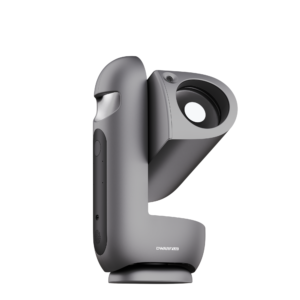
| Weight and size | Larger, suitcase with tripod | Very compact, approximately 1.3 kg |
| Price | €999 | €529 |
Image quality: the opening makes the difference
The biggest difference lies in the optics. The S50 Pro has a 50 mm aperture and a brand focal length of 260 mm. The DWARF 3 has an aperture of 35 mm and a focal length of 150 mm. A larger aperture means more light, which is reflected in the details of nebulae and galaxies. The S50 Pro’s longer focal length also allows smaller objects to fill more of the frame. Reviewers who tested both devices therefore classify the DWARF 3 as a wide-field smart telescope: excellent for large objects such as the Andromeda Nebula or the North America Nebula, but less effective for small targets.
The DWARF 3 compensates with a modern Sony IMX678 sensor and a clever dual camera. For the price, the image quality is impressive. The S50 Pro works with an OmniVision OS08B10 as a telephoto camera; noticeably, ZWO does not mention that sensor model anywhere on its own product page, it was only confirmed after inquiry by international reviewers. Both sensors deliver 8.3 megapixels. Anyone wanting to get the most out of a single device is clearly better off with the S50 Pro, with its dual 4K camera and nearly three times the light gathering power of a 30 mm class telescope.
Format and usage: this is where the DWARF 3 wins
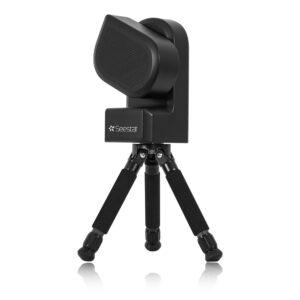
Anyone who pairs the S50 Pro with the DWARF 3 will immediately notice the difference: the S50 Pro is significantly larger and heavier and comes in a sturdy protective case with a tripod. The DWARF 3, on the other hand, is built to be always ready to go: it weighs little, fits in a small bag, and is ready to go within a minute. For vacations, walks to a dark place, or spontaneous sessions on the balcony, that is a real advantage. Both have a sun filter in the box, so you can shoot with both during the day to capture sunspots.
Astrography: both serious, with a different approach
Both telescopes support an equatorial mode for longer exposures. The DWARF 3 achieves exposures of up to 60 seconds in this mode, which is impressive for this size. The S50 Pro counters this with a virtually backlash-free drive, allowing the EQ mode to track more stably and resulting in fewer failed shots during longer sessions. Combined with the mosaic function for large patches of sky and a battery life of approximately 9 hours, the S50 Pro is built for long, productive nights.
Which telescope is for whom?
- ✓ Choose the Seestar S50 Pro if image quality is paramount, you regularly run longer sessions, and your budget is around a thousand euros.
- ✓ Choose the DWARF 3 if you are looking for a compact device for on the go, especially if you want to photograph large objects and the sun, or are trying out smart telescopes for the first time.
- ✗ The S50 Pro is less suitable when weight and size are decisive factors, for example when traveling.
- The DWARF 3 is less suitable if you primarily want to capture small deep-sky objects and a lot of detail.
Read more
All specifications and the differences with the regular S50 and the S30 Pro can be found in the Seestar S50 Pro. If you're unsure between the two Seestars, read on Seestar S50 Pro vs S30 Pro. If you're unsure between the DWARF 3 and the smaller Seestar, read on DWARF 3 vs Seestar S30 Pro. If you are still looking for more openings, the DWARF Draco With 90 mm, it is a step above both; how it compares to the S50 Pro you can read in Seestar S50 Pro vs DWARF Draco. The comparison with the older Seestar S50 is in DWARF 3 vs Seestar S50. You can view the complete range on our page with smart telescopes.