
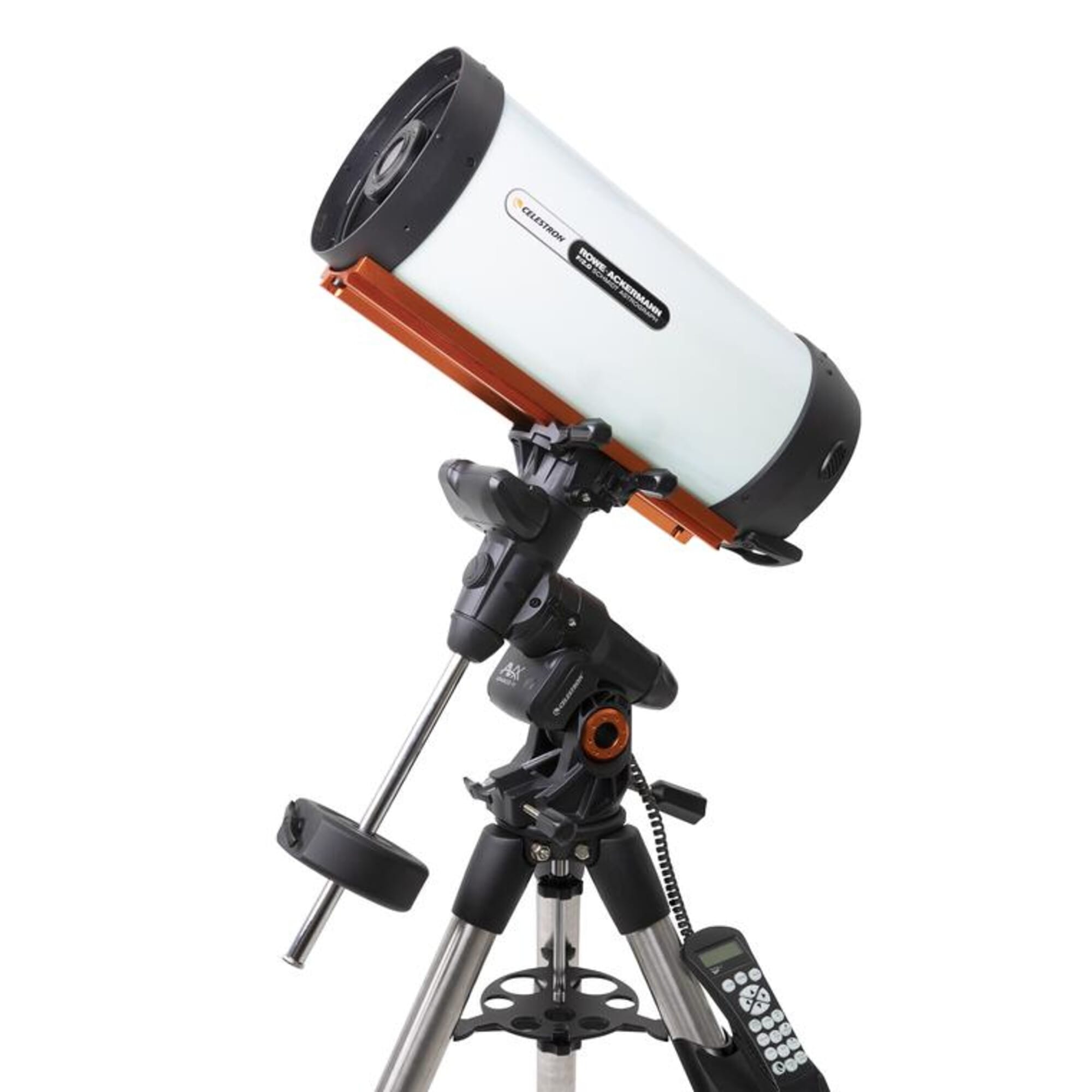
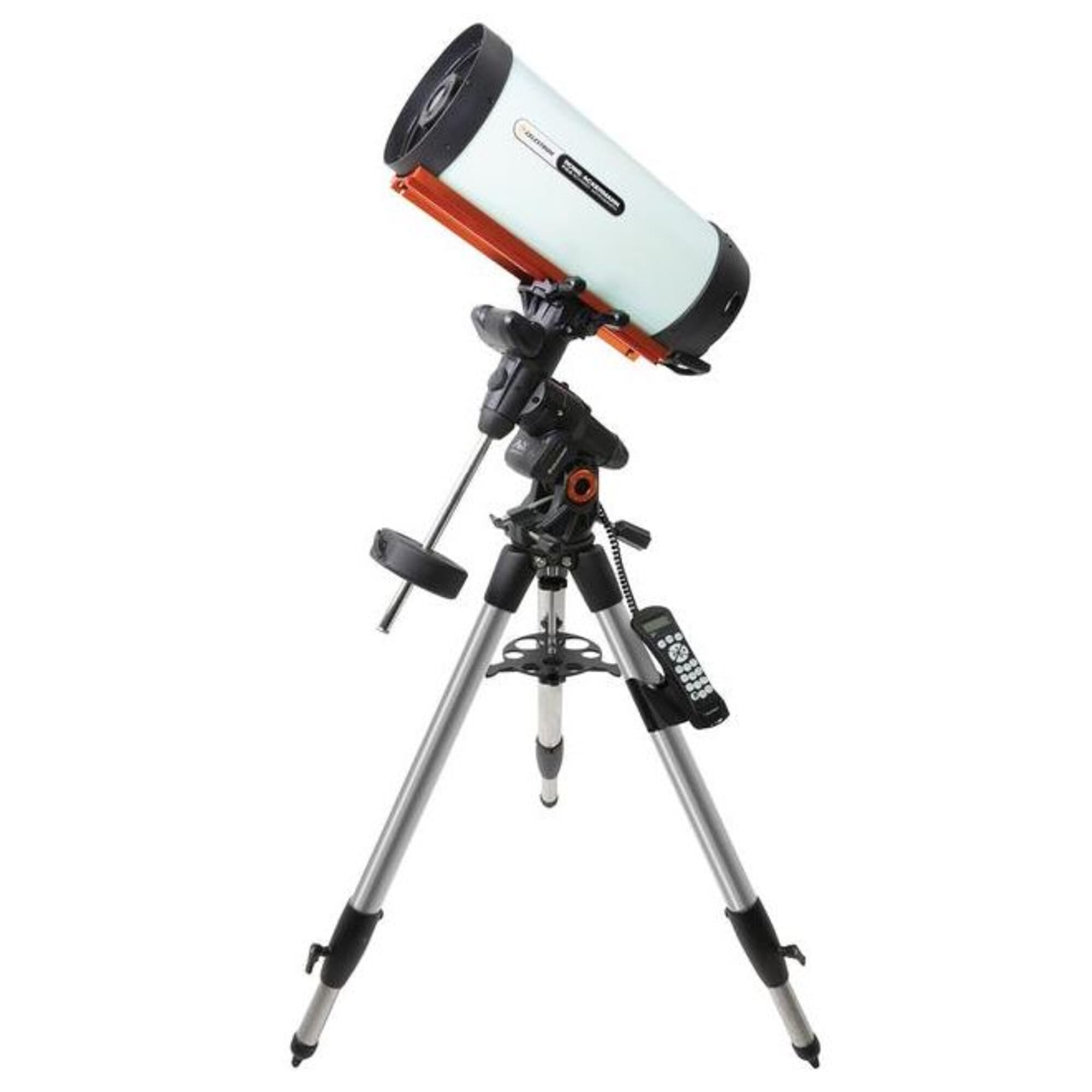
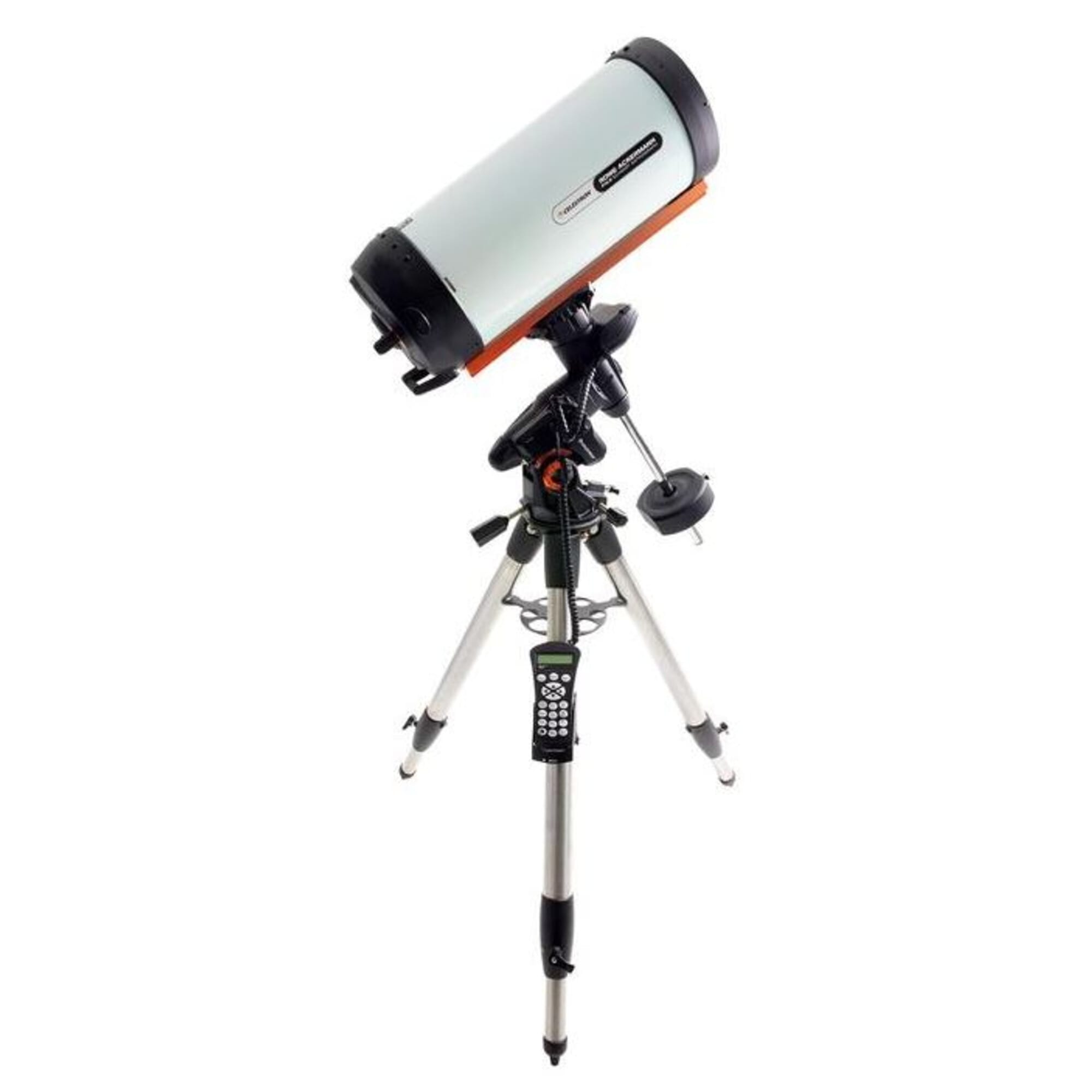
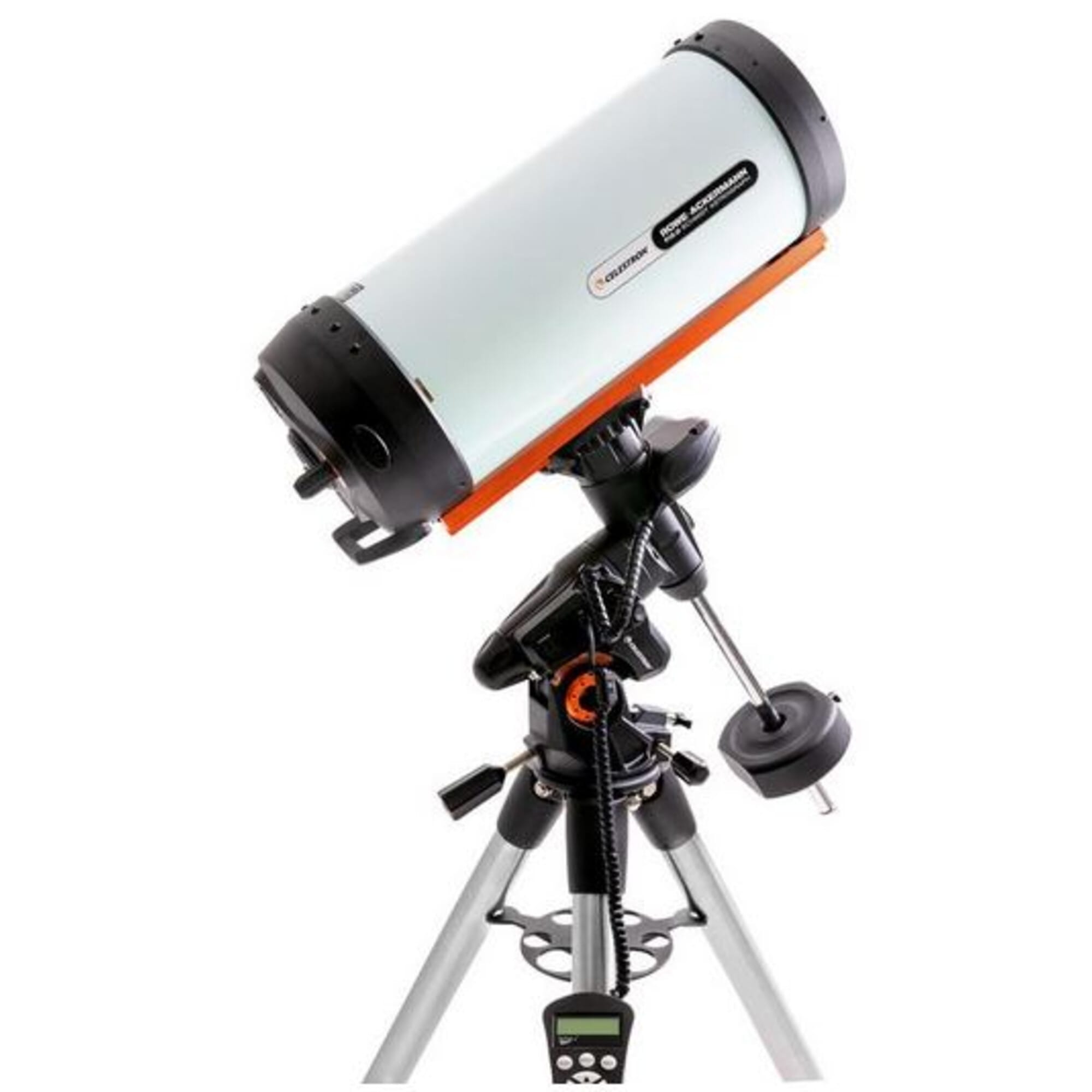
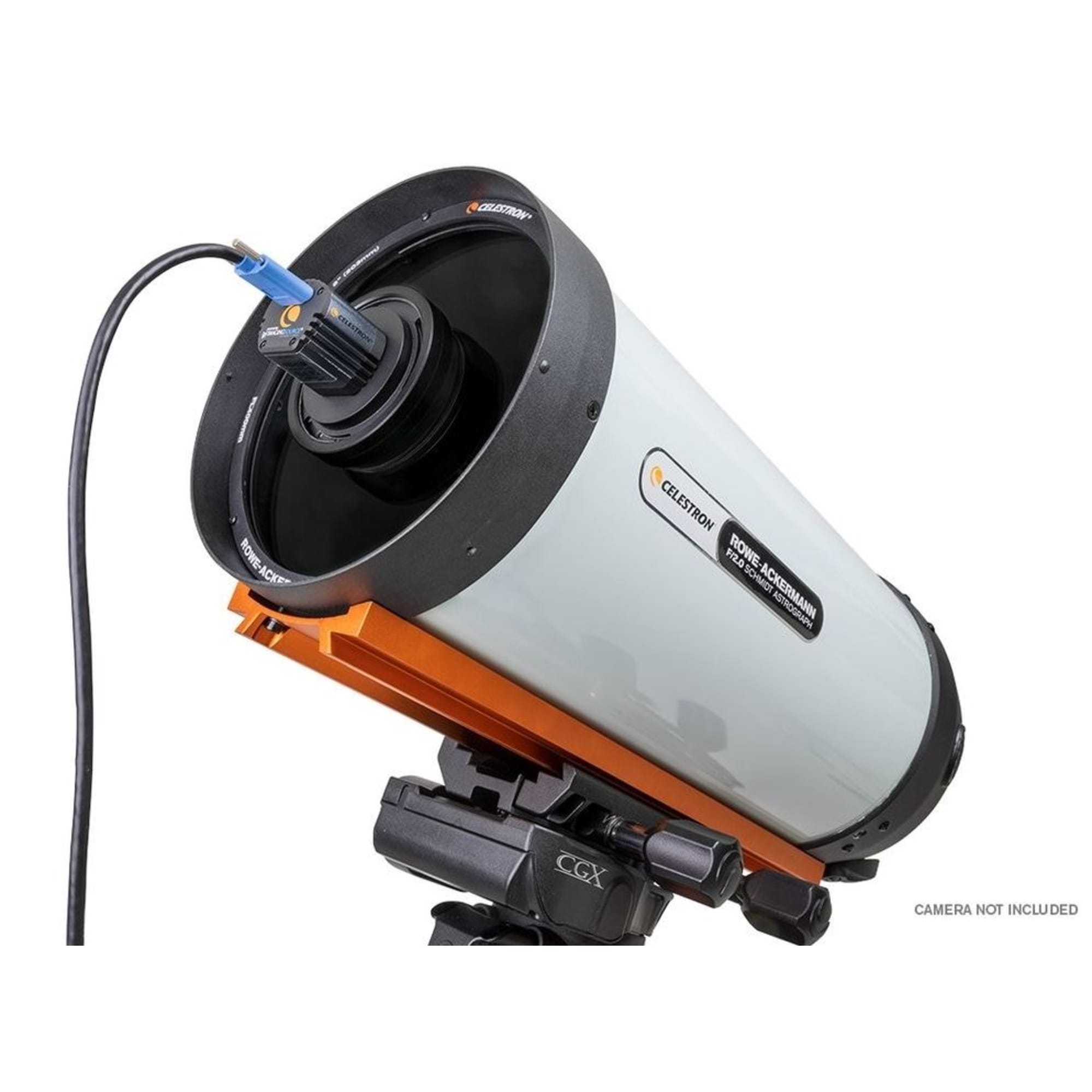
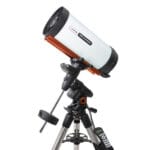
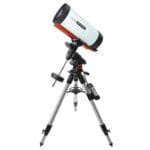
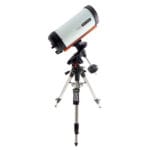
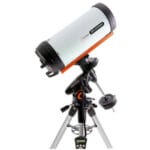
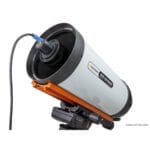


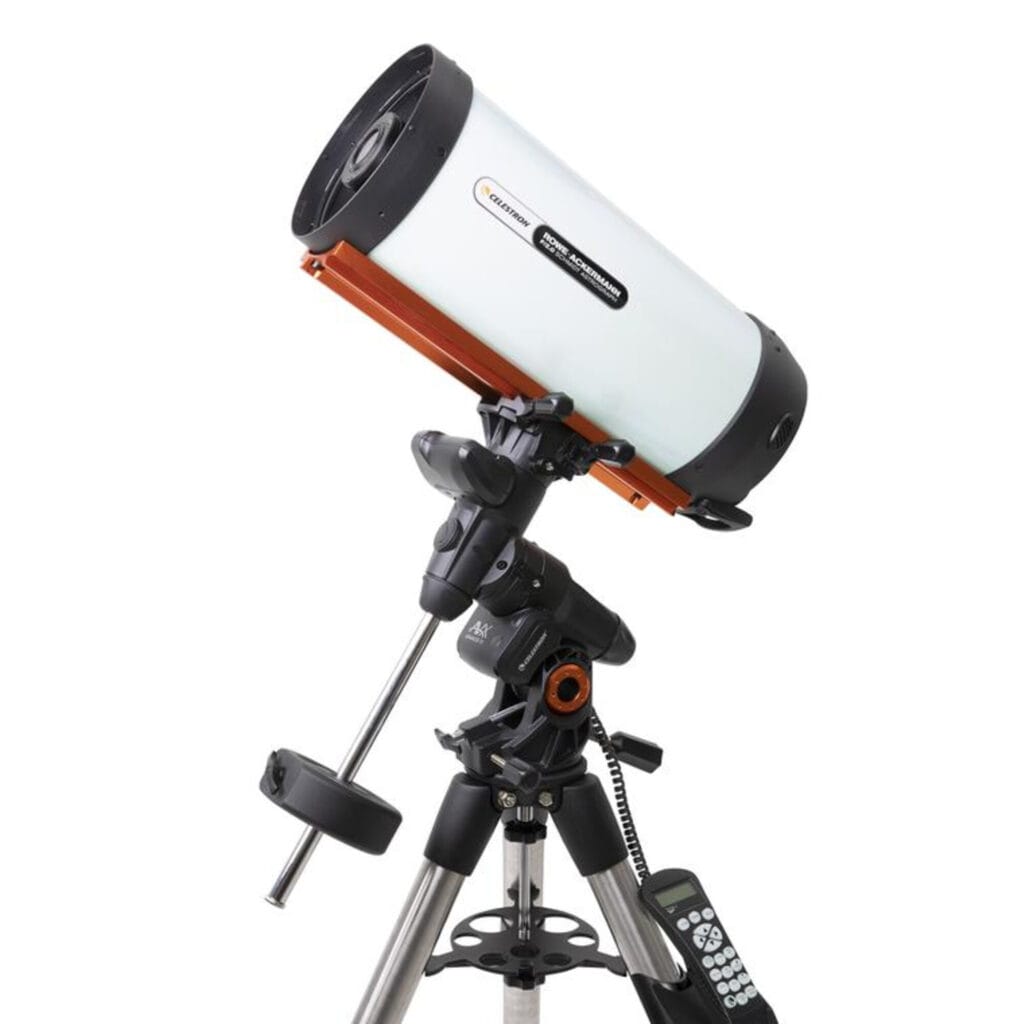
The RASA 8 AVX is a Rowe-Ackermann Schmidt Astrograph: a Schmidt telescope with a 203 mm corrector plate, a main mirror and a four-element lens group, with the camera located in front of the tube at the brandpoint. With a 400 mm focal brandlength, it operates at f/2. The tube is mounted on the Advanced VX, a German equatorial GoTo mount with NexStar+ hand controller, PPEC (permanent correction of the recurring drive error) and an autoguide port. The series of these merk are side by side in the Celestron brand guide.
What do you shoot with the RASA 8 AVX?
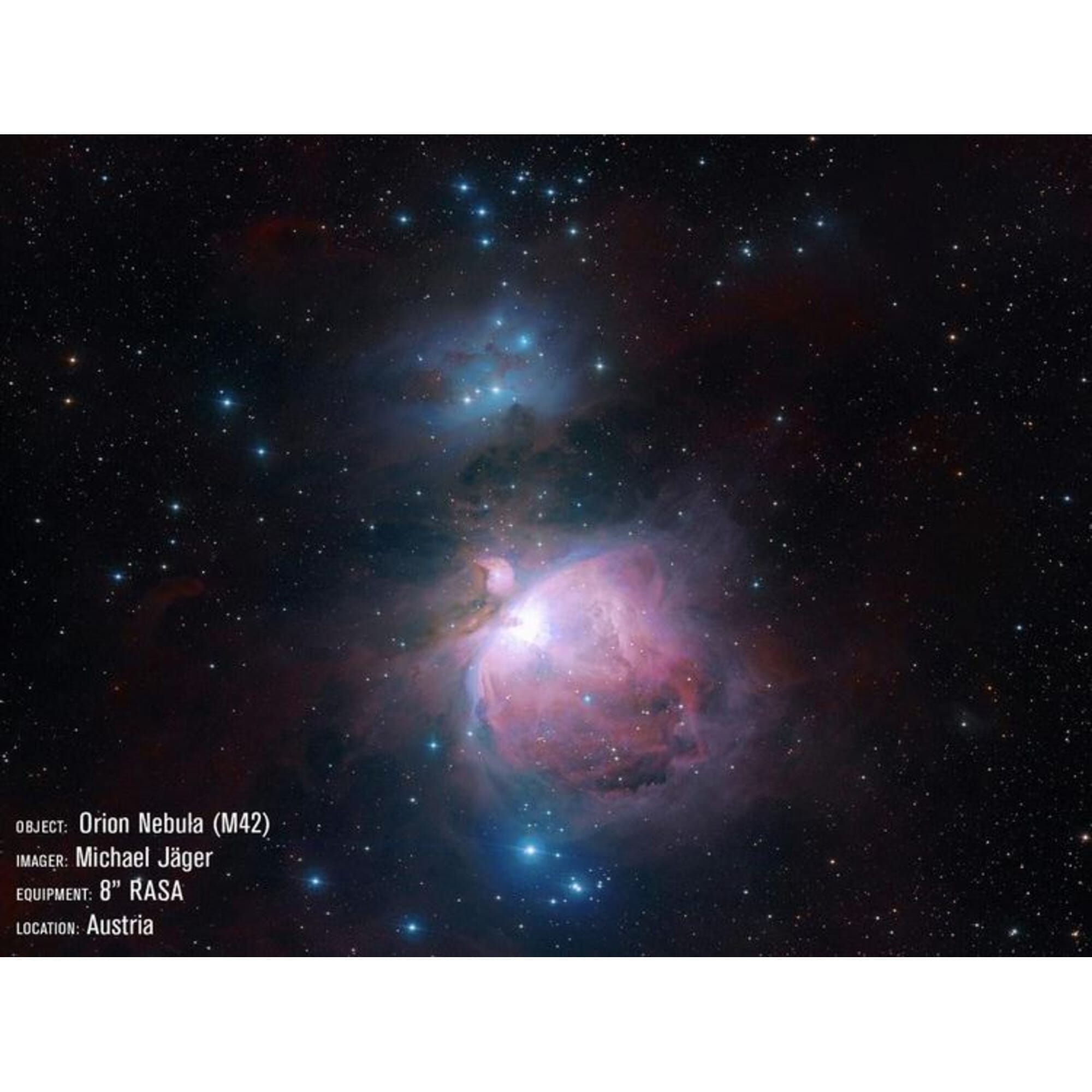
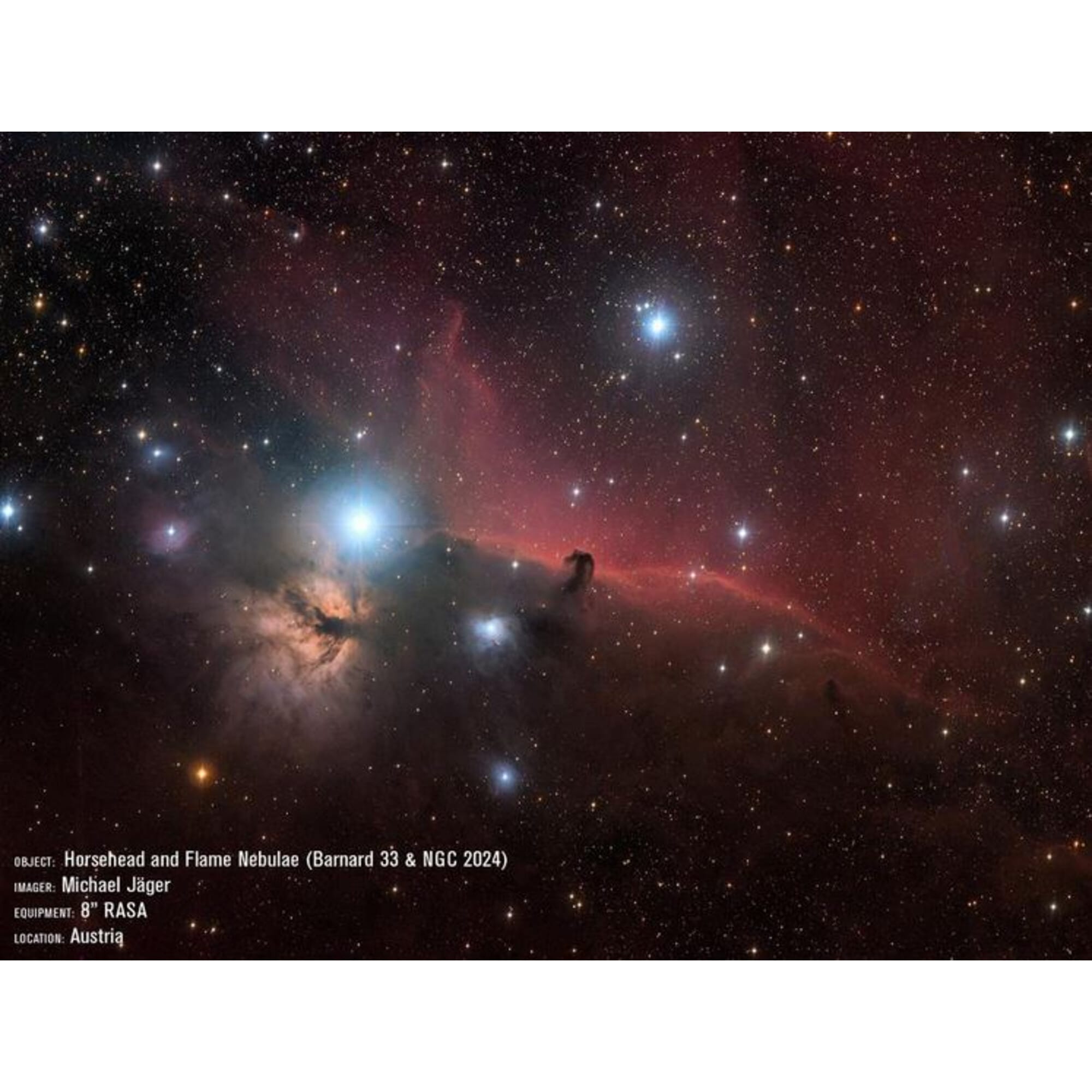
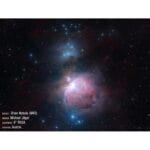
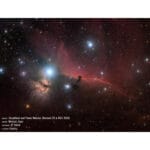
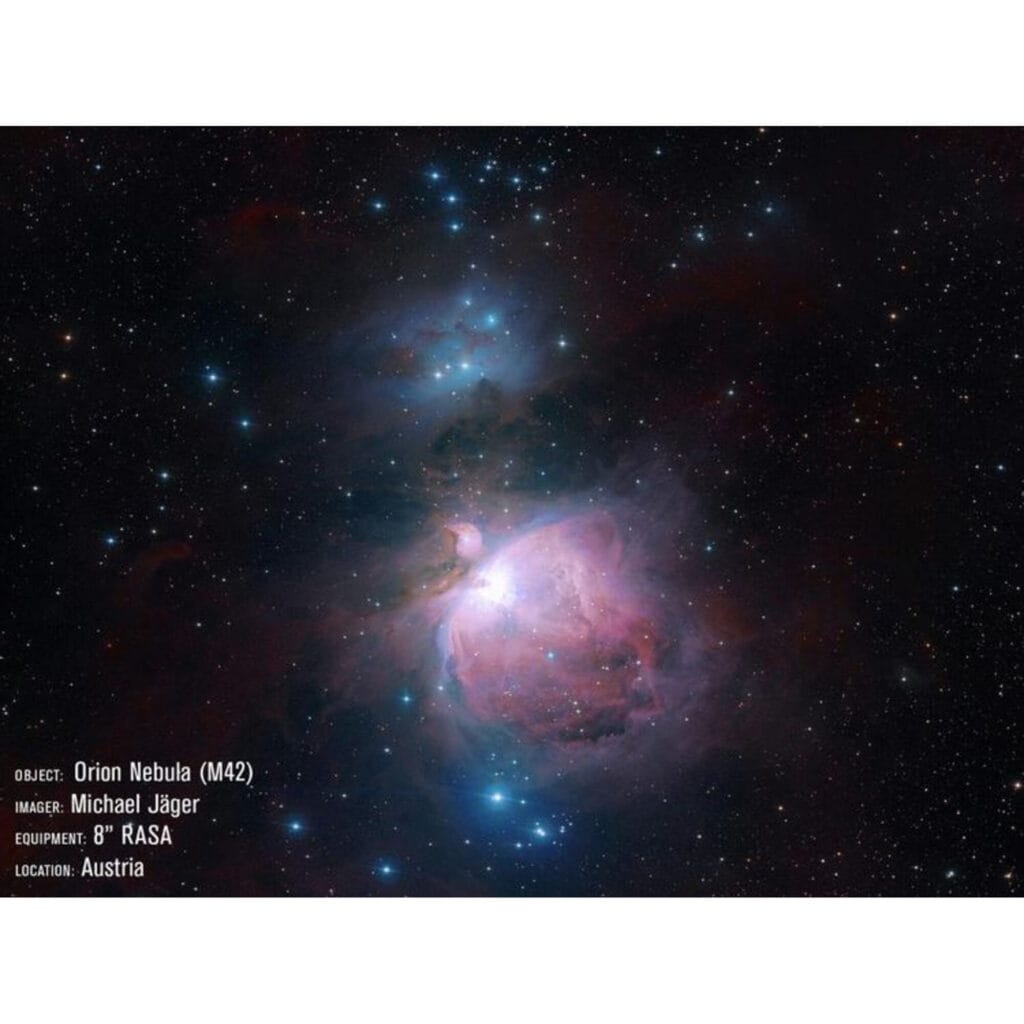
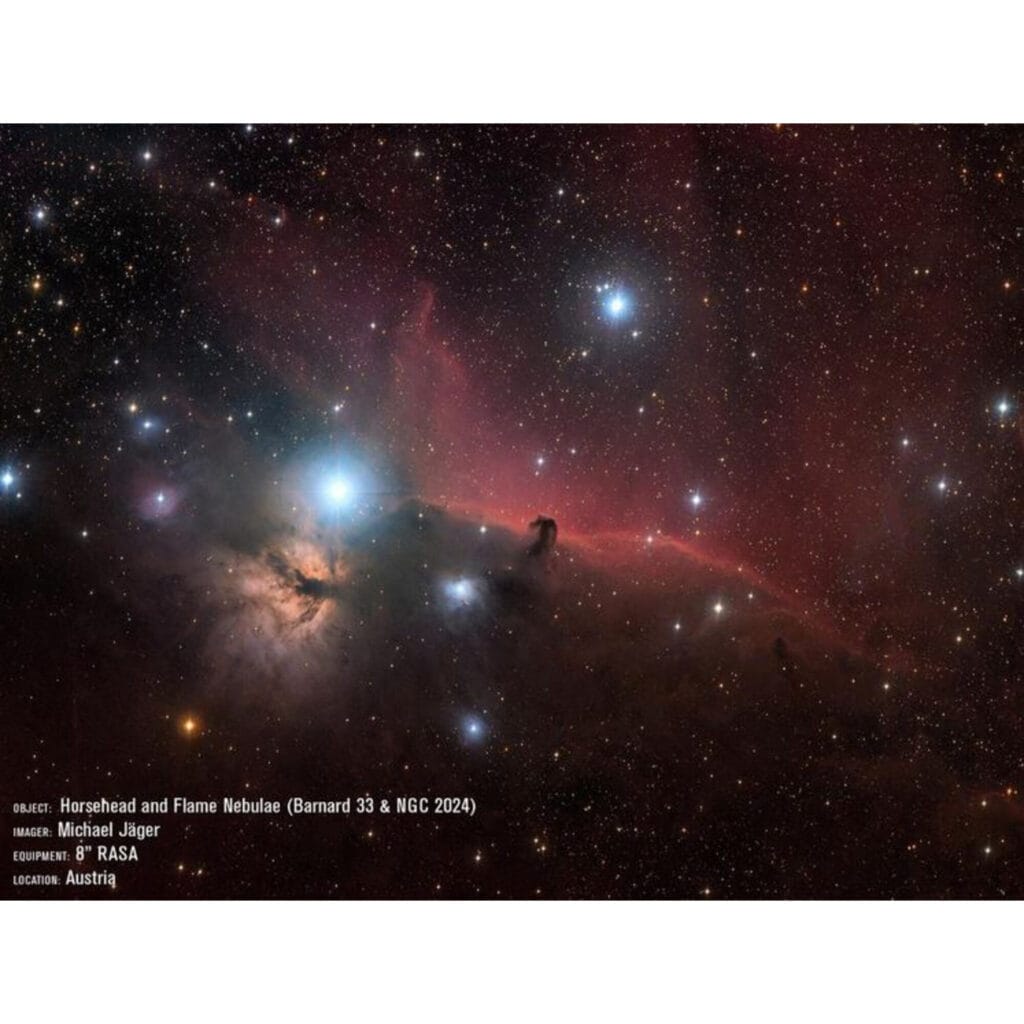
With an APS-C sensor of 23.5 x 15.6 mm, the RASA 8 captures a field of 3.4 by 2.2 degrees, almost seven times the width of the Moon. This includes the Orion Nebula with the Running Man Nebula (NGC 1977) next to it, the Andromeda Galaxy in length with its two companions, the Pleiades with the reflection nebula surrounding it, and the North American Nebula in one shot. Celestron has adjusted the optics to sensors up to 22 mm diagonally (3.15 degrees); up to 32 mm diagonally (4.6 degrees) the image remains good, with some loss at the edge.
f/2 means short exposures: for the same amount of light per pixel, an exposure at f/2 is sixteen times shorter than at f/8 and more than six times shorter than at f/5. What takes an hour of exposure at f/5, you can do in about ten minutes with f/2. Short burst exposures require less from the full-frame accuracy, and in one night you can photograph several objects. How to combine short bursts is explained in Stacking in astrophotography.
For small objects, the 400 mm is short: at this brandpoint, the galaxy M51 covers a twentieth of the image width and the planets are a few pixels. From a city or village with street lighting, emission nebulae can be seen with a narrowband or dual-band filter; Celestron makes one available for this purpose that takes the place of the 46 mm optical window. Star clusters require a dark place. Looking through a telescope is not possible: there is no sharp focus point for a telescope. Which objects are available per season are listed in Observing deep-sky objects, The Orion Nebula through a telescope and View the Andromedan Nebula.
How does the RASA 8 AVX differ from other astrograps?
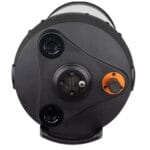
- Front camera: The RASA 8 AVX has the sensor located in front of the tube, behind a lens group of four elements with glass from rare earth metals. The lens group and the camera together form the central obstruction of 93 mm (46% of the aperture); therefore, Celestron advises against cameras wider than 10 cm.
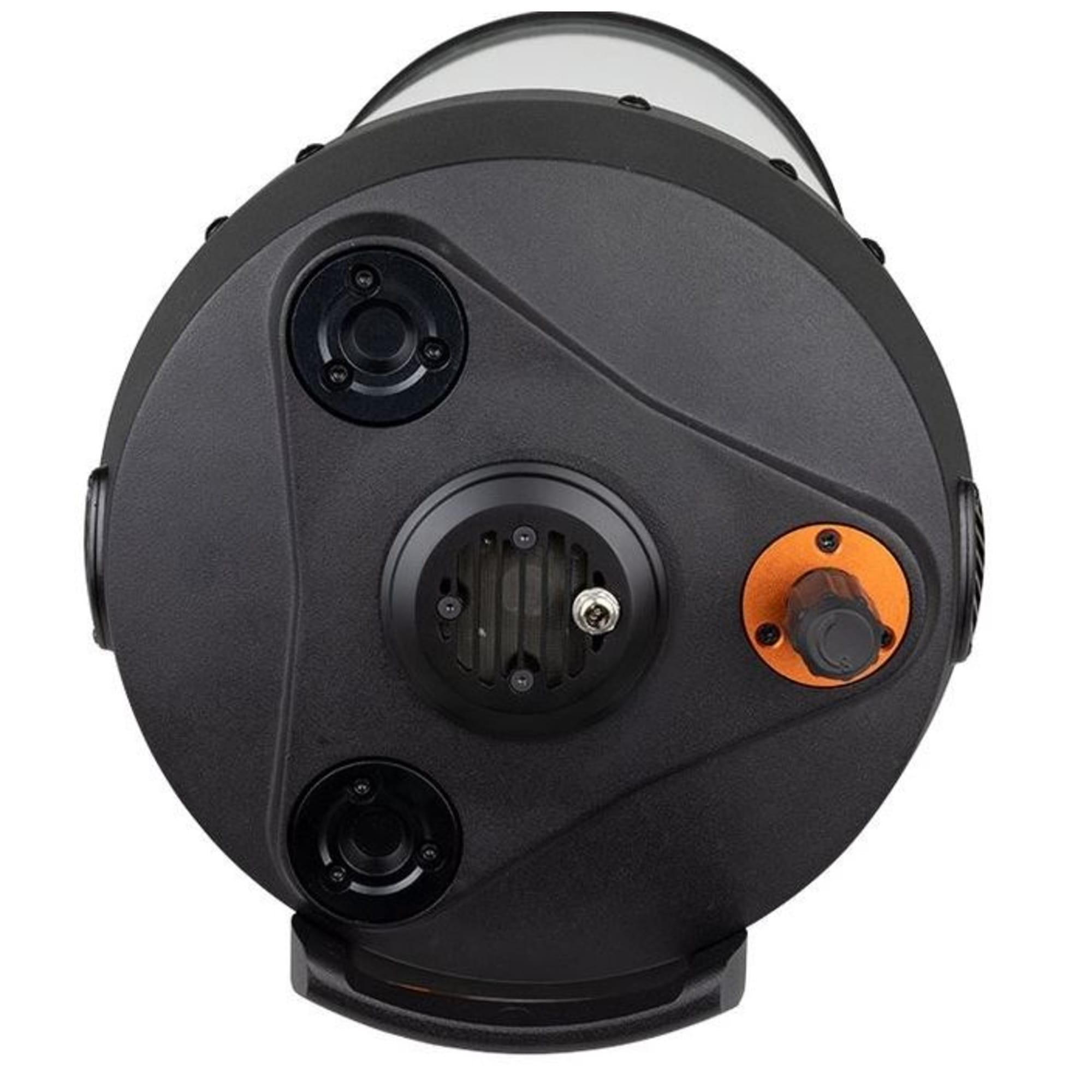
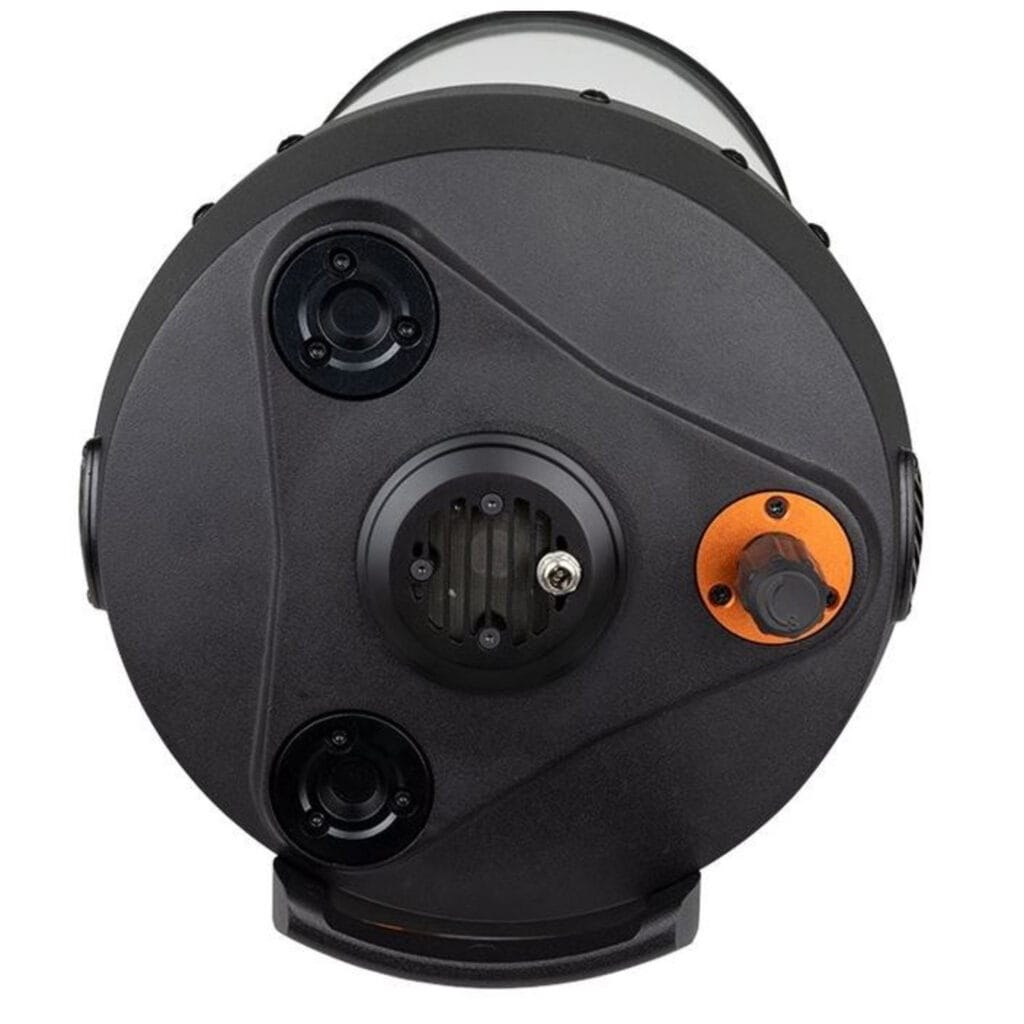
- Focusing and cooling: the Ultra-Stable Focusing System shifts the main mirror on ball bearings so that the mirror does not move sideways during focusing and the image remains in place. A 12 V MagLev fan with a fabric filter brings the tube to room temperature faster; the 46 mm optical window is removable for a filter.
- Mounting: the Advanced VX weighs 13.6 kg without counterweights; with the 7.7 kg tube, there is still 5.9 kg left for the camera, rain cover and cables. The wide CGE eagle-tail of the tube fits into the double saddle, which also takes on the narrow CG-5 rails.
For whom yes and for whom no
Hello Anyone who wants to photograph nebulas and star fields with short exposures, using an astrocamera or a mirrorless APS-C camera; anyone who wants to capture multiple objects from a dark location in one night; anyone looking for a photography kit that weighs from 5.4 to 8.2 kg in four parts. More about photographing with a telescope can be found here. Photographing stars and at the telescopes for astrophotography.
Not for anyone who wants to look through a telescope; the 200 mm Newton on the same mounting It takes an ocular and a camera, where this astrografer sets a much shorter exposure time compared to that of a standard camera. For those who want to carry a filter wheel, guide, and a heavy-duty, cooled camera: the same tube on the mounting with 18 kg load capacity has 10.3 kg left, compared to 5.9 kg here, at 43 kg instead of 29 kg. For planets, a long brandpoint is needed, as in the case of Schmidt-Cassegrain telescopes.
What's in the box
- RASA 8 optical tube 203/400 with CGE eagle tail and built-in fan
- M42 camera adapter
- C-mount camera adapter
- Battery pack for the fan
- Advanced VX GoTo mounting with counterweight bar
- NexStar+ handheld controller with holder
- Stainless steel tripod with accessory tray
- Weight counterweight of 5.4 kg
- 12 V cable with cigarette lighter plug for mounting
- CPWI control software and Starry Night Special Edition (download)
Not included: camera, power supply, adapter for a Canon or Sony camera. An astro camera with an M42 or C-mount connection fits on the included adapters; extension tubes are not included; for mirrorless cameras from Canon and Sony, Celestron makes separate adapters. Mounting requires 12 V at 3.5 A, a cooled camera has its own 12 V connection.
Connecting the camera
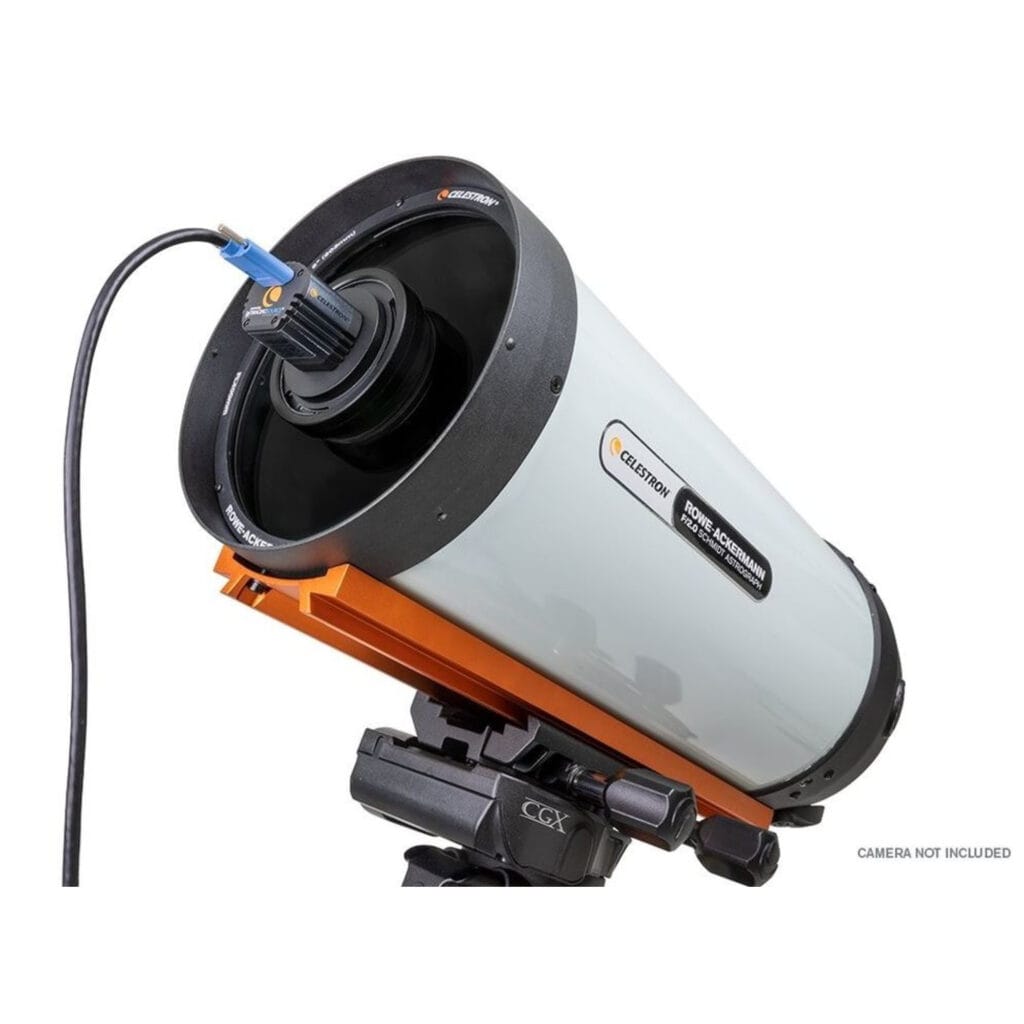
The back focus (the space between the tube and the sensor) is 29 mm from the top of the screw ring and 25 mm with the supplied camera adapter. Astro cameras with M42 or C-mount threads screw onto the supplied adapters; a lengthening ring is needed to get to those 25 mm depending on the distance between the front of the camera and the sensor. Mirrorless APS-C cameras from Canon and Sony fit with a separate adapter from Celestron. SLR cameras do not: the distance from their bayonet to the sensor is greater than the 29 mm offered by the RASA 8. A full-frame sensor works, but with darker and less sharp corners. How to choose and connect a camera is explained in Connecting camera to telescope and at the astro-cameras.
Format and weight
29 kg complete, in four parts: tube 7.7 kg, mounting head 7.7 kg, tripod 8.2 kg and counterweight 5.4 kg. The aluminum tube is 62.8 cm long and 23.5 cm in diameter. Mounting and tripod together are 112 to 163 cm high, with stainless steel legs of 5 cm. The camera is mounted in front of the tube, so the center of gravity shifts forward; you balance the camera and cables on it.
First evening with the RASA 8 AVX
- Power: connect a 12 V battery or mains power supply to the supplied mounting cable, insert batteries into the fan's battery pack, and provide the camera with its own power supply.
- Setting up: tripod level, polar axis pointing north (the North Star), pole elevation at approximately 52 degrees for the Netherlands and Belgium. Then accurately align the polar axis using All-Star Polar Alignment in the hand controller.
- Camera and balance: Screw the camera onto the tube with the M42 or C-mount adapter first, then balance it in both axes until the tube stays in place when you release it.
- Cooling: Set the tube outside with the fan on for half an hour before the first recording.
- Alignment: Without a viewfinder or ocular, you center the two alignment stars on the live camera image on your laptop. Using the USB port on the handheld controller, you can also control the alignment from the CPWI software.
- Focusing: Turn the focus ring until a bright star is the smallest point. At f/2, the sharp area is only a few micrometers deep; check the sharpness again as the temperature drops throughout the night.
- Rain: the front correction plate covers in on wet evenings; a dew cap prevents that. Never wipe a smudged plate off; let it dry inside.
Which accessories are suitable?
- Omegon Powertank 17Ah204 Wh battery with two 12 V cigarette lighter outlets and two 5 V USB ports; the included 12 V cable from the Advanced VX goes straight in; the installation requires 3.5 A. For a cooled camera, you need a separate 12 V power source.
- Omegon Flexible Rain Cap 8 inch, For pipes from 225 to 245 mm: the 23.5 cm RASA pipe falls in the middle of that range. The cap protrudes from the corrector plate so that it covers it later during the night.
- Celestron transport bag 102cm: internal dimensions 99.7 x 36.2 x 36.2 cm with 16 mm foam; the RASA tube measuring 62.8 cm long and 23.5 cm wide is included, with more than 35 cm remaining in length.
150/750 Newton AVX, RASA 8 AVX or RASA 8 CGEM II?
| 150/750 Newton AVX | RASA 8 AVX (this page) | RASA 8 CGEM II | |
|---|---|---|---|
| Optics | Newton 150 mm, 750 mm, f/5 | Rowe-Ackermann astrograph 203 mm, 400 mm, f/2 | Rowe-Ackermann astrograph 203 mm, 400 mm, f/2 |
| Use | observing with an eyepiece and photographing | only photographing, camera mounted on the tube | only photographing, camera mounted on the tube |
| Image sensor with an APS-C sensor | 1.8 x 1.2 degrees | 3.4 x 2.2 degrees | 3.4 x 2.2 degrees |
| Mounting and load-bearing capacity | Advanced VX, 13.6 kg | Advanced VX, 13.6 kg | CGEM II, 18 kg |
| Support capacity after the tube | 9.1 kg | 5.9 kg | 10.3 kg |
| Total weight | 25.9 kg | 29 kg | 43 kg |
| Choose this as | You also want to look through an eyepiece and want the brightest set | You only want to photograph and want to transport a set of 29 kg | You bring your filter wheel, guide, and heavy camera, or you often leave the setup unattended |
Frequently asked questions about the RASA 8 AVX
- Can I also look through it? No. The RASA 8 does not have a focal point for an eyepiece; the camera is mounted in front of the tube at the brandpoint.
- Which camera fits on it? An astro camera with an M42 or C-mount thread on the supplied adapters, or a mirrorless APS-C camera from Canon or Sony with a separate Celestron adapter. Mirrorless cameras and cameras wider than 10 cm do not fit.
- How long do you expose for each shot? About six times shorter than with a f/5 telephoto lens for the same light per pixel. The length of exposure per shot depends on the camera, filter, and background; under a city sky, the background fills quickly at f/2.
- Do I need an auto guide? Not at first. The Advanced VX has an auto guide port if you want to use it for longer exposure per shot or when working with narrow band filters.
- What current does he need? The 12 V DC installation at 3.5 A, plus on the core; the fan runs on the supplied battery pack; a cooled camera requires its own 12 V source.
- Does the correction plate cover it? Yes, on wet nights; a dew cap on the front of the tube makes that unnecessary. Never wipe it off, let it dry.
Specifications
| Optical design | Rowe-Ackermann Schmidt Astrograph: Schmidt correction plate, main mirror and lens group of four elements |
| Opening | 203 mm (8 inches) |
| Focal length | 400 mm |
| Opening ratio | f/2 |
| Mirror and coating | StarBright XLT on the lenses, aluminum on the main mirror; central obstruction 93 mm (46%) |
| Image circle | 22 mm (3.15 degrees), usable up to 32 mm (4.6 degrees) |
| Back focus | 29 mm from the screw ring, 25 mm with the supplied adapter |
| Camera connection | M42 and C-mount adapter included |
| Mount | Advanced VX, German equatorial GoTo, servo motors, 13.6 kg carrying capacity without counterweights, NexStar+ with 40,000 objects, PPEC, autoguide port |
| Tripod | Stainless steel legs, 5 cm high, 112 to 163 cm high with mounting, accessory panel |
| Reporter | Ultra-Stable Focusing System, main mirror on ball bearings |
| Seeker | No |
| Dovetail | CGE (wide); the saddle takes CGE and CG-5 |
| Total weight | 29 kg (tube 7.7 kg, assembly 7.7 kg, tripod 8.2 kg, counterweight 5.4 kg) |
| Tube length | 62.8 cm, diameter 23.5 cm |
| Stream | Mounting 12 V DC, 3.5 A, plus on the core; fan on the supplied battery pack |
Shipping and assistance
Orders with multiple items are shipped from multiple warehouses and may arrive in parts; each package will have its own tracking number. More information about this can be merk found on the Celestron brand page. Help with choosing or on the first evening: WhatsApp or call on weekdays from 9:00 to 17:00, or come by appointment in Sneek. 30 days' cooling-off period.
Reviews
There are no reviews yet.