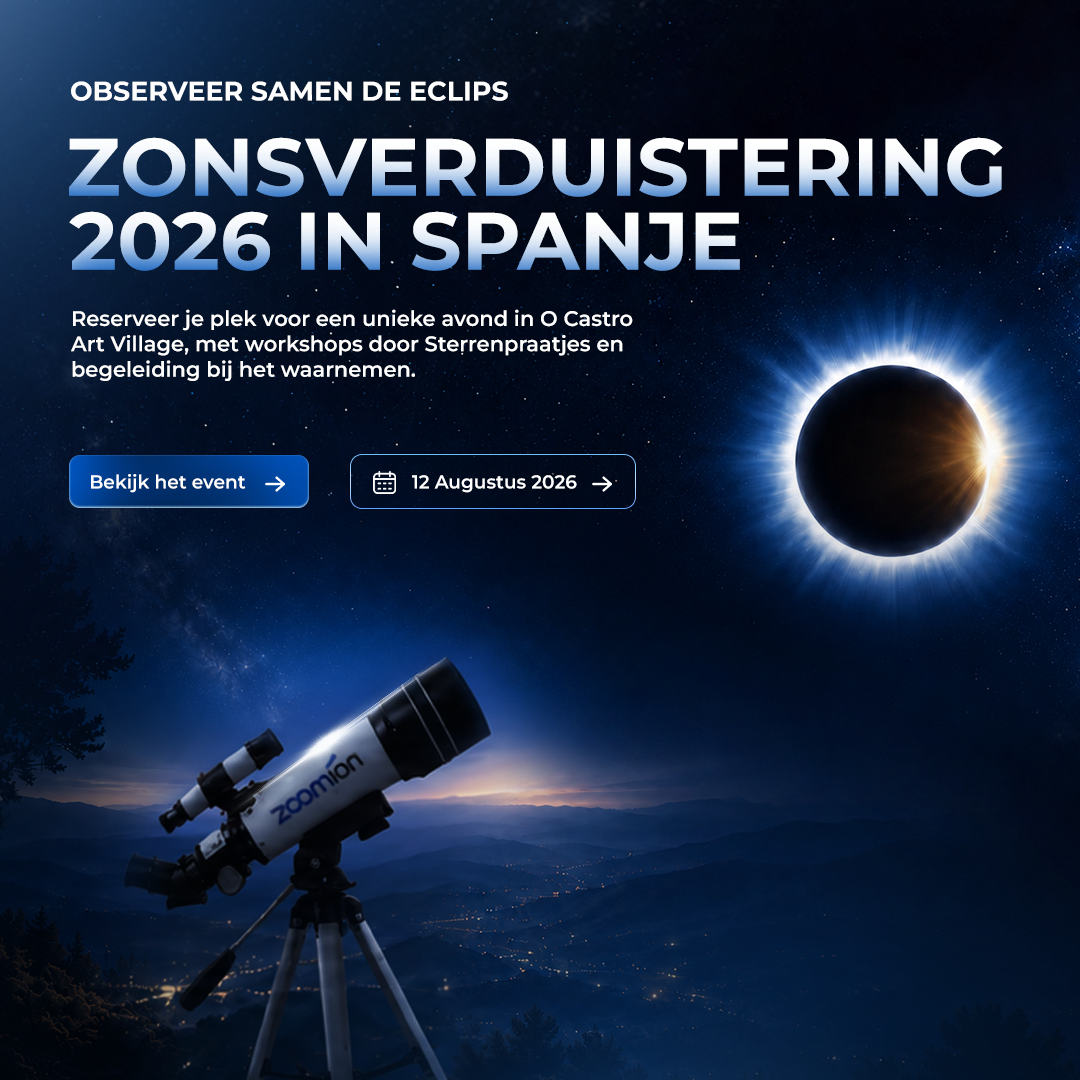
On Wednesday evening, August 12, the moon will pass in front of the sun for nearly 90%, marking the deepest solar eclipse over the Netherlands and Belgium in more than ten years. You can find all the details about the phenomenon itself, the times, and the best viewing locations on our Event page about the 2026 solar eclipse. In this article, we'll cover the other half of the story: how can you safely view that solar eclipse without damaging your eyes or your telescope?
Because here’s the truth: watching a partial solar eclipse without proper protection is never safe. Even if 90% of the sun is covered, the remaining 10% is bright enough to cause permanent damage to your retina. You won’t feel that damage; it often doesn’t become noticeable until hours later, by which time it’s irreversible.
Why sunglasses are not enough
Regular sunglasses block at most 90% of the light. That sounds like a lot, but it’s nothing when it comes to the sun: safe viewing equipment blocks more than 99.999% of sunlight. Looking through sooty glasses, CDs, X-rays, or stacked pairs of sunglasses—tricks you might remember from the past—is downright dangerous. They partially filter visible light but allow invisible infrared and UV radiation to pass right through.
The rule of thumb is simple: only material made specifically for sun observation that meets the ISO 12312-2 standard is safe.
Option 1: the eclipse glasses for everyone
The easiest way to safely view the solar eclipse is with a certified eclipse glasses. Such glasses are inexpensive, fit in any coat pocket, and are perfect for following the entire progression: from the first “bite” out of the sun to the maximum around 8:11 PM.
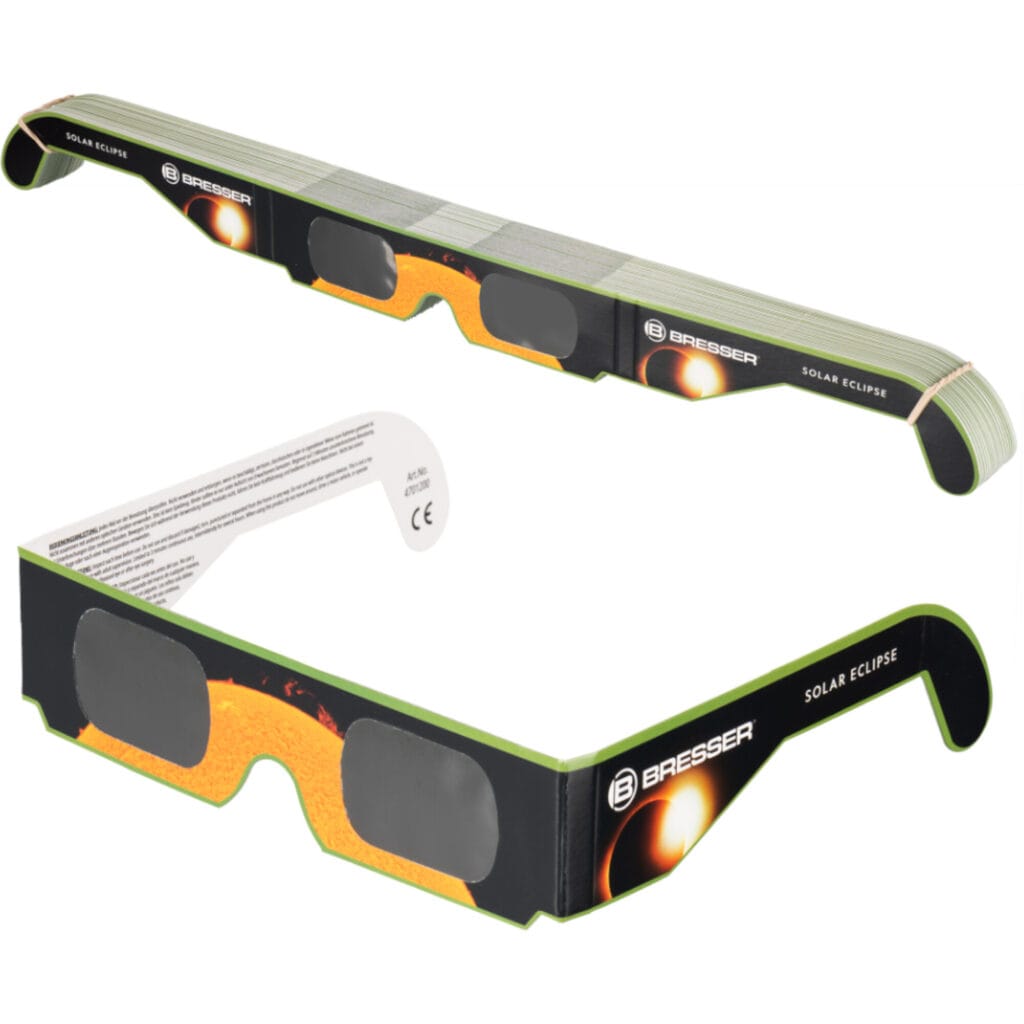
What to consider when purchasing:
- ISO 12312-2 certification printed on the frame
- Undamaged filter materiala scratch or hole makes the glasses unusable
- One pair of glasses per personEspecially with kids around, you don't want to pass it on!
Do you have an eclipse glasses from a previous eclipse lying around at home? Check it thoroughly for scratches and holes against a bright lamp. When in doubt: replace it. Your eyes are not worth experimenting with.
Option 2: a solar filter on your telescope or binoculars
If you want to see the eclipsed sun up close, complete with sunspots, then solar filter on the front of your telescope the way. Pay attention to the little word beforeThe filter should always be at the front of the tube, where the sunlight enters. So-called eyepiece solar filters (which you screw onto the viewing part) are extremely dangerous: the concentrated heat can cause them to crack while you are looking.
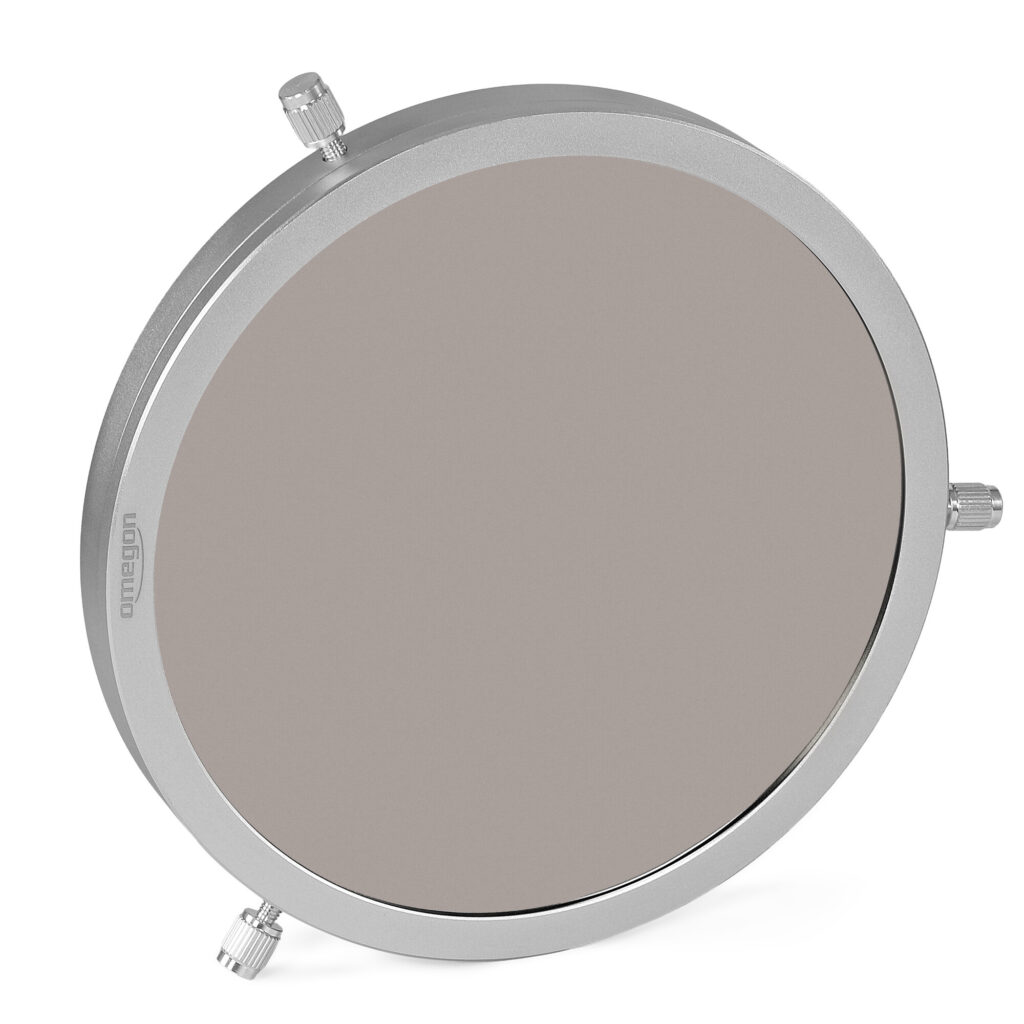
Solar filters Are there in two flavors:
- Sun filter film (like AstroSolar): affordable, excellent image quality, customizable for any telescope diameter
- Glass sun filters in mountingMore robust and faster to assemble, slightly more expensive
Before ordering, measure the outer diameter of your telescope tube to ensure the filter fits snugly and won't blow off. And don't forget your finder scope: cover or remove the finder scope too, as looking through it is also dangerous (or accidentally letting a child look through it).
Important for binoculars: The same rules apply. Two separate film filters, one per lens, securely attached.
Option 3: the solar telescope the premier class
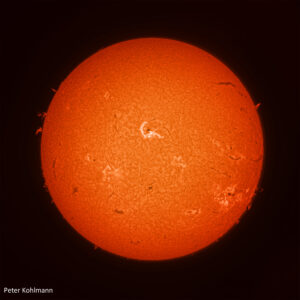
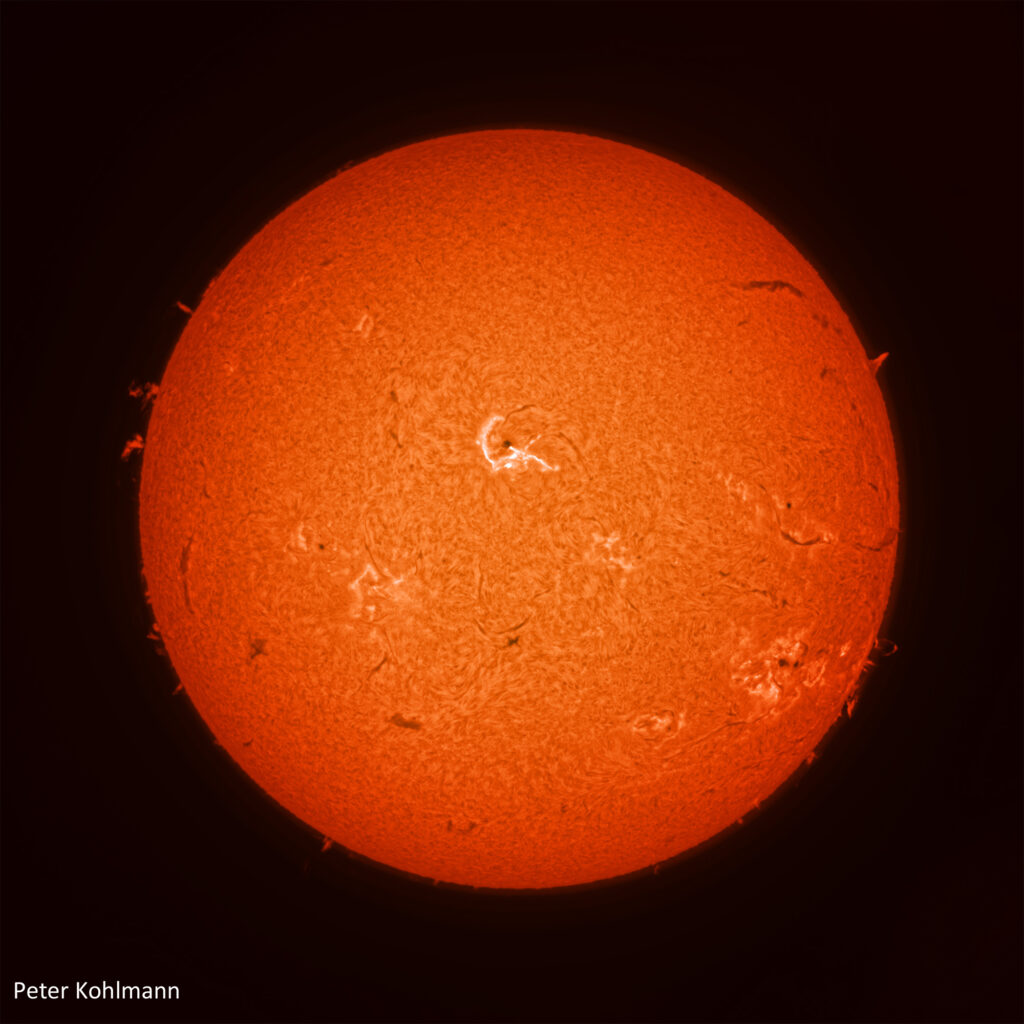
Anyone who truly wants to enjoy, looks through a special solar telescope. White-light solar telescopes show the sun with razor-sharp sunspots; H-alpha solar telescopes even reveal prominences, the flaming arches of gas at the edge of the sun. During a solar eclipse, you can see the edge of the moon slowly slide past: an unforgettable sight.
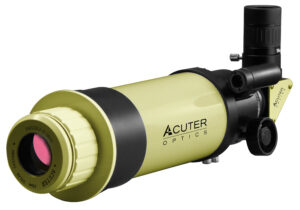
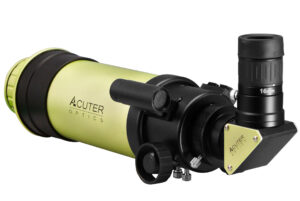
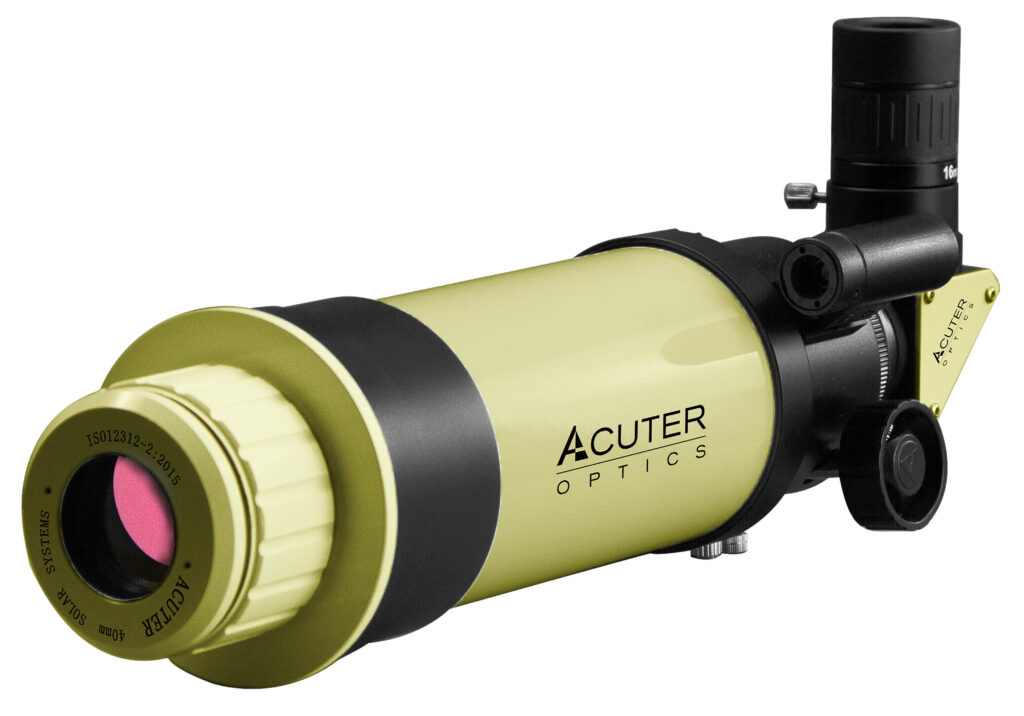
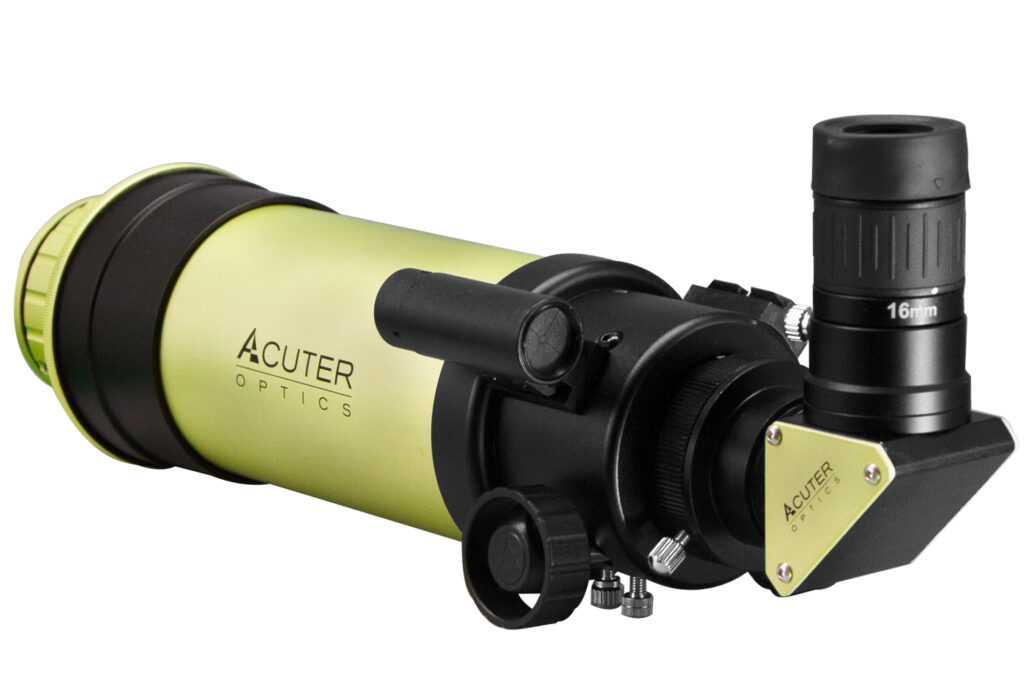
This is just the tube (OTA), without mounting and tripod. You can choose the appropriate mounting and the accessories that come with it below.
H-alpha solar telescope with 40 mm front etalon, pressure tuning, and a bandwidth of 0.6 Angstrom or better. Over 8 mm blocking filter, 25x to 80x zoom eyepiece, and smartphone adapter. Observe prominences, filaments, and solar flares at an attractive entry-level price in H-alpha.
A solar telescope is also not a one-day wonder for August 12: the sun can be viewed during the day all year round, including on weekday evenings when deep-sky objects are still hours away. Check out our solar telescopes for the possibilities per budget.
Option 4: de smart telescope, blackout AND photo in one!
Do you have a smart telescope like the Seestar S30 Pro or DWARF MiniGood news: a suitable solar filter is included as standard with these models. Click the filter on, choose solar mode in the app, and the telescope will automatically track the sun while you watch safely on your screen, all while capturing the entire eclipse on camera.
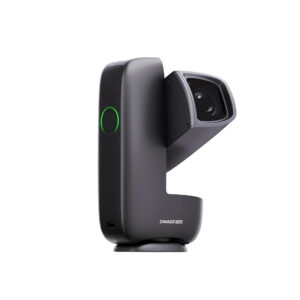
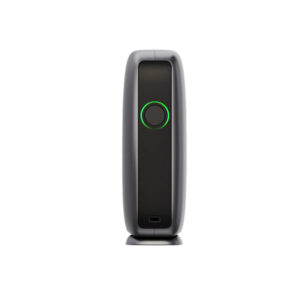
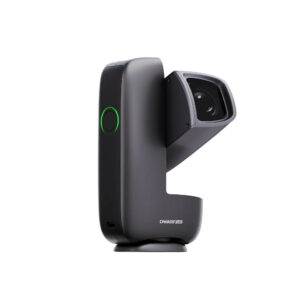
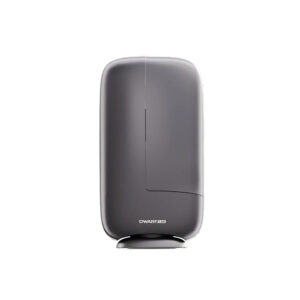
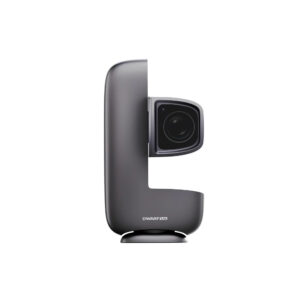
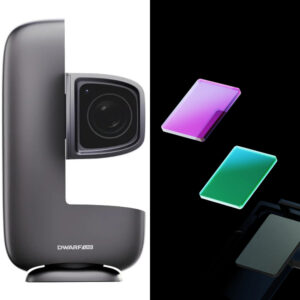
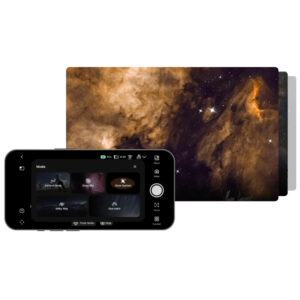
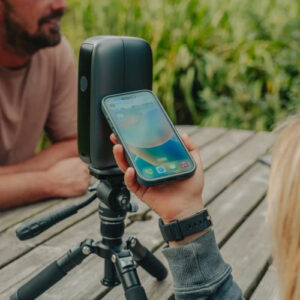
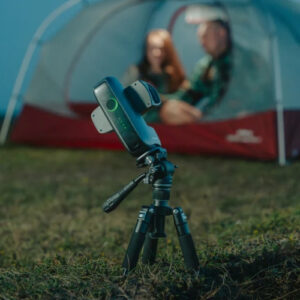
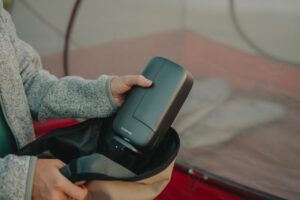
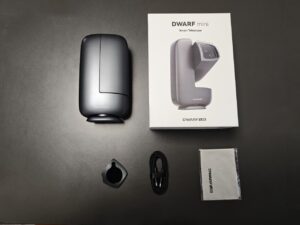
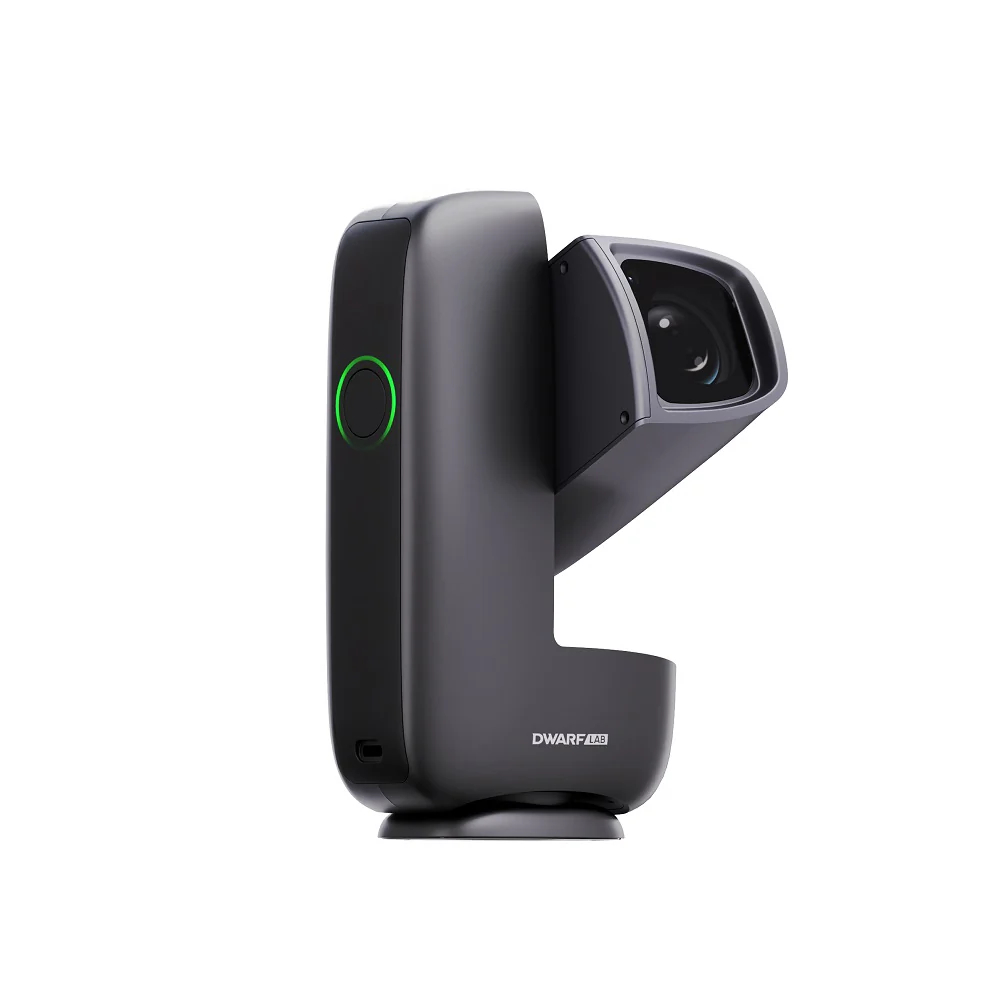
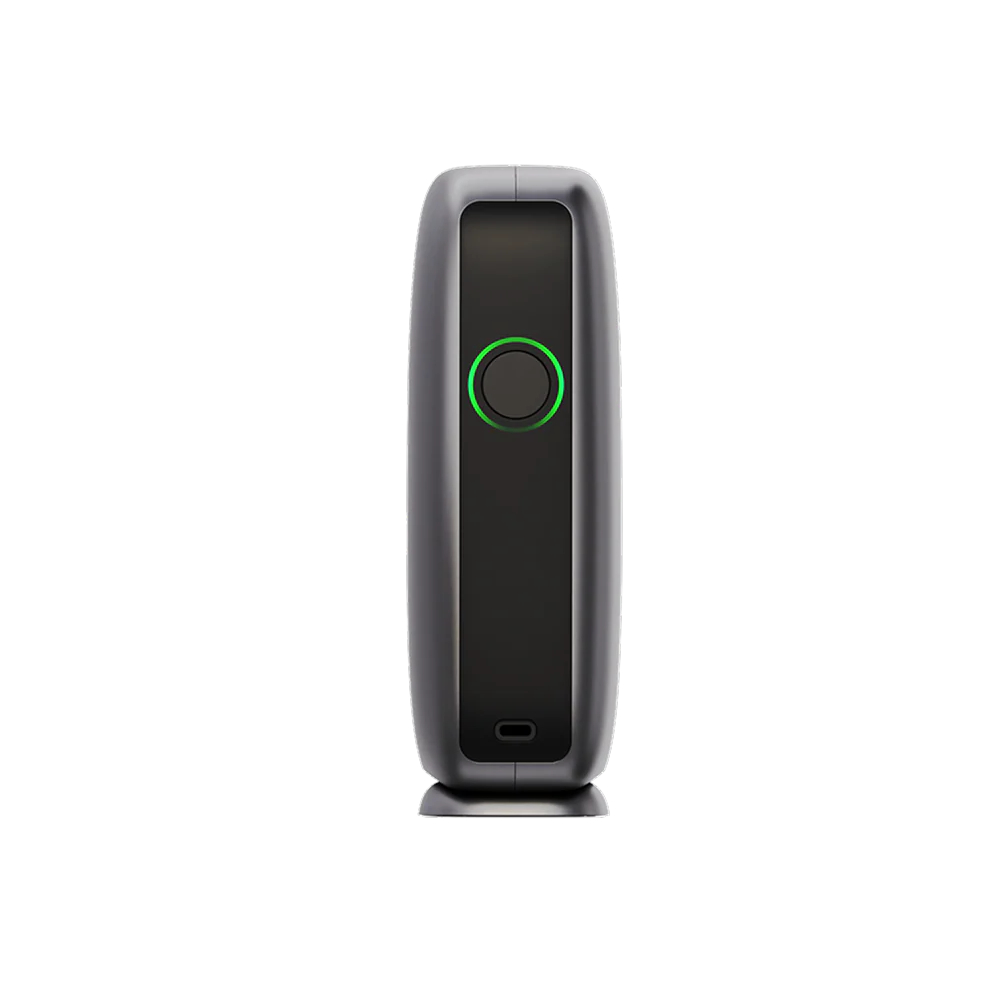
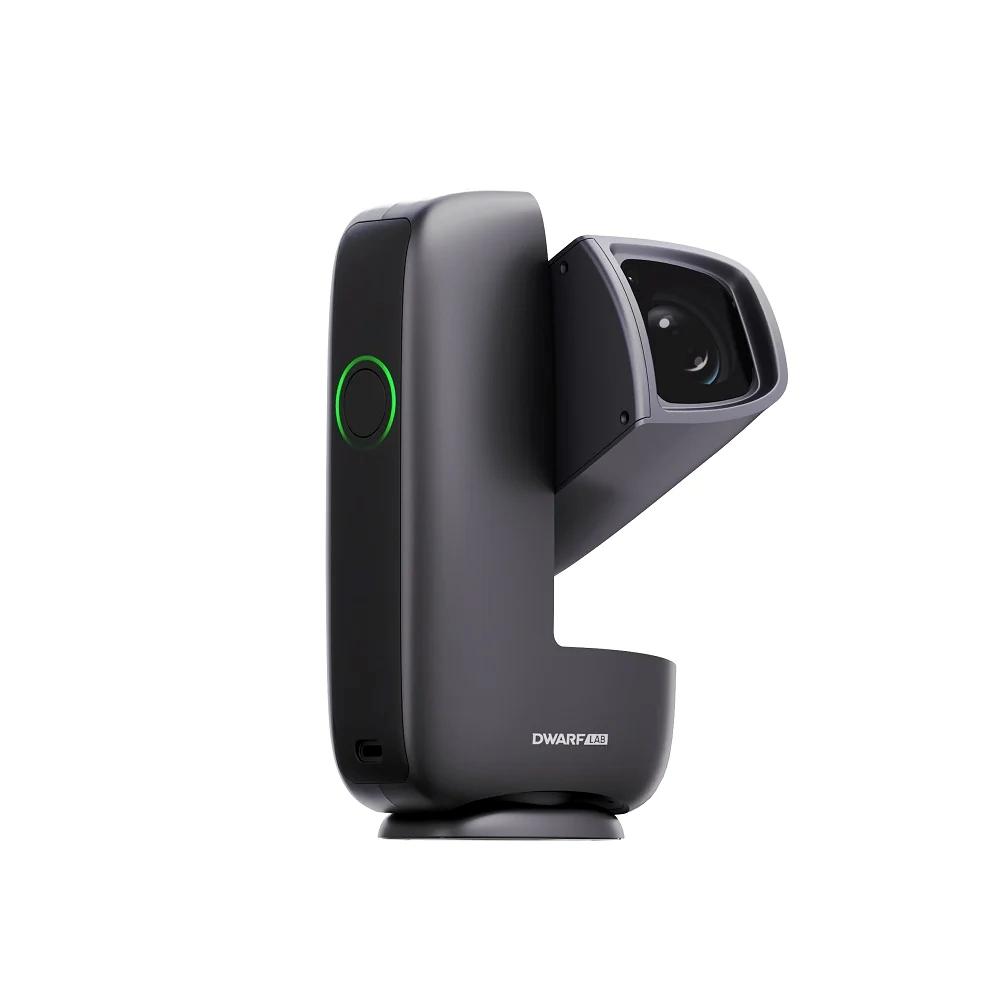
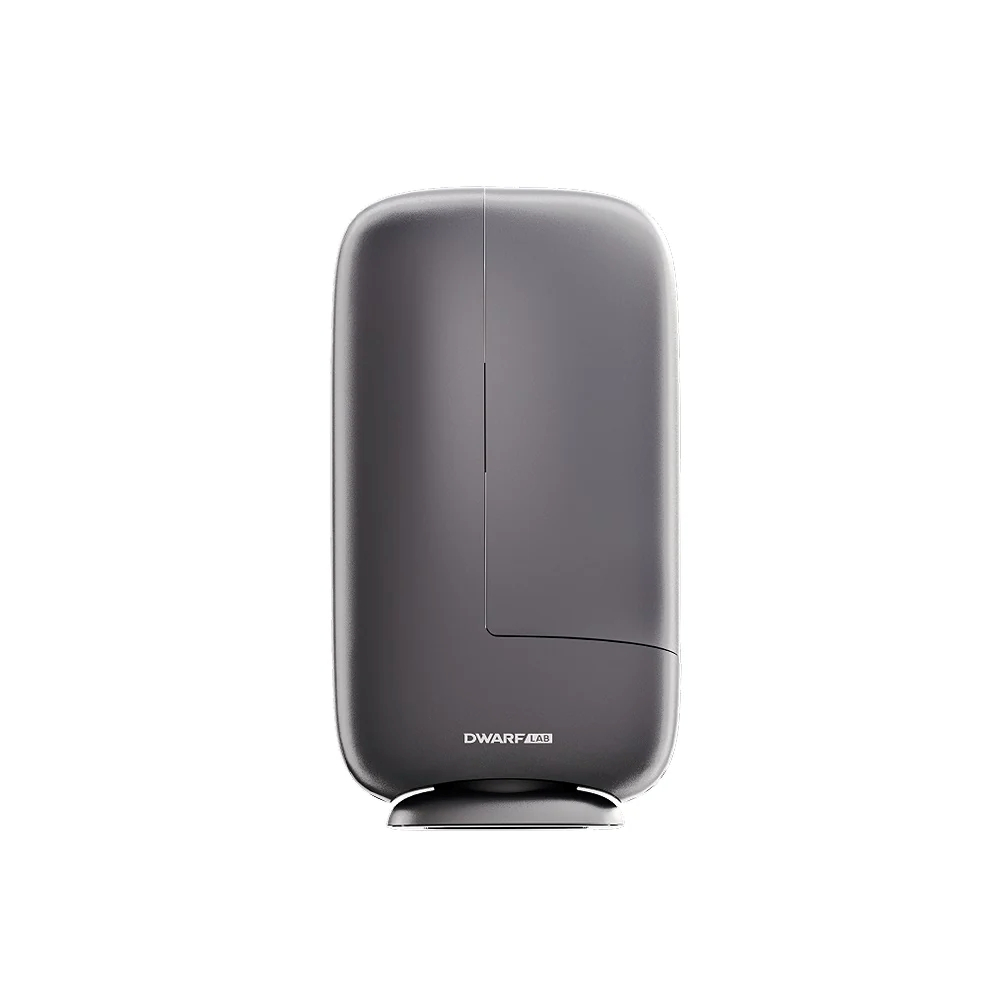
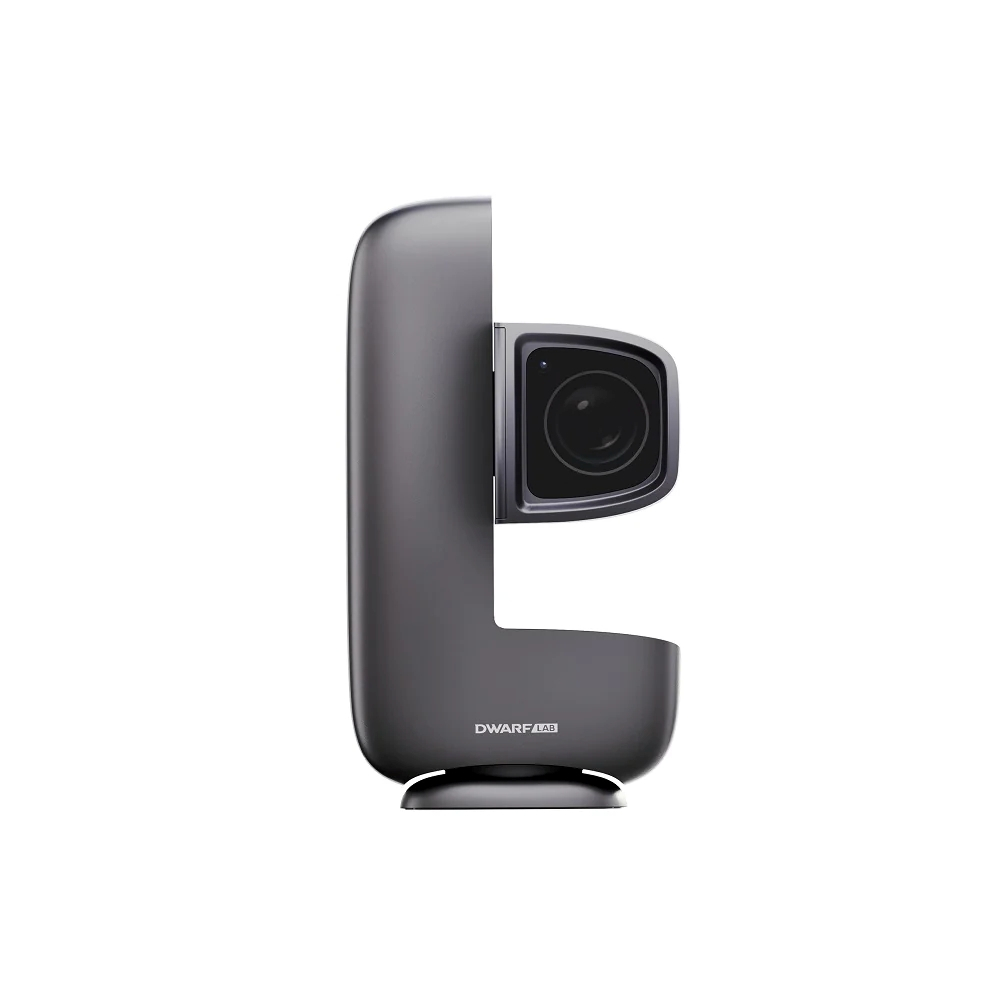
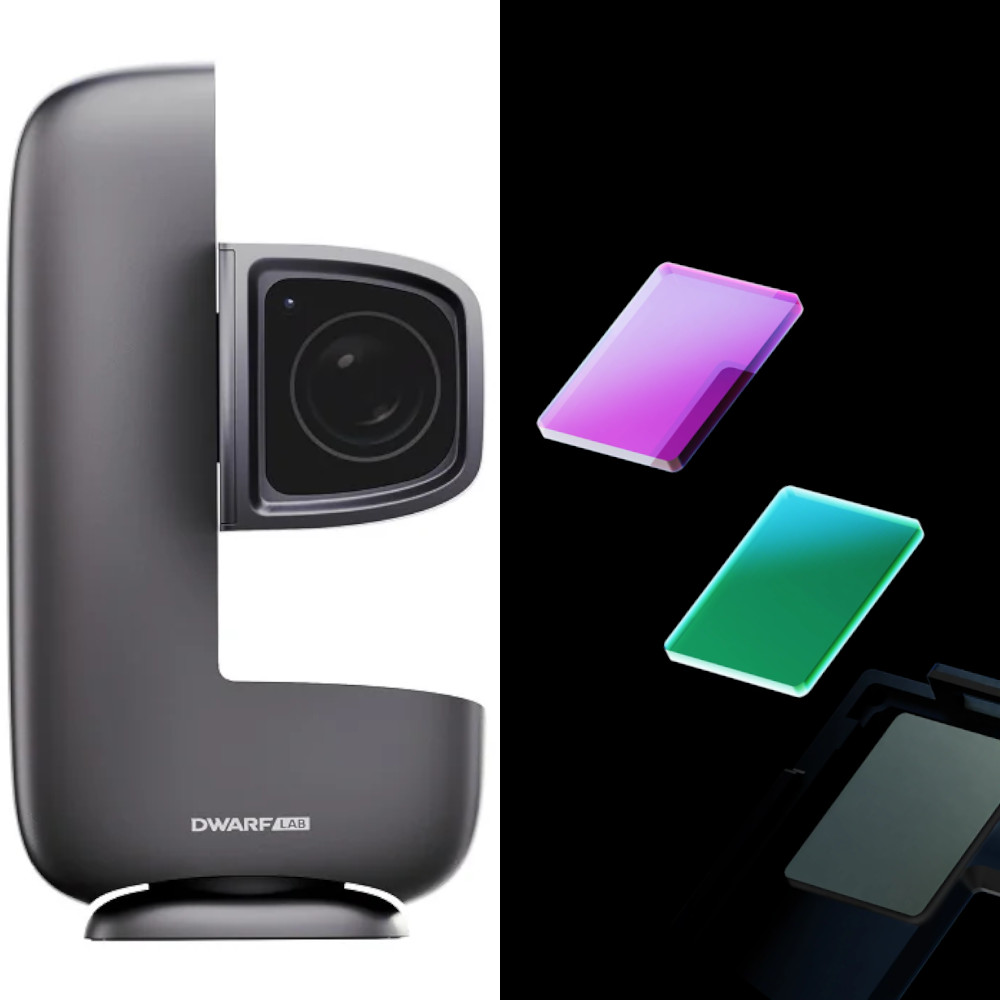
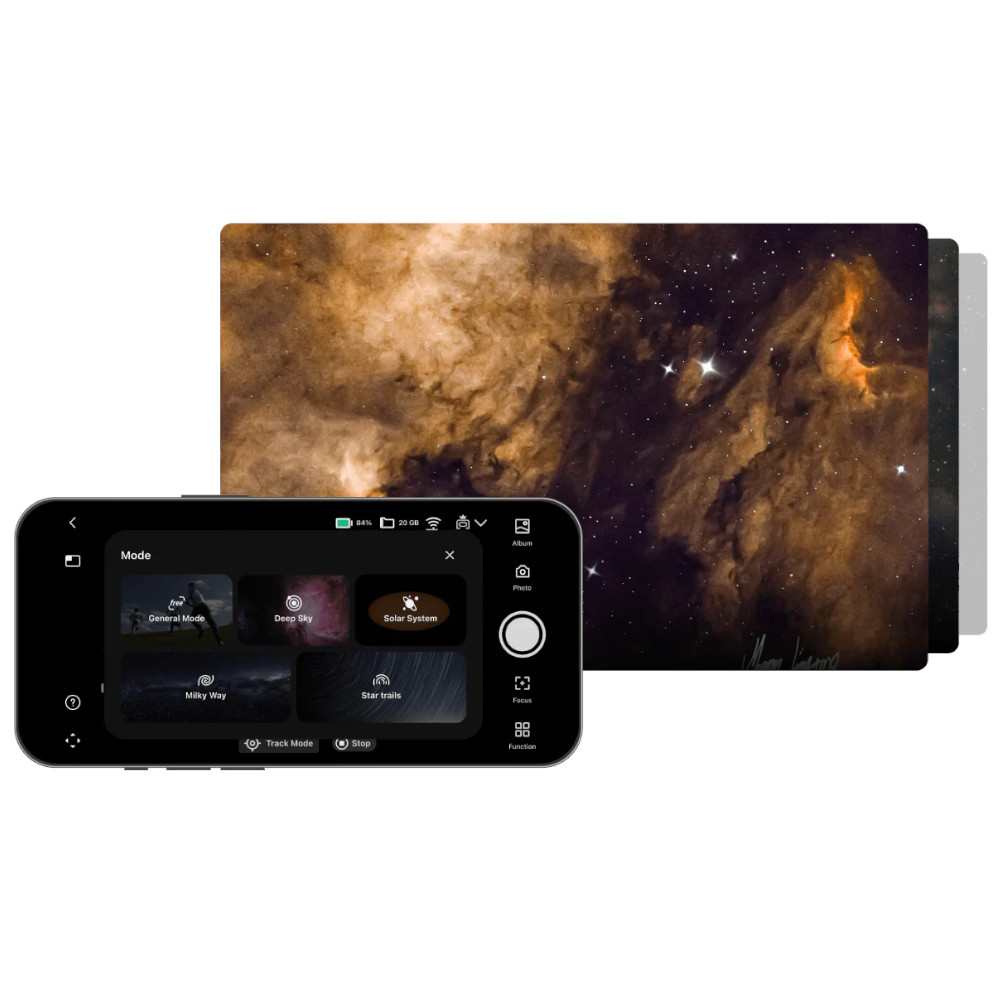
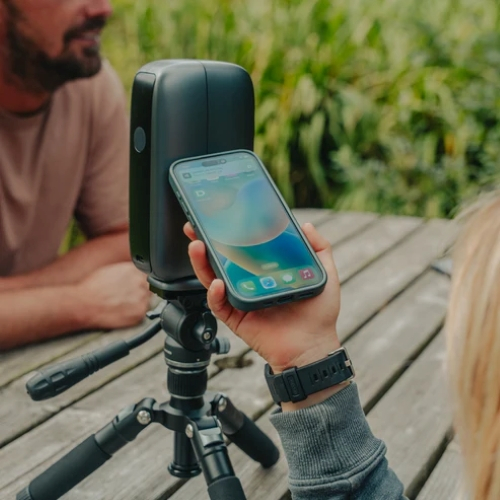
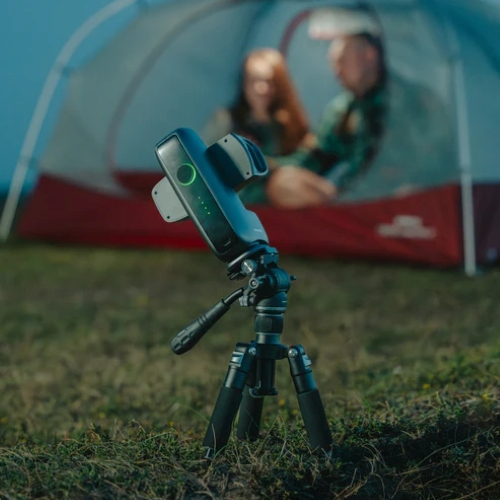
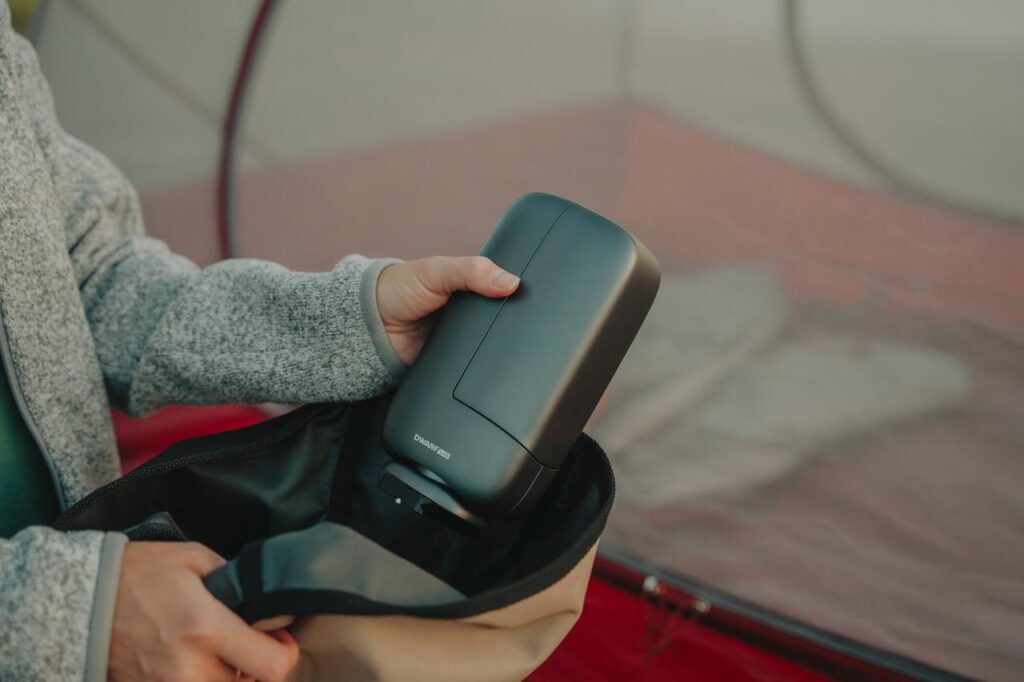
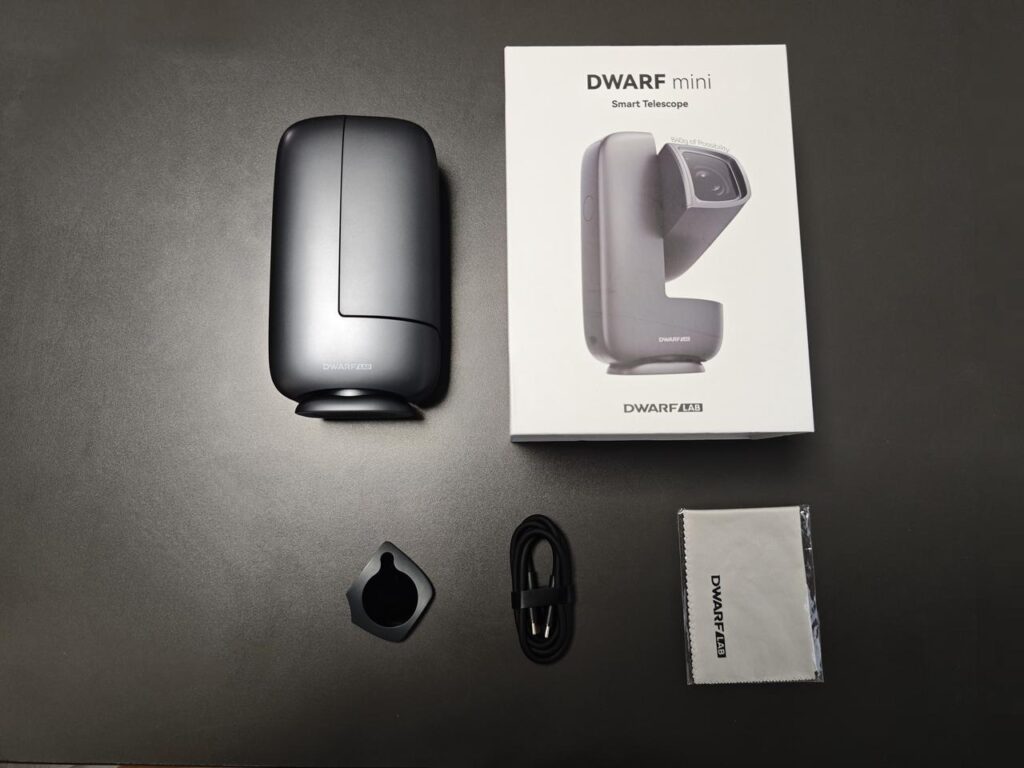
The DWARF Mini comes with a telephoto lens, a wide-angle lens, internal filters, a solar filter, and 64 GB of storage: an ultra-compact smart telescope weighing less than 1 kg that photographs in three minutes.
For families, this might just be the nicest option: everyone watches together at the same time, and no one has to look through an eyepiece.
Want to take pictures? Filter your equipment first!
Your camera also needs protection. Pointing it at the sun unfiltered can damage your sensor in seconds, and looking at the unfiltered sun through an optical viewfinder is just as dangerous as with the naked eye. Use solar filter film for your lens and focus using the screen (live view), never through the viewfinder.
Checklist: Safely Viewing a Solar Eclipse
- ✅ Certified eclipse glasses (ISO 12312-2) for every family member
- ✅ Solar filter on the front of a telescope, binoculars, or camera, never at the eyepiece
- ✅ Locator covered or removed
- ✅ Filters pre-checked for damages
- ✅ Unobstructed southwest view (sun is low, check details on the event page)
- ✅ Bonus: stay outside after sunset, the Perseids peak that same night. In our Perseids viewing guide Read how to see the most shooting stars
Order on time
During the 1999 solar eclipse and the more recent American eclipses, eclipse glasses and sun filters Sold out for weeks. With only a few weeks left, this is the perfect time to get your equipment at home. Are you unsure which filter fits your telescope? Send us a message, come by for an appointment in Sneek, or send us a message via WhatsApp or email. We’d be happy to help, so that you only have to look up on August 12th!
Frequently Asked Questions
Can I safely watch the solar eclipse with sunglasses?
No. Sunglasses block far too little light and do not adequately filter out UV and infrared radiation. Only use certified eclipse glasses or a real solar filter.
Is it safe to look during the maximum, when almost the entire sun is covered?
No. Because the eclipse in the Netherlands and Belgium is not total, a dazzling portion of the sun remains visible at all times. Protection is mandatory from beginning to end.
Which solar filter fits my telescope?
That depends on the outer diameter of your telescope tube. You cut solar filter film to size; for glass filters, you order them by diameter. In our Sunscreen guide Make sure you know exactly which type of filter fits your telescope. Feel free to ask us, and with your telescope model at hand, we'll give you direct, suitable advice.
Can my child look at the solar eclipse through the telescope?
Yes, provided an approved solar filter is attached to the front of the telescope and an adult is present. Always cover the viewfinder: children might otherwise look through it unnoticed.