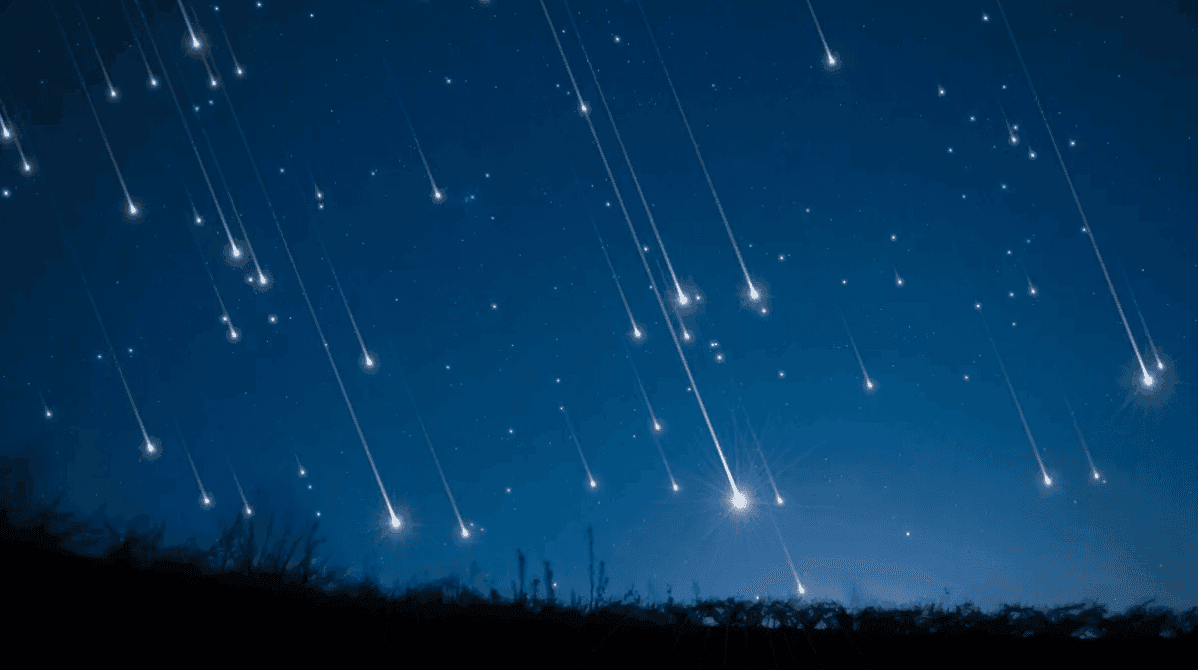
The Perseids are the most famous meteor shower of the year, and by far the most popular: dozens of shooting stars per hour, in the middle of summer, visible without a telescope. On this page you can read when the Perseids peak, how to view them best, and what to expect from the next edition.
When are the Perseids in 2027?
The Perseids are active every year from about mid-July to late August, with the peak on the night of August 12 to 13. In 2027 as well, the maximum falls on that night. In the days around the peak, you will also see increased activity, so a single cloudy night does not have to ruin your meteor shower. The best hours are after midnight, when the radiant (the point where the meteors appear to come from, in the constellation Perseus) is higher in the sky.
What are the Perseids, actually?
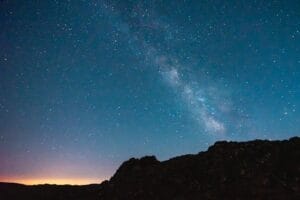
Every year in August, Earth crosses the dust trail of Comet Swift-Tuttle. The dust particles—often no larger than a grain of sand—burn up high in the atmosphere and create the streaks of light we call shooting stars. Under a truly dark sky, you can see anywhere from a few dozen to about a hundred meteors per hour during the peak; under an average Dutch sky with light pollution, a significant portion of that number is lost, but there are still more than enough to make for a memorable evening.
This is how you watch: no telescope needed
Honest advice from a telescope store: for meteors, leave the telescope inside. Shooting stars appear everywhere in the sky and are gone in a fraction of a second; the naked eye with its wide field of view is the best instrument that exists. What does help:
- Find a dark place, away from streetlights. Our guide with the best locations in the Netherlands for stargazing helps you on your way.
- Give your eyes 20 to 30 minutes to adjust to the dark and do not look at your phone during that time.
- Lie down (stretcher or mat) and look broadly, not rigidly at one point.
- Check the moon phase in the lunar calendarthe fewer meteors you see in the sky, the more moon... Wait.the less moon in the sky, the more meteors you see.
Retrospective: The Perseids of 2026
The 2026 edition was a special one: the peak occurred on the same night as the major partial solar eclipse of August 12. Anyone who stayed outside that evening after the eclipse was rewarded with one of the finest viewing nights of the year. It made 2026 an evening that many visitors to our eclipse event will not soon forget.
Photographing the Perseids
Honest advice here too: a smart telescope is not the right tool for meteors, because its field of view is too small for that. You photograph meteors with a camera on a tripod, a wide-angle lens, and exposures of 10 to 30 seconds, pointed at a dark part of the sky. Let the camera run throughout the entire peak evening and the hits will naturally be among them. If, after the meteor shower, you want to go deeper into the night, with nebulae and galaxies that do require a telescope, start with our Telescope Buying Guide for Beginners or view the smart telescopes that automate that work.
Frequently Asked Questions
When is the best time to see the Perseids?
In the night of August 12 to 13, after midnight. Activity is also increased in the days before and after.
Do I need a telescope for the Perseids?
No. Meteors are viewed with the naked eye; a telescope or binoculars has too small a field of view. A dark location and patience are more important than optics.
Where should I look?
Nowhere in particular: meteors can appear anywhere in the sky. Look well upwards toward the darkest part of the sky and avoid the direction of cities and the moon.
Curious about what else is happening in the sky? The lunar calendar shows all full and new moons, and the solar eclipse of 2027 is the next major celestial spectacle.