A lunar eclipse is one of the most beautiful celestial phenomena that you can view without special equipment. The Moon then moves through the Earth's shadow and, in the best case, turns a deep red: the famous blood moon. On this page you will find the dates of all upcoming lunar eclipses visible from the Netherlands and Belgium, an explanation of how the phenomenon occurs, and practical tips to get the most out of it.
When is the next lunar eclipse?
The next lunar eclipse is a penumbral eclipse on the night of February 20 to 21, 2027. It is barely perceptible to the naked eye: the moon only becomes a fraction darker. The next total lunar eclipse which is clearly visible from the Netherlands and Belgium, falls on December 31, 2028, right in the middle of New Year's Eve. In 2029 there will even be two: on June 26 and December 20.
| Date | Type | Visibility from the Netherlands and Belgium |
|---|---|---|
| February 20 to 21, 2027 | Penumbral eclipse | Barely perceptible |
| December 31, 2028 | Total lunar eclipse (blood moon) | Clearly visible during New Year's Eve |
| June 26, 2029 | Total lunar eclipse | Visible in clear weather |
| December 20, 2029 | Total lunar eclipse | Visible in clear weather |
The most recent eclipses over the Low Countries were the total lunar eclipse of September 7, 2025, and the deep partial eclipse of August 28, 2026, during which approximately 93 percent of the Moon disappeared into the Earth's umbra. The next chance for a real blood moon is therefore around the turn of the year from 2028 to 2029.
How does a lunar eclipse occur?
A lunar eclipse occurs when the Earth is positioned precisely between the Sun and the Moon. The Earth then casts a shadow on the Moon. This can only happen during a full moon, because only then are the Sun, Earth, and Moon aligned. When the Moon moves completely into the umbra (the core shadow), we speak of a total eclipse. If the Moon only partially touches the umbra, the eclipse is partial. If the Moon merely passes through the lighter penumbra, it is a penumbral eclipse that is barely visible to the naked eye.
Why does the moon turn red?
During a total eclipse, the moon does not turn black, but red to copper-colored. This is because Earth's atmosphere bends a small portion of the sunlight toward the moon. Blue light is scattered along the way, while red light gets through. The amount of dust and moisture in the atmosphere determines the exact color: from bright orange to deep dark red. That is why we call a totally eclipsed moon a blood moon.
How do you view a lunar eclipse?
Unlike a solar eclipse you do not need any protection during a lunar eclipse. You can safely look with the naked eye for as long as you want. Moreover, an eclipse unfolds slowly: from start to finish, the phenomenon often lasts more than three hours. So you have plenty of time to find a good spot and set up your equipment.
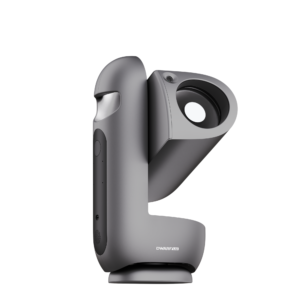
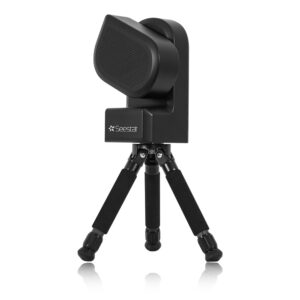
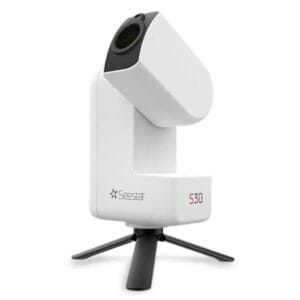
With binoculars or a telescope, the spectacle becomes a lot more impressive. You can then see how the shadow edge of the earth slowly glides over craters and lunar maria. A Dobson telescope gives a high light output and a wide view, ideal for seeing the entire moon at once. A refractor telescope shows details in craters extra sharply due to the high contrast. A smart telescope automatically tracks the moon and takes photos directly via your smartphone. Unsure which type suits you? Our guide for beginners helps you on your way.
Tips for photographing a lunar eclipse
- Always use a tripod. The moon is dark during the red phase and requires longer exposure times.
- If you photograph the bright, un-eclipsed phases, a moon filter prevents overexposure. In our Moon filter guide read which filter fits your telescope.
- During the total phase, you remove the filter precisely then: the moon needs all the light it can get.
- A smart telescope or a smartphone adapter on your eyepiece is the easiest way to immediately capture sharp images.
Lunar eclipse and the full moon
Every lunar eclipse coincides by definition with a full moon. Do you want to know when the upcoming full moons are, what they are called, and what else you can see in the sky on those nights? Then check out our lunar calendar, the complete annual calendar for moon phases and observation tips.
Frequently Asked Questions
Do I need eclipse glasses for a lunar eclipse?
No. A lunar eclipse is completely safe for your eyes. Eclips glasses are only needed for a solar eclipse.
When is the next blood moon in the Netherlands?
The next total lunar eclipse visible from the Netherlands and Belgium will take place on December 31, 2028, during New Year's Eve. This will be followed by two in 2029: on June 26 and December 20.
How often does a lunar eclipse occur?
Worldwide there are usually two to four lunar eclipses per year, but by far not every eclipse is visible from Europe. Total eclipses over the Netherlands and Belgium are rarer: sometimes years pass between them.
Can I photograph a lunar eclipse with a regular camera?
Yes, with a tripod and a telephoto lens you can already get quite far. If you want to capture details on the lunar surface, a telescope with a camera adapter or a smart telescope gives clearly better results.