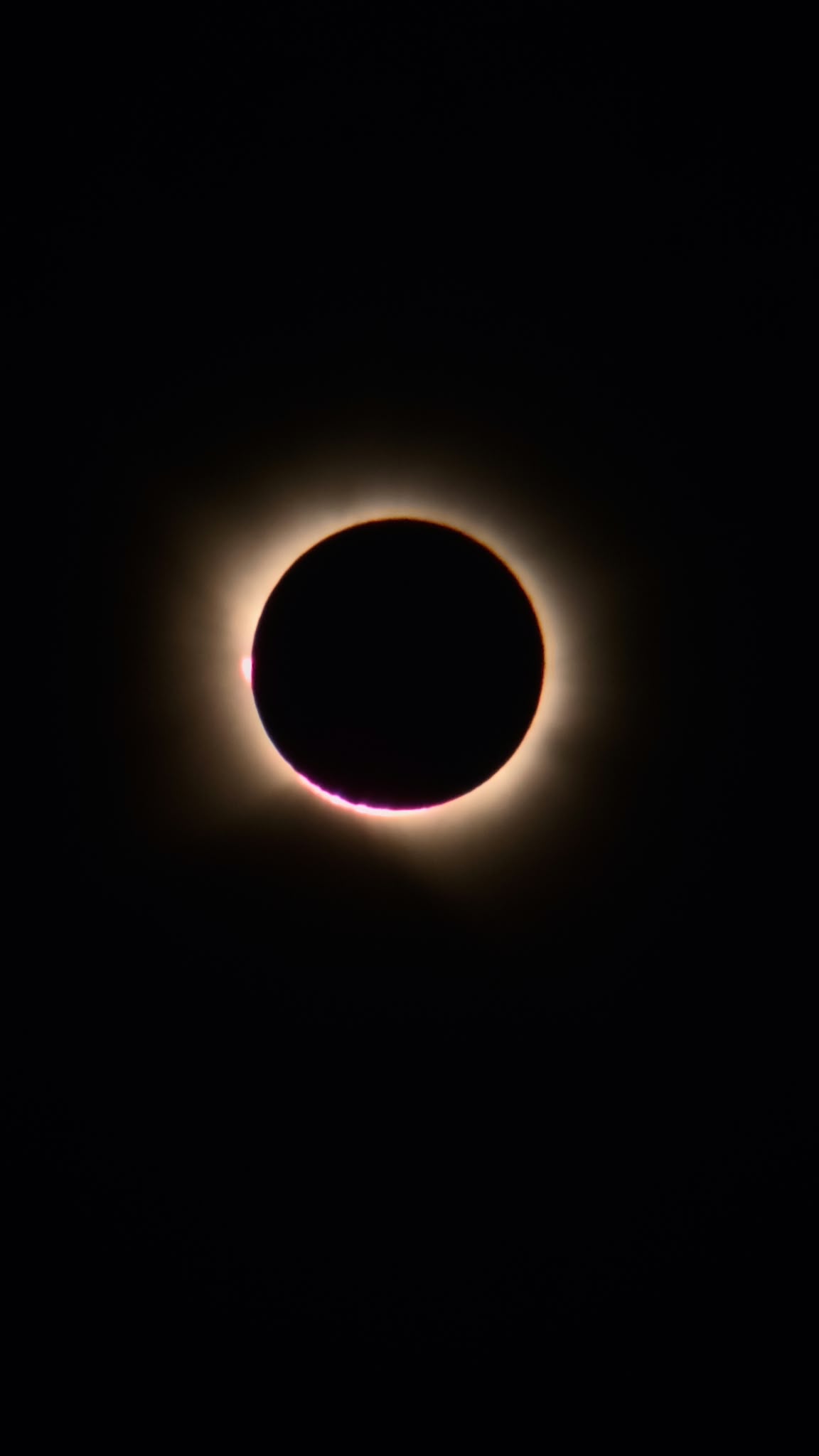
When is the next one solar eclipse? The answer: on August 2, 2027. In the Netherlands and Belgium, you will see a partial eclipse that morning where about half of the sun is covered, and those who travel toward southern Spain or North Africa will experience a total solar eclipse of historic length. On this page, we keep track of everything about the upcoming solar eclipse: what you will see, where you need to be, and how to watch safely.
Solar eclipse August 2, 2027: what will you see in the Netherlands and Belgium?
On Monday, August 2, 2027, the moon will pass in front of the sun in the late morning. In the Netherlands, the eclipse will begin shortly after 10:00 a.m., with maximum eclipse occurring around 11:05 a.m.; exact times vary by a few minutes depending on location. At its peak, approximately 49% of the Sun’s diameter will be covered. That’s less spectacular than the 88% from August 2026, but with eclipse glasses or a telescope equipped with a solar filter, it remains a remarkable sight: the Moon takes a distinct bite out of the Sun.
Total in southern Spain and North Africa: the longest in over a century
The real spectacle takes place further south. The shadow path runs across the far south of Spain, Morocco, Algeria, Tunisia, Libya, and Egypt. In southern Spain, totality lasts over 4.5 minutes; near Luxor in Egypt, this increases to 6 minutes and 23 seconds. This makes it the longest total solar eclipse on land between 1991 and 2114. For anyone already heading to Spain for a holiday in August, this is a once-in-a-lifetime opportunity: a total eclipse means a few minutes of deep twilight in the middle of the day, with the sun's corona visible to the naked eye. Only during that complete totality can the glasses be removed; in all other phases, and everywhere in the Netherlands and Belgium, eye protection is mandatory.
Retrospective: the solar eclipse of August 12, 2026
On August 12, 2026, the Netherlands experienced the greatest partial solar eclipse in years: at its peak, around 8:11 p.m., 88% of the Sun was covered, and it became merkbar twilight. That evening, we joined hundreds of visitors at our eclipse event and watched through our telescopes equipped with solar filters as the moon slid across the sun’s disk for several minutes. We’re carrying that experience forward to 2027: on this page, you can read exactly how to prepare for the eclipse in the run-up to the event.
Safe sun viewing: this is what you need
Never look at the sun without protection, not even when it is largely covered. For the naked eye, use certified eclipse glasses such as the Bresser solar eclipse glasses. If you want to look through a telescope or binoculars, a solar filter always belongs on the front; you can read which size fits your binoculars in our guide about solar filters for your telescope. All steps, from glasses to projection method, are in the comprehensive guide safely view a solar eclipse.
And after 2027?
Anyone who misses 2027 will need patience. A partial solar eclipse with a greater coverage than the one in 2026 will not be visible from the Netherlands until 2090, and we will have to wait until October 7, 2135, for a total solar eclipse over the Netherlands. Therefore, the 2027 eclipse is simply the best upcoming opportunity for most people, especially when combined with a summer vacation heading south.
Frequently Asked Questions
When is the next solar eclipse in the Netherlands?
On August 2, 2027, in the late morning. In the Netherlands and Belgium, the eclipse will be partial: approximately 49% of the Sun’s diameter will be covered, with maximum eclipse occurring around 11:05 a.m.
Where is the 2027 solar eclipse total?
In the far south of Spain and in North Africa, from Morocco to Egypt. In southern Spain, totality lasts over 4.5 minutes, and near Luxor in Egypt a maximum of 6 minutes and 23 seconds.
Can I reuse an old eclipse glasses?
Only if undamaged: no scratches, pinholes, or loose filter film. Check the glasses before use against a bright light; if you see light coming through anywhere outside of the filters, replace them.
Want to see more of the sun than just an eclipse? Read the sun through a telescope or view all sun filters in our assortment.