

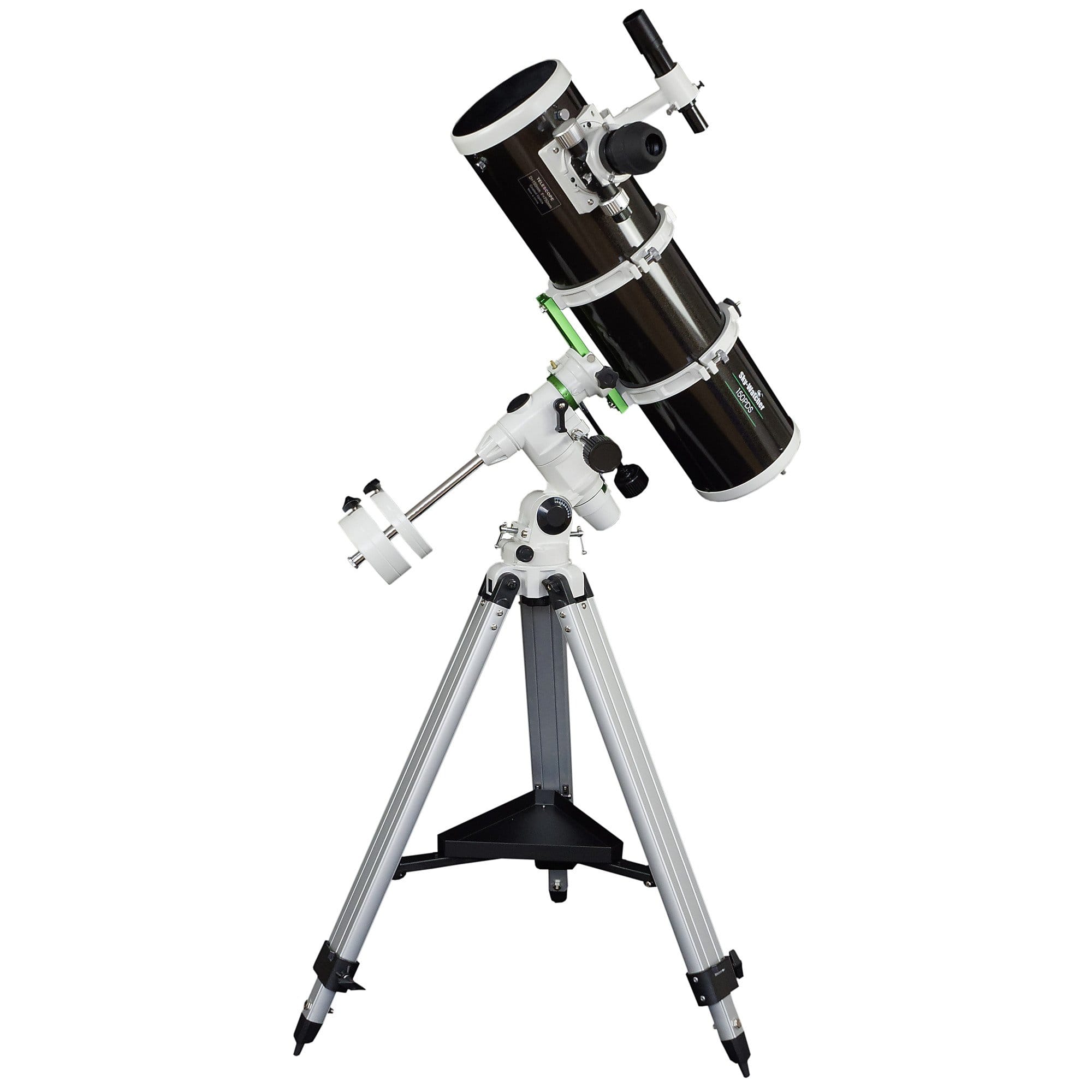
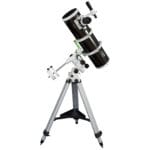


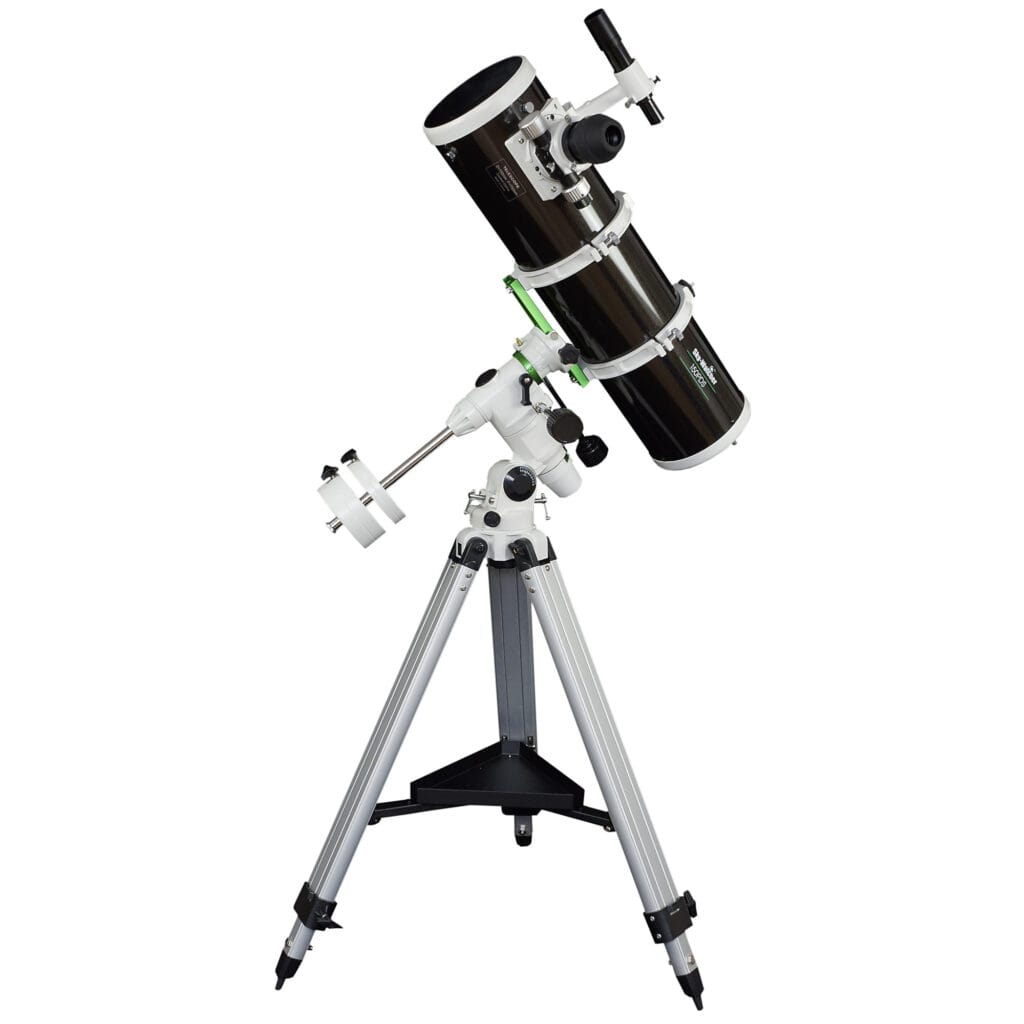
Sky-Watcher Explorer-150PDS EQ3-2: serious start in both astrophotography and visual astronomy
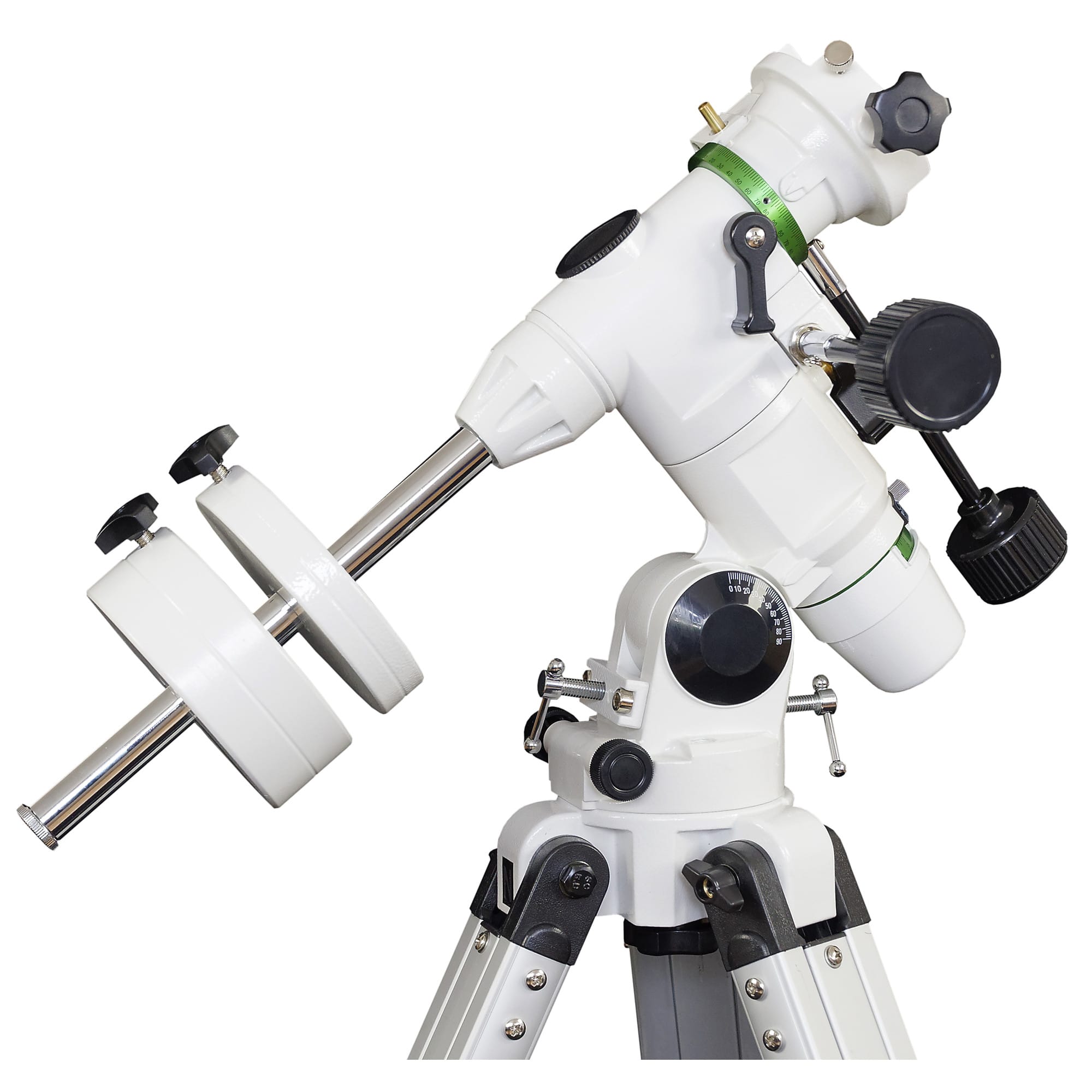
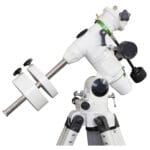
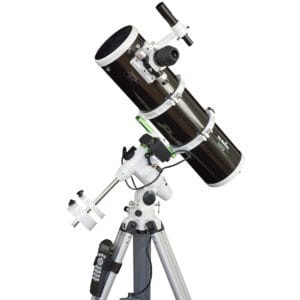
This set puts the popular 150/750 mm imaging Newtonian (f/5) on the EQ3-2 mount: the most affordable complete route to a system that is fully capable visually and can grow photographically. The EQ3-2 can later be expanded with tracking motors or a GoTo upgrade, allowing the set to grow with your ambitions.
What can you do with it?
Photographic: the great nebulae and galaxies in prime focus, with the fast f/5 optics that gather a lot of signal per minute. Visual: sharp lunar craters, the cloud bands of Jupiter, the rings of Saturn, and under a dark sky, the well-known deep-sky highlights. The parabolic mirror keeps stars sharp; the coma at the extreme edge is characteristic of f/5 and can be resolved by a corrector.
Why a PDS?
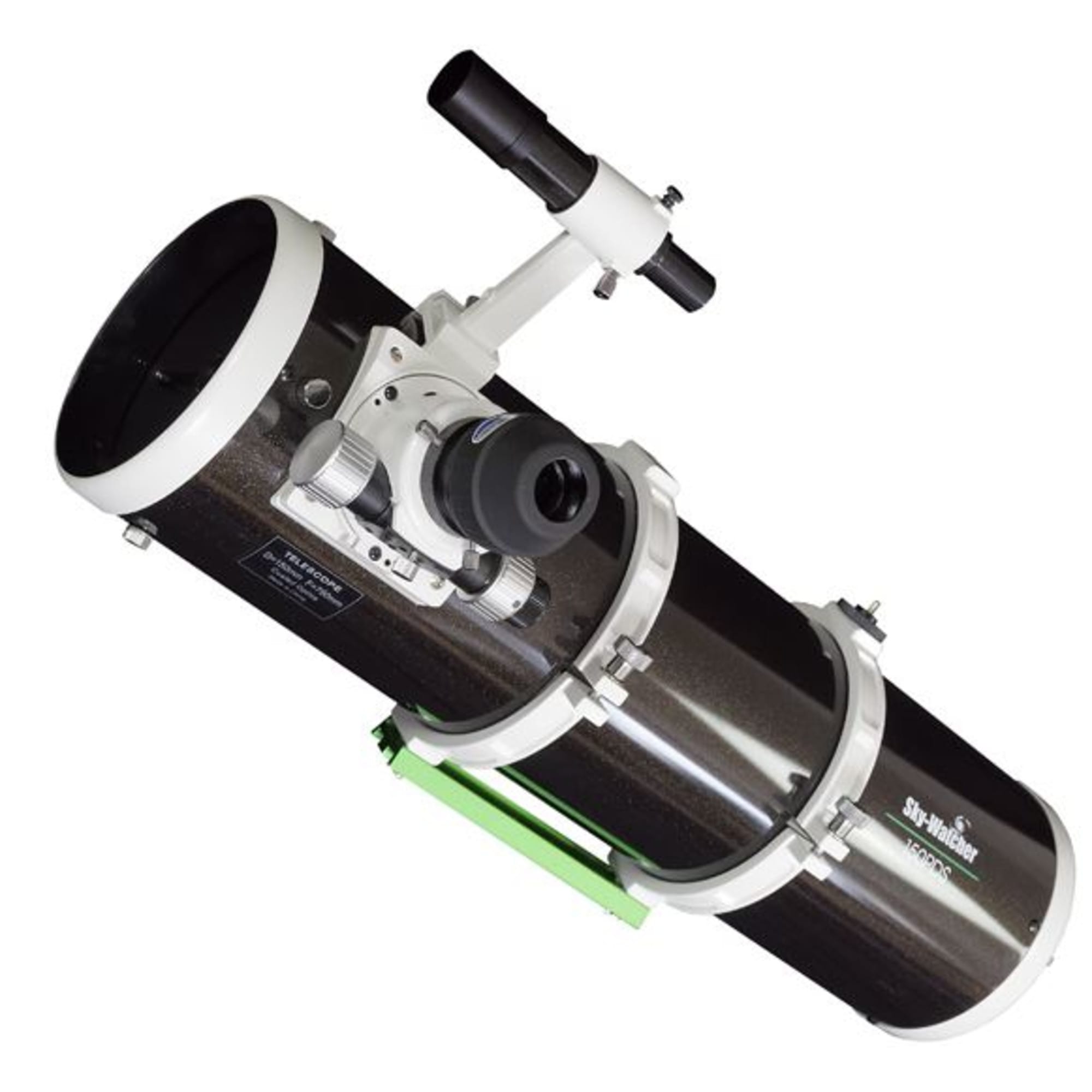
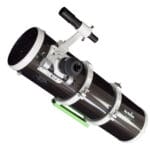
The PDS versions are the photo versions of the Explorer line: the focal point is further out so that a camera comes into focus in prime focus, the tube is internally blackened to prevent stray light, and the focuser is built for the weight of a camera. Visually, you don't lose anything: with the included.
This is how to get the most out of this telescope
- Collimation is a fixed ritual at f/5: check for each photoshoot. Our guide to collimation It takes two minutes.
- Include the comma corrector: For sharp stars all the way to the corners of the sensor, this fast optic requires a corrector. Ordering it at the same time saves you a second waiting period.
- Mounting choice: The EQ3-2 is sufficient visually and for short exposures; for serious photography, the EQ5 Pro version is the more durable choice.
- Give the mirror some cooling time (30 to 60 minutes depending on the size) for the sharpest image, visually and in photos.
- Visual planetary work: a 6 mm eyepiece gives 125x.
For whom yes and for whom no
Hello the beginner who knows that astrophotography beckons but wants to start visually first without having to replace everything later.
Not If you want deep-sky photos without a mount, guiding, and post-processing, the smart telescopes the shorter route; ours Telescope Buying Guide for Beginners explain the trade-off.
Featured accessories
These accessories add the most after purchase:
- Coma corrector At f/5, stars at the edge of the frame appear comet-shaped on the sensor. The Sky-Watcher 2 inch Coma Corrector 1.0x solves this and is the most important first purchase for serious photography with this tube.
- Cheshire eyepiece An imaging Newton only performs with tight collimation; a Cheshire makes the adjustment accurate and fast.
- Moon Filter 25%: for visual moon phases dims the Omegon Moon Filter 25% (1.25 inches) the bright light. More explanation in our Moon filter guide.
- Carrier bag the 150/750 bag and the EQ3 mount bag keep the setup portable. Check out the carrier bags.
Technical specifications
| Specification | Details |
|---|---|
| Optical design | Newtonian reflector (parabolic), imaging version |
| Opening | 150 mm |
| Focal length | 750 mm (f/5) |
| Mount | EQ3-2 (equatorial, upgradeable with motors/GoTo) |
| Ocular | 28 mm (1 inch) |
| Seeker | 6×30 optical with reticle |
Included in the box
- Sky-Watcher Explorer-150PDS optical tube
- EQ3-2 mount with tripod
- 28mm LET-ocular (2-inch)
- 6×30 optical viewfinder
- Free: Stargazer's Handbook by Telescoop.nl (16 pages, Dutch language)
Free Stargazers' Handbook
Every Sky-Watcher telescope from Telescoop.nl comes with our own Stargazer’s Handbook in the box. It’s a 16-page booklet that helps you get started on your first few nights: how to align the finder scope, what magnification to start with, why the image sometimes wobbles, and when a telescope does or doesn’t need to be collimated. It’s not a thick book—just the essentials you really need when you’re starting out.
Honest advice from observers
We sell and use the Sky-Watcher line ourselves. In our Sky-Watcher brand guide We'll explain which series are strong and which you'd rather skip. View the full range on our Sky-Watcher brand page. Order before 11:59 PM for fast delivery, in the Netherlands and Belgium. Uncertain about mounting, guiding, or coma corrector? Call or email us: we're happy to help with photo setups.
Reviews
There are no reviews yet.