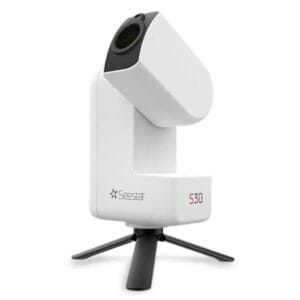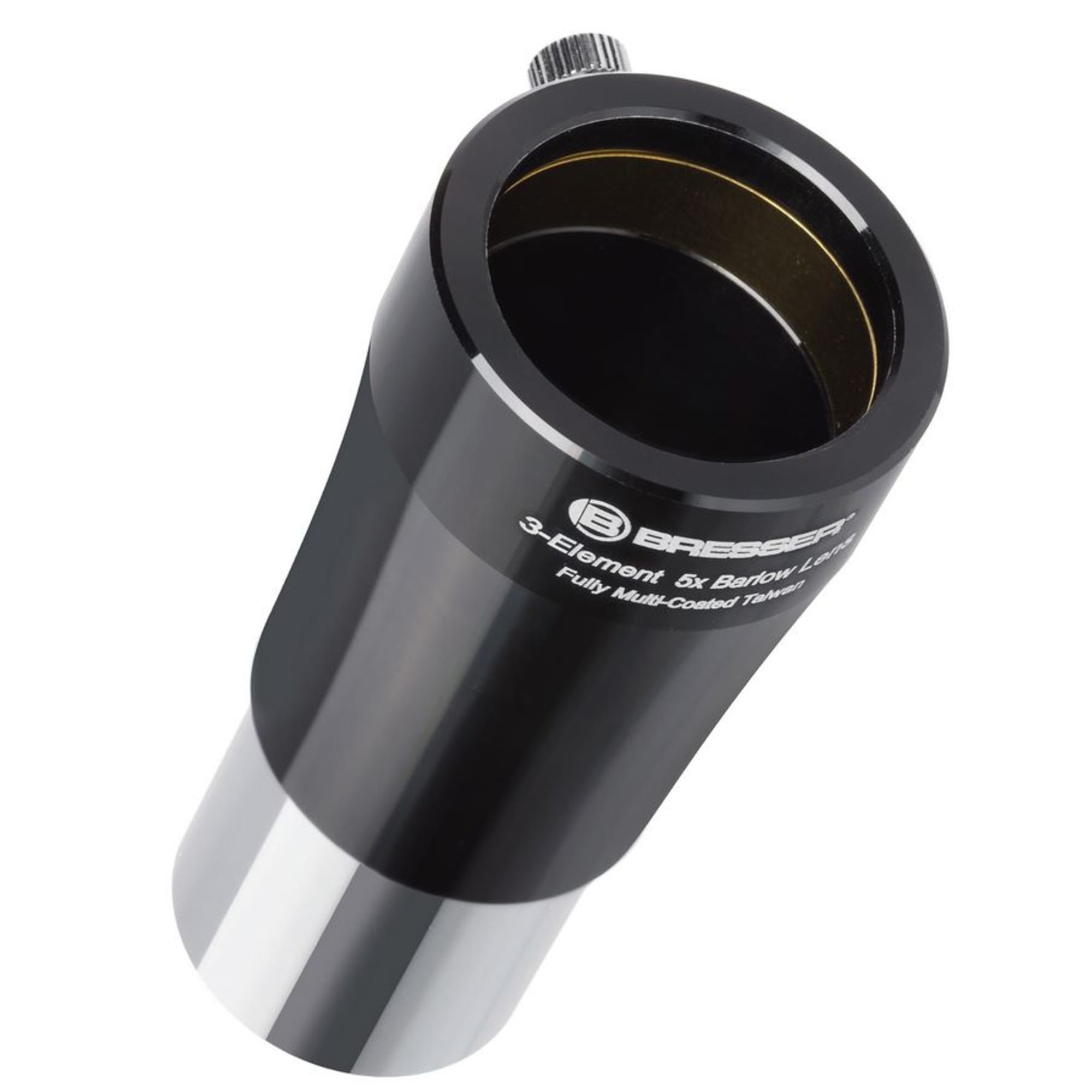
Een Barlow lens telescoop klinkt voor veel beginners als een soort magisch accessoire. Je schuift hem tussen het oculair en de focuser, en ineens wordt de vergroting verdubbeld of zelfs verdrievoudigd. Een 10 mm oculair dat normaal 100x vergroting geeft, verandert met een 2x Barlow in 200x. Handig, want zo lijkt het alsof je met een paar oculairs ineens veel meer mogelijkheden hebt. Toch is het verhaal genuanceerder. Een Barlow kan je set oculairs uitbreiden, maar levert niet altijd winst in beeldkwaliteit. Goedkope exemplaren zorgen vaak voor wazige, contrastarme beelden.
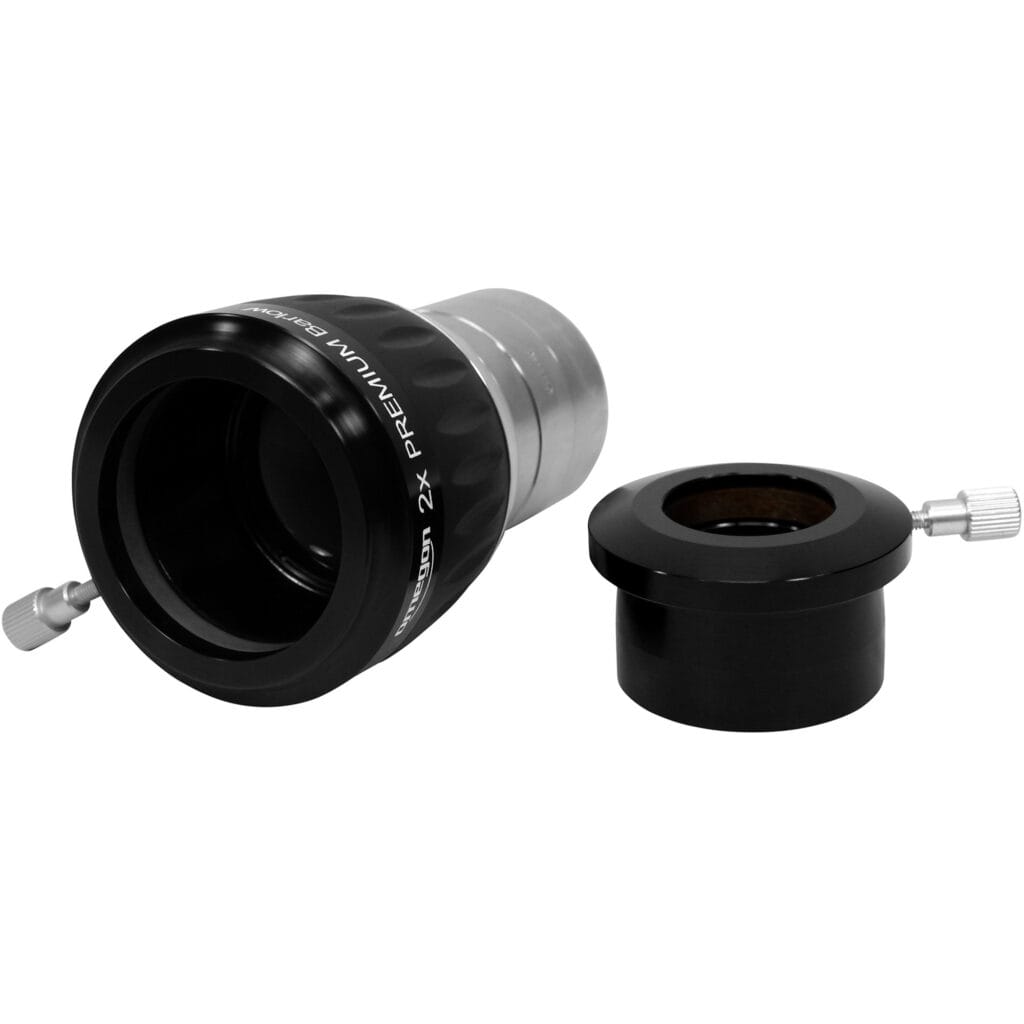
How a Barlow lens telescope works optically
Optically, a Barlow is a negative lens. Where an eyepiece focuses light to enlarge the image, the Barlow does the opposite: it spreads the light out slightly, effectively lengthening the focal length of the telescope. That longer focal length provides additional magnification without the need for a new eyepiece. If you place a 2x Barlow in front of a 25 mm eyepiece, that eyepiece behaves like a 12.5 mm. Thus, one accessory transforms several eyepieces into a whole range of new focal lengths.
When is a Barlow useful and when is it not?
A Barlow lens telescope is especially useful for planetary observations. With a 2x or 3x Barlow, you can visualize more details on Jupiter or Saturn without immediately investing in extra short eyepieces. But there is a limit: you can't keep enlarging infinitely. If the atmosphere is shaky or your telescope's aperture is limited, that extra magnification will mainly produce a larger, blurrier image. For deep-sky objects, a Barlow usually backfires, because you actually lose light and brightness.
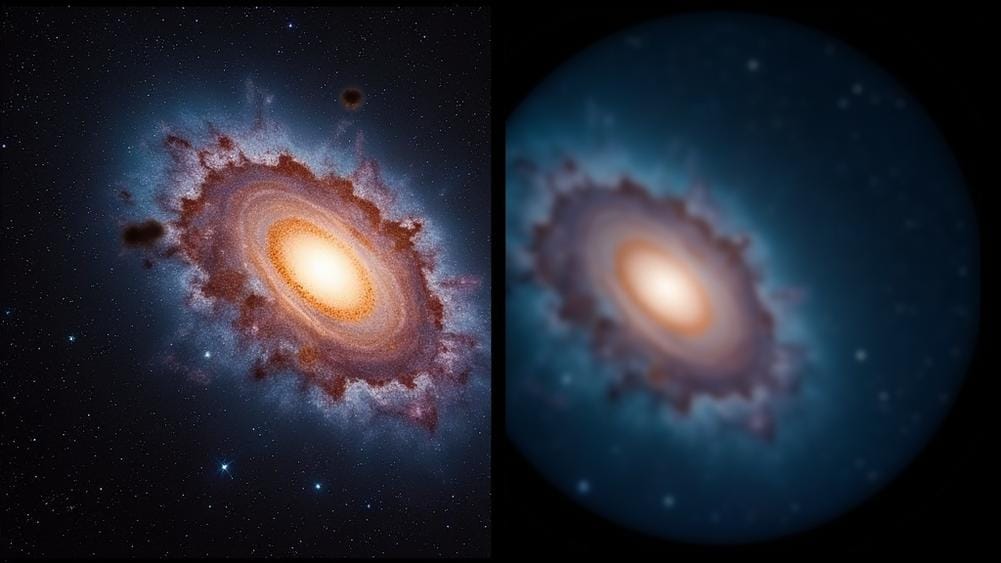
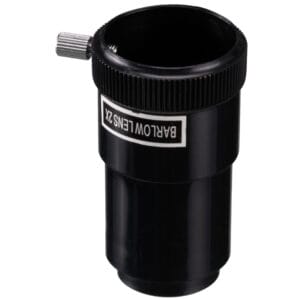
The difference is also in the quality of the lens. An achromatic Barlow (usually 2-lens design) corrects color errors reasonably well, but an apochromatic variant (3-lens) gives a sharper image and is especially interesting for those who photograph. Cheap entry-level binoculars often come with a simple Barlow that is more marketing trick than functional addition.
Common misunderstandings
Een Barlow lens is geen vervanging voor een goed oculair. Hij vermenigvuldigt alleen wat er al is. Gebruik je een matig 10 mm oculair, dan krijg je met een 2x Barlow niet plotseling de scherpte van een topmodel 5 mm. Een ander misverstand is dat je altijd een 3x Barlow zou moeten nemen “om dichterbij te komen”. In werkelijkheid is een 2x veelzijdiger: het geeft voldoende vergroting voor planeten zonder dat je meteen de grenzen van je telescoop overschrijdt.
In addition, a Barlow changes the light path. This means that focus is sometimes more difficult to achieve, especially with smaller telescopes. For photography, a good Barlow can actually be valuable: it makes the focal length longer and helps in capturing details, for example in close-ups of the Moon.
Practical advice on purchasing
A good way to determine if a Barlow lens is useful for you is to look at your current set of eyepieces. For example, if you only have a 25 mm and a 10 mm, then a 2x Barlow will effectively give you a 12.5 mm and a 5 mm. This immediately gives you a complete range for both deep-sky and planets. If you already have a 6 mm and a 12 mm in your case, then a Barlow adds less. This way you avoid double investing in magnifications you already own.
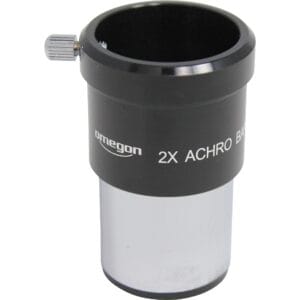
Those considering a Barlow lens telescope should first choose a good 2x Barlow with achromatic double lens. This effectively doubles your eyepieces and gives usable results with most telescopes. For advanced observers and astrophotographers, an apochromatic 3x Barlow may be of interest, but only if telescope aperture and seeing permit.
Een slimme strategie is om een paar degelijke eyepieces te combineren met één goede Barlow. Daarmee heb je direct een veelzijdige set zonder dat je tien losse oculairs hoeft te kopen. Bij Telescoop.nl vind je diverse barlowlenzen die passen bij 1,25” en 2” focusers. Bekijk ze hieronder:
The most popular Barlow lenses right now
-
 Bresser Barlow lenses 2x / 3x / 5xPrice range: 12,90 through 49,90
 -
Omegon Barlow Lens 2x Achromatic (1.25 inch)34,90