
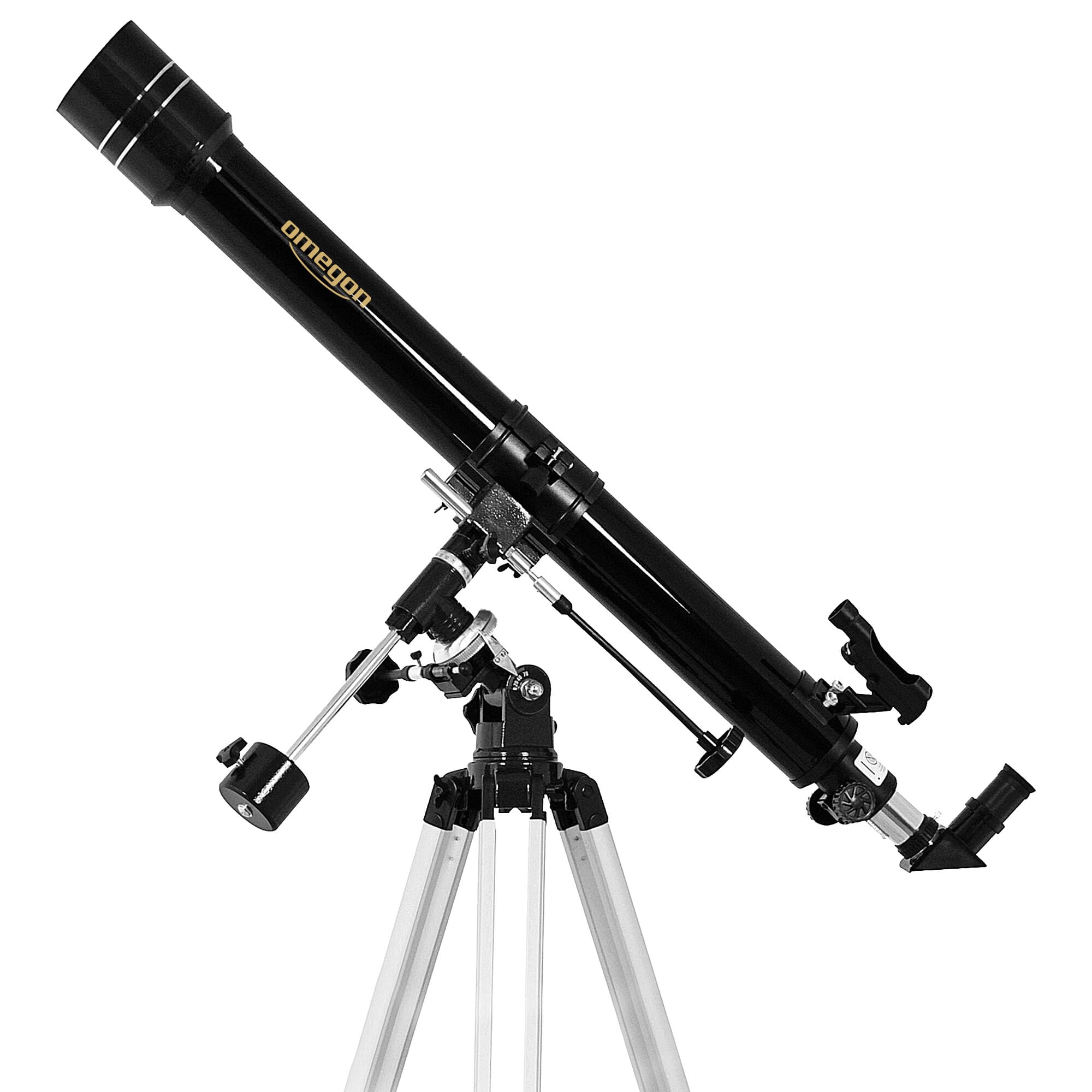
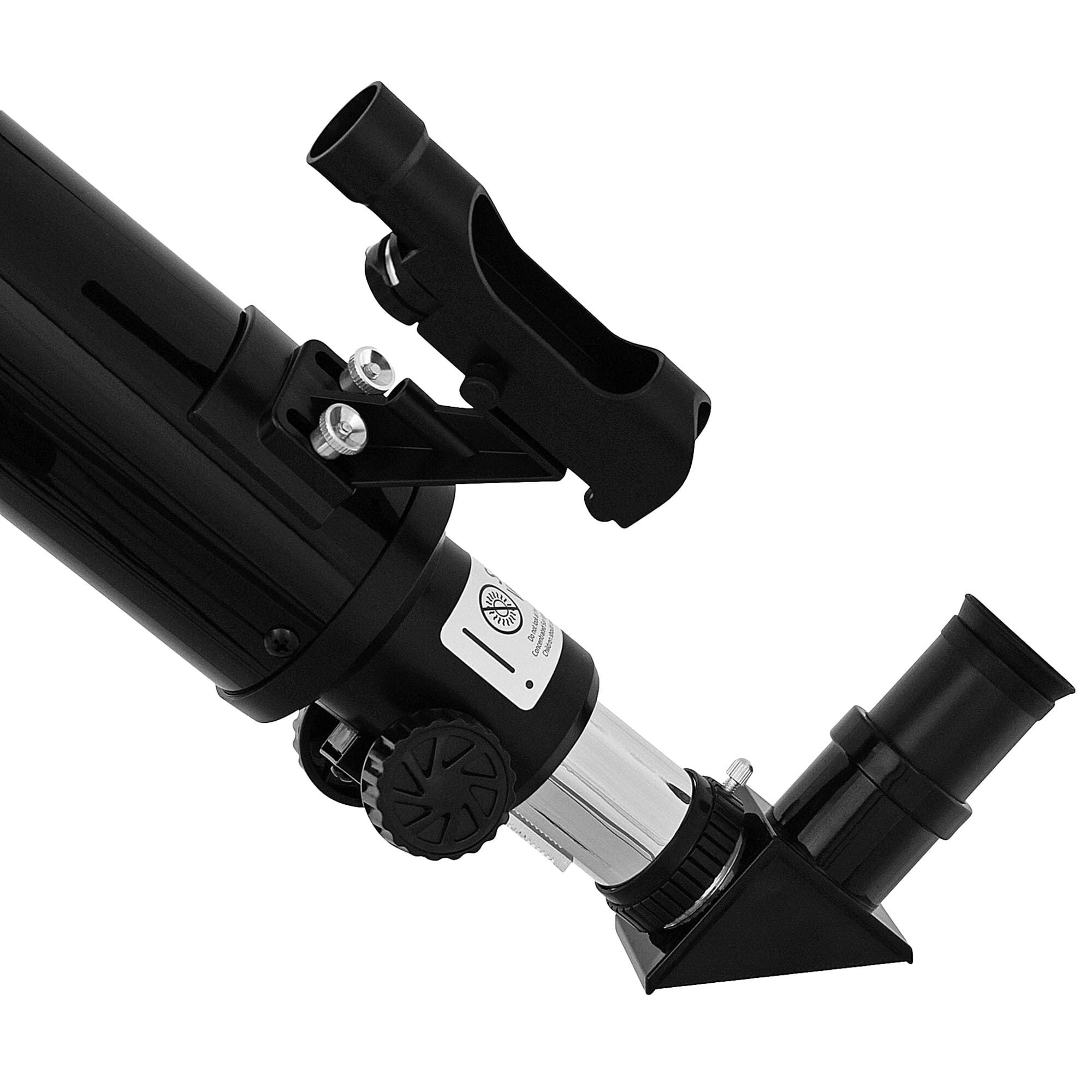
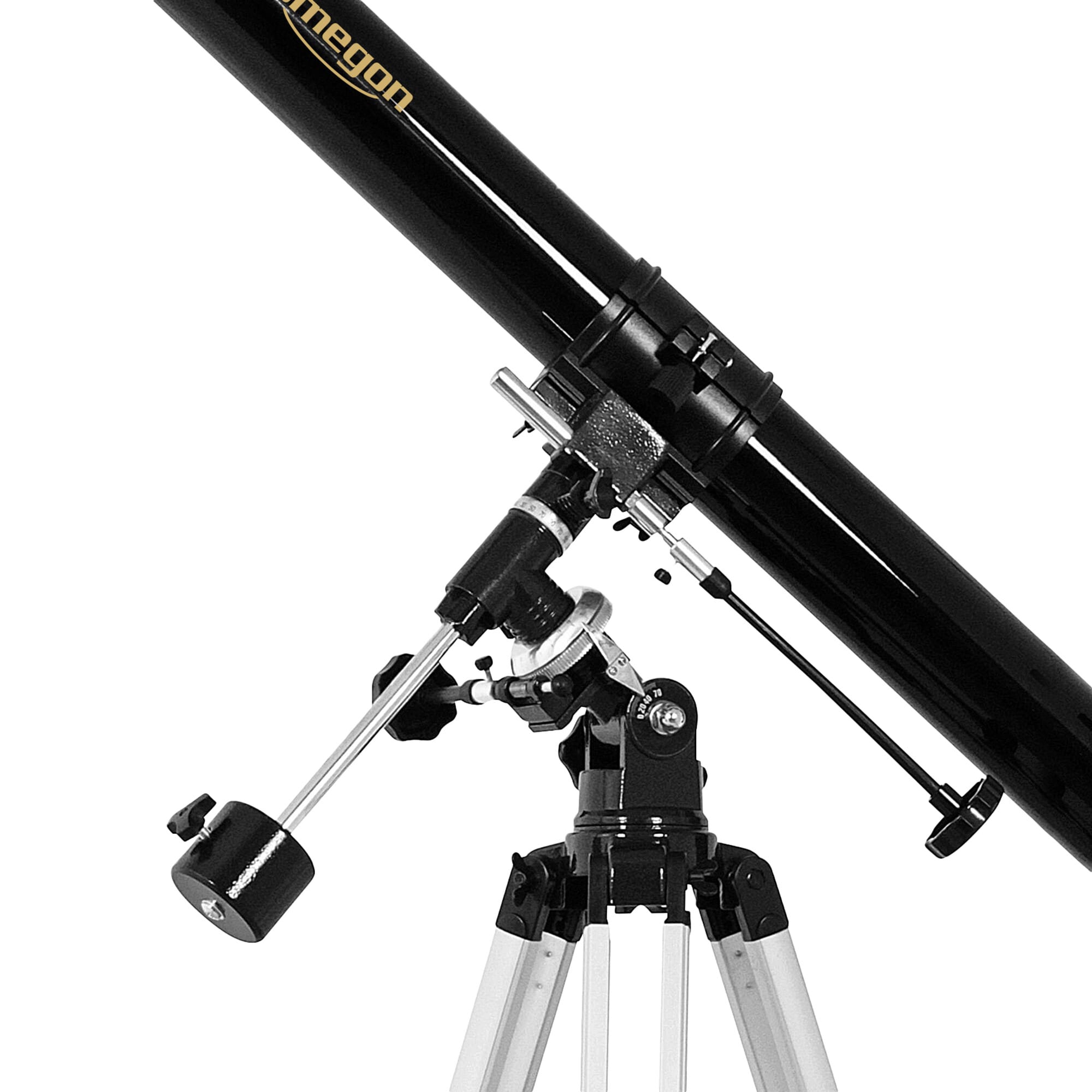
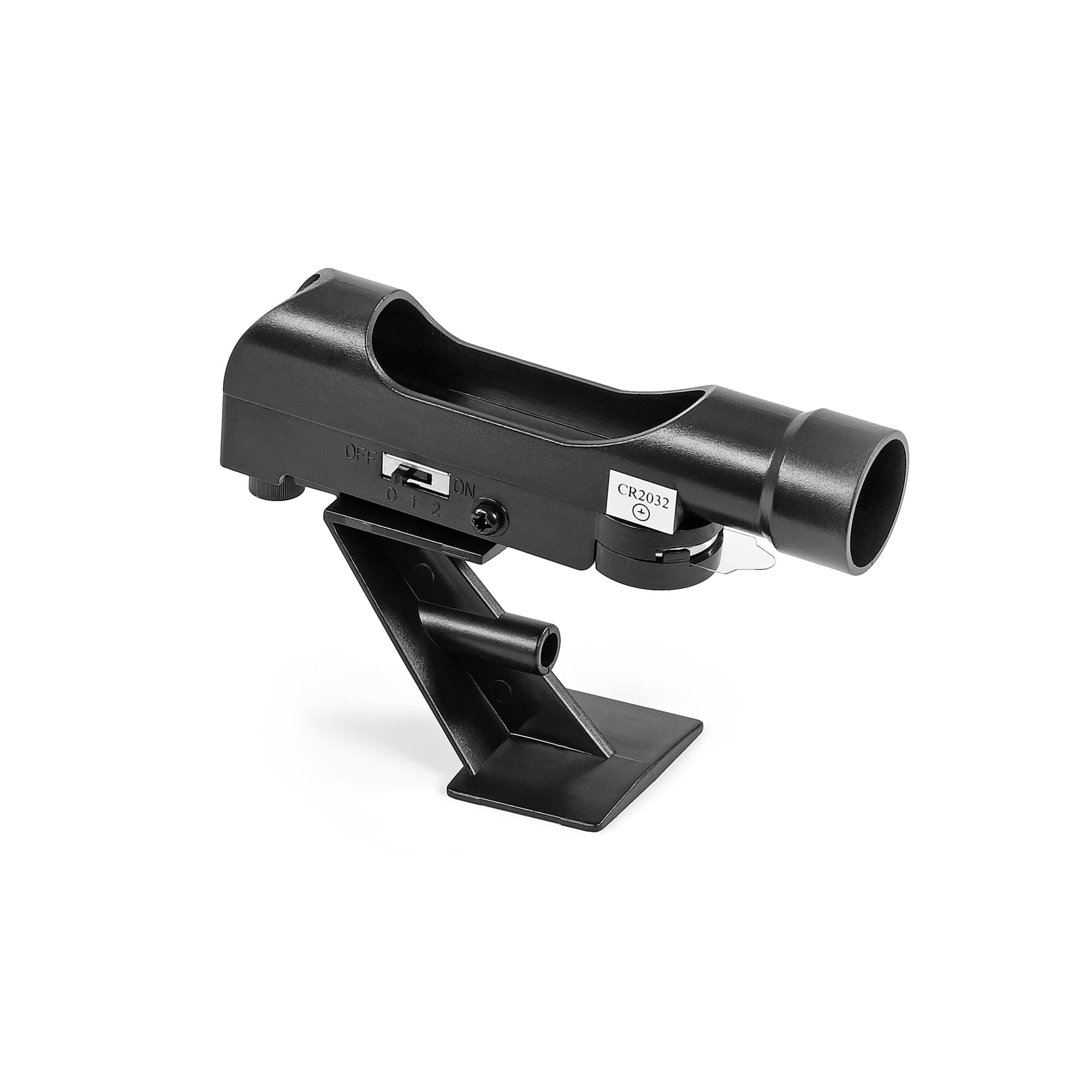
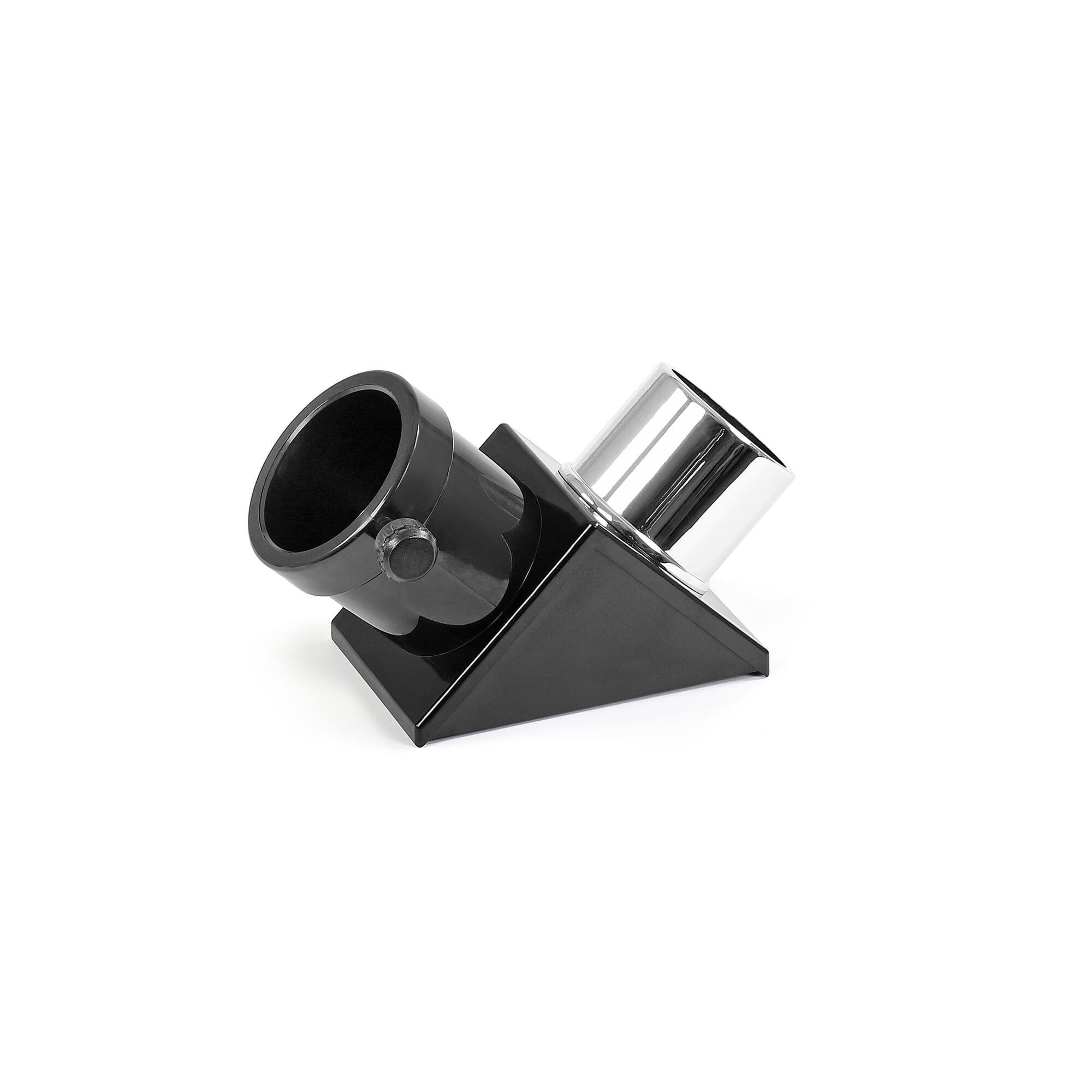
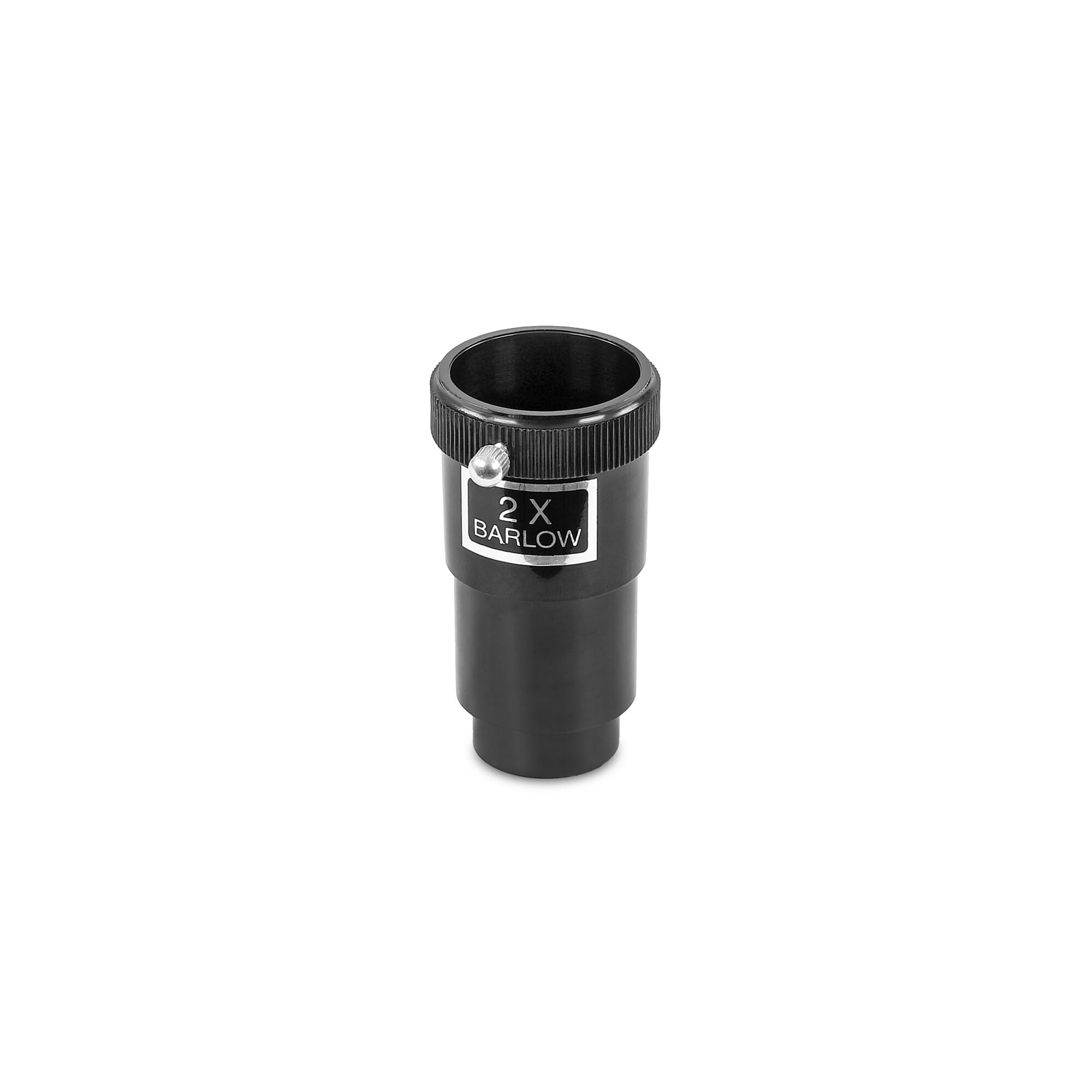
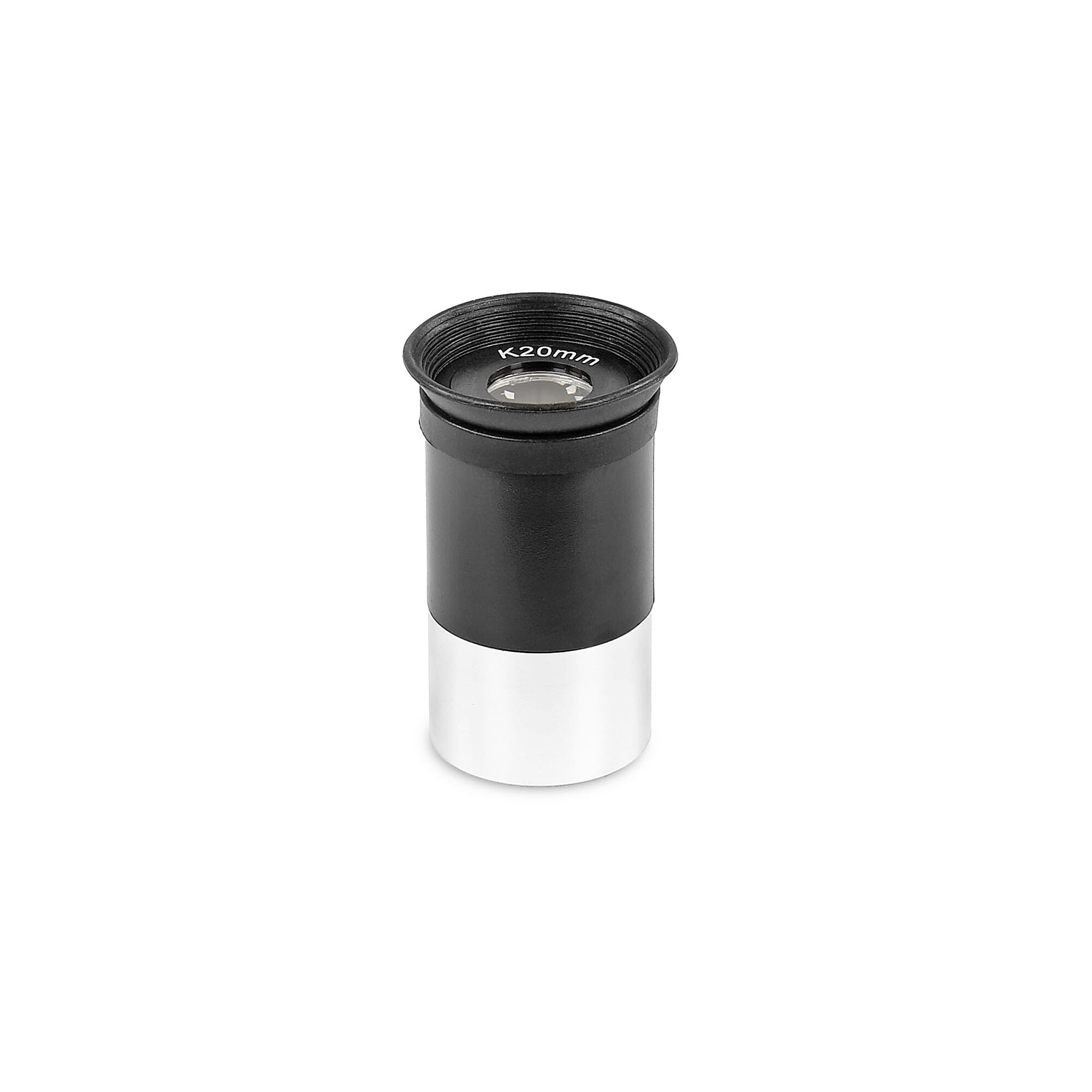
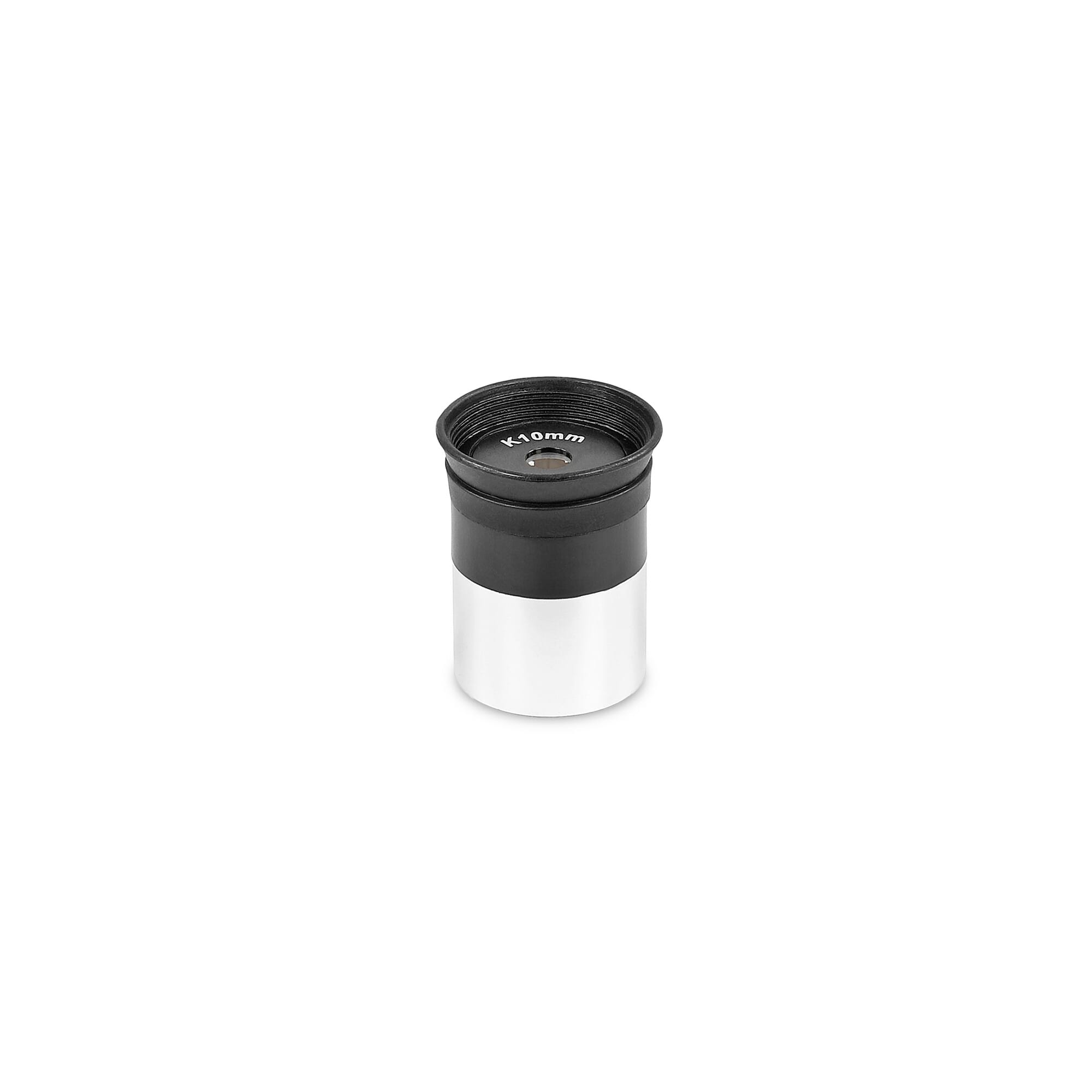
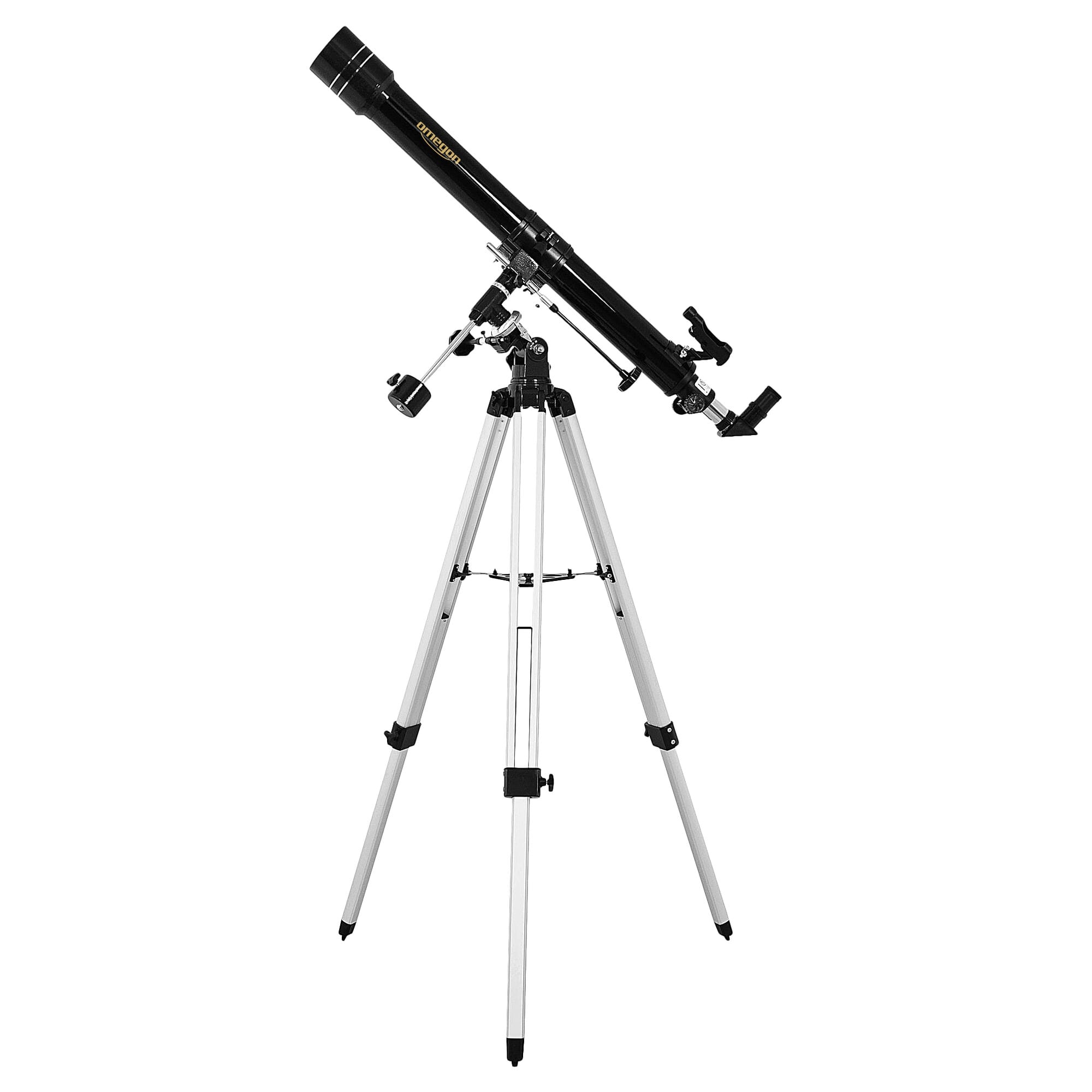
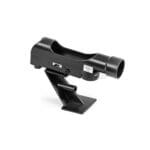
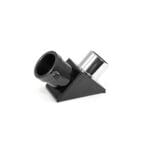
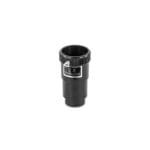
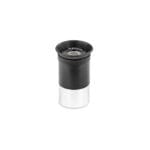
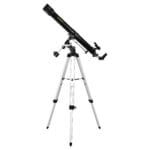


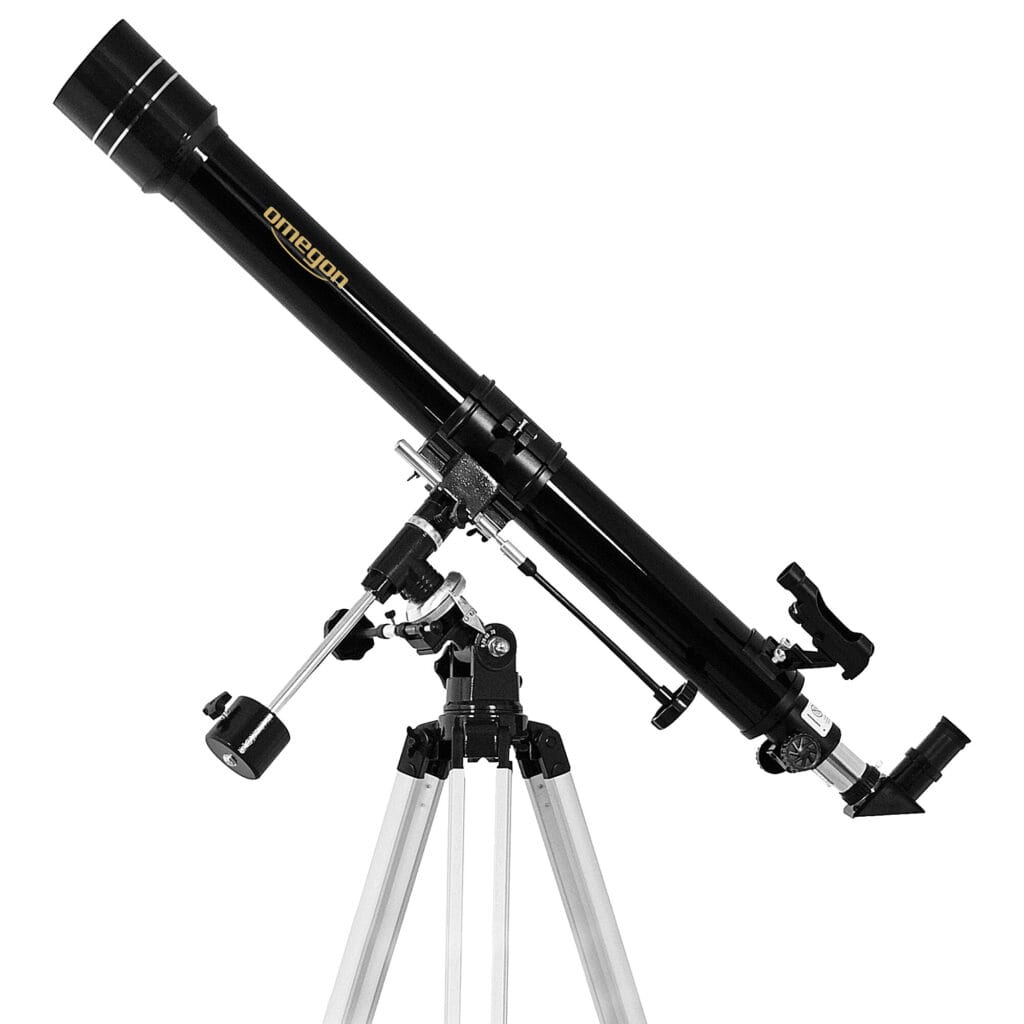
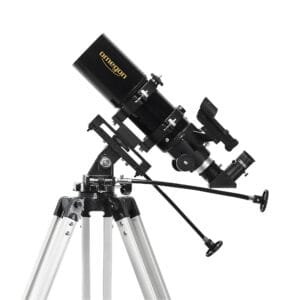
De 70/900 EQ-1 is een achromatische lenzentelescoop met 70 mm opening en 900 mm brandpuntsafstand (f/12,9) op de parallactische EQ-1 montering met contragewicht en aluminium statief. Van de 70 mm refractoren van Omegon heeft hij het langste brandpunt: 29% langer dan de 70/700 modellen, zodat hetzelfde oculair een hogere vergroting geeft en de kleurrand van de achromaat het kleinst blijft. De EQ-1 is de instap in parallactisch volgen: de montering heeft een as die evenwijdig aan de aardas staat, zodat je een object met één draaiknop in beeld houdt. Twee oculairs, een 2x Barlow-lens, een red dot-zoeker en een diagonaal zitten in de doos. Hoe de series van dit merk zich tot elkaar verhouden staat in de Omegon merkguide.
Wat zie je door de 70/900?
Maan: kraters, bergketens en de schaduwlijn bij 90x met het 10 mm oculair; met een los oculair van 7 mm (129x) de kleine kraters op de bodem van de grote, zolang de lucht rustig is. Langs de felle maanrand blijft een dunne blauwpaarse zoom zichtbaar; bij f/12,9 is die smaller dan bij elke andere 70 mm achromaat van dit merk. Jupiter: de twee donkere hoofdbanden en de vier grote manen, die van avond tot avond van plaats wisselen; de montering houdt de planeet bij 90x minutenlang in beeld met één draaiknop. Saturnus: de ring los van de planeet bij 90x, met de maan Titan als sterretje ernaast. Venus laat zijn schijngestalten zien, Mars blijft een klein oranje schijfje. Deep-sky: de Pleiaden passen bij 45x grotendeels in het beeld, de Orionnevel toont de vier Trapeziumsterren in een grijze nevelvlek, Albireo splitst in een gele en een blauwe ster, en vanaf een donkere plek is de Andromedanevel een ovale lichtvlek. Met het 20 mm oculair (45x) zie je ongeveer 1,1 graad hemel, twee keer de maan. Nevels en stelsels zie je met het oog in grijstinten, niet in kleur. Vanuit een stad of dorp met straatverlichting blijven maan, planeten, dubbelsterren en sterrenhopen over; nevels en stelsels vragen een donkere plek. De hoogste zinvolle vergroting is ongeveer 140x, twee keer de opening in millimeters; het 10 mm oculair met de Barlow (180x) komt daar overheen en geeft een groter maar waziger beeld. Wat je per object kunt verwachten staat in What do you see through a telescope?, Jupiter through a telescope, Saturn through a telescope and The Moon through a telescope.
Waarin verschilt de 70/900 van andere 70 mm refractoren?
- Brandpunt: 900 mm bij 70 mm opening (f/12,9). Het 10 mm oculair geeft daardoor 90x zonder Barlow, en de kleurrand van de achromaat is kleiner dan bij een 70 mm refractor met f/10.
- Montering: de EQ-1 is parallactisch, met fijnbewegingen op beide assen en een contragewicht. Na het richten van de poolas op de Poolster volg je een object met één draaiknop in plaats van met twee duwtjes; de fabrikant biedt een volgmotor voor de rechte klimming als optie.
- Compleet en lang: twee oculairs (45x en 90x), 2x Barlow-lens, red dot-zoeker en 90 graden diagonaal op een statief van 70 tot 120 cm met accessoireblad; de doos is met 96 cm 20 cm langer dan bij een 70 mm refractor met 700 mm brandpunt.
For whom yes and for whom no
Hello wie de maan en de planeten wil bekijken en daarbij wil leren hoe een parallactische montering werkt, als voorbereiding op een grotere montering later; wie bij hogere vergroting een object rustig in beeld wil houden zonder steeds bij te duwen; wie een lenzentelescoop wil die nooit gecollimeerd hoeft te worden. Twijfel je, lees dan de Telescope Buying Guide for Beginners.
Not voor lange belichtingen van nevels en sterrenstelsels; de EQ-1 draagt geen camera-opstelling en heeft zonder motor geen aandrijving, kijk dan naar de smart telescopes. Foto’s van de maan en de planeten lukken met een smartphone-adapter op het oculair. Wil je richten zonder uitlijnstap, kies dan het azimutale 70 mm model uit de AC-serie met dezelfde opening op een AZ-2 montering. Wil je nevels en stelsels met structuur zien, dan brengt een Dobson met een spiegel van 150 mm of meer ruim vier keer zoveel licht.
What's in the box
- Optische buis AC 70/900 met lensdop
- EQ-1 parallactische montering met fijnbewegingen op beide assen
- Counterweight
- Aluminium statief, verstelbaar van 70 tot 120 cm, met accessoireblad
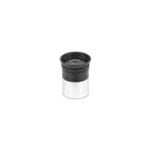
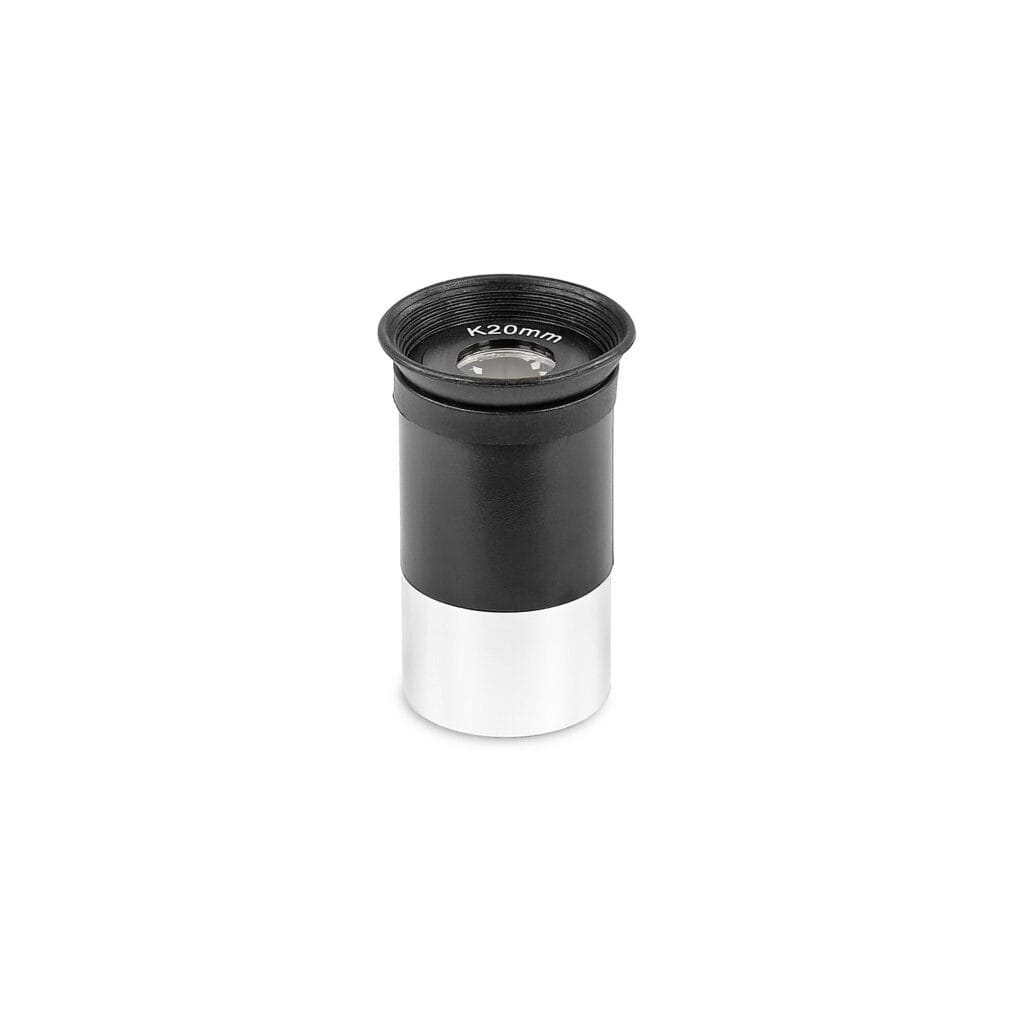
- 20 mm oculair (45x), 1,25 inch, voor zoeken, sterrenhopen en de hele maan
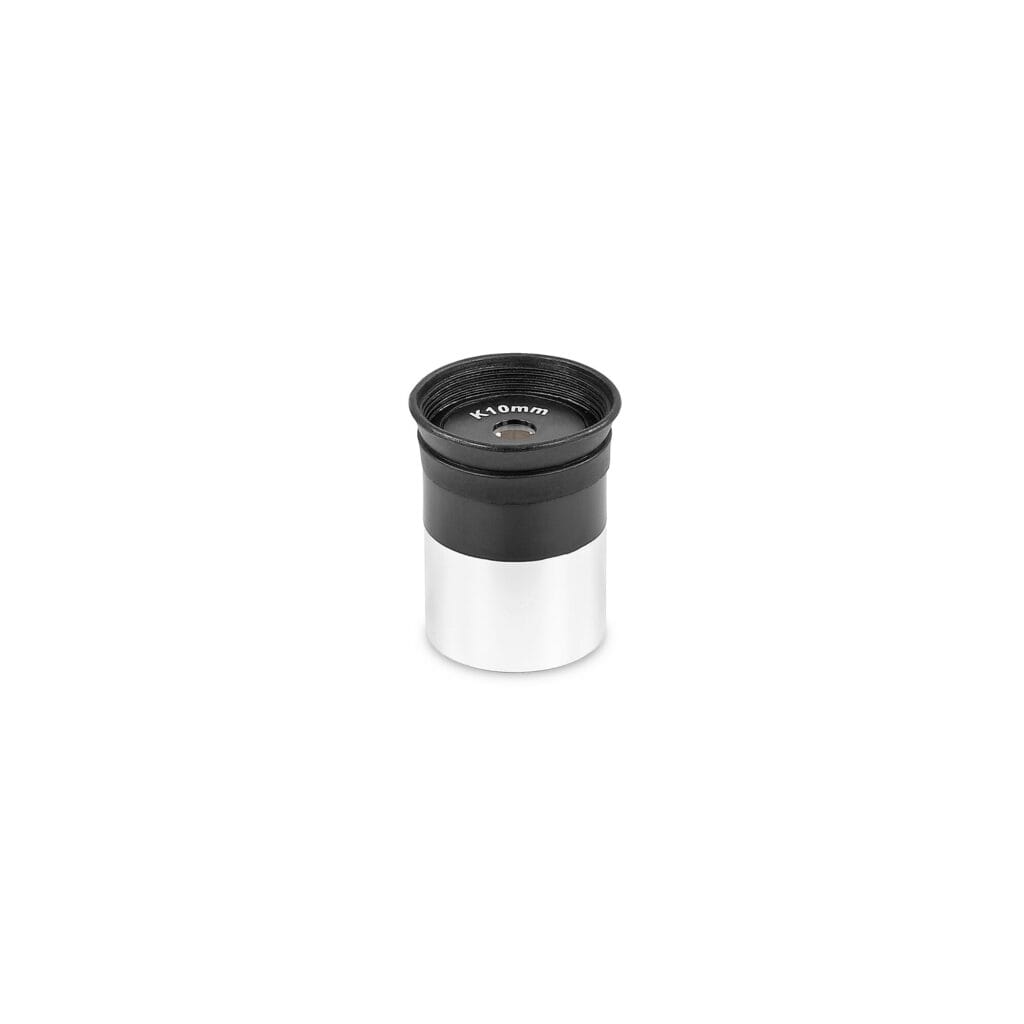
- 10 mm eyepiece (90x), 1.25 inch, for the Moon and planets
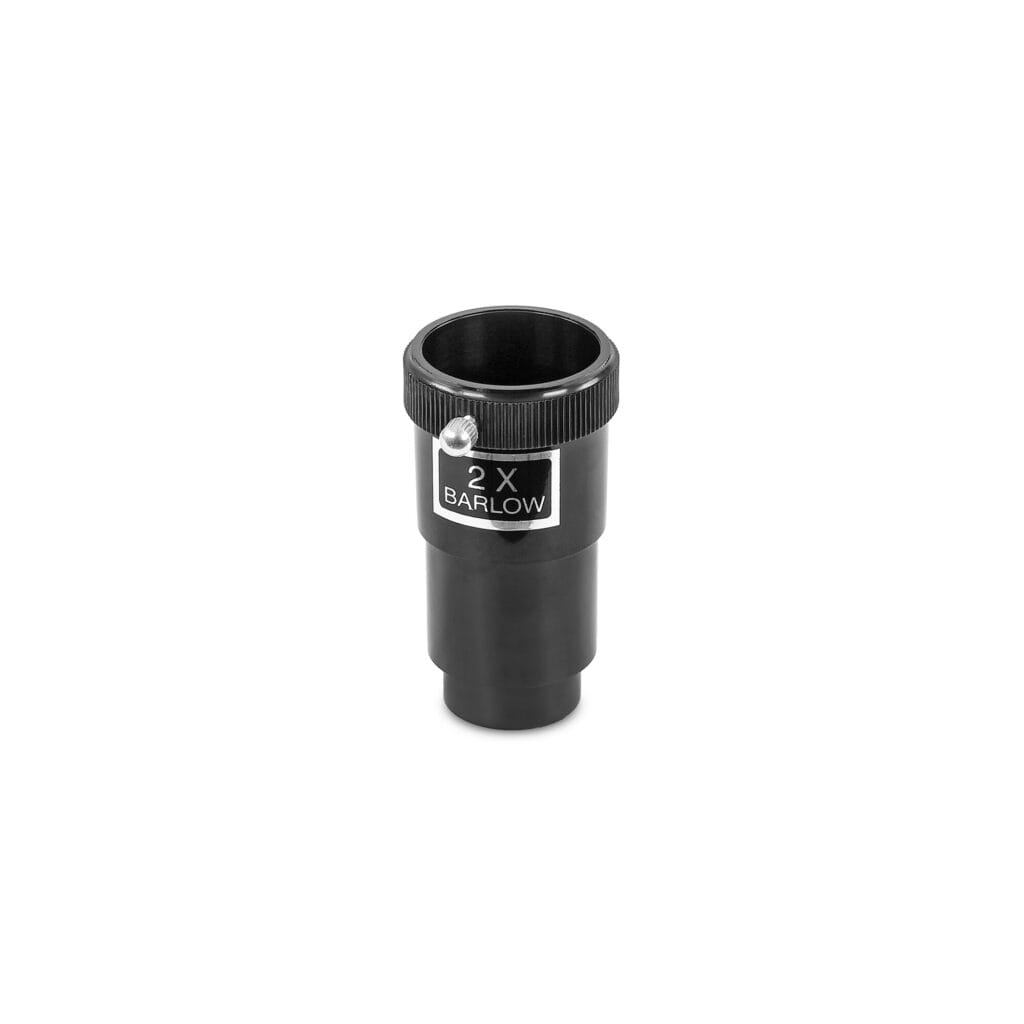
- 2x Barlow-lens, 1,25 inch: 90x met het 20 mm oculair; met het 10 mm oculair 180x, boven de bruikbare grens
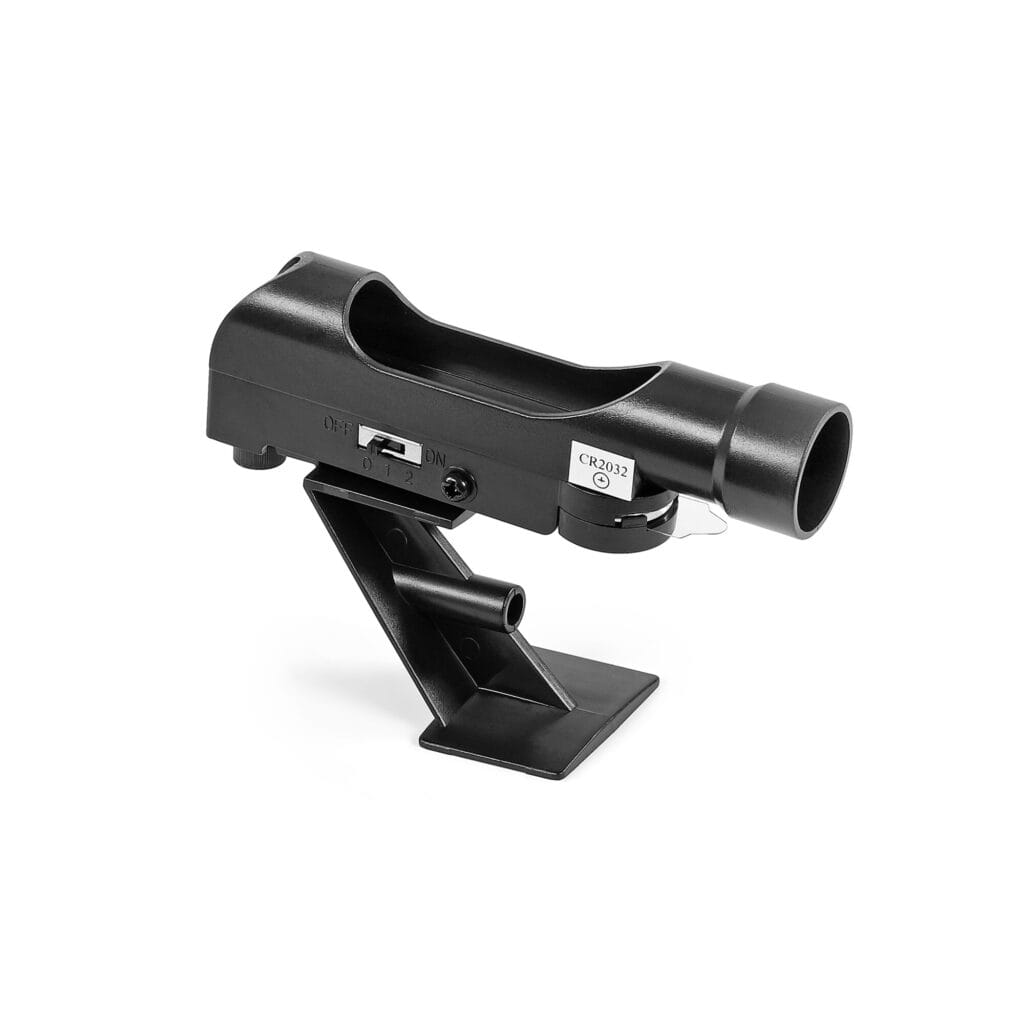
- Red dot sight
- 90-degree diagonal, 1.25 inches
Niet meegeleverd: volgmotor, maanfilter, smartphone-adapter. Zonder motor volg je met de hand aan de draaiknop van de rechte klimming, wat voor visueel kijken volstaat; bij 70 mm is de volle maan fel genoeg om een nabeeld achter te laten, een maanfilter van 30% dempt dat; een smartphone-adapter klemt je telefoon op het oculair voor foto’s van de maan.
Format and weight
Verpakt weegt de set 8 kg. Alles komt in één doos van 96 x 27 x 27 cm, dus de buis is korter dan 96 cm. Het statief is verstelbaar van 70 tot 120 cm. Omdat de buis op een parallactische montering schuin staat, wisselt de hoogte van het oculair met de richting waarin je kijkt; een krukje met verstelbare hoogte is handiger dan een vaste stoel. Hij staat op de grond, niet op een tafel.
Eerste avond met de 70/900
- Haal de lensdop eraf, zet het statief op een vlakke ondergrond en draai de poolas (de schuine as van de montering) richting het noorden, omhoog tot de Poolster; voor visueel kijken is op het oog richten nauwkeurig genoeg.
- Balanceer de buis: schuif het contragewicht over de stang tot de buis met losse klemmen in elke stand blijft hangen, en draai de klemmen daarna vast. Lijn de red dot-zoeker overdag uit op een ver object, bijvoorbeeld een kerktoren.
- Do not look through a window; the glass and the temperature difference make the image blurry.
- Begin met het 20 mm oculair (45x) en zoek de maan; wissel daarna naar het 10 mm oculair (90x). Volg met de draaiknop van de rechte klimming, de tweede knop is alleen voor kleine correcties.
- Rotate the focus lever until the image is small and sharp; a large blurry disc is not sharp.
- Set the telescope outside for 20 to 30 minutes before viewing; a 70 mm lens cools down faster than a mirror, but a warm tube produces shaky images.
- A lens telescope does not need to be collimated. If you see nothing or only a blur, the viewfinder is crooked or the magnification is too high; after a few hours the lens may become foggy; then put the lens cap on and let it dry inside, never wipe it off. More causes are listed in Why can't I see anything through my telescope?.
Which accessories are suitable?
- Omegon Cronus WA 7 mm eyepiece, 1,25 inch: 129x met een ruimer beeld en meer oogafstand dan het 10 mm oculair met Barlow, binnen de bruikbare grens van 140x voor Jupiter en Saturnus.
- Omegon Premium Moon Filter 1.25 inch30% aperture, intended for telescopes up to 150 mm; screws into the included eyepieces and suppresses the full moon.
- Omegon Smartphone Adapter for eyepieces from 25 to 48 mm: klemt om het oculair en houdt de cameralens van je telefoon boven het oog van het oculair; met de EQ-1 blijft de maan in beeld terwijl je scherpstelt.
- Omegon Helievo solar filter: foil in a ring that clips onto the tube beforehand; measure the circumference of the front of the tube, divide by 3.14 and choose the size that corresponds to that result.
AC 70/700, 70/900 EQ-1 of 90/1000 EQ-2?
| AC 70/700 AZ-2 | 70/900 EQ-1 (deze pagina) | 90/1000 EQ-2 | |
|---|---|---|---|
| Lens | 70 mm, f/10 | 70 mm, f/12,9 | 90 mm, f/11,1 |
| Mount | AZ-2 azimutaal, richten met de hand | EQ-1 parallactisch, volgen met één draaiknop, contragewicht | EQ-2 parallactisch, zwaarder uitgevoerd, volgen met één draaiknop |
| Highest meaningful magnification | about 140x | about 140x | about 180x |
| Weight and box | 4 kg, box 76 cm | doos 96 cm | doos 115 cm |
| Moon and planets | kraters tot 140x, de hoofdbanden van Jupiter, de ring van Saturnus | dezelfde objecten, met de smalste kleurrand van de drie en rustig volgen bij 90x | 65% meer licht, de Grote Rode Vlek en op goede nachten de Cassini-scheiding |
| Choose this as | je zonder uitlijnstap wilt richten en 4 kg wilt dragen | je wilt leren volgen met een parallactische montering en vooral maan en planeten kijkt | je meer opening wilt op een stevigere montering en een doos van 115 cm kwijt kunt |
Veelgestelde vragen over de 70/900
- Is hij geschikt voor een kind? Vanaf 8 jaar samen met een ouder, vanaf 10 jaar zelfstandig; de parallactische montering vraagt uitleg over de poolas en het contragewicht, dus de eerste avonden samen opbouwen.
- Kan ik er foto’s mee maken? Van de maan en de planeten wel, met een smartphone-adapter op het oculair; de montering houdt het object daarbij in beeld. Lange belichtingen van nevels en sterrenstelsels vragen een zwaardere montering met motor.
- Which sun filter fits it? A filter that fits on the tube before it. Measure the circumference of the front of the tube, divide by 3.14 and choose on the page of the Omegon Helievo The size that this outcome falls into. Cover the viewfinder and check the film for each use. Never use an eclipse glasses behind the viewfinder or a filter in the eyepiece.
- Moet ik hem collimeren? Nee; de lens van 70 mm zit vast in de buis en blijft uitgelijnd, ook na vervoer.
- Kan er een volgmotor op? De fabrikant noemt een motor voor de rechte klimming als optie; in ons assortiment zit geen Omegon-motor voor de EQ-1, dus vraag ons eerst welke past voordat je er een koopt. Zonder motor volg je met de hand aan de draaiknop, wat voor visueel kijken volstaat.
- Moet ik de montering elke avond uitlijnen? Ja, in één stap: draai de poolas van de EQ-1 richting het noorden, schuin omhoog naar de Poolster. Bij 45x en 90x volstaat richten op het oog; hoe dat werkt staat in Tripods and mounts explained.
Specifications
| Specification | Value |
|---|---|
| Optical design | Achromatic refractor, double lens |
| Opening | 70 mm |
| Focal length | 900 mm |
| Opening ratio | f/12.9 |
| Lens | Achromatic double lenses of 70 mm, capture 100 times as much light as the eye |
| Highest meaningful magnification | about 140x |
| Separating power | 1.64 seconds |
| Mount | EQ-1 parallactisch met fijnbewegingen op beide assen en contragewicht; volgmotor voor de rechte klimming als optie |
| Tripod | Aluminium, verstelbaar van 70 tot 120 cm, met accessoireblad |
| Reporter | Rack, 1.25 inch |
| Seeker | Red dot |
| Included eyepieces | 20 mm (45x) en 10 mm (90x), 1,25 inch; 2x Barlow-lens |
| Diagonal | 90 degrees, 1.25 inch |
| Tube length | korter dan 96 cm |
| Packed | 96 x 27 x 27 cm, 8 kg |
Shipping and assistance
Orders with multiple items are shipped from multiple warehouses and may arrive in parts; each package will have its own tracking number. More information about this can be merk found on the Omegon brand page. Help with choosing or on the first evening: WhatsApp or call on weekdays from 9:00 to 17:00, or come by appointment in Sneek. 30 days' cooling-off period.
Reviews
There are no reviews yet.