
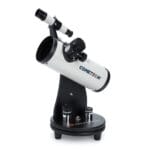
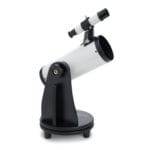


The complete table dobson for young explorers
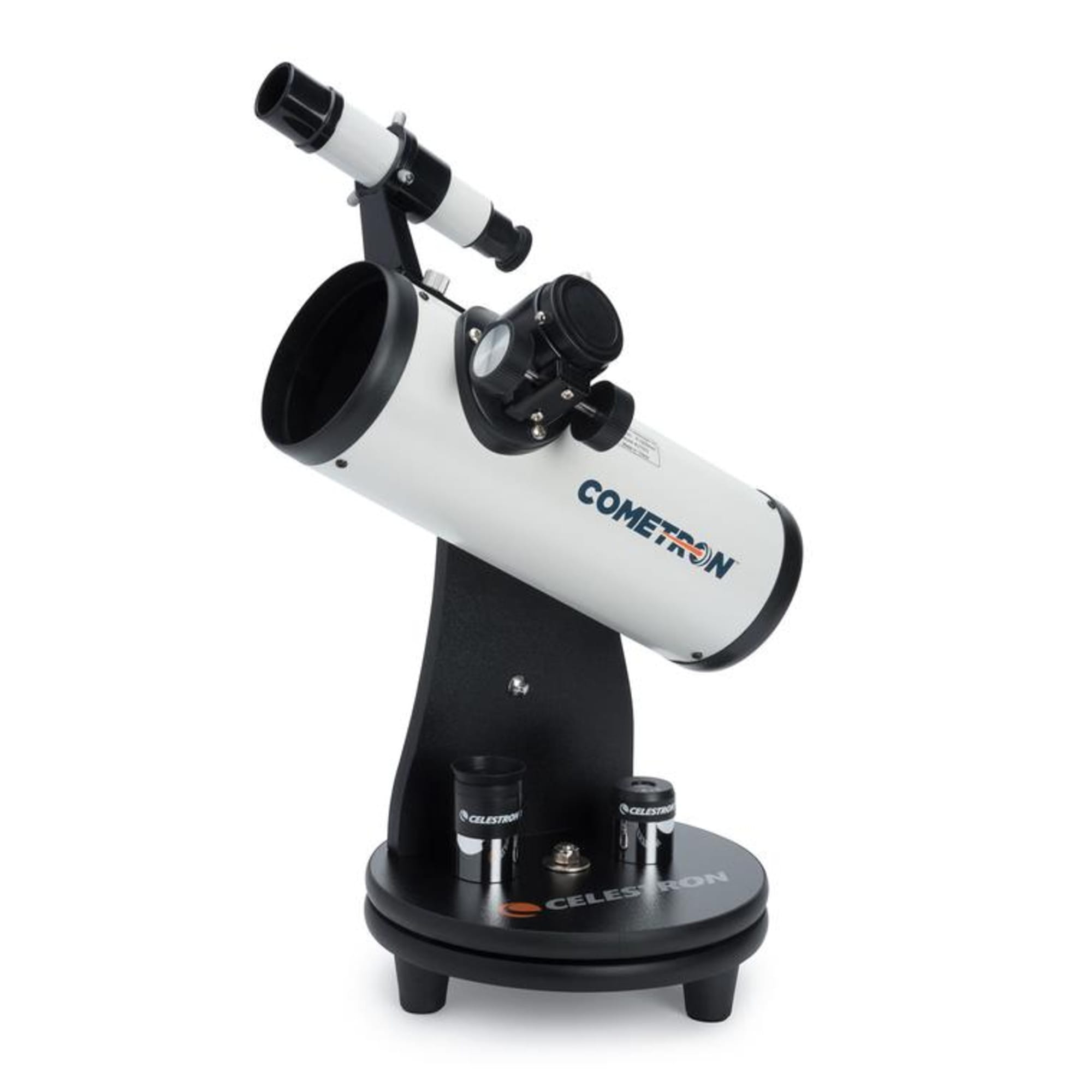
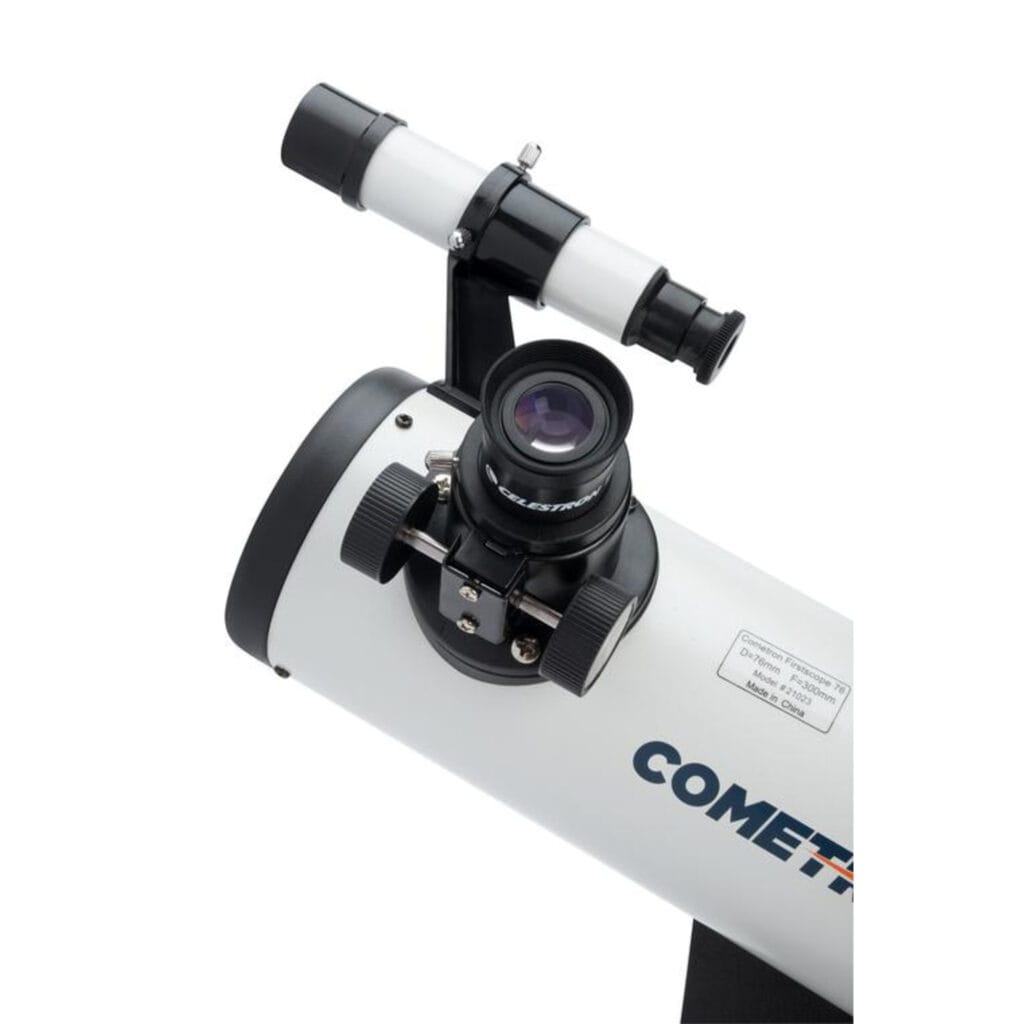
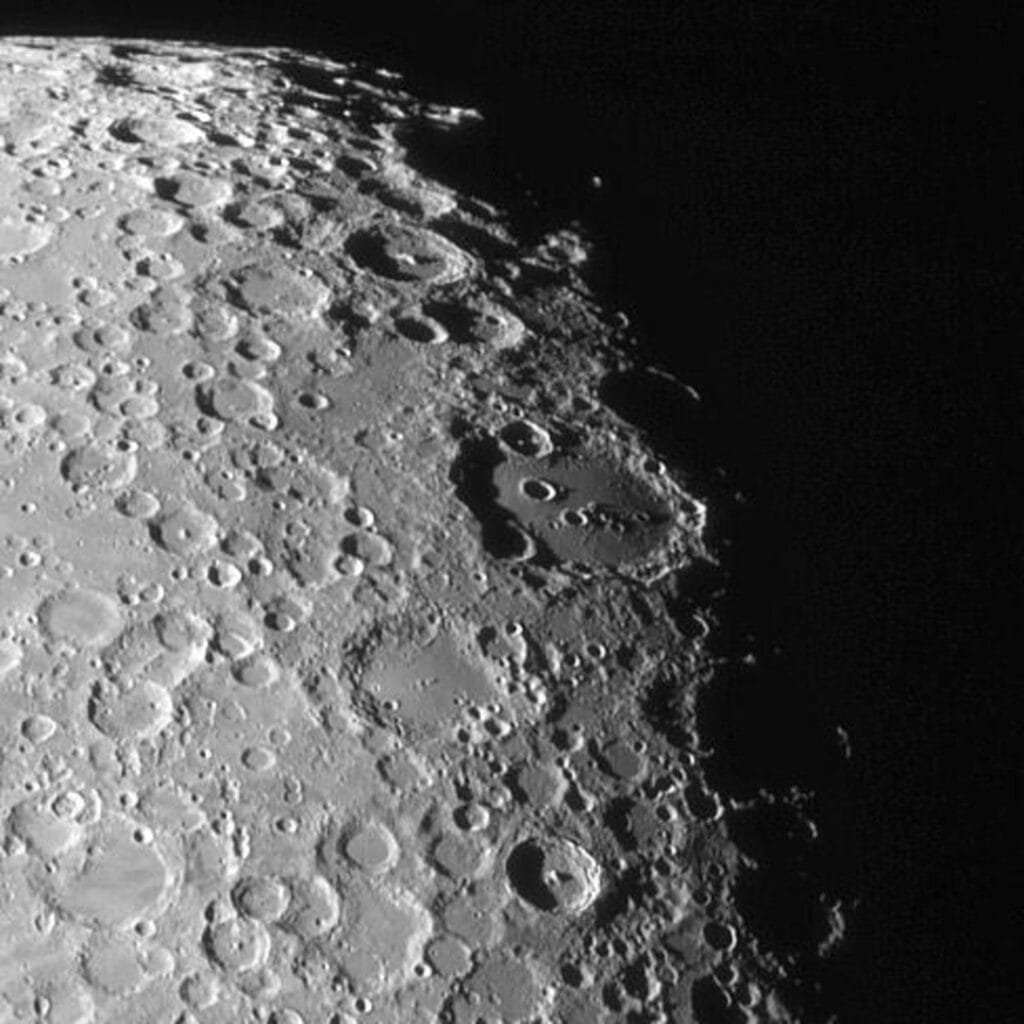
The Celestron Cometron The extended version of Celestron's famous FirstScope table telescope. The 76 mm mirror with a 300 mm focal brandlength captures more than one hundred times more light than the naked eye and shows lunar craters, the rings of Saturn, Jupiter's moons, and even comets and wide star fields at low magnification. With 2 kg, you can carry it in one hand to the garden, balcony, or camping site.
Set, aim, look
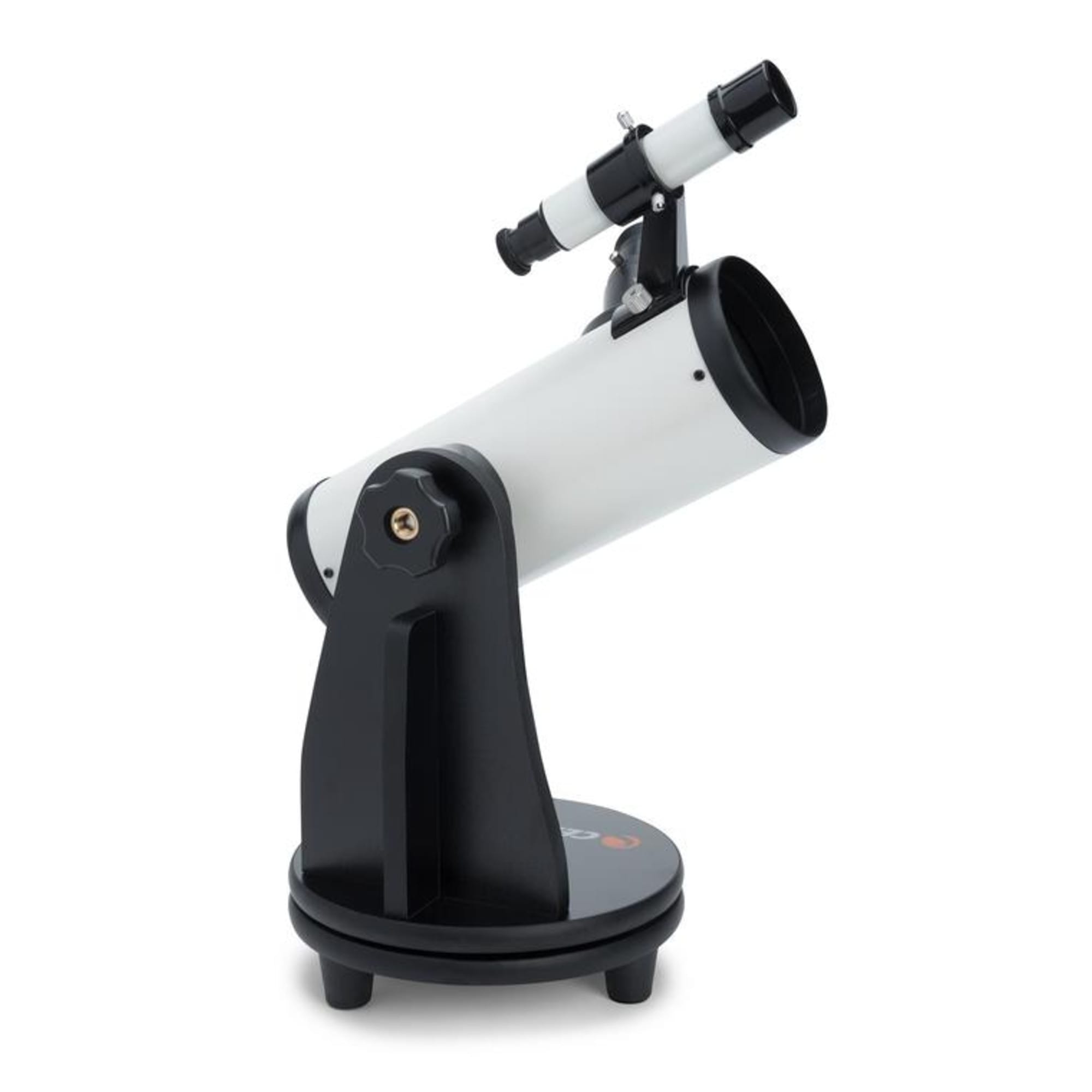
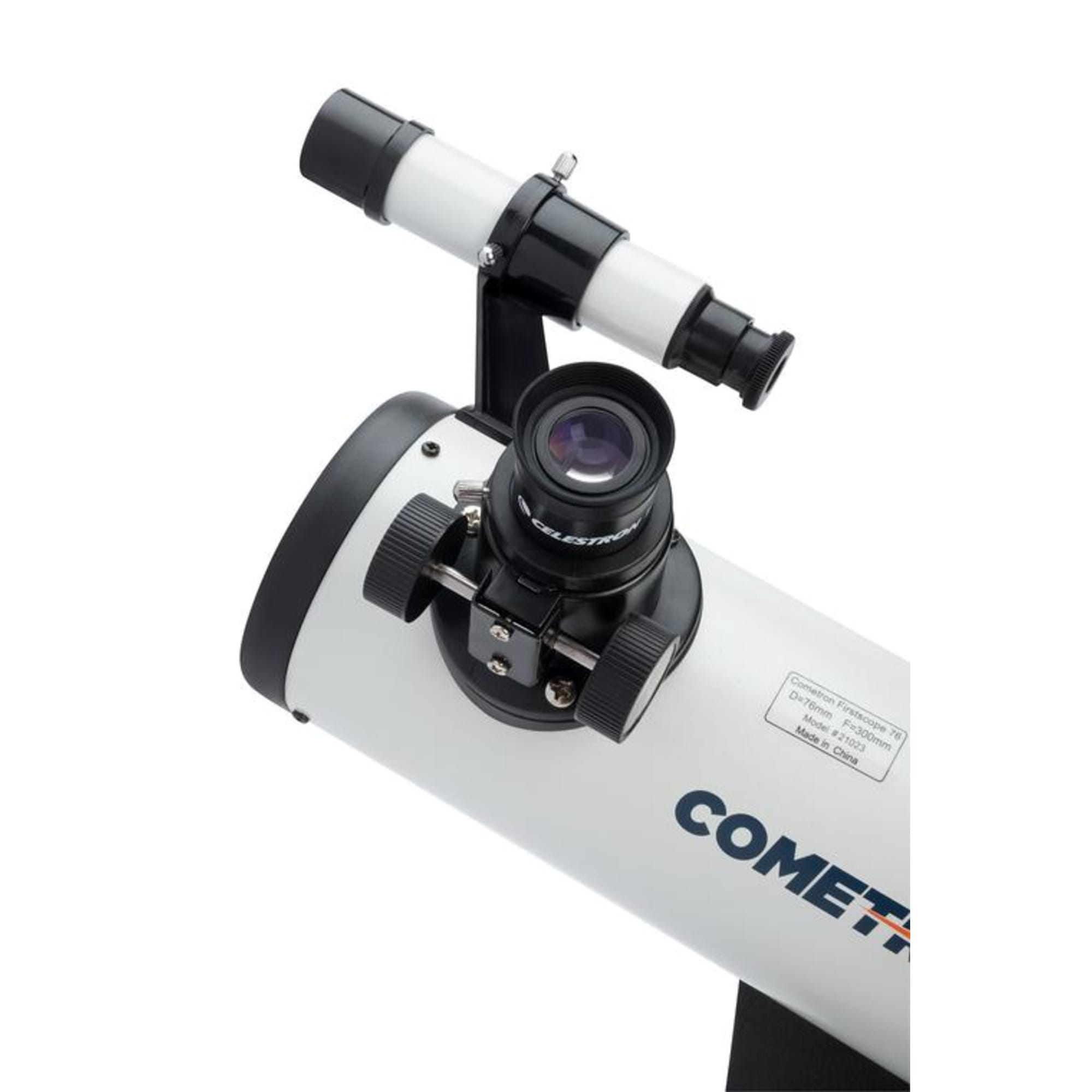
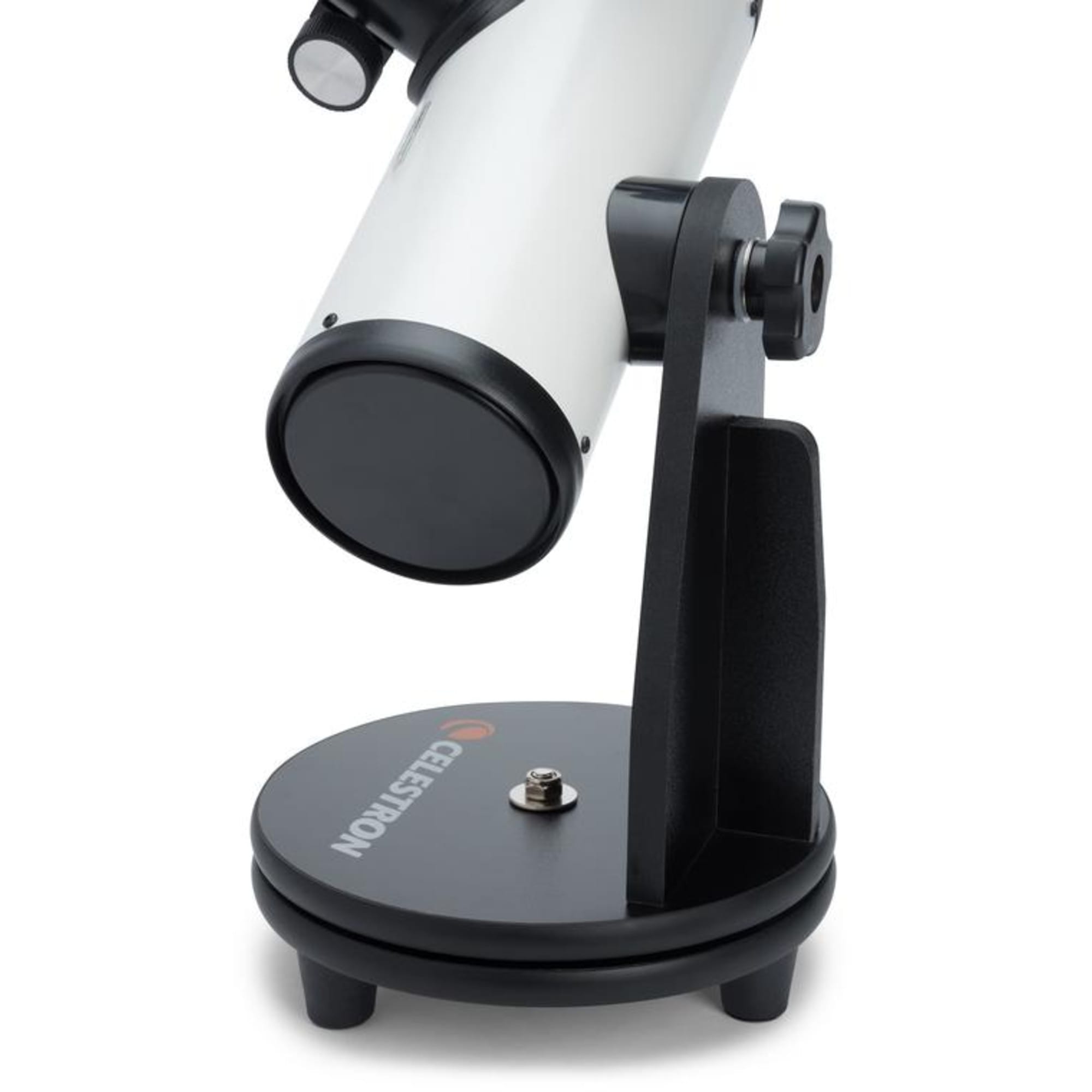
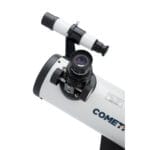
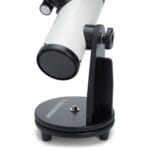
The wooden table mount moves smoothly in height and direction: no alignment, no electronics, no tools. The 5×24 viewfinder with wire cross helps find objects, and the 1.25 inch rack-and-pinion-focuser provides precise focus. Exactly the simplicity that children and beginners can achieve immediately with success.

Two eyepieces and a viewfinder included
The 20 mm and 10 mm eyepieces provide 15x and 30x magnification respectively, offering wide, bright images that encompass the full lunar disc and expansive star fields. This makes this version more complete than the standard FirstScope, which comes with a simpler set of eyepieces. For higher planetary detail, an additional 6 mm eyepiece or a Barlow lens is a logical upgrade later on.
For whom yes, for whom no
Good for: families with children, campers, and anyone who wants to discover stargazing or planet viewing on a small budget. Not for: those who expect planet detail at high magnification right away; choose a Dobson with a larger mirror or longer focal length. Compare the table models on the Dobson category page.
What's in the box?
- Optical tube with 76 mm mirror (300 mm focal length)
- Wooden dobsonian mount
- 20 mm and 10 mm eyepieces (1.25 inch)
- 5×24 search viewer with wire cross
- 1.25 inch rack-and-pinion focuser
Featured accessories
- The Vela Optics Moon Filter ND96 13% (1.25 inch) blurs out the bright moonlight: the Moon is the number one target for this viewer.
- Vela Optics 7 mm Super Plössl eyepiece, 1.25 inch: 43x on this telescope, for the Moon and planets.
- Vela Optics smartphone adapter: Clamp it around the eyepiece and hold the camera on your phone directly above the lens.
| Optical design | Newton reflector |
| Opening | 76 mm |
| Focal length | 300 mm |
| Opening ratio | f/3,9 |
| Maximum useful magnification | 152x |
| Light output | 118 times compared to the naked eye |
| Mount | Dobson table model (alt-azimuth) |
| Eyepieces | 20 mm (15x) and 10 mm (30x) |
| Weight | ± 2 kg |
| Additional | 5×24 search viewer with wire cross |
Still unsure about the right model? Our Buyer's guide for beginners and the telescope selection aid help you step by step. Also check out all the Dobson telescopes or the full range on the Celestron brand page. You can read more background information about the brand in the Celestron brand guide.
At -
I am really pleasantly surprised by what you can see with this small telescope. That being said, it is a small telescope and it has its limitations. If you know what to expect (and what not to expect), this is truly a great purchase.
What can you see? To begin with: the moon, of course, the moon! Clear, sharp image, especially on the line between light and dark. Cracks, shadows and light, lots of details. Beautiful!
Jupiter and the four largest moons: small, but clearly a bright ball, with four very small specks that are in a different place every day.
Saturn; you have to look very carefully (and focus well), but then you will really see the rings!
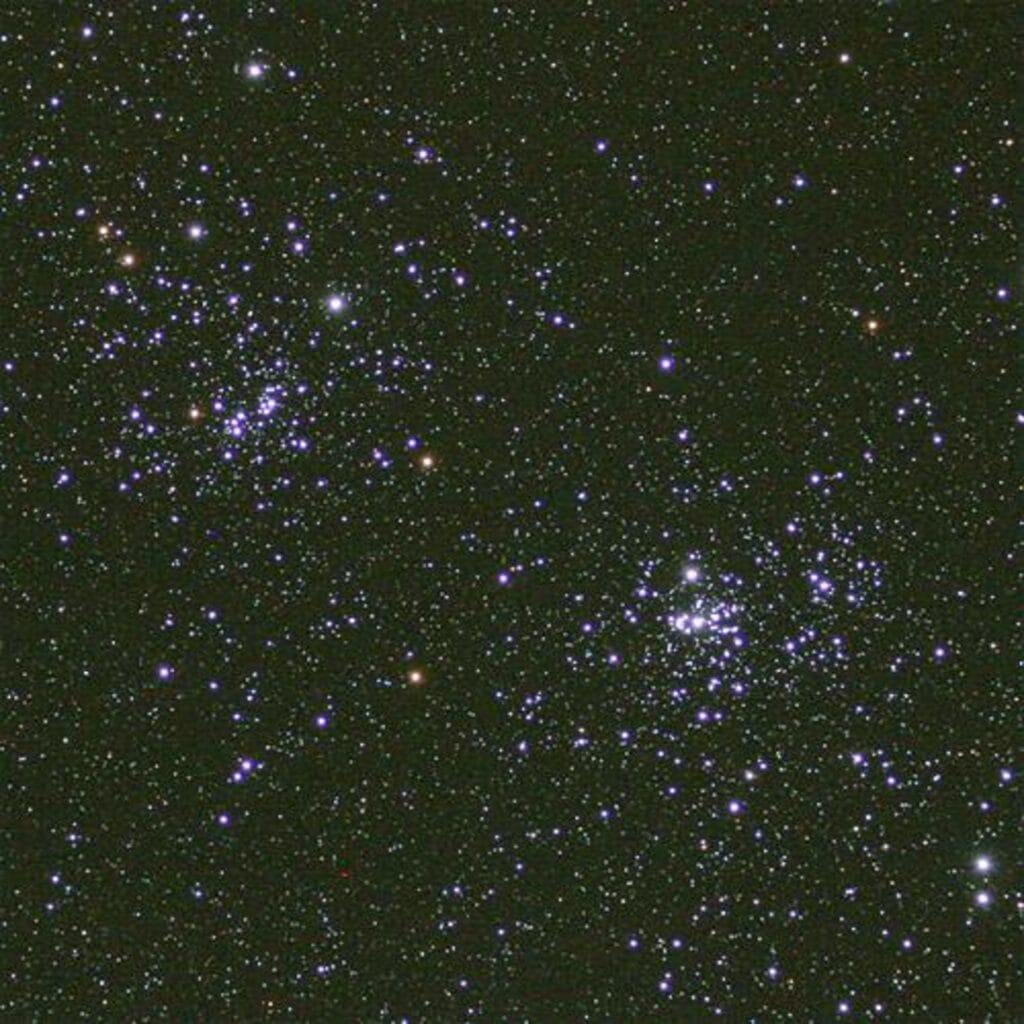
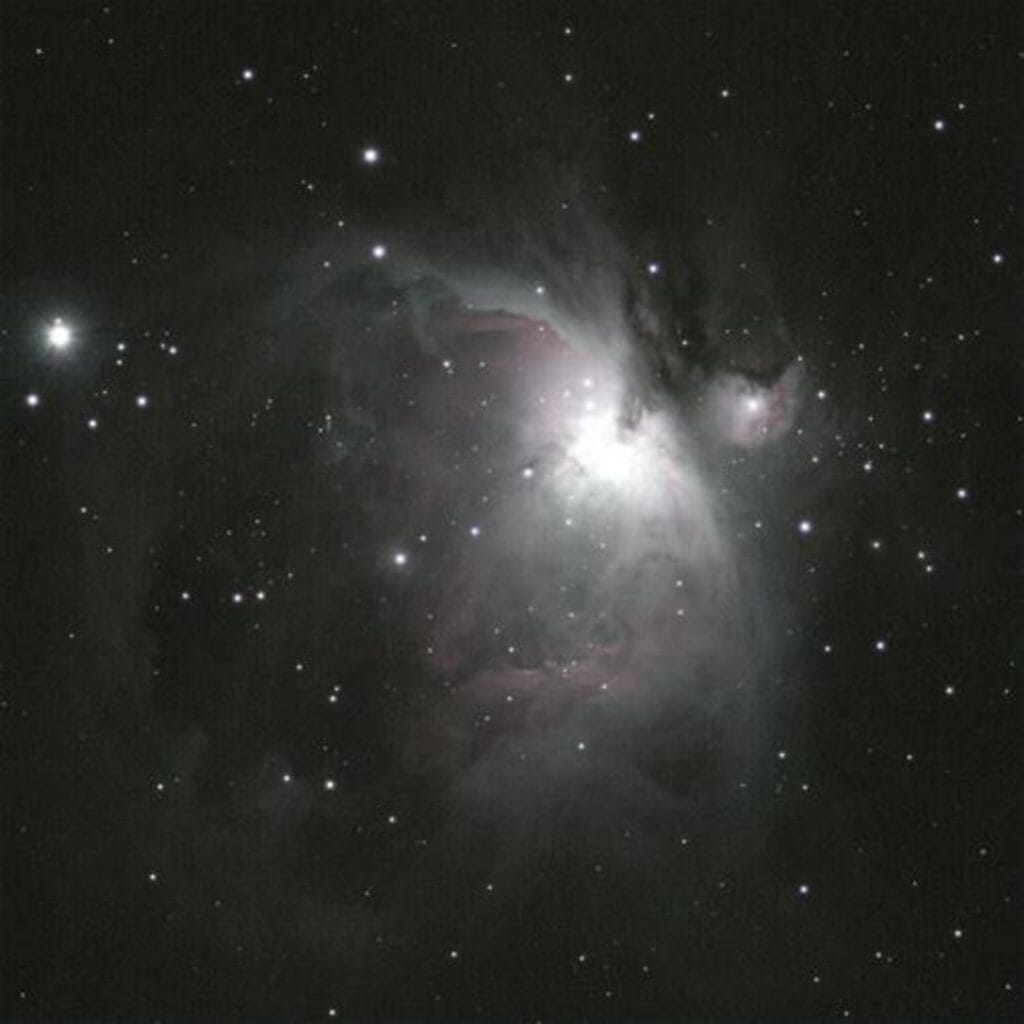
The Double Cluster in Perseus: beautiful! The Pleiades: brilliant! The Orion Nebula: look closely, but you can definitely see the bluish-green fuzz. Alcor and Mizar in the Great Bear: beautiful double stars, well visible. And I could go on and on. The only thing new users will have to get used to: there is a lot you won’t see. You won’t be able to see Jupiter or Saturn in full view; you won’t see galaxies with huge detail. That’s not possible even with a small telescope… What you will see is small, subtle, but absolutely clear. That’s what I love about such a small instrument. You pick it up quickly as soon as the sky clears again; just 20 minutes of looking from the balcony at bedtime. I don’t see myself doing that with my much larger telescope. That takes a quarter of an hour to set up, and another 20 minutes to wait for it to cool down.
What I would recommend: properly set the viewfinder (preferably during the day). To do this, first place something eye-catching (the top of a church tower, a lantern pole in the distance, in the center of your image). Then unscrew the 3 screws of the viewfinder and carefully screw them back on again, while looking through the viewfinder at that same top of the church tower. Keep turning until the cross is exactly in the same place as where you are looking through the eyepiece. Screw it on a little at a time (and don’t touch it anymore!).
What I also recommend is to buy an extra good eyepiece, for example a 15 mm Plössl. That is a bit sharper than the supplied 10 and 20 mm Kellners that come with the camera. Those are certainly not bad, by the way!
Overall: a great purchase!