
Solar filters
Not sure what fits your telescope? We are stargazers ourselves and happy to help.
Send us a WhatsApp messageWe reply on weekdays between 9:00 and 17:00.
Showing 1–20 of 47 resultsSorted by popularity
 Price range: 49,90 through 109,00 Select options This product has multiple variants. The options may be chosen on the product page



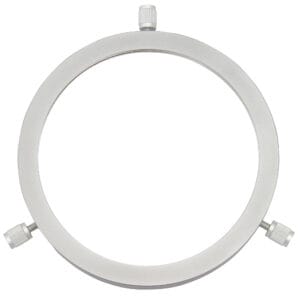
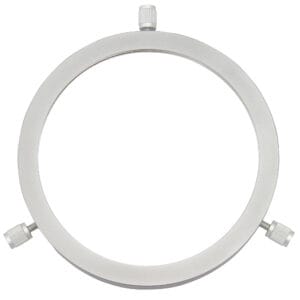



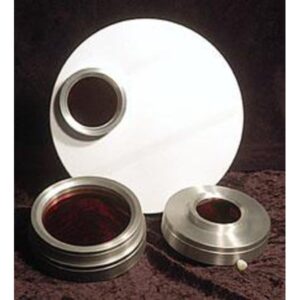
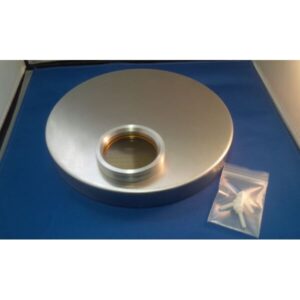
Showing 1–20 of 47 resultsSorted by popularity
Which sun filter do you need?
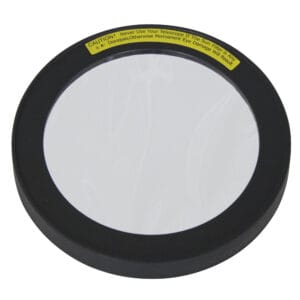
A sun filter on the front of your telescope (objective filter) is the safe and affordable way to see sunspots. The filter lets through about one hundredth of a millionth of the sunlight (OD 5.0). You see the sun in white light: sunspots, the edge darkening, and with good seeing, the granulation.
Choose the filter based on the outer diameter of your telescope tube, not the opening. Measure the tube at the point where the filter will be placed and choose a filter with some clearance so that it will fit snugly without being pinched.
White light or H-alpha?
White light filters (Baader AstroSolar and Omegon)
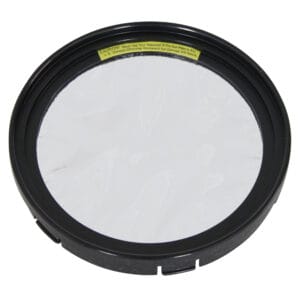
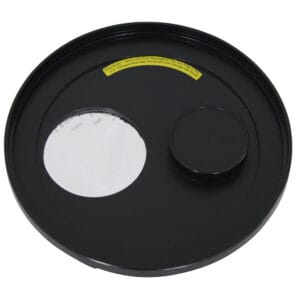
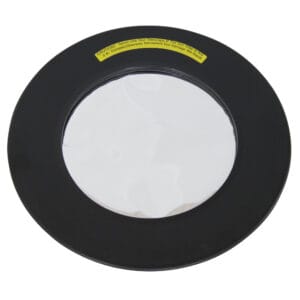
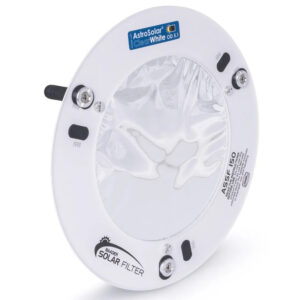
Baader ASTF and ASSF filters use AstroSolar foil (OD 5.0) in a fixed cell per diameter, from 50 to 280 mm. The Omegon solar filters are the economical choice for the common tube sizes. Both are safe for visual viewing and for photography.
Photographic sun filters (Baader BDSF)
The Baader Digital Solar Filter (OD 3.8) allows more light to pass through for short exposure times with a camera. Only for photography, never to look through the eye.
H-alpha: ERF pre-filters and block filters
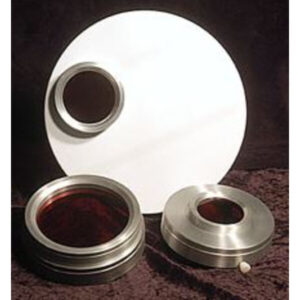
For protuberances and filaments you need an H-alpha system. The DayStar ERF prefilters keep the heat out of the telescope before the light reaches the H-alpha filter. The Lunt block filters (B600 to B3400) are part of a Lunt solar telescope or filter set. Lunt’s rule of thumb: the number is approximately the maximum focal length in millimeters where you can still see the entire solar disk, so a B1200 to 1200 mm. For photography, choose a size larger.
The Lunt DSII module stacks a second etalon onto your LS130MT for a narrower bandwidth: more contrast in filaments and surface detail. The Ca-K module shows the sun in calcium light, with the bright areas around sunspots.
Looking safely at the sun
Never look at the sun without a properly approved filter, not even briefly and not through a viewfinder or binoculars. Cover the viewfinder or remove it. Check the filter for any holes or scratches before each use by holding it up to a lamp.
Sun filters that screw into the eyepiece are unsafe: they can crack due to the heat. Always use a filter on the front of the telescope.
Frequently asked questions about sunscreens
Which size of sun filter fits my telescope?
Measure the outer diameter of the tube or the dewcap that the filter slides over. Omegon filters are available in different ranges, for example 138 to 153 mm. Baader ASTF and ASSF filters are available in fixed sizes.
Can I see protrusions with a white light filter?
No. You can only see protuberances and filaments with an H-alpha solar telescope or an H-alpha filter set. With white light, you can see sunspots and granulation.
Is solar filter film as good as a glass filter?
Baader AstroSolar film provides a sharp and neutral image and is the standard for visual viewing and photography. A glass filter is more sturdy but not sharper.