
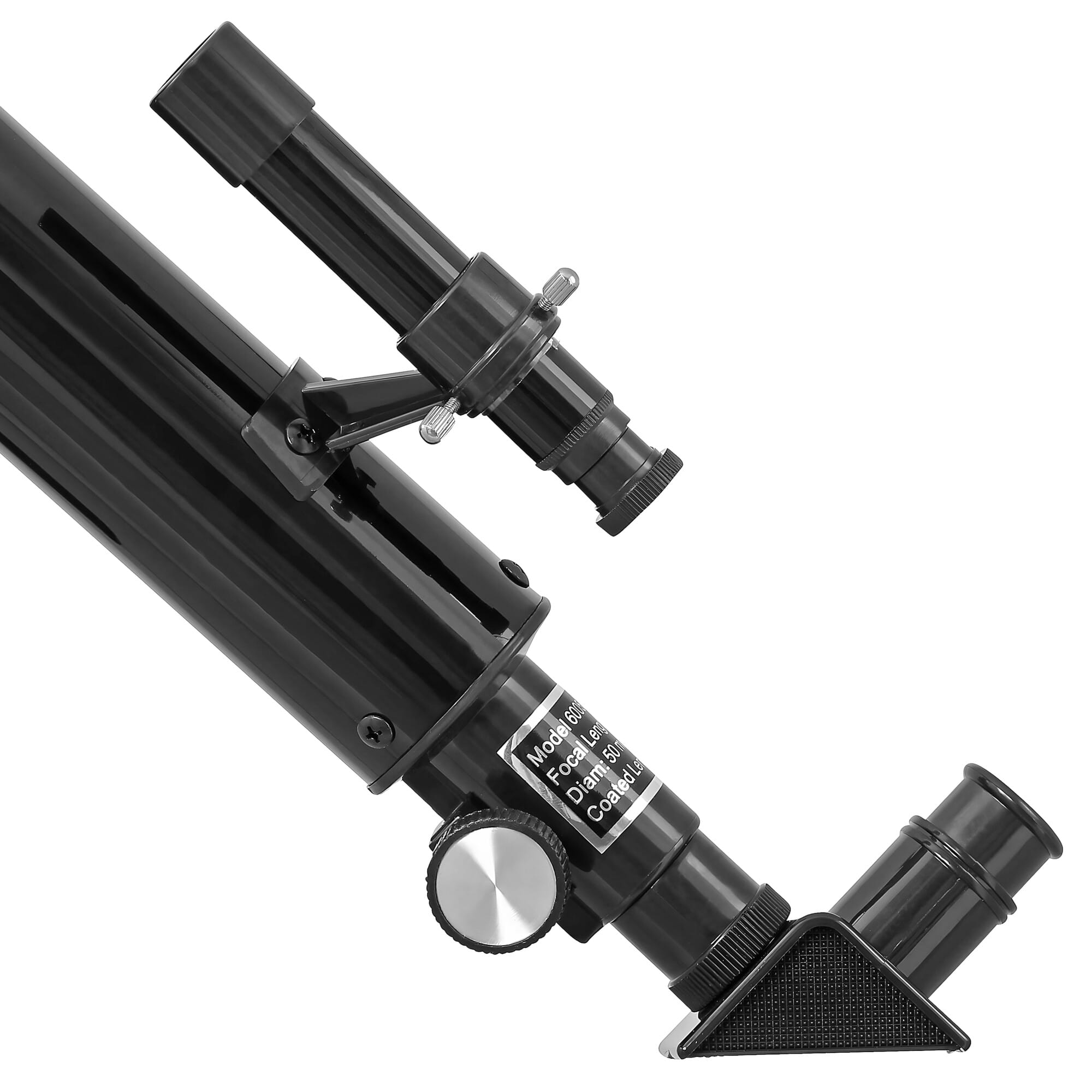
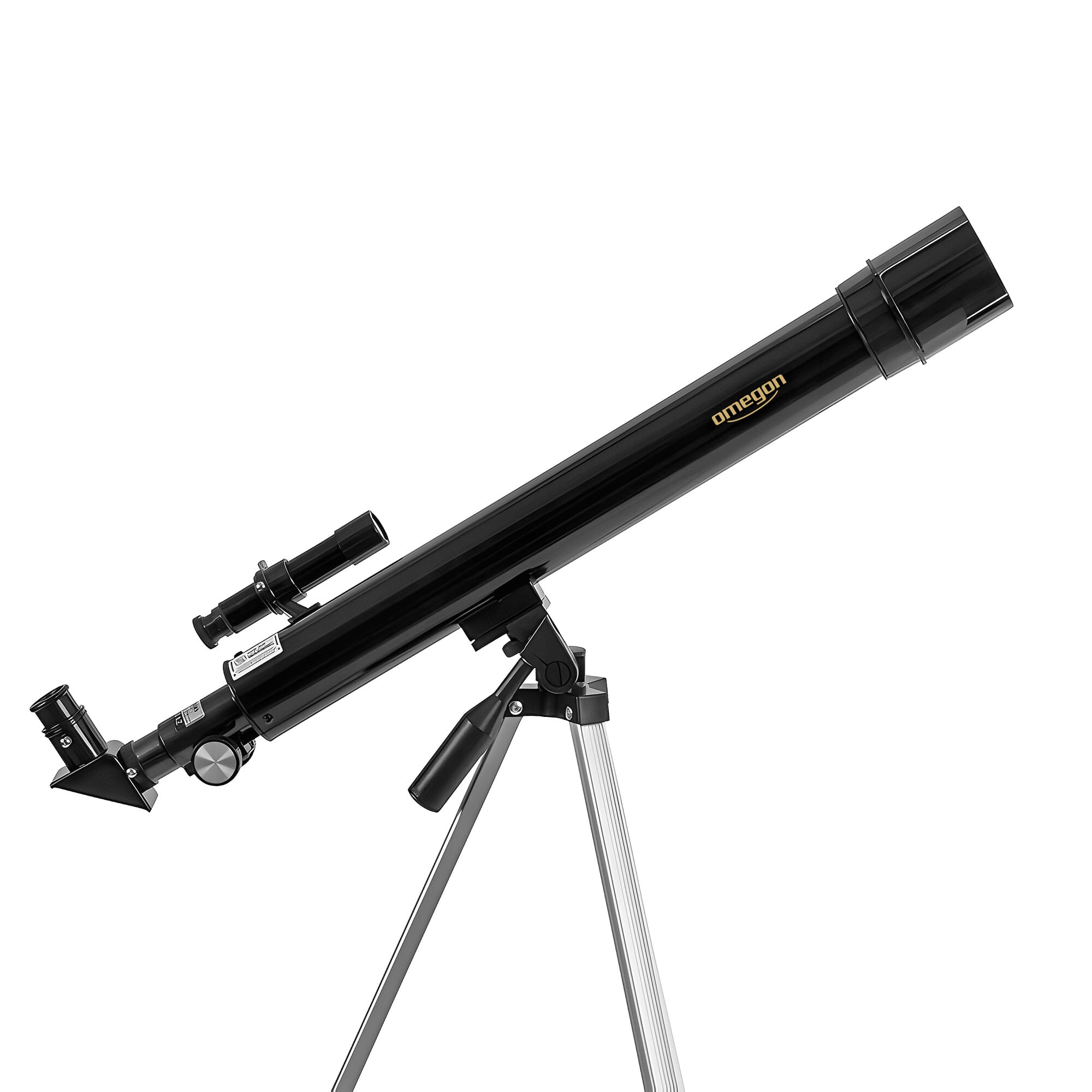
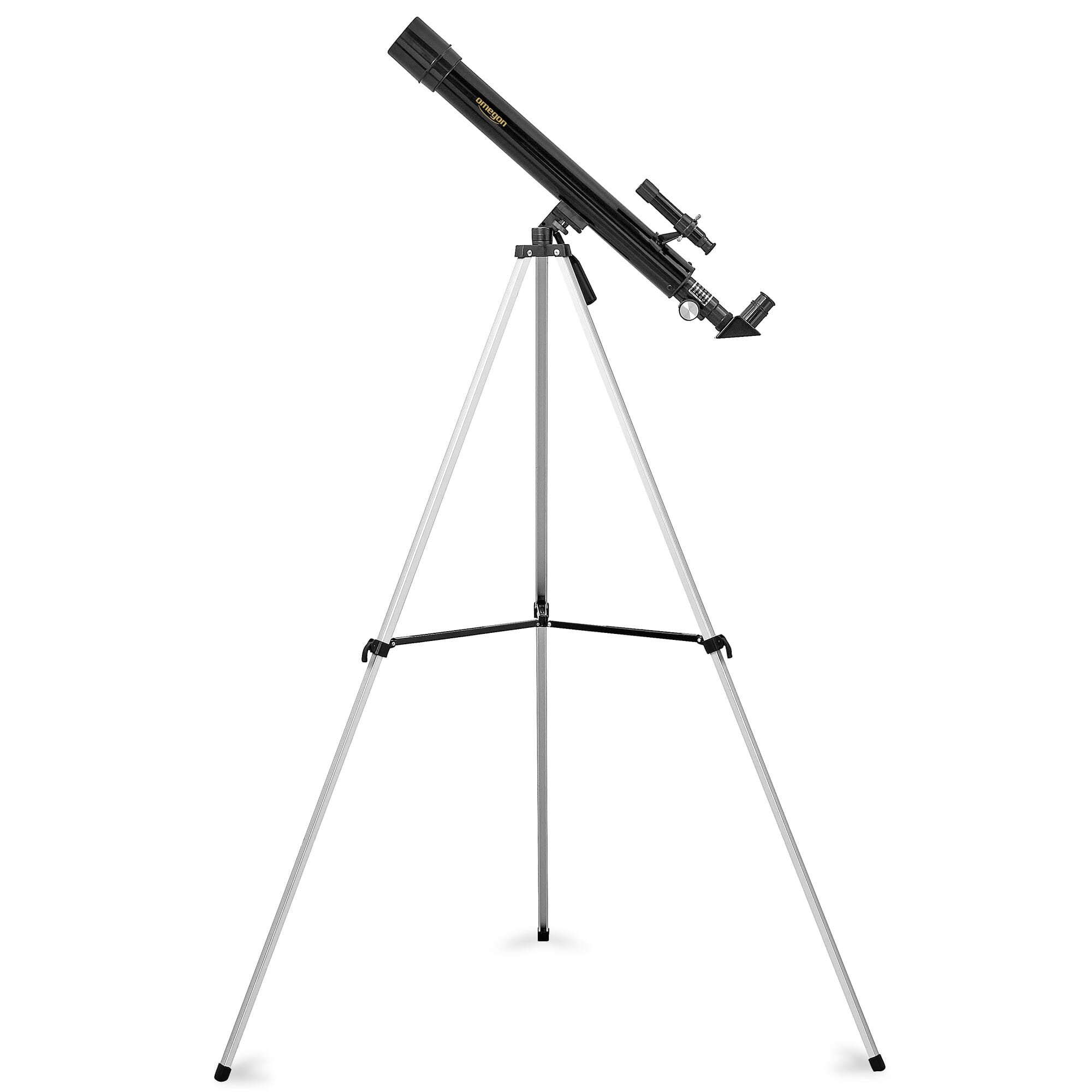
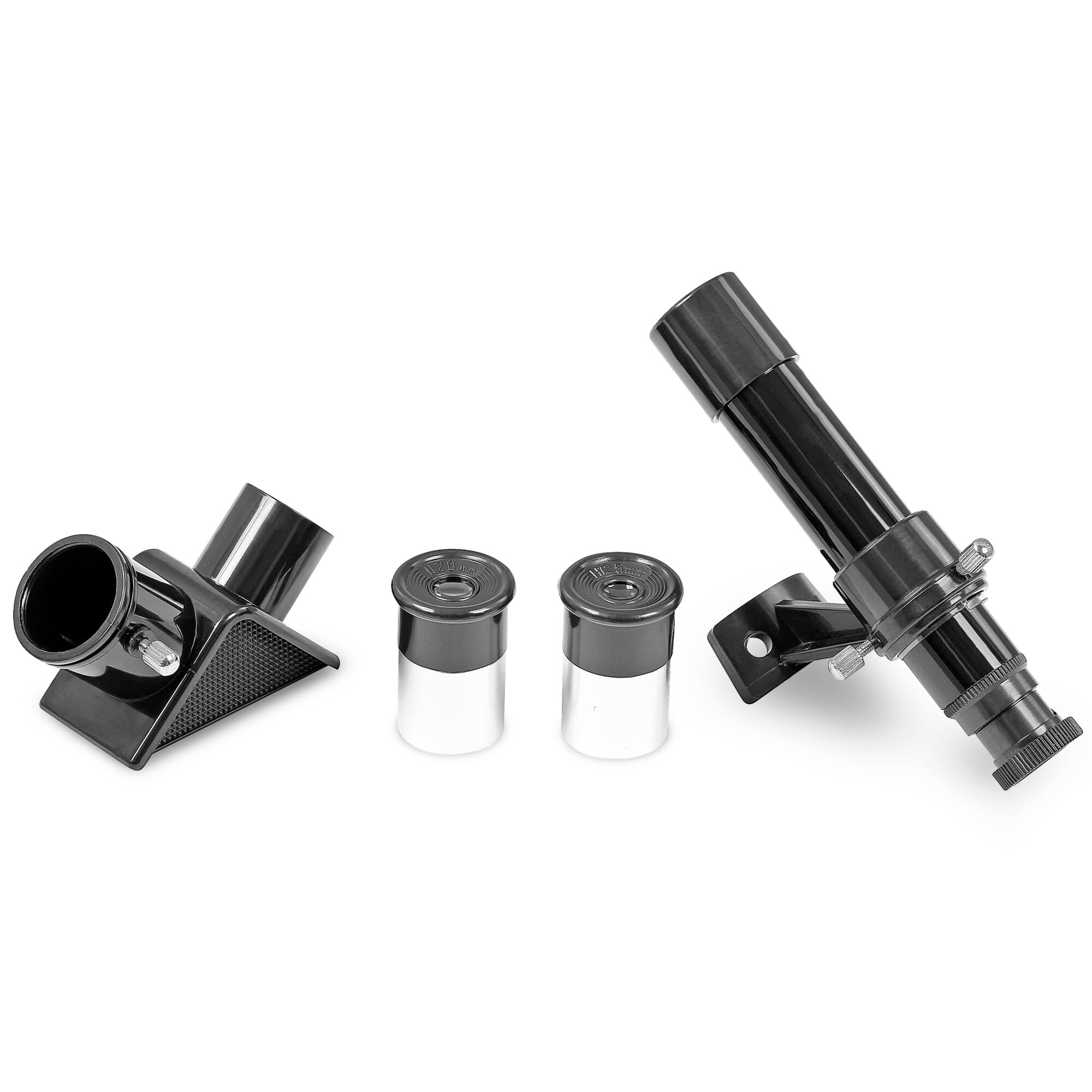
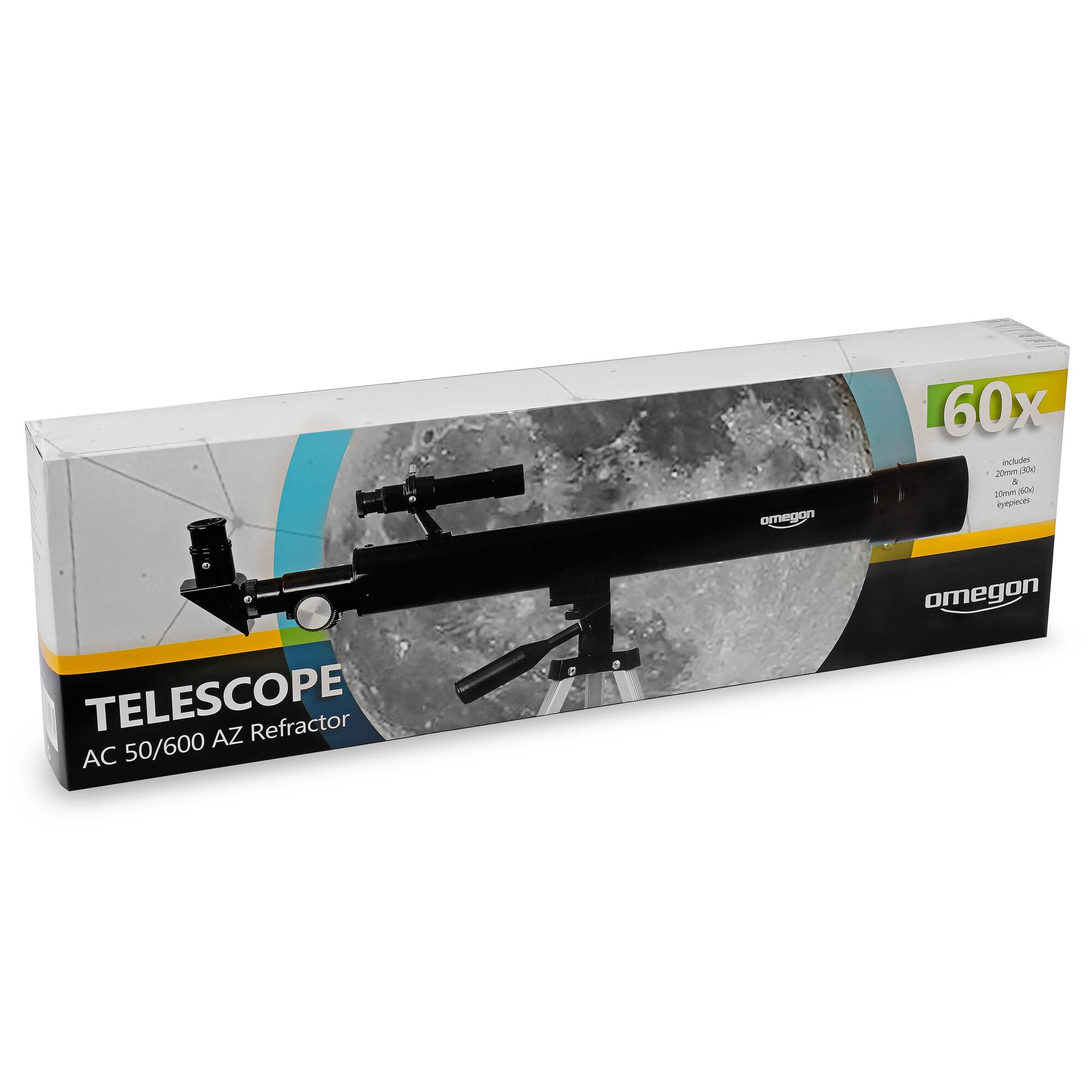
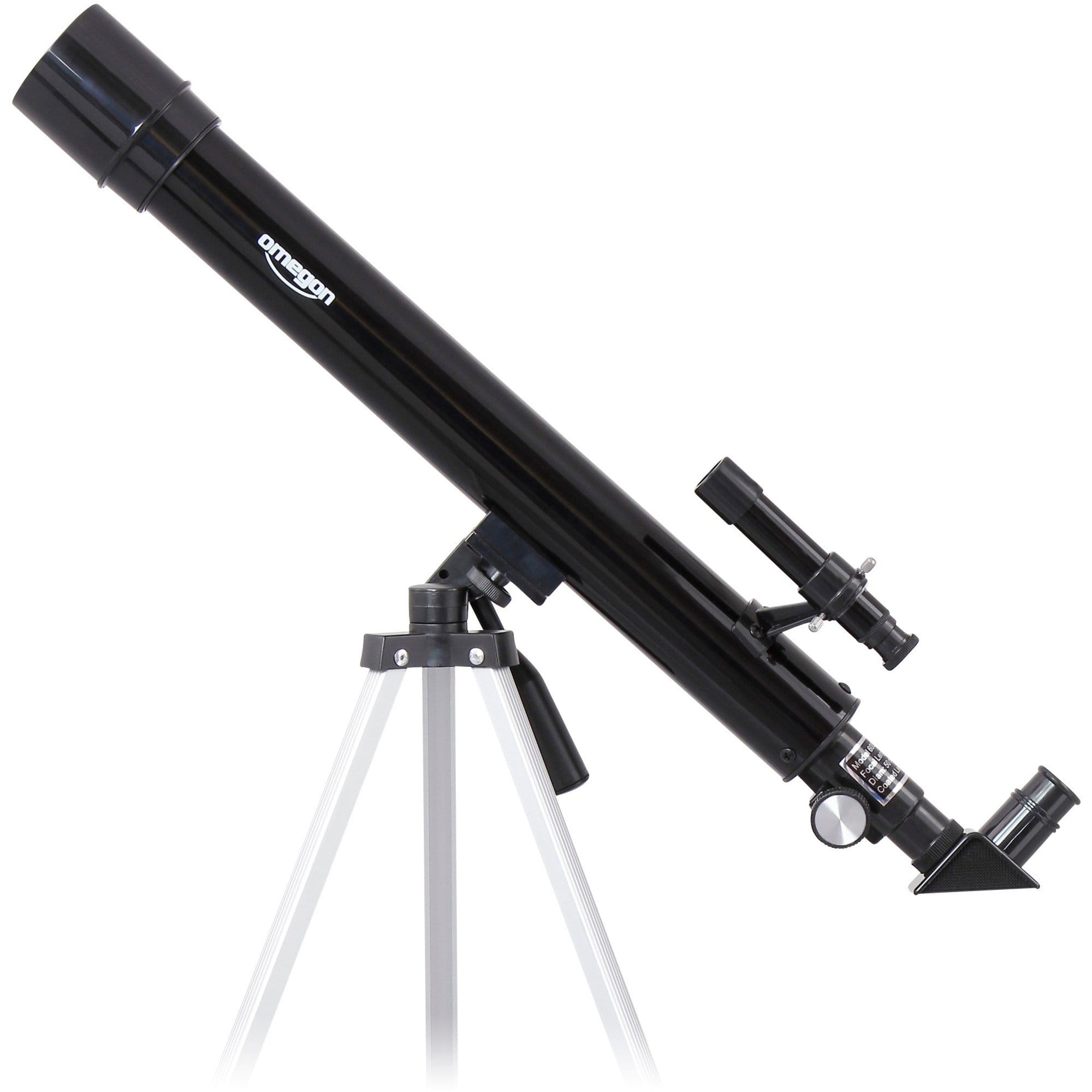
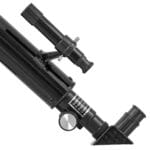
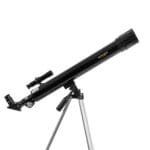
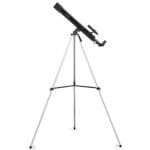
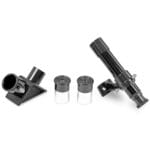
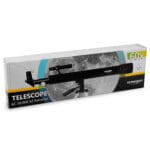
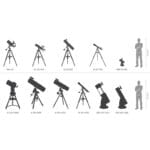
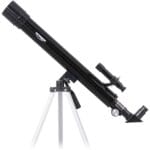


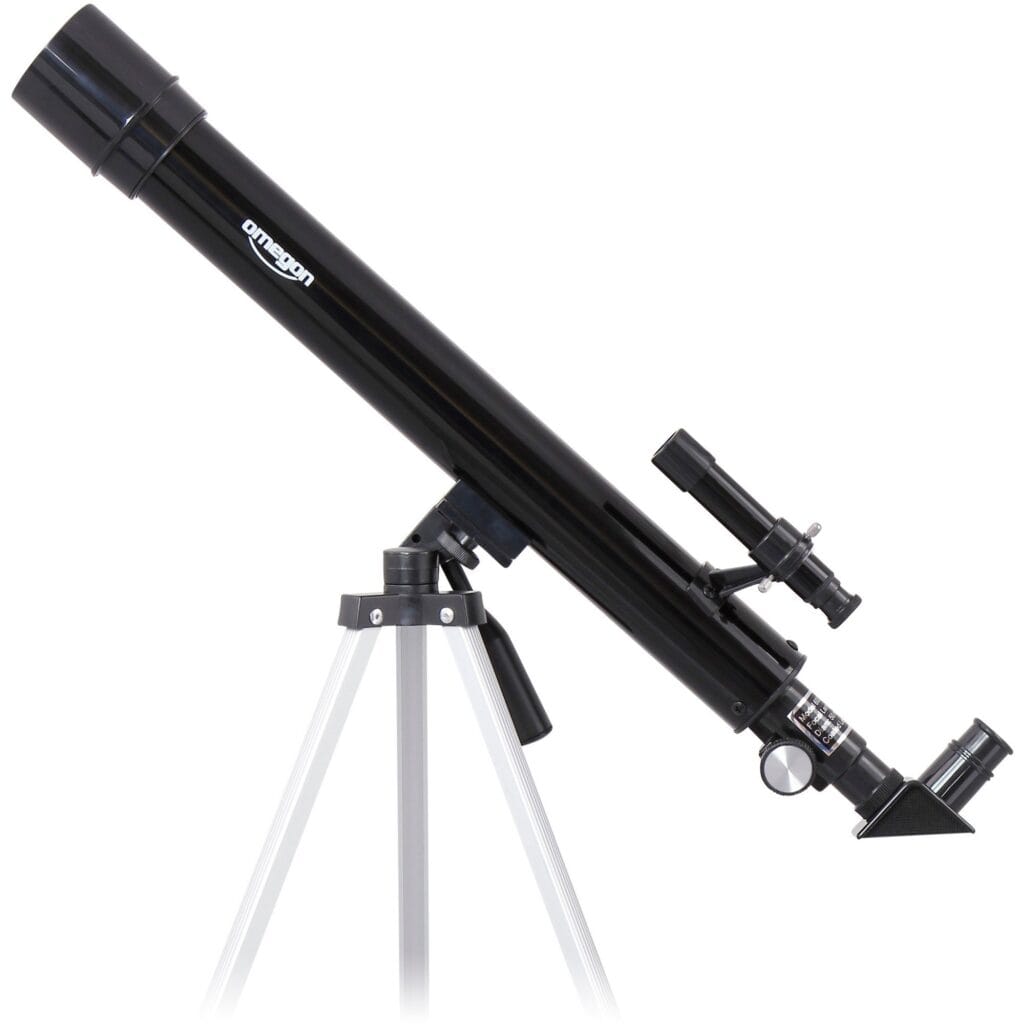
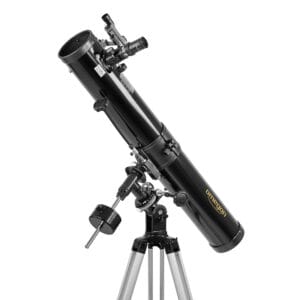
The AC 50/600 AZ is an achromatic lens telescope with a 50 mm aperture and 600 mm focal brandlength (f/12) on an azimuthal mount with an aluminum tripod. It is the smallest and lightest model of the Omegon AC series: the lens captures 50 times as much light as the human eye, the highest meaningful magnification is 100x, and the set consists of a tube, mount, tripod, two eyepieces, a viewfinder, and a zenith mirror. The 60 mm model from the same series captures 44% more light and includes a Barlow lens and a reversing lens; this 50/600 comes in a 67 cm box instead of 84 cm and is intended as the first telescope for a child, with the moon as the main target. What you can show a child with a first telescope is described in Astronomy for children.
What do you see through the AC 50/600?
Moon: at 30x with the 20 mm eyepiece, the entire moon disk with the dark seas and the large craters; at 48x with the 12.5 mm eyepiece, the crater rims and mountains along the shadow line, where the relief is clearest; along the bright edge of the moon you see a thin bluish-purple rim; that is the chromatic aberration of an achromat and at f/12 it remains narrow. Jupiter: a small disk with the four large moons in a row, which change place from evening to evening; at 48x on a quiet night the two dark main bands. Saturn: at 30x an oval; at 48x on a quiet night the ring as a loose border around the planet; Venus shows its disk shapes. Deep sky: the Pleiades at 30x, the Orion Nebula as a gray smudge around the Trapezium stars, Albireo as a yellow and blue double star at 48x, and from a dark spot the Andromedan Nebula as a faint oval smudge. The 20 mm eyepiece (30x) shows the moon more than twice as far in the sky. Nebulae and galaxies are seen with the eye in gray tones, not in color. From a city or village with street lighting, the moon, planets, double stars, and star clusters remain; nebulae and systems require a dark spot. The highest meaningful magnification is approximately 100x, twice the opening in millimeters; the included eyepieces remain well below that at 48x, keeping the image calm and clear. What you can expect per object is stated in What do you see through a telescope?, Jupiter through a telescope, Saturn through a telescope and The Moon through a telescope.
How is the AC 50/600 different from other children's telescopes?
- Optics: an achromatic doublet lens of 50 mm with a 600 mm focal brandpoint (f/12). The long focal brandpoint keeps the color edge small and makes focusing forgiving: a small adjustment of the focus ring changes the image less than with a short tube.
- Magnification that is correct: 30x and 48x out of the box, both below the 100x limit for 50 mm. Many children's telescopes promise 300x or more on the box; that gives a large, blurry image. This set stays within what the lens can handle.
- The lightest set in the series: tube, azimuthal mount, aluminum tripod, viewfinder and zenith mirror in one box of 67 cm, without power and without alignment. A Barlow lens is not included.
For whom yes and for whom no
Hello a child from 8 years old together with an adult or from 10 years old independently, with the Moon and the moons of Jupiter as the first targets; those who want the lightest complete set that a child carries to the garden themselves; those looking for a first introduction before a larger telescope arrives. If you’re unsure, read the Telescope Buying Guide for Beginners.
Not for photos of nebulas and galaxies; that requires a mount that follows the sky; then look at the smart telescopes. Photos of the moon are possible with a smartphone adapter attached to the eyepiece. If a child also wants to look up at birds during the day and see more at night, choose The 60 mm model from this series With 44% more light, three eyepieces, a Barlow lens and a reversing lens. If you want to see the planets in detail, then 70 mm or more is the minimum; see the telescopes for children.
What's in the box
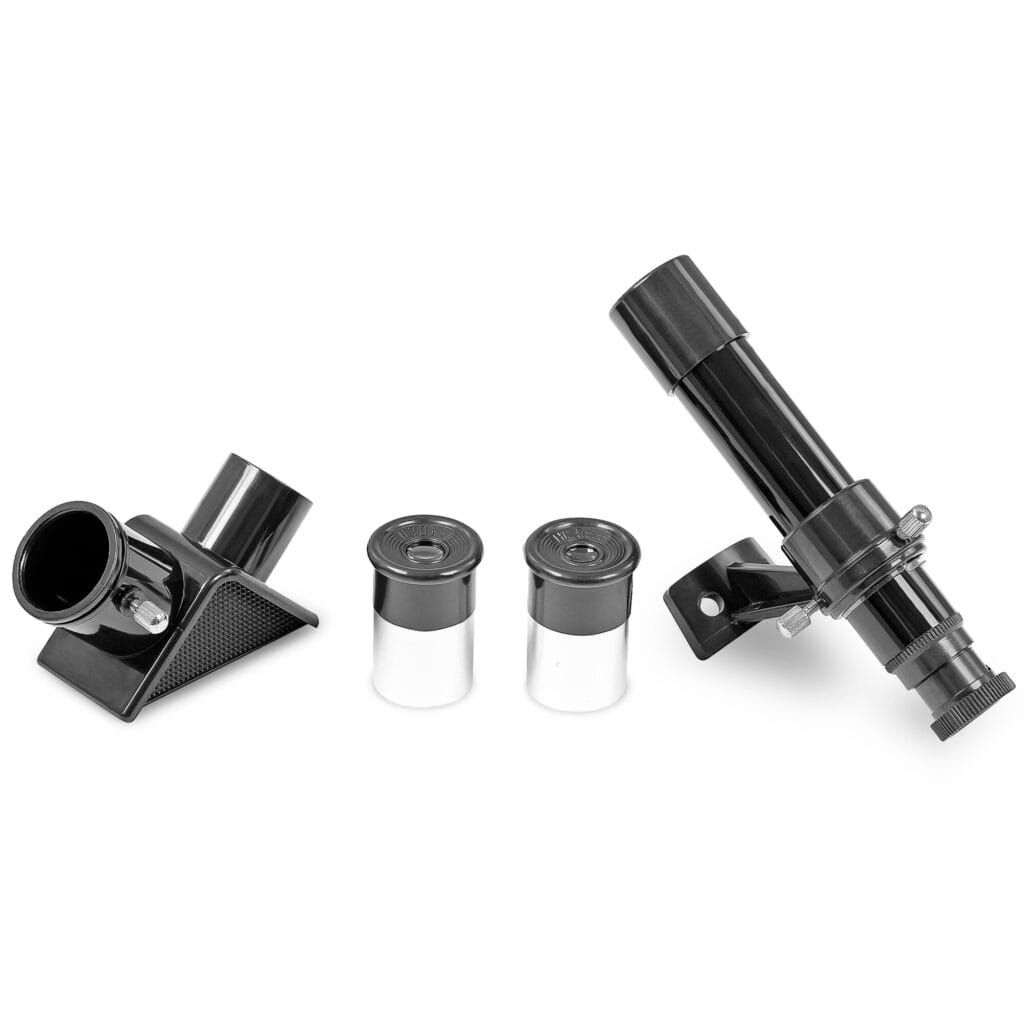
- Optical tube AC 50/600 with lens cap
- Azimuthal mount
- Aluminum Tripod
- 20 mm eyepiece (30x), for the entire moon, the Pleiades and searching
- 12.5 mm eyepiece (48x), for craters and planets
- Seeker
- 90 degree zenith mirror
- Manual
Not included: Barlow lens, smartphone adapter, sun filter. A Barlow lens would double the magnification to 96x, at the limit of what the 50 mm can handle; therefore, the set works without it; a smartphone adapter clamps a phone onto the eyepiece for the first photo of the moon; a sun filter that is attached to the tube before is the only safe way to look at the sun.
Format and weight
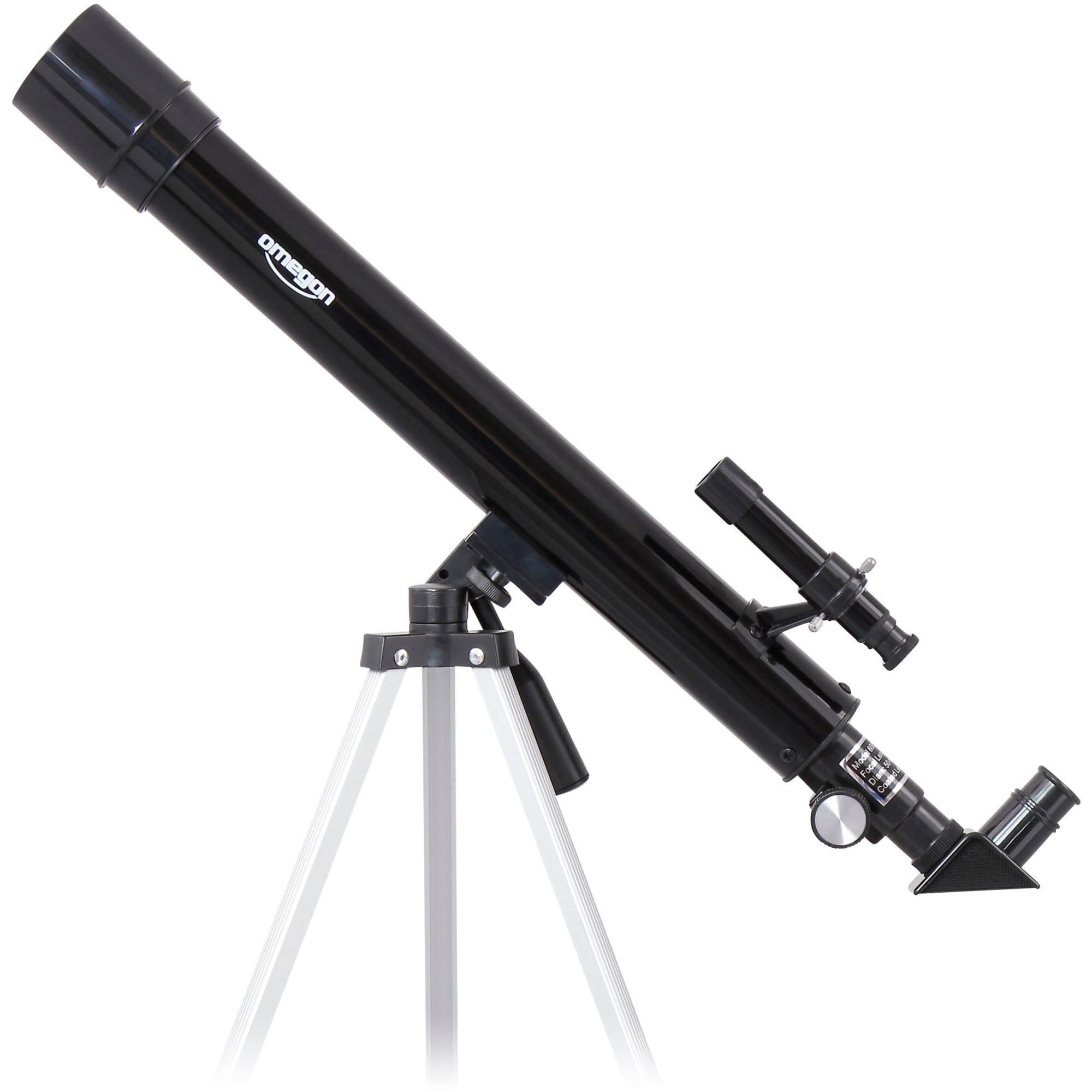
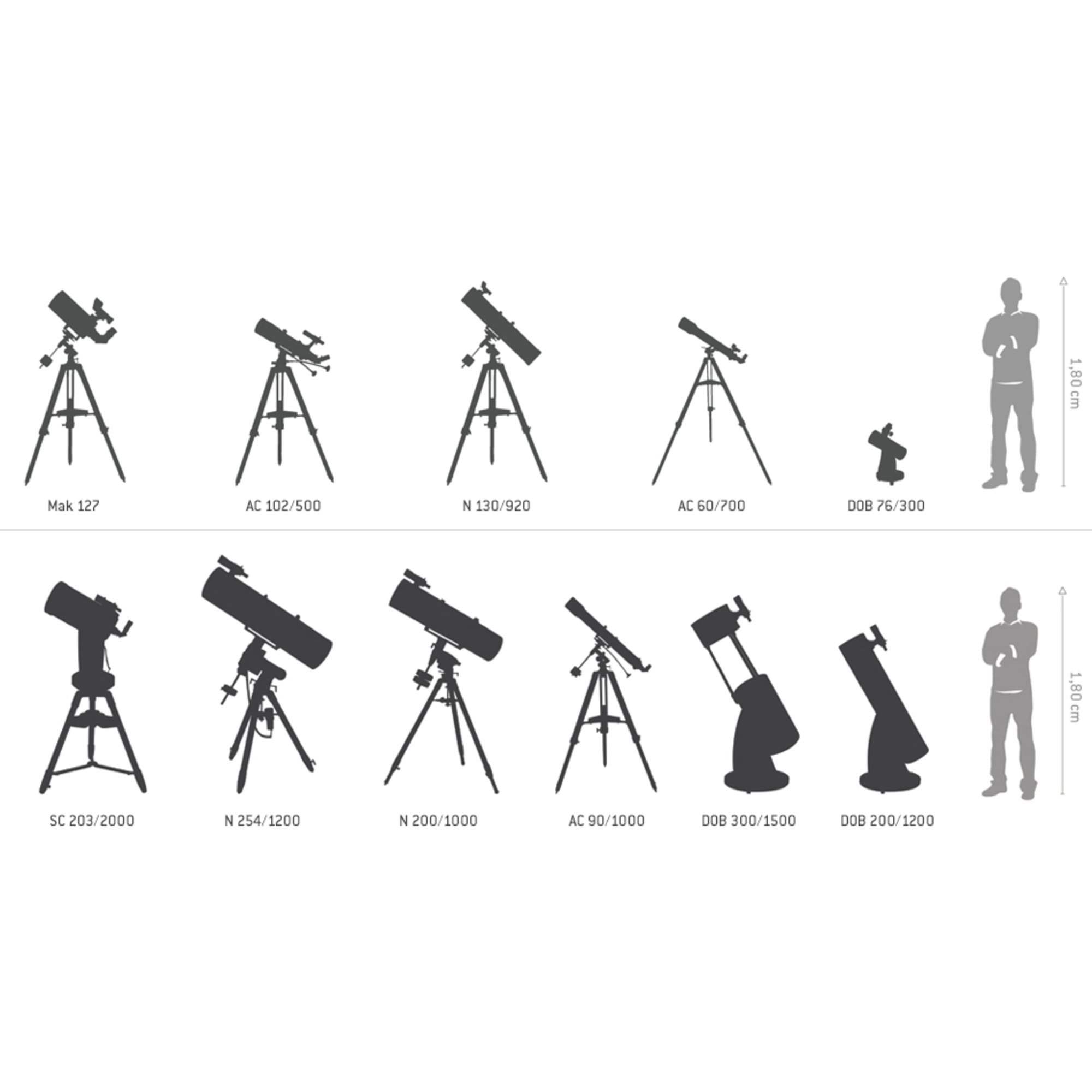
The set is the lightest in the series. Everything comes in a box measuring 67 x 25 x 25 cm, so the tube is shorter than 67 cm. The tripod is made of aluminum; the manufacturer describes it as a table tripod. Then set it on a sturdy garden table so that a child can look straight through the zenith mirror, not on a wobbling stool.
First evening with the AC 50/600
- Remove the lens cap and place the tripod on a flat, sturdy surface; focus manually and secure the clamps as soon as the subject is in focus.
- Line up the viewfinder during the day on a distant object, such as a church tower or chimney: first focus with the 20 mm eyepiece, then adjust the viewfinder with the screw-on screws at the same point. Let a child practice focusing and focusing during the day.
- Do not look through a window; the glass and the temperature difference make the image blurry.
- Start with the 20 mm eyepiece (30x) and look for the moon; then switch to the 12.5 mm eyepiece (48x).
- Rotate the focus lever until the image is small and sharp; a large blurry disc is not sharp.
- Set the telescope outside for 15 to 20 minutes before viewing; a 50 mm lens cools down quickly, but a hot tube produces shaky images.
- A lens telescope does not need to be collimated. If you see nothing or only a blur, the viewfinder is crooked or the focus is off; after a few hours, the lens may become foggy due to dew; then put the lens cap on and let it dry inside, never wipe it off. More causes are listed in Why can't I see anything through my telescope?.
Which accessories are suitable?
- Omegon Helievo solar filter: foil in a ring that sticks to the tube beforehand; measure the circumference of the front of the tube, divide by 3.14 and choose the size that corresponds to that result. This way, a child can see sunspots during the day.
- Vela Optics smartphone adapterClamps around the eyepiece and holds the camera on your phone directly above the lens; this allows a child to take a photo of the entire moon at 30x magnification.
AC 50/600, AC 60/700 or AC 70/700?
| AC 50/600 AZ (this page) | AC 60/700 AZ-1 | AC 70/700 AZ-2 | |
|---|---|---|---|
| Lens | 50 mm, f/12 | 60 mm, f/11.7 | 70 mm, f/10 |
| Highest meaningful magnification | about 100 times | about 120x | about 140x |
| Oculars in the box | 20 and 12.5 mm (30x and 48x) | 20, 12.5 and 4 mm, 2x Barlow, 1.5x reversing lens | 20 and 10 mm, 2x Barlow |
| Mount | ideal for aluminum tripod | AZ-1 with fine adjustment in height | AZ-2 with fine movement in height and locking on both axes |
| Weight and box | box 67 cm | 4 kg, box 84 cm | 4 kg, box 76 cm |
| Moon and planets | the moon with craters and seas, the moons of Jupiter, the ring of Saturn as a loose rim | crater sizes up to 112x, the main bands of Jupiter, the ring of Saturn detached from the planet | crater sizes up to 140x, the main bands of Jupiter, the ring of Saturn with Titan |
| Choose this as | It should be the lightest first telescope for a child, with the moon as the main target | a child wants to look straight ahead during the day and wants to have three oculars to go with it | You mainly watch in the evening and want more detail on the planets |
Frequently asked questions about the AC 50/600
- Is it suitable for a child? From 8 years old together with an adult, from 10 years old independently: no alignment, two eyepieces, and the moon is in view within a minute with the 20 mm eyepiece.
- Can I take photos with it? Of the moon, with a smartphone adapter attached to the eyepiece at 30x; long exposures of nebulas and galaxies require a mount that follows the sky.
- Which sun filter fits it? A filter that fits on the tube before it. Measure the circumference of the front of the tube, divide by 3.14 and choose on the page of the Omegon Helievo The size that this outcome falls into. Cover the viewfinder and check the film for each use. Never use an eclipse glasses behind the viewfinder or a filter in the eyepiece.
- Do I need to collimate it? No; the 50 mm lens is fixed in the tube and remains aligned, even after transport.
- Are there other eyepieces available? The manufacturer specifies a 1-inch eyepiece connection, a smaller size than the 1.25-inch of the larger models; loose 1.25-inch eyepieces and filters do not fit in there. Stick with the two included eyepieces, which cover the usable range of this lens.
- Is it on a table or on the ground? The manufacturer describes the tripod as a table tripod: place it on a sturdy garden table so that a child can look straight through the zenith mirror.
Specifications
| Optical design | Achromatic refractor, double lens |
| Opening | 50 mm |
| Focal length | 600 mm |
| Opening ratio | f/12 |
| Lens | Achromatic double lenses of 50 mm, capture 50 times as much light as the eye |
| Highest meaningful magnification | about 100 times |
| Mount | Azimuthal |
| Tripod | Aluminum, described by the manufacturer as a table tripod |
| Reporter | Tooth bracket, ocular connection 1 inch according to the manufacturer |
| Seeker | Searcher, included |
| Included eyepieces | 20 mm (30x) and 12.5 mm (48x) |
| Diagonal | 90 degree zenith mirror |
| Tube length | less than 67 cm |
| Packed | 67 x 25 x 25 cm |
Shipping and assistance
Orders with multiple items are shipped from multiple warehouses and may arrive in parts; each package will have its own tracking number. More information about this can be merk found on the Omegon brand page. Help with choosing or on the first evening: WhatsApp or call on weekdays from 9:00 to 17:00, or come by appointment in Sneek. 30 days' cooling-off period.
Reviews
There are no reviews yet.