
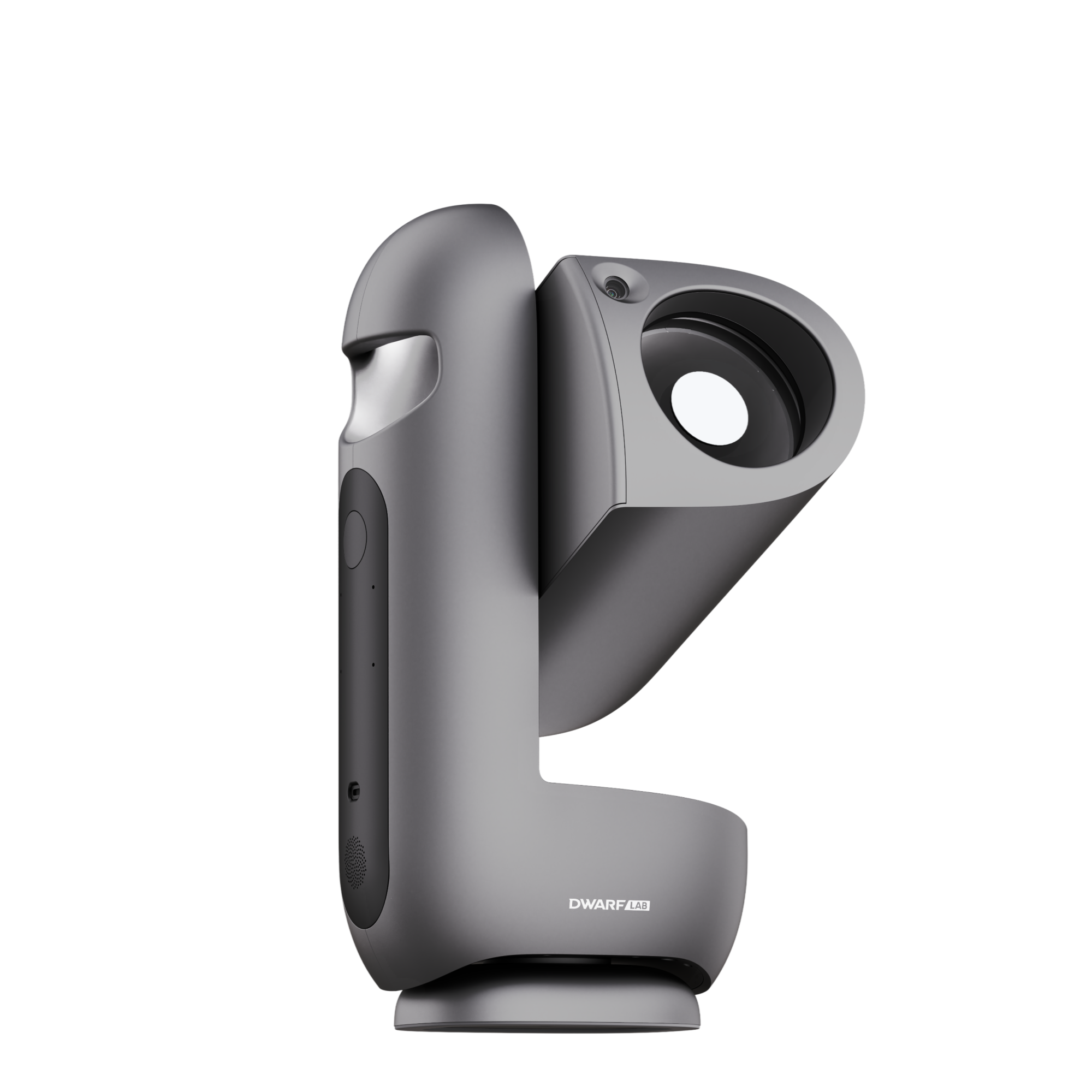
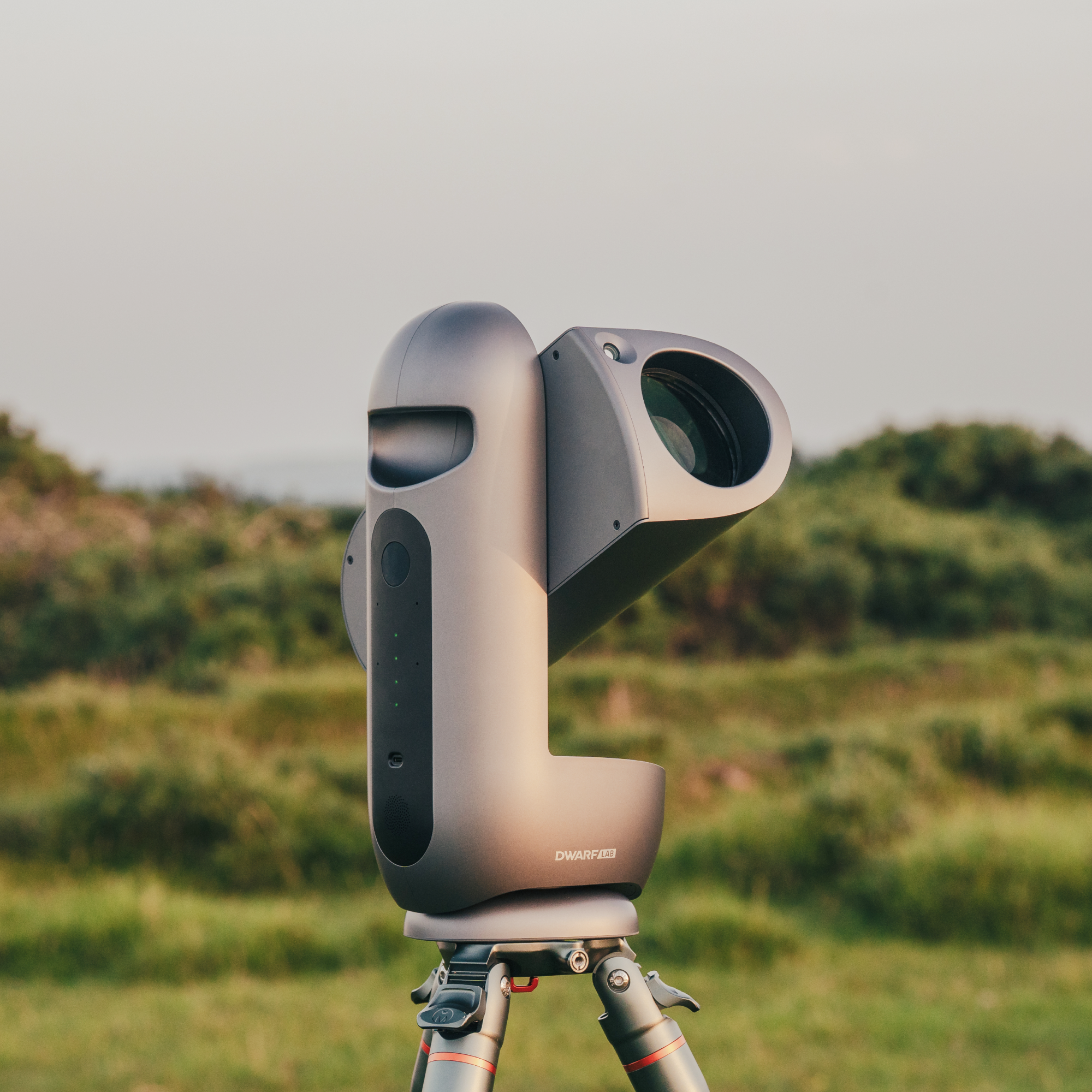
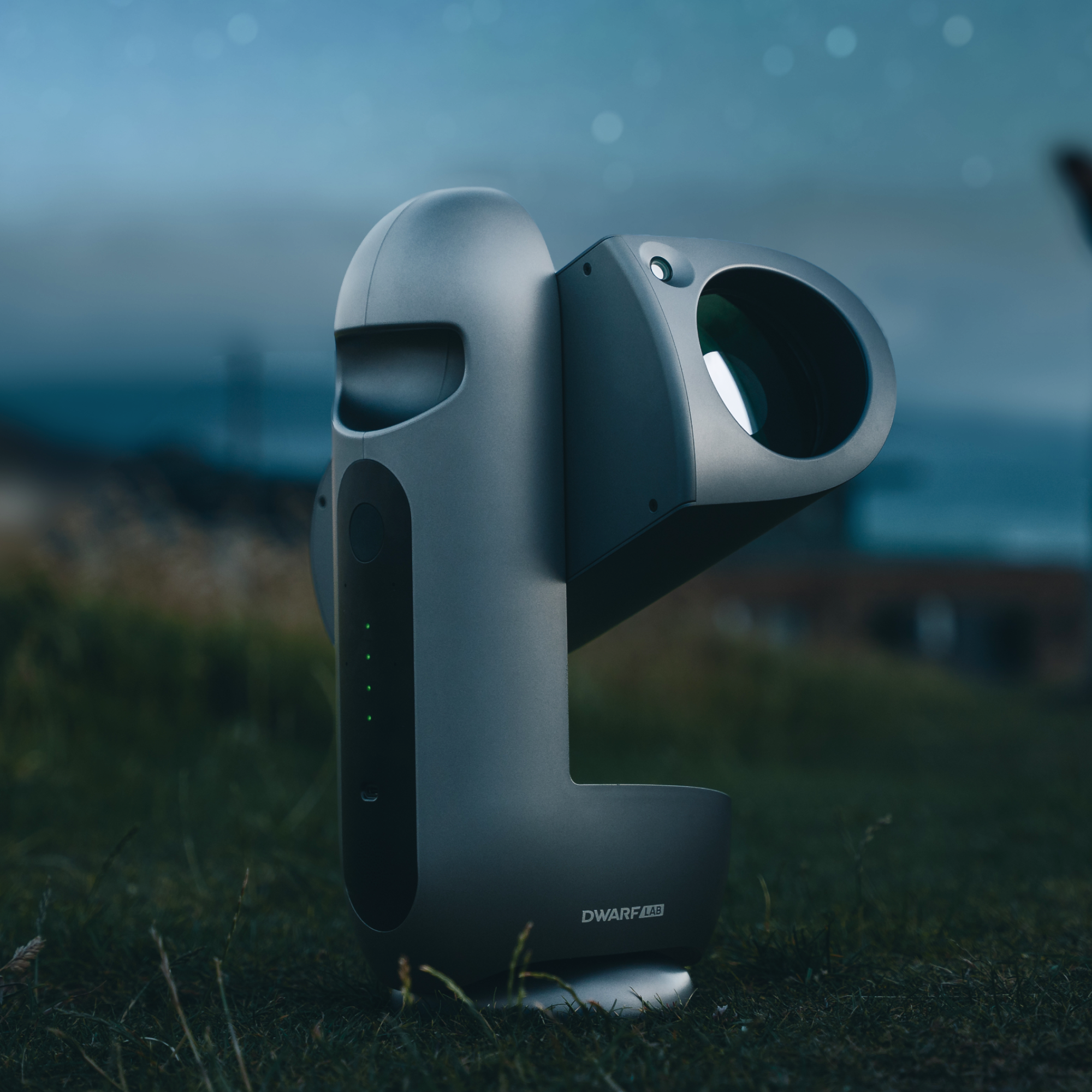
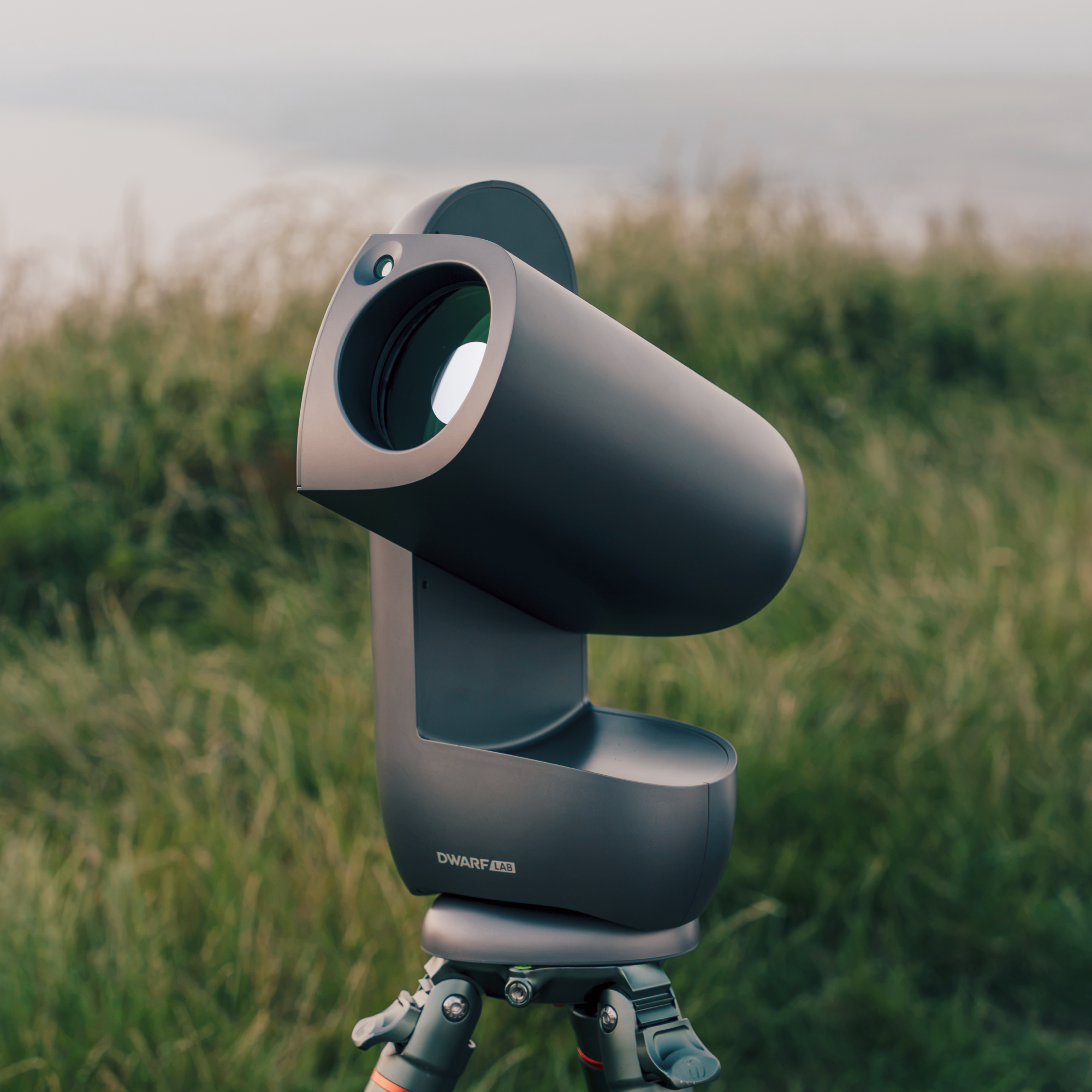
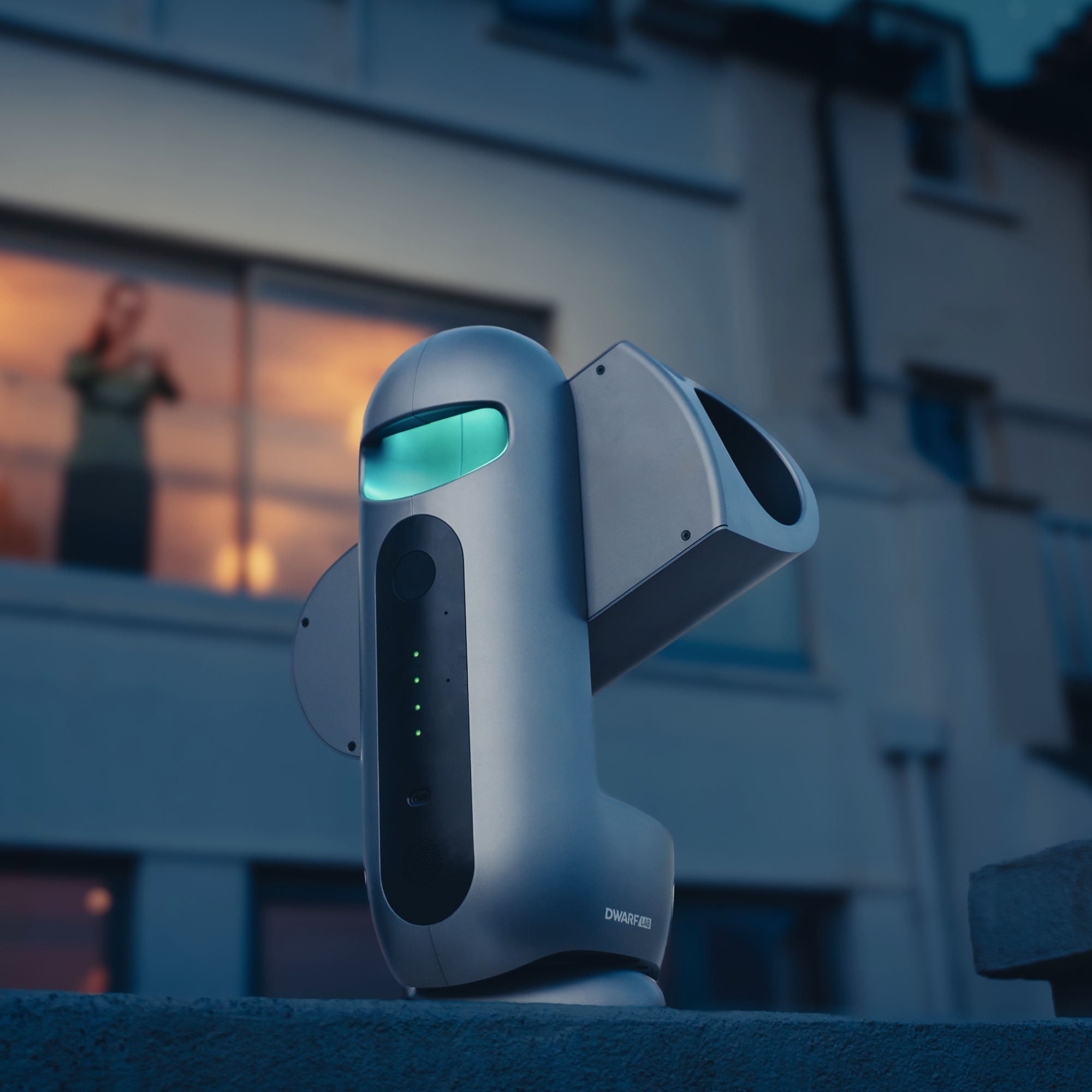
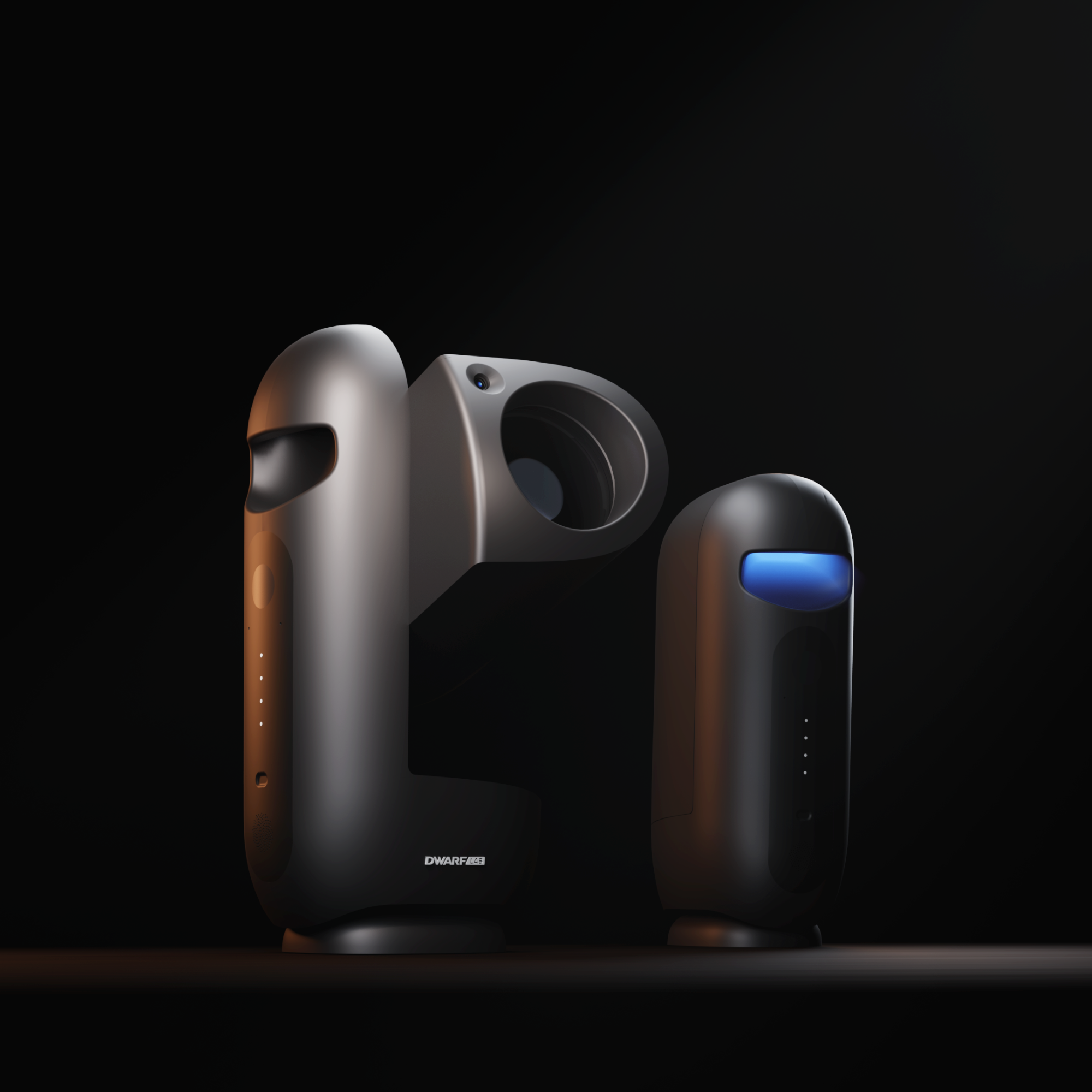
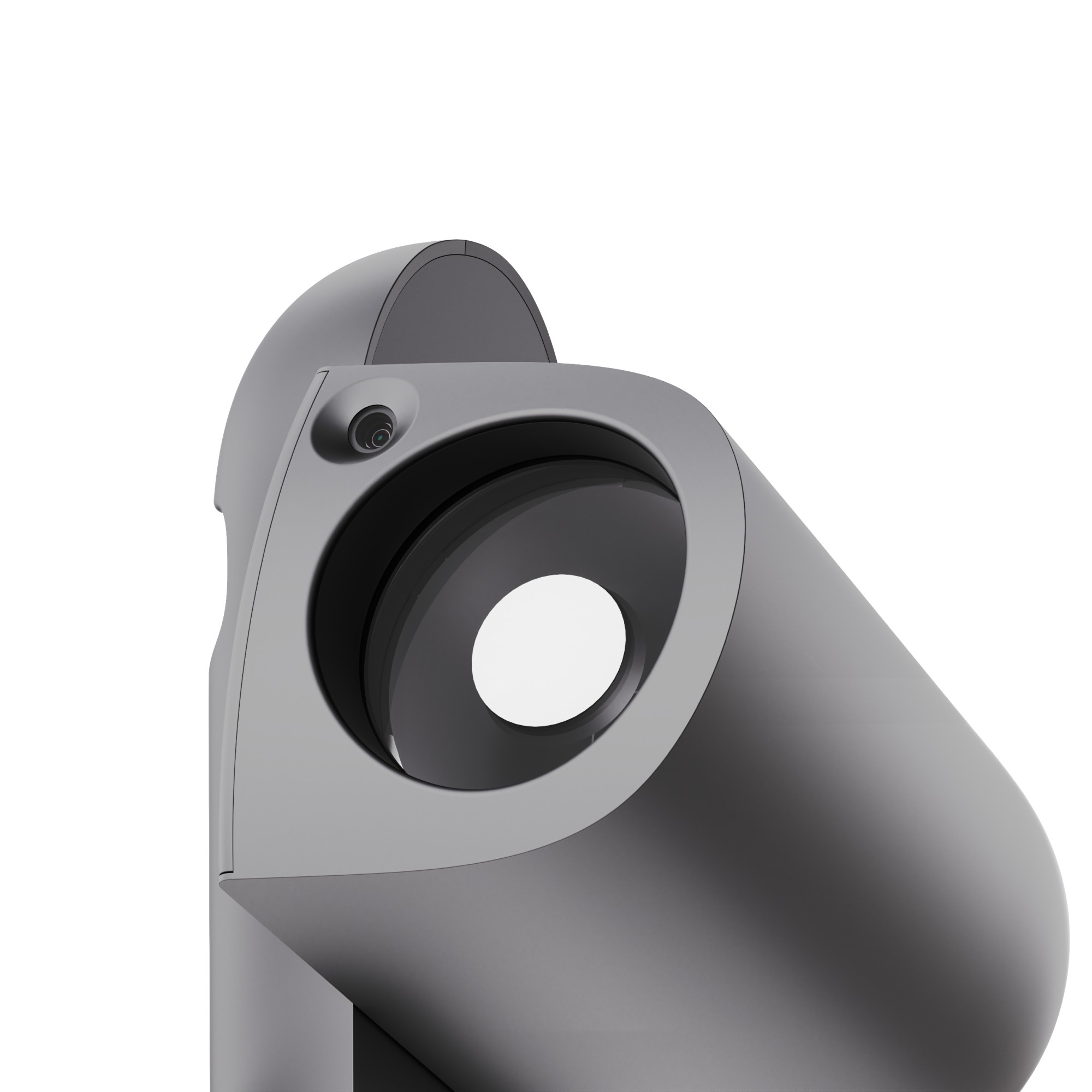
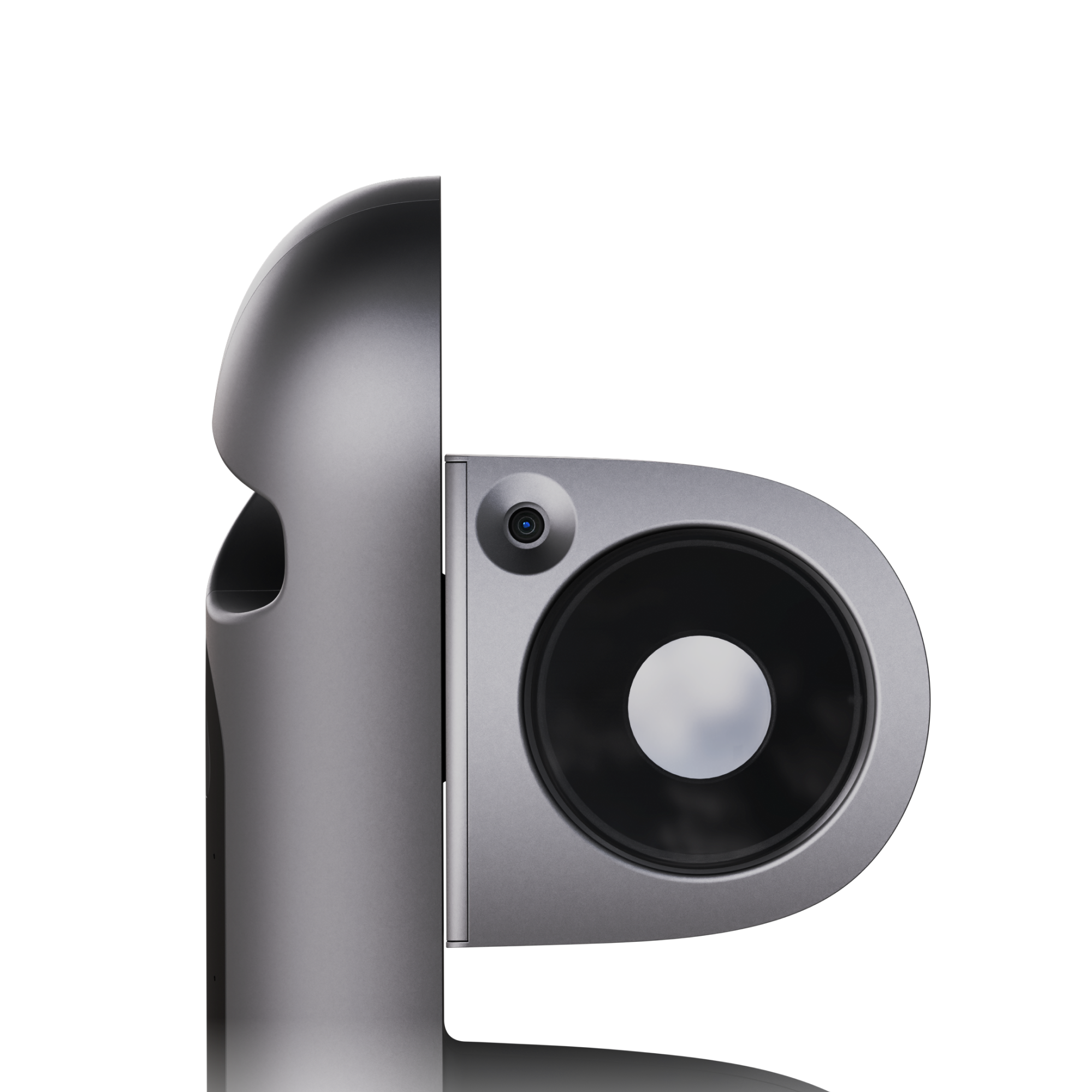
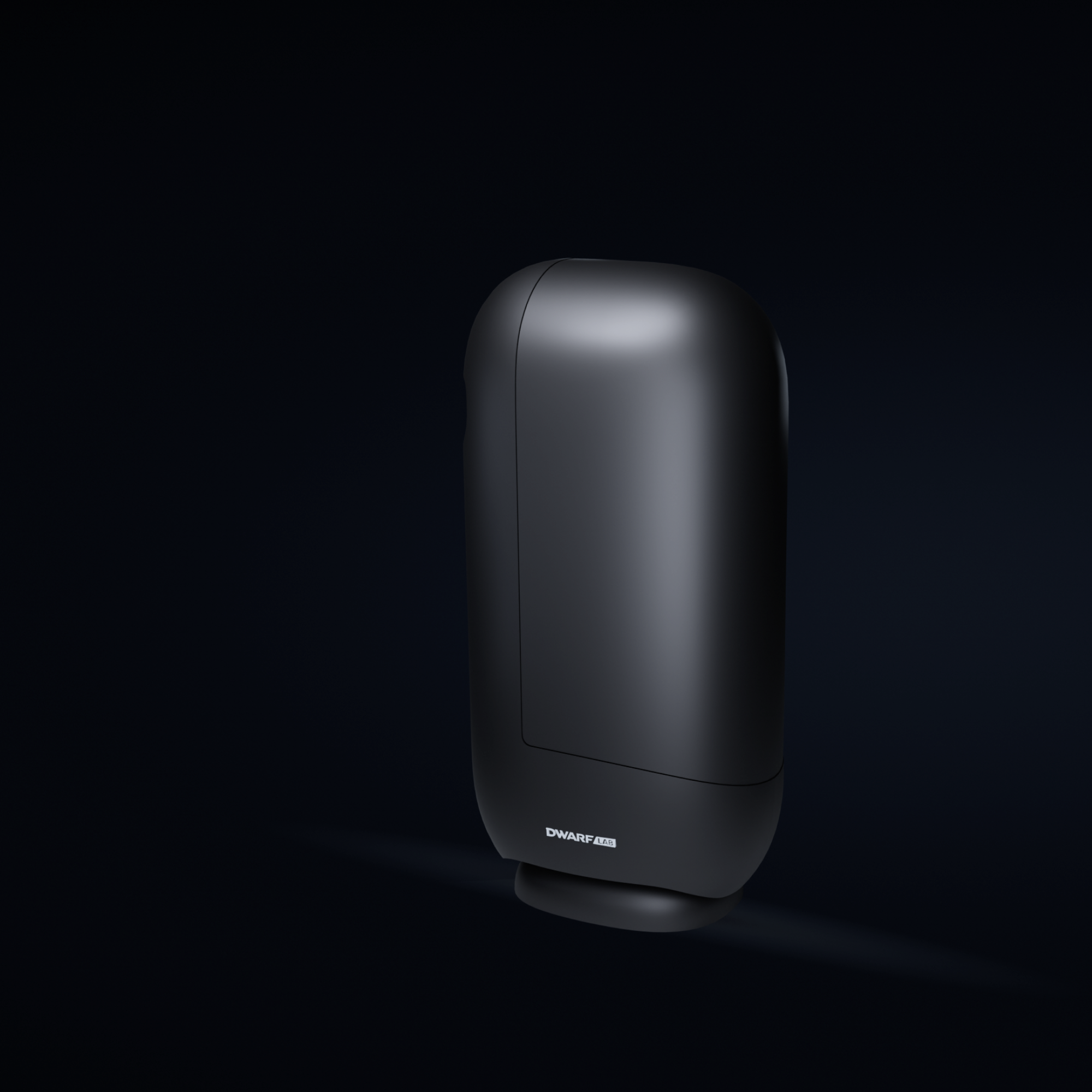
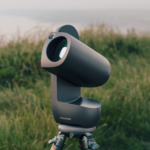
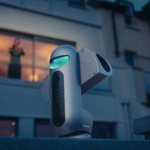
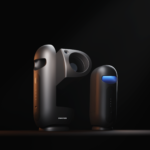
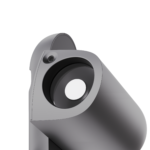
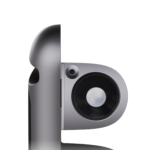
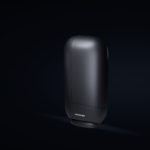


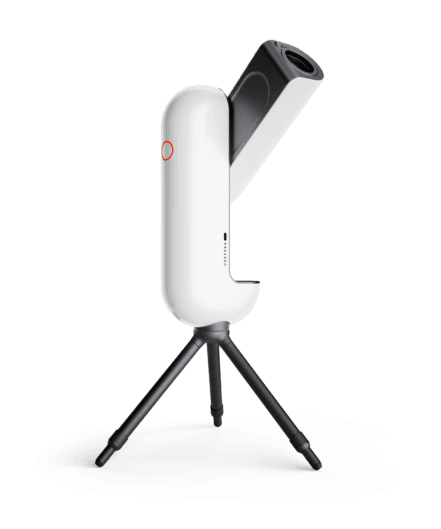
The Draco is Dwarflab's new smart telescope, and the first smart telescope in this price range to combine a 90 mm aperture, an actively cooled sensor, a built-in guidescope, and a field-rotation-correcting rotating sensor. Features that you normally only get with a separate mount, camera, and guider are packed into a single 5.5 kg housing. You set it down, open the app, and the Draco does the rest.
The Draco is available in two editions: the Standard Edition (€ 1,499) and the SHO Edition (€ 1,669). The difference lies in the built-in filters; further on we explain which one suits you best. Both editions are now available for booking. The first units are expected around November/December.
In brief
- 90 mm aperture, 340 mm brand focal length, f/3.8, catadioptric design
- 50-megapixel sensor (1/1.3 inch) with active cooling
- Exposures up to 300 seconds per shot
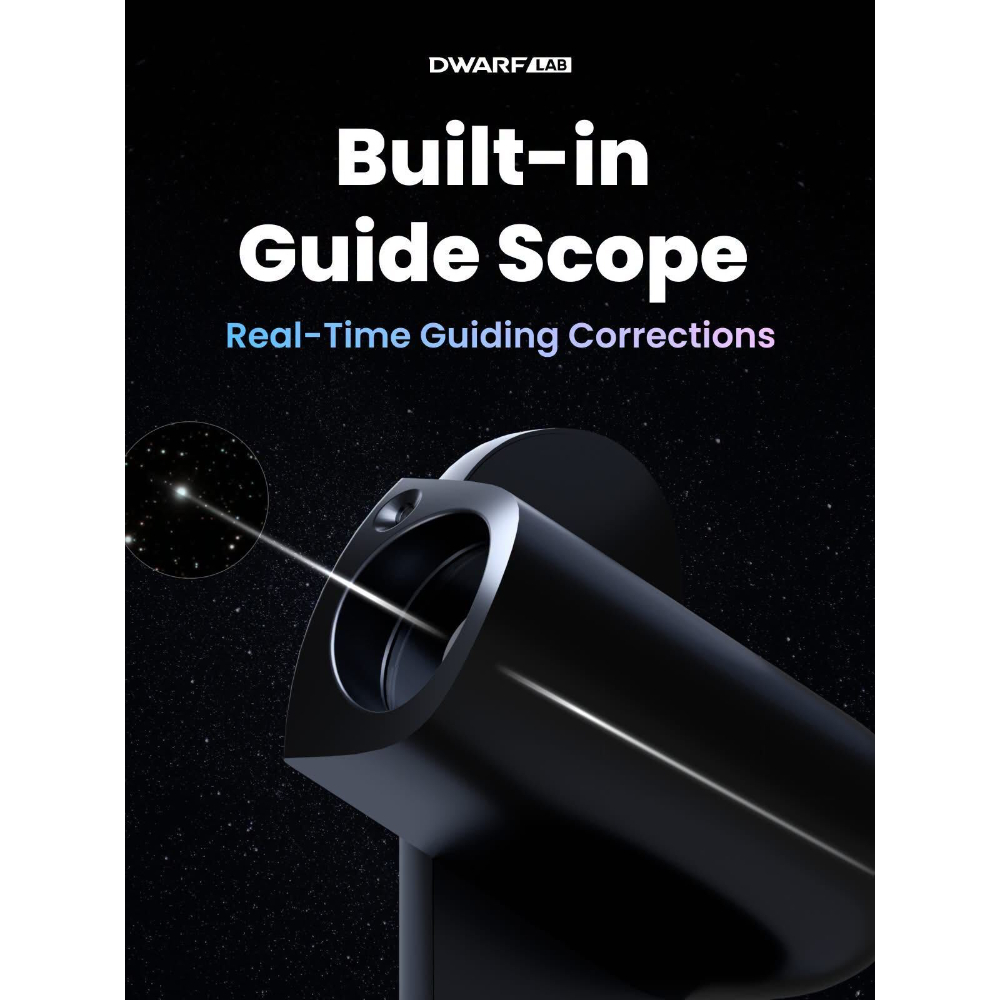
- Built-in guidescope with its own sensor that adjusts tracking in real-time
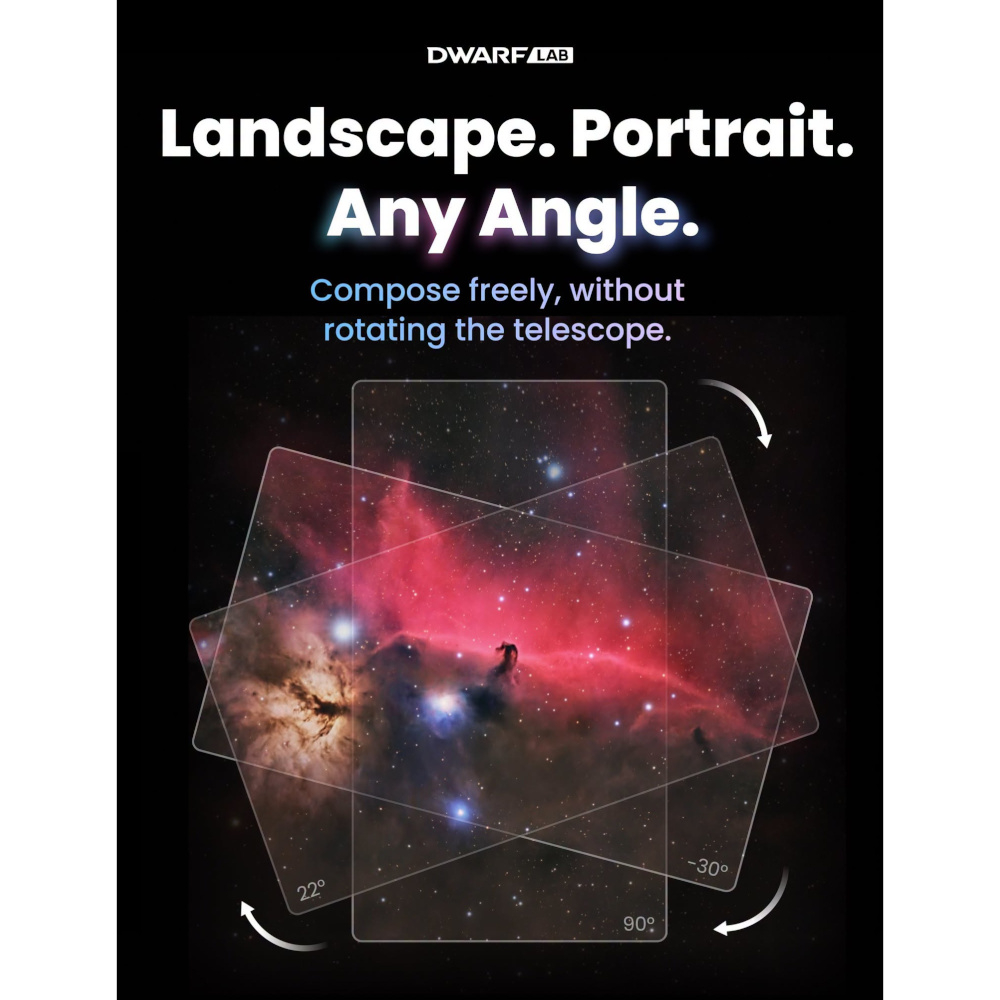
- Rotary sensor (±90°) that compensates for field rotation and allows you to frame at any angle
- Second wide-angle camera (50 megapixels, f/1.9) for Milky Way, landscape and northern lights
- Built-in filters: Standard Edition with duo-narrowband Hα+OIII and ND solar filter, SHO Edition with Hα+OIII and SII+OIII
- Wi-Fi, Bluetooth, NFC, and USB-C 3.0, with 128 GB of onboard storage
- 77 Wh battery for about 5 hours in astro mode, IP56, works from -20 to 45 °C
- 5.5 kg, tripod included, polar alignment not required
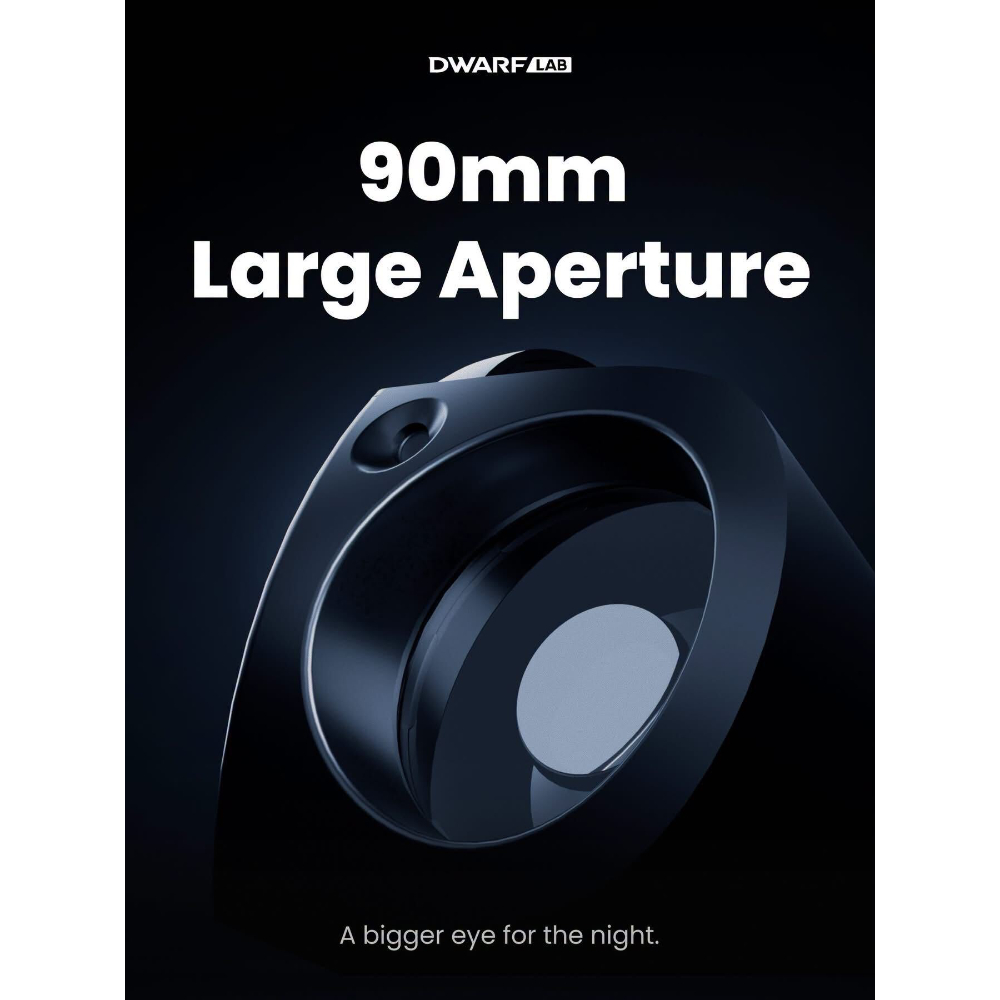
90 mm opening
The aperture determines how much light a telescope gathers, and in astrophotography, light is everything. A 90-mm lens captures more than three times as much light as a 50-mm lens. In practice, this means that faint nebulae and galaxies become visible more quickly, with greater detail, and you need less time to achieve the same result. Thanks to its catadioptric design (a combination of lenses and mirrors), this 90 mm telescope with a brand focal length of 340 mm still fits into a compact housing.
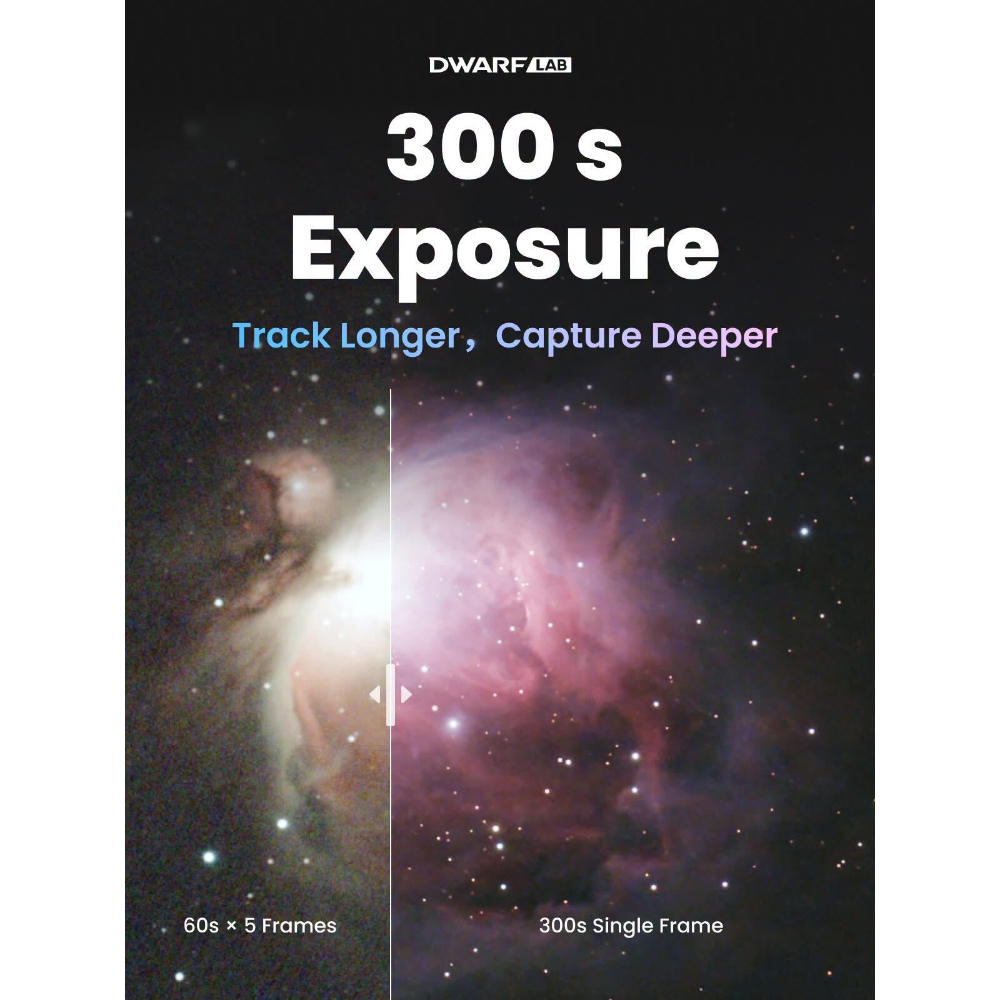
Exposures up to 300 seconds
Most smart telescopes use short exposures of ten to sixty seconds, which the software then stacks together. The Draco can expose up to 300 seconds per shot. A single five-minute exposure contains less read noise than five one-minute exposures, and that difference is especially visible in the faint parts of a nebula.
Built-in guidescope
Long exposures are only useful if the telescope stays locked onto the target the entire time. For this, the Draco has a second, small scope on board: the guidescope. This keeps an eye on a star and adjusts the tracking in real time. In a traditional astrophotography setup, this is a separate guide camera with its own software. Here, it is simply built right in.

Rotary sensor against field rotation
A telescope that tracks the sky straight up, without polarising filters, slowly rotates the field of stars during a long exposure. This is called field rotation, and it is the reason why smart telescopes keep their exposures short by default. The Draco solves this mechanically: the sensor itself rotates along with the image (up to 90 degrees in both directions), exactly as fast as the image rotates. This keeps the stars round even during long exposures. If you want to get the most out of long exposures, the Draco also has an EQ mode. To do this, you tilt the entire viewfinder to your latitude, and that is not possible with the supplied tripod. You need a sturdy tripod with a wedge that weighs 5.5 kilograms. For most users, the regular mode is more than sufficient.
Framing from every angle
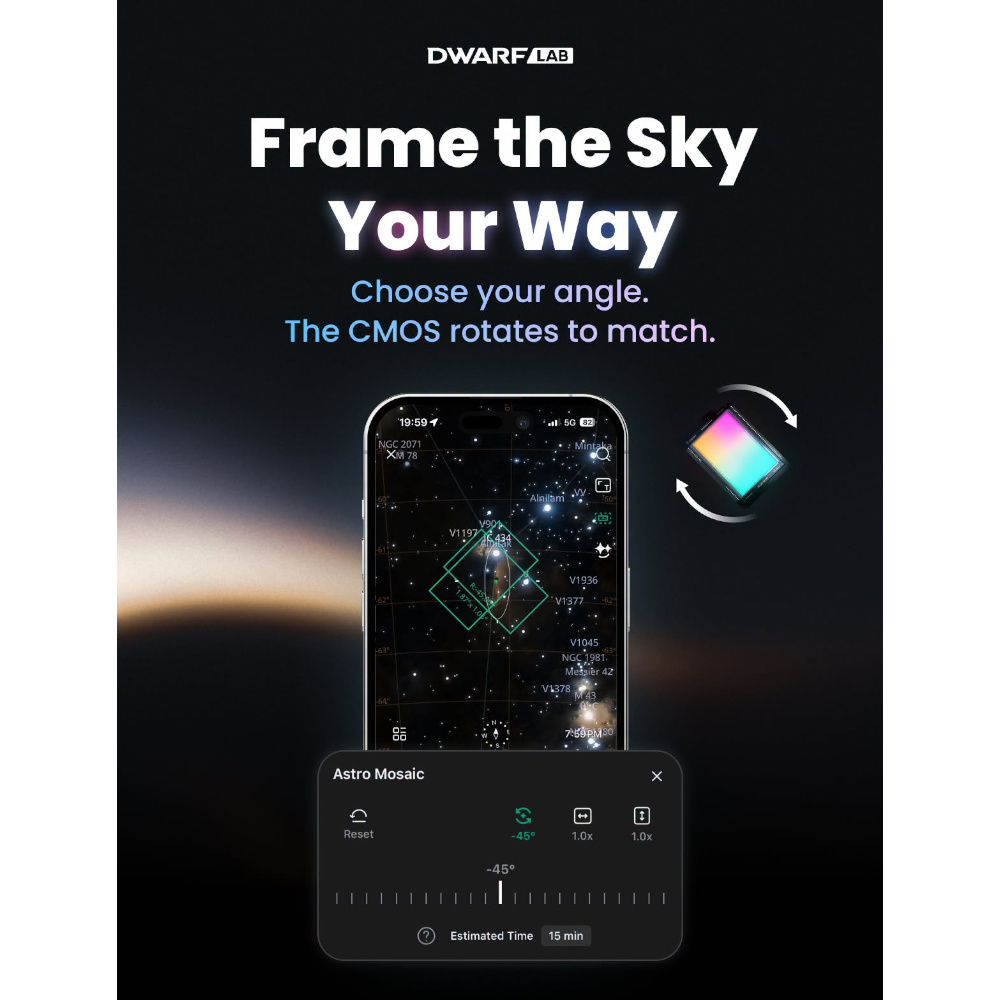
That same rotating sensor offers another advantage. In the app, you choose the angle at which you want an object in frame—landscape, portrait, or anywhere in between—and the sensor rotates accordingly. The telescope itself does not need to be repositioned for this. This is useful for elongated objects like the Andromeda Galaxy, and for mosaics where you stitch multiple images together. You create such a mosaic in the app: you stretch the frame up to 1.8 times per side, and the Draco photographs the parts one after the other and stitches them together itself.
Choose your angle in the app
You see directly in the app which piece of the sky is in frame and rotate the framing until the composition is right. The app immediately calculates how long the exposure or mosaic will take. You don't have to do more than that: the Draco focuses itself, finds the object, and holds it.
Cooled sensor and anti-dew
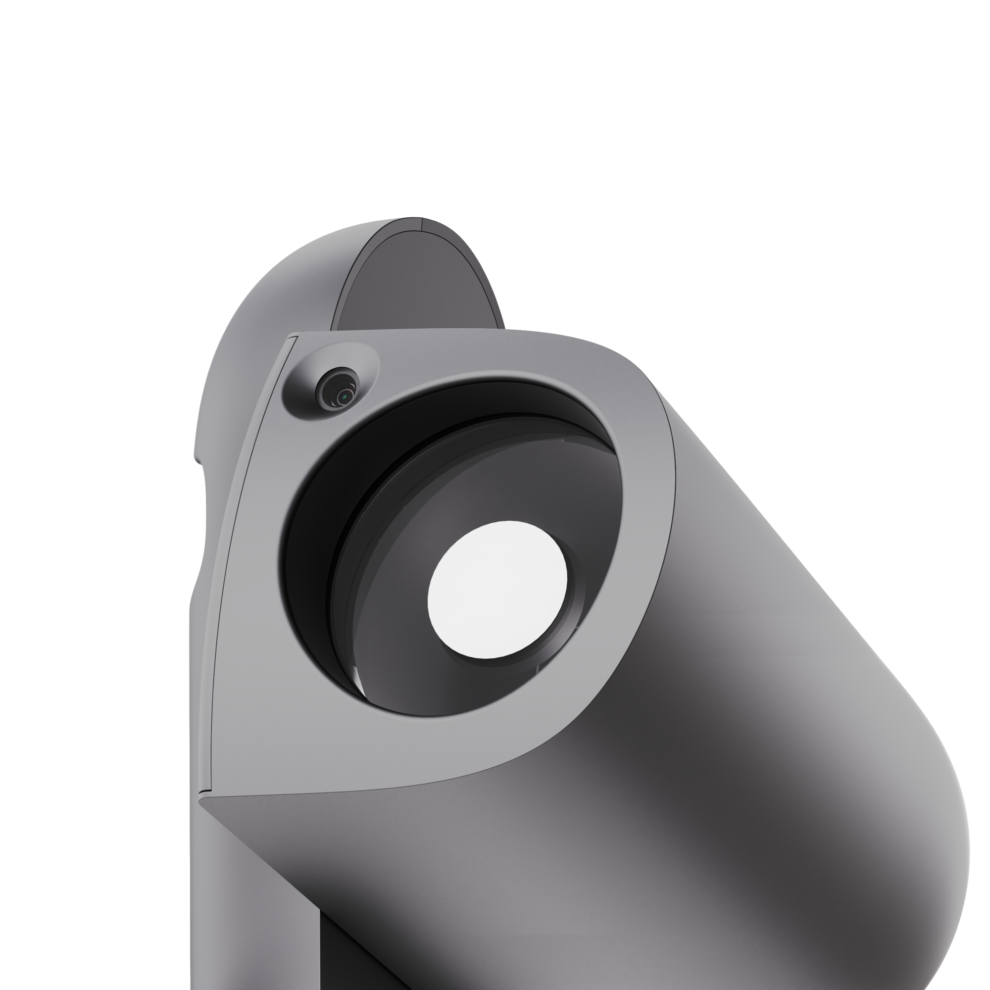
A warm sensor produces noise, and with long exposures, that noise quickly accumulates. The Draco actively cools the sensor, resulting in cleaner images. The heat released in the process is not wasted: the Draco uses it to keep the lens free of dew. Anyone who has ever seen a clear night end with a fogged-up lens knows why that is a welcome feature.

Built for outdoors
The Draco is protected against dust and water in accordance with IP56 and operates at temperatures from -20 to 45 °C, so even on a freezing January night. The built-in 77 Wh battery lasts for about five hours in astro mode. Charging is via USB-C and takes about three hours.
Standard of SHO: which edition is right for you?
Both editions are optically and mechanically identical. The difference lies in the filters built in behind the main lens.
| Built-in filter (main lens) | Standard Edition | SHO Edition |
|---|---|---|
| Astrofilter | Yes | Yes |
| Dark-frame filter | Yes | Yes |
| Duo-narrowband Hα+OIII (13±3 nm) | Yes | Yes |
| Duo-narrowband SII+OIII (13±3 nm) | No | Yes |
| ND solar filter (OD 5) | Yes | Included (magnetic) |
| Price | € 1.499 | € 1.669 |
The Standard Edition is the logical choice for most people. With the Hα+OIII filter, you can capture emission nebulae such as the Orion Nebula, the North America Nebula, and the Veil Nebula even from a town or city, and with the built-in solar filter, you can photograph sunspots during the day.
The SHO Edition is for those who primarily photograph nebulae and want to take their photography to the next level. With Hα, OIII, and SII, you have all three lines needed for the famous Hubble palette: you can combine images taken with both filters to create the golden-blue nebula images you’re familiar with from the Hubble Space Telescope. Please note: The SHO Edition does not have a built-in solar filter; instead, it comes as a separate magnetic clip-on filter. So you can still use it to photograph sunspots—you just need to attach the filter to the main lens yourself; with the Standard Edition, you activate it via the app. You’ll notice this difference most when operating the Draco remotely.
What can you do with it?
Deep-sky is what the Draco is built for: nebulae, galaxies, and star clusters, with long exposures and a cooled sensor. The Moon comes into sharp focus with a brand point spread function of 340 mm and a resolution of 0.73 arcseconds per pixel. Planets are observable with a 90 mm aperture; you can see Jupiter’s bands and Saturn’s rings, but they remain small in the field of view at a 340 mm focal length. If you want planets to fill the screen, a telescope with a long focal length remains the better choice.
The second camera, a 50-megapixel wide-angle at f/1.9, exposes for up to 90 seconds and is designed for the Milky Way, northern lights, star trails, and landscapes. And because the main lens already focuses from 25 meters, you can also use the Draco as a telephoto lens for birds and nature during the day.
Specifications
| Optics | Main lens (telephoto) | Wide-angle | Guidescope |
|---|---|---|---|
| Opening | 90 mm | 2.96 mm | Shared with main lens |
| Focal length | 340 mm | 5.56 mm | |
| Equivalent brand Point Spacing | 1200 mm | 25.39 mm | |
| Brightness | f/3.8 | f/1.9 | |
| Field of view | Astro mode: 2.059° diagonal, 1.649° × 1.238°. Other modes: 1.936° diagonal, 1.549° × 1.162° | 85.74° diagonal, 73.20° × 58.23° | 0,905° × 0,512° |
| Sampling | 0.73″/pixel (native), 1.45″/pixel (2×2 bin) | 1.212″/pixel | |
| Optical design | catadioptric | ||
| Focus range | 25 m to infinity | 0.3 m to infinity | |
| Image sensor | Main lens (telephoto) | Wide-angle | Guidescope |
| Sensor | OV50Q40 | OV50E40 | |
| Sensor format | 1/1.3 inch | 1/1.55 inch | 1/3 inch |
| Pixel size | 1,197 µm (native), 2,394 µm (2×2 bin) | 1,008 µm (native), 2,016 µm (2×2 bin) | |
| Effective pixels | Astromode: 50.33 MP (native), 12.58 MP (2×2 bin). Other modes: 37.75 MP (native), 9.44 MP (2×2 bin) | 50.33 MP (native), 9.44 MP (2×2 bin) | 4.09 MP |
| Maximum resolution | Astromode: 8192 × 6144 (native), 4096 × 3072 (2×2 bin). Other modes: 8192 × 4608 (native), 4096 × 2304 (2×2 bin) | 8192 × 4608 (native), 4096 × 2304 (2×2 bin) | 2688 × 1520 (native), 1344 × 760 (2×2 bin) |
| Aspect ratio | 4:3 | ||
| Temperature sensor | Built into main lens, wide-angle, and guidescope | ||
| Built-in filters | Standard Edition: astrofilter, dark-frame filter, ND solar filter (OD 5), duo-narrowband Hα+OIII (13±3 nm). SHO Edition: astrofilter, dark-frame filter, duo-narrowband Hα+OIII (13±3 nm), duo-narrowband SII+OIII (13±3 nm) | Standard filter, ND solar filter | |
| Astrophotography | |||
| Exposure time | Main lens 1/10000 to 300 s, wide-angle 1/10000 to 90 s | ||
| Tracking system | Altitude range 225°, rotation 360°; alt-az with sensor rotation, optional EQ mode (tilt tripod required) | ||
| Guidescope | Built-in, dedicated sensor, real-time tracking correction | ||
| Rotary sensor | ±90°, compensates for field rotation | ||
| Sensor cooling | Yes, active | ||
| Connection and operation | |||
| Wifi | Built-in, range 15 m, up to 30 MB/s | ||
| Bluetooth | Built-in | ||
| NFC | Yes | ||
| USB | USB 3.0 via USB-C, for charging and reading storage, suitable for a USB-to-Ethernet adapter | ||
| Storage | 128 GB built-in | ||
| App | DWARFLAB app for iOS and Android | ||
| Audio | Built-in microphone and speaker | ||
| Indicator lights | 4 for the battery, 1 for the power supply | ||
| Button | On/off | ||
| Case and power supply | |||
| Dimensions (w × d × h) | 196 × 133 × 386 mm | ||
| Weight | 5.5 kg | ||
| Color | Silver gray | ||
| Tripod connector | 3/8-inch thread in the base; aluminum tabletop tripod included (17.5 cm high, 480 grams, fixed legs) | ||
| Battery | 77 Wh (10,000 mAh, 7.7 V) | ||
| Duration of use | 5 hours in astrophotography mode | ||
| Loading time | 3 hours, maximum 36 W via USB-C | ||
| Degree of protection | IP56 | ||
| Operating temperature | -20 to 45 °C (charging: 0 to 45 °C) | ||
In the box
- DRACO smart telescope
- Aluminum table stand
- USB-C cable and cleaning cloth
- In addition, the magnetic solar filter is included in the box with the SHO edition
Who is the Draco for?
For anyone who knows smart telescopes and wants to go further. Those who want to take more serious deepsky shots usually end up with a separate mount, camera, guide, and the learning curve that comes with it. The Draco puts all those parts in one device that you set down and operate via the app. At 5.5 kilograms, it is significantly heavier than a DWARF Mini or Seestar S50 Pro, But you don't need a tripod or a polariser: the rotating sensor and the guidescope do the rest of the work for you. You just set it on a sturdy surface and you're ready to go. How the Draco compares on paper to the S50 Pro you can read in Seestar S50 Pro vs DWARF Draco. Are you unsure whether this is the right device for you, or would you like to know how it compares to the others? smart telescopes in our range? Feel free to call or email us, we’d be happy to help.
Delivery time
You can now reserve the Draco; you pay when placing the order and that puts you on the list for the first delivery. We expect the first units around November/December. That is an indication: as soon as Dwarflab finalizes the shipping date, you will receive it from us by email. Until then, you can cancel your reservation free of charge.

Reviews
There are no reviews yet.