
Refracting Telescopes
Showing 1–20 of 208 resultsSorted by popularity

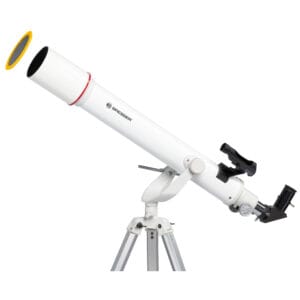

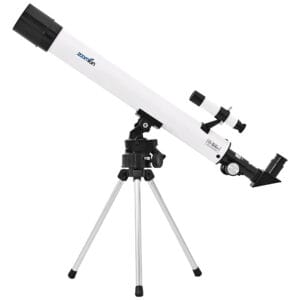
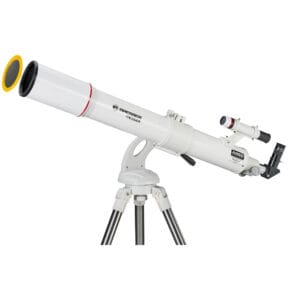

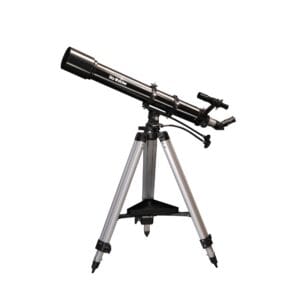
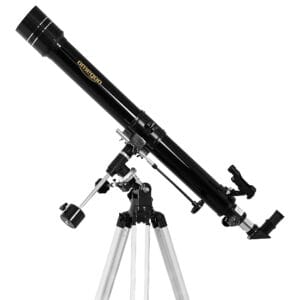

Showing 1–20 of 208 resultsSorted by popularity
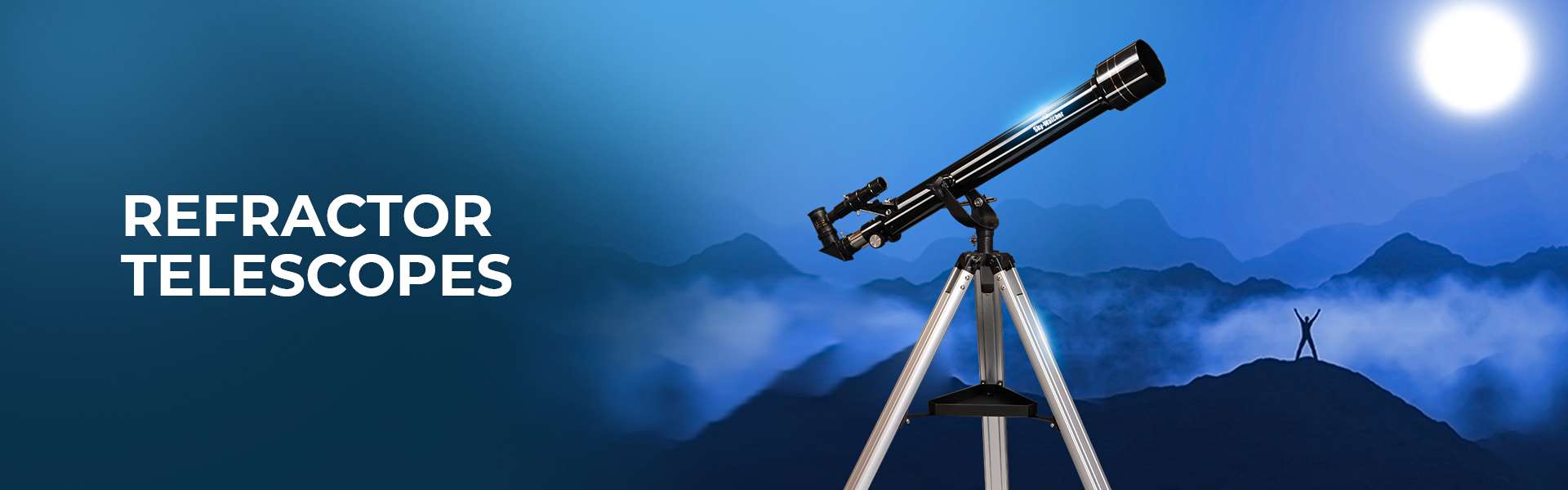
Refractor Telescopes: The ultimate guide to razor-sharp observations
When you think of a telescope, you probably immediately envision the classic image of a long, slender tube on a tripod. This is the refractor telescope, also called the lens telescope. For many astronomers - from enthusiastic beginners to professional astrophotographers - the refractor the instrument of choice. With unparalleled contrast, ease of maintenance and sharpness of image, this type of telescope offers a viewing experience that cannot be compared to any other system.
In this comprehensive guide, you will discover everything you need to know about the technology behind the lens telescope, the different types available, and how to choose the right one for your personal journey of discovery through the universe.
What exactly is a Refractor Telescope?
A refractor works according to a relatively simple but highly effective principle: refraction (refraction of light). At the front of the telescope is an objective lens that collects the incident light and sends it to a focal point at the back of the tube. Here the image is magnified by an eyepiece.
The benefits of a lens system
Unlike a reflector (mirror telescope), a refractor has no obstruction in the light path. In a reflector telescope, there is a catch mirror in the center, which causes some loss of contrast. A refractor does not suffer from this, resulting in:
Superior contrast: Ideal for observing subtle details on planets such as Jupiter's cloud bands or Saturn's rings.
Low maintenance requirement: The tube is completely enclosed, so no dust gets on the optics and the lenses rarely if ever need to be adjusted (collimated).
Rapid deployment: Because the tube is closed, you have less air turbulence inside the telescope, so you can start looking faster.
Achromats vs. Apochromats: The importance of color correction
When choosing a refractor you inevitably encounter two terms: Achromatic and Apochromatic (APO). The difference is in how the telescope handles refraction and color errors.
1. Achromatic Refractors
These are the most common models for beginners and visual observers. They use two lens elements to bring most colors to the same focal point. On very bright objects, such as the edge of the moon or the planet Venus, you may see a slight purple-blue glow (chromatic aberration). For visual use, this is often negligible and an achromatic offers the best value for money.
2. Apochromatic Refractors (APO).
For the serious astrophotographer, a APO refractor the gold standard. These telescopes use three or more lenses, often combined with exotic glass such as FPL-53 (ED glass). This virtually eliminates color error. The result is a perfectly color-fast image with unprecedented sharpness across the entire field.
Our choices for beginners: quality that pays off
Many entry-level models on the market are plastic and offer a disappointing experience. We have selected four models that stand for solidity and optical excellence, ideal for starting your hobby.
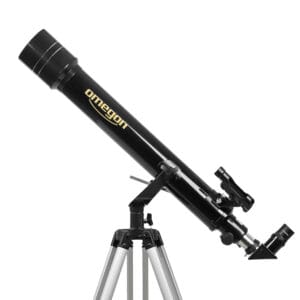
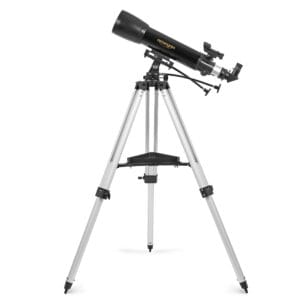
The Powerful All-rounder: Omegon AC 102/660 AZ-3
The Omegon AC 102/660 is a favorite due to its large 102mm objective lens. Thanks to its shorter focal length, this telescope offers a beautiful wide field of view. This makes it perfect for 'rich field' observations: scanning the Milky Way or viewing large star clusters like the Pleiades. The AZ-3 mount is very stable and equipped with convenient fine adjustments.
Strengths: Great light-gathering ability and a very stable tripod.
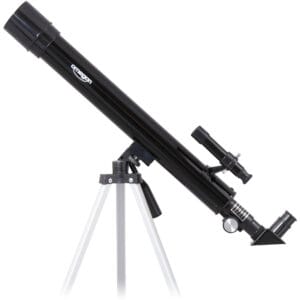
The Moon and Planets Expert: Omegon 70/900 EQ-1
Looking for those classic, razor-sharp images of the craters on the moon? The Omegon 70/900 has a long focal length, minimizing color errors. This model comes on an EQ-1 equatorial mount. This allows you to really get to know the night sky; by aligning the mount with the Pole Star, you track objects with one simple dial.
Strengths: Minimal color error and an educational equatorial mount.
Astrophotography with the Refractor
If you want to transition to astrophotography, a refractor often the best choice. Because of their flat field of view and sharpness, they are ideal for capturing deep-sky objects.
Why professionals choose APO's:
Contrast: Nebulae and galaxies stand out from the background much better.
Weight: Refractors are often lighter than large Newton telescopes, so you need less heavy (and expensive) mounts.
Flat field of view: With a 'field flattener,' you get stars that are point-like all the way to the extreme corners of your photo.
One brand that excels at this is William Optics. Their RedCat-series is world-renowned among photographers for its superior optics and innovative internal focus system (WIFD), which prevents vignetting and keeps your camera perfectly balanced.
What should you pay attention to when purchasing?
When buying online refractor telescope there are a number of crucial factors:
1. The Aperture (Opening)
The larger the lens, the more light the telescope catches. For beginners, an aperture between 70mm and 100mm is ideal. With this you can see the moon in great detail, the rings of Saturn, the moons of Jupiter and the brightest nebulae such as the Orion Nebula.
2. Focal length and f ratio.
Long refractors (f/9 or higher): Excellent for high magnifications (planets/moons).
Short refractors (f/5 - f/7): Better for wide view and photography.
3. The Mounting
A telescope is only as good as its tripod. For visual use, a Alt-Azimut (AZ) mount the easiest. For photography, you need a Equatorial (EQ) mount that automatically compensates for the earth's rotation.
Frequently Asked Questions (FAQ)
Is a refractor better than a mirror telescope? Neither is "better" by definition, but they serve different purposes. A refractor provides a sharper, higher-contrast image and requires less maintenance. A reflecting telescope often offers more aperture for the same price, which is advantageous for very faint deep-sky objects.
Can I use a refractor for daytime viewing? Yes! Unlike many other telescopes, a refractor excellent for use as a powerful spotting scope for birdwatching or viewing ships at sea. You will only need an 'erector prism' for this, so that the image is upright.
What are the best accessories for my refractor? Start with a good set of eyepieces. A 25mm for overview and a 10mm for details are essential. In addition, a moon filter is essential to dampen the moon's bright light so you can see more detail in the craters.
Why buy your Refractor from the specialist?
With us, you will find not only a box, but also the knowledge. We understand that the move to a quality refractor is an investment in years of viewing pleasure. This is why we select our products based on field performance and mechanical reliability.
Our promise:
Expert advice: Help in choosing the right mount and accessories.
Prompt delivery: Order before 11:59 PM and receive it within 48 hours if in stock!
Extensive collection: From entry-level achromats by Omegon to high-end APOs by William Optics.
Whether you are taking your first steps into astronomy or want to upgrade your equipment for professional astrophotography, a refractor telescope provides the stability and clarity you seek.
Want to learn more about the specific differences between the EQ and AZ mounts for these telescopes? Then check out our comprehensive mounts-page Or contact us for a customized consultation!