Telescopes for children

Showing 21–32 of 32 resultsSorted by popularity
Telescopes for children - Read our recommendations
To make it easy to choose, we have listed directly at the top the three models that work best in practice for children. They are robust, easy to use and really show something.
Sky-Watcher Heritage 100P (Dobson)
De Sky-Watcher Heritage 100P is de ideale keuze voor beginnende astronomen die op zoek zijn naar een compacte, krachtige telescoop. Dankzij de 100 mm spiegeldiameter vangt deze kijker aanzienlijk meer licht dan instapmodellen, waardoor je de kraters op de maan, de manen van Jupiter en de ringen van Saturnus nog gedetailleerder kunt bewonderen.
Sky-Watcher Mercury 60/700 (Op statief)
The Sky-Watcher Mercury 60/700 is de perfecte keuze voor jonge ontdekkingsreizigers die voor het eerst de sterrenhemel willen verkennen met een telescoop op statief. Dankzij de eenvoudige bediening op een klassiek statief kunnen kinderen het instrument stabiel richten op de hemellichamen.
Sky-Watcher heritage 130P (Dobson)
Voor de jonge astronoom die toe is aan een serieuze upgrade, is de Sky-Watcher Heritage 130P de ultieme keuze. Waar speelgoedtelescopen stoppen, begint de Heritage 130P pas echt: met zijn indrukwekkende 130 mm parabolische hoofdspiegel biedt deze kijker een lichtopbrengst die de maan, planeten en zelfs verre sterrenstelsels en nevels haarscherp en helder in beeld brengt.
Telescoop voor je kind: De eerste keer dat een kind door een telescoop kijkt
Something extraordinary happens when a child sees the moon sharply for the first time. The white dot turns into a landscape full of craters. Jupiter turns out to have four moons that shift, Saturn has rings, and stars are suddenly distant suns. That first moment determines whether a child becomes curious or disengaged.
Therefore, at Telescoop.nl, we only choose models that give children real results. Not toys, but entry-level models that are easy to operate and allow young explorers to explore the sky without frustration.
Buying telescope for kids: a window into wonderment
The first time a child looks through an eyepiece and sees the craters of the moon or the rings of Saturn, something special happens. It is the moment when the universe changes from an abstract picture in a book to a tangible reality. When picking a telescope for children however, it's not about complicated specifications or technical terms; it's about ease of use, stability and most importantly: instant results.
A good children's telescope should be robust and intuitive to operate. Nothing is more crippling to enthusiasm than a shaky image or a complicated alignment that takes minutes. At telescoop.nl, we make a clear distinction between “toy telescopes” (which often disappoint due to poor lenses) and true beginner instruments designed specifically for younger explorers.
What type of telescope works best for children?
There are two main designs we recommend for families. The choice depends on how your child prefers to explore.
1. The Dobson (tabletop models).
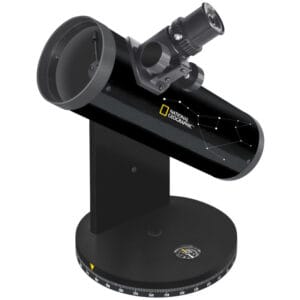
The dobson is the most intuitive telescope for children. It stands directly on a table or on the floor and the tube is simply moved by hand.
Why it works: Children understand this system immediately. Want to look to the left? Then you push the tube to the left. It's ‘point-and-shoot’ for stargazing.
The experience: Models such as a compact tabletop-dobson are ideal because they are stable. They vibrate much less than cheap tripods, which is essential for the impatient child's hand.
2. The Refractor (lens telescope on tripod).
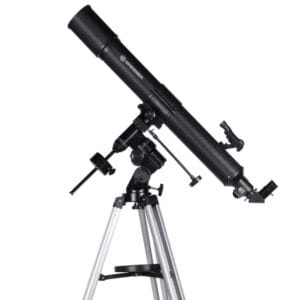
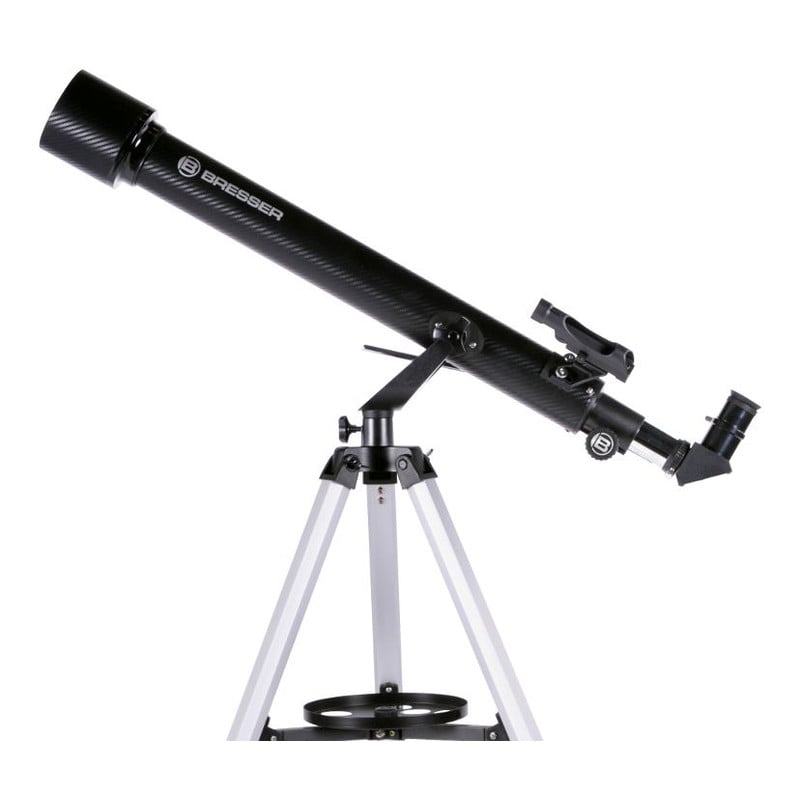
This is the classic telescope shape that many parents recognize. A refractor uses lenses to form the image and is virtually maintenance free.
Why it works: The image is sharp and rich in contrast. In addition, these telescopes are often lighter and easier to take to the park or campsite.
Technology as help: Models in the celestron starsense series use a smartphone app to help the child navigate. The app shows with arrows on the screen where to move the telescope to find jupiter, for example.
What can children really see?
Realistic expectations are the key to a long-lasting hobby. Even with a simple telescope for children there is much to discover:
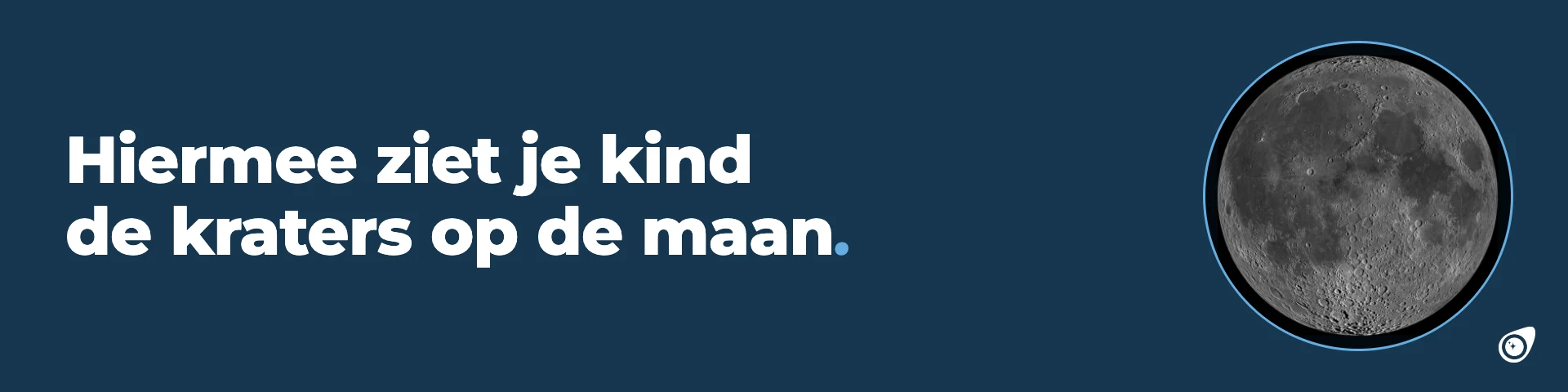
The moon: The absolute highlight. Children can see the shadows in the craters along the terminator (the boundary between light and dark). It feels like flying over the lunar surface.
Jupiter: Our solar system's largest planet displays its four largest moons (the Galilean moons). It is a great teaching moment to see how these moons are in a different place every night.
Saturn: Seeing the rings of Saturn is a life-changing experience for many children (and adults). Even as a small, sharp jewel in the eyepiece, it leaves an unforgettable impression.
Star clusters: Groups of stars like the Pleiades look through a telescope like a handful of diamonds on black velvet.
The right telescope by age group
Every child develops differently, but at telescoop.nl we use the following rules of thumb for choosing a children's telescope:
6 to 7 years: Discovering together
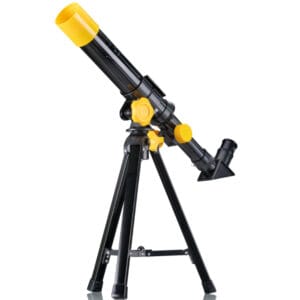
At this age, it's all about the experience. A simple refractor on a low tripod works best. Parents help with aiming while the child enjoys the moon. Focus on large, bright objects.
8 to 10 years: doing it yourself
Children at this age want control. A tabletop-dobson is perfect here. They can move the tube independently and learn how to look through the viewfinder to get an object in focus.
10 years and older: independent observation
From this age, children can often handle more complex systems on their own. They can learn to focus, try different eyepieces for more magnification and even take their first pictures of the moon with a smartphone adapter.
Why investing in quality pays off
When buying a telescope for children optical quality is critical. Cheap telescopes from the toy store often use lenses made of plastic that give a blurry or colored image. This creates frustration; if the image does not become sharp, a child quickly loses interest.
Our children's telescopes feature real optical glass with coatings. This ensures:
Brightness: More light means that fainter objects also become visible.
Contrast: Important to really see the details on the moon and planets well.
Sustainability: A good telescope will last for years and grow with the child's knowledge.
Guidance from telescoop.nl
A telescope for your child picking is an important decision. You're investing not just in a piece of equipment, but in a potential lifelong passion for science and nature. At telescoop.nl, we check each instrument before it is shipped, so you can be sure everything is complete and ready to use.
Need help setting up for the first time or not sure which model suits your son or daughter's motor skills? Our specialists are ready with honest advice. Because nothing makes us happier than a new generation of astronomers discovering the stars for the first time.
If you order today before 11:59 p.m., in most cases you will have the telescope within 48 hours. Bring the cosmos into the nursery and let the journey of discovery begin.