
Eyepieces and Barlows
Showing 21–40 of 244 resultsSorted by popularity


- 275,00 Select options This product has multiple variants. The options may be chosen on the product page
- 165,00 Select options This product has multiple variants. The options may be chosen on the product page
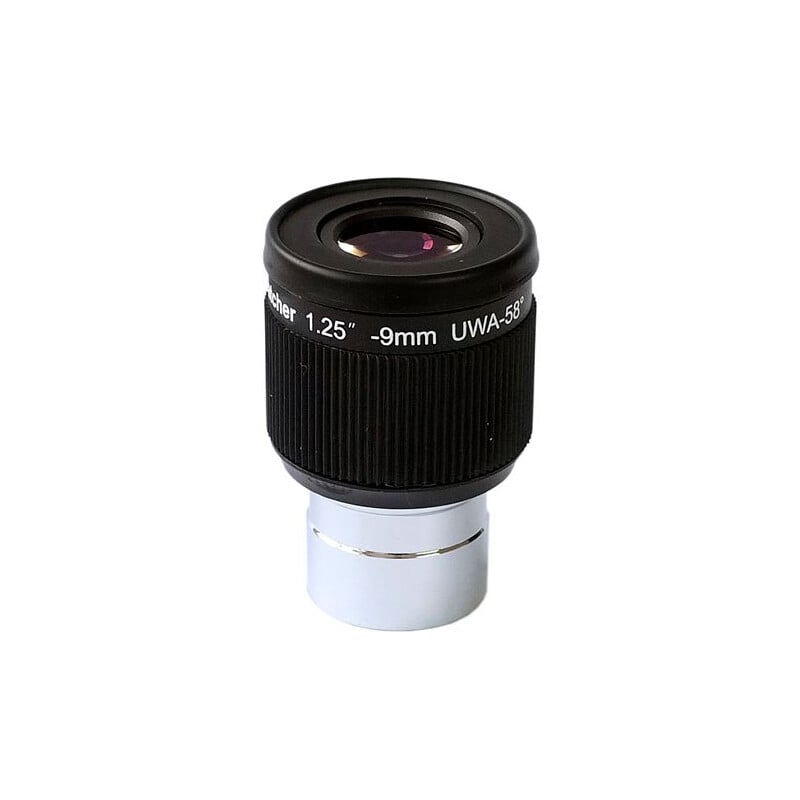
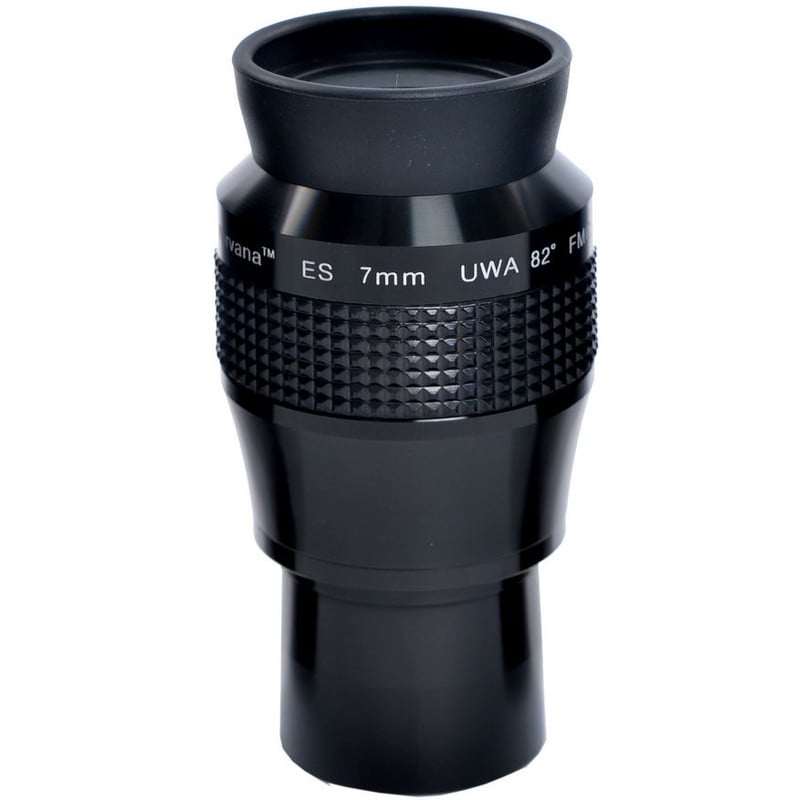
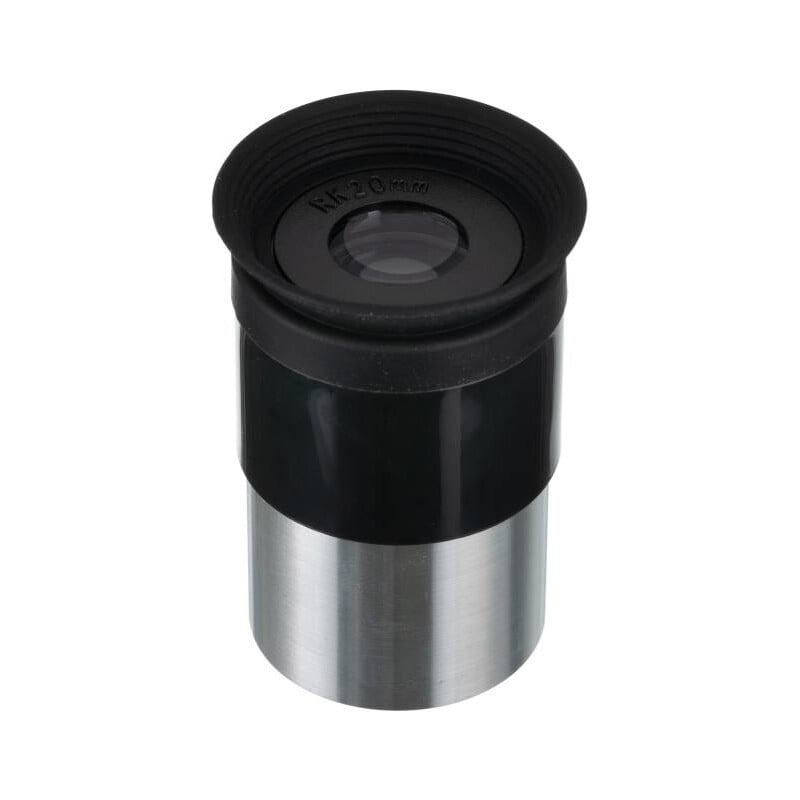






Showing 21–40 of 244 resultsSorted by popularity
Which eyepiece do you need?
An eyepiece is the lens you look through. Together with your telescope, it determines the magnification, how sharp the image is, and how much of the sky you see at once. With the same telescope, you will see a completely different image using a different eyepiece.
Most telescopes come with one or two simple eyepieces. They are fine to start with, but with a second or third eyepiece you get much more out of the same telescope.
What brand pixel pitch do you choose?
Each eyepiece has an eye relief in brand in millimeters. You calculate the magnification by dividing the focal length in brand of your telescope by that of the eyepiece. A 1200 mm telescope gives 120x magnification with a 10 mm eyepiece, and 48x with a 25 mm eyepiece. More calculation examples can be found in our explanation of eyepieces.
High magnification (3 to 8 mm)
For details on the moon and planets, such as Saturn's rings and Jupiter's cloud belts. Works best on a calm night and with a well-collimated telescope.
Average magnification (9 to 15 mm)
The range you use most often: the Moon, planets, and small deep-sky objects such as globular clusters and planetary nebulae.
Low magnification (16 to 32 mm)
For finding objects and for large objects such as the Orion Nebula and the Andromeda Galaxy. The image is wider and calmer.
More magnification is not always better. As a rule of thumb, count on about twice the aperture of your telescope in millimeters: a 100 mm telescope goes up to about 200x. Beyond that, the image gets bigger, but not sharper.
Which type of eyepiece suits you?
Standard eyepieces, like Plössl, have a field of view of about 50 degrees. They are sharp and affordable, but it feels a bit like looking through a tunnel.
Wide-angle eyepieces have a field of view of 68 to 82 degrees, some 100 degrees or more. You see more of the sky at once, and with a telescope without a tracking motor, an object stays in view longer.
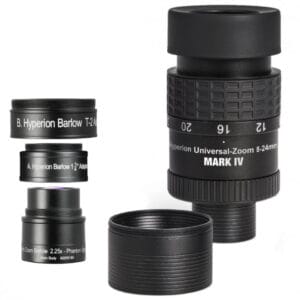
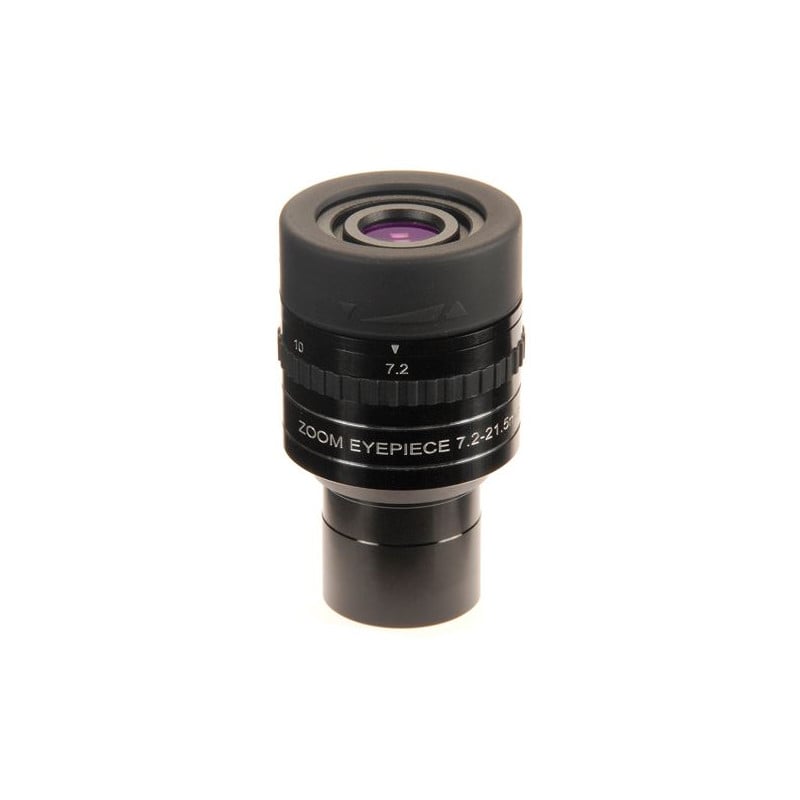
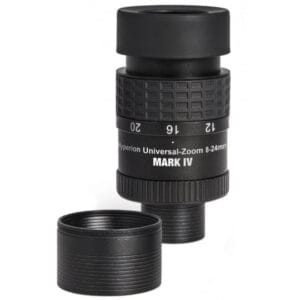
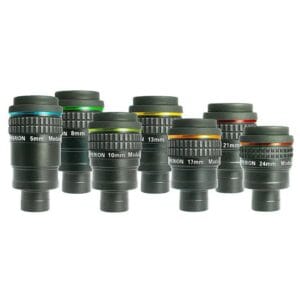
A zoomocular replaces multiple separate eyepieces, for example from 8 to 24 mm. With a eyepiece set Do you have a series of enlargements all at once?.
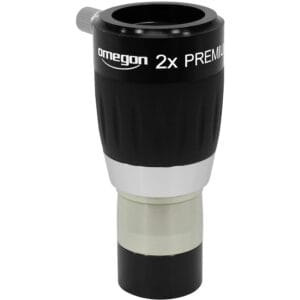
A barlow lens Put it in front of your eyepiece. A 2x barlow doubles the magnification of any eyepiece you already have, a 3x barlow triples it.
What is eye relief?
Eye relief is the distance between your eye and the lens at which you see the entire image. With a short eye relief, you have to hold your eye almost against the glass. If you wear glasses, choose an eyepiece with a minimum of 17 to 20 mm of eye relief so you can keep your glasses on.
How many eyepieces do you need?
Start with three: a 25 to 32 mm wide-angle eyepiece to find objects, a 12 to 15 mm eyepiece for the moon and deep-sky, and a 5 to 7 mm eyepiece for planets and double stars. Better three good ones than a case full of overlapping eyepieces.
Will this eyepiece fit my telescope?
Check the size of your focuser. 1.25 inch (31.75 mm) is the standard on almost all telescopes. Larger telescopes also have a 2-inch connection (50.8 mm) for eyepieces with a very wide field of view.
Are you in doubt about which eyepiece fits your telescope? Send us the model via email or WhatsApp, and we will figure it out for you.