A moon filter It's the cheapest accessory that immediately delivers more detail. The full moon through a telescope is blindingly bright. Fine craters and ridges disappear in the light, and your eye then needs time to readjust to the dark. A moon filter dims that light, allowing you to observe comfortably and with full contrast. In this buying guide, you'll read which type of moon filter fits your telescope, what size you need, and which filters we recommend based on our own experience.
Planning a stargazing night? Then check out our lunar calendarAround the first quarter, you see the most detail along the terminator.
What does a moon filter do?
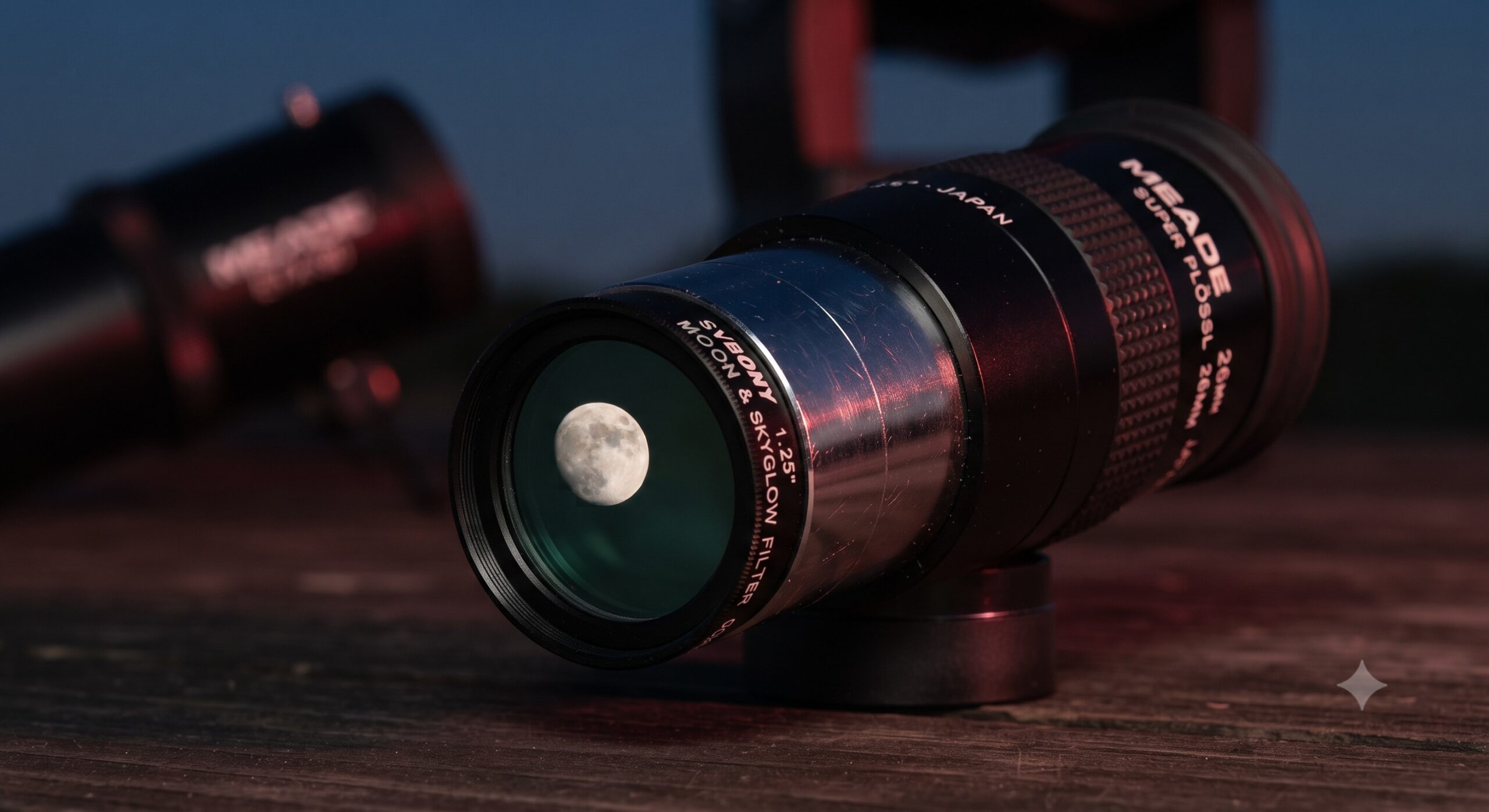
A moon filter is a gray (neutral density) filter that you screw into the bottom of your eyepiece. It allows only a portion of the moonlight to pass through, such as the 25% or 13%. Think of it as sunglasses for your telescope: the image becomes less glare-filled, contrast increases, and your eyes don’t get tired.
Good to know: looking at the moon is never dangerous for your eyes, even without a filter. Therefore, a moon filter is not a safety product, but a comfort and contrast product. This is unlike the sun. Never use a moon filter to look at the sun. You can read how to safely look at the sun in our guide. viewing the solar eclipse safely.
Why is the moon too bright through a telescope?
A telescope collects much more light than your eye. The larger the aperture, the more light enters. Because of this, the full moon through a 200 mm Dobsonian is so bright that observing becomes unpleasant: you mainly see a white disc without depth.
Two things help. First, a moon filter. Second, choosing the right moment: around a full moon, sunlight falls directly on the moon's surface, and all shadows disappear. Around the first or last quarter, craters are fully in shadow, and you see the most relief.
What types of moon filters are there?
Fixed gray filter: 13% or 25% transmission
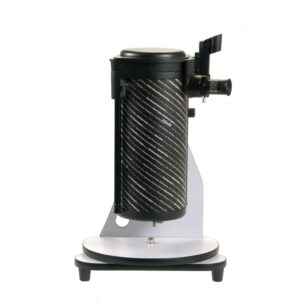
A fixed moon filter has a single transmission value: the percentage of light it transmits. The rule of thumb is simple. Does your telescope have an aperture of up to about 150 mm? If so, choose the 25% transmission, such as the Omegon Moon Filter 25% (€27.90). Do you have a larger telescope, such as a 200-mm Dobsonian? In that case, the 13% transmission is more comfortable, such as the Omegon Moon Filter 13% (€27.90). For small table telescopes and refractors up to approximately 100 mm, the affordable Omegon Premium Moon Filter (€ 19.90) Enough already.
Variable polarizing filter
A variable polarizing filter consists of two filters that you rotate relative to each other. This allows you to adjust the brightness continuously, usually between 1% and 40%. This is ideal, because the moon isn’t equally bright every night: a narrow crescent requires a lot of light, while a full moon requires very little. If you’re going to buy just one moon filter, this is our top choice. The Omegon Variable Polarizing Filter (€ 39.90) and the Bresser Polarizing Filter 1.25 inch (€ 39.90) both do an excellent job.
1.25 inch out of 2 inch: what size do you need?
Moon filters screw into the threads on the bottom of your eyepiece. Most eyepieces have a diameter of 1.25 inches (31.7 mm): that's the standard size. Are you using large widefield eyepieces of 2 inches (50.8 mm)? Then choose the 2-inch version, such as the Omegon Moon Filter 25% 2-inch (€34.90) Whether the Bresser Polarizing Filter 2 inch (€55.00). Doubting? Measure the outside of the eyepiece cup or check the product page of your eyepiece.
Best telescope moon filter: our advice
In our showroom, we get asked this question almost weekly. Based on what we use ourselves, this is what we recommend:
| Your telescope | Our advice | Price |
|---|---|---|
| Small refractor or tabletop telescope (up to 100 mm) | Omegon Premium Moon Filter 1.25 inch | € 19,90 |
| Reflector for Dobson telescope from 114 to 150 mm | Omegon Moon Filter 25% 1.25-inch | € 27,90 |
| 200mm or larger Dobsonians | Omegon Moon Filter 13% 1.25-inch | € 27,90 |
| One filter for each moon phase | Omegon Variable Polarizing Filter 1.25 inch | € 39,90 |
| 2 inch eyepieces | Omegon Moon Filter 25% 2-inch or Bresser Polarizing Filter 2 inch | € 34,90 / € 55,00 |
All mentioned filters are from our own product range. Moon and planet filters from Omegon and Bresser. In this category, you'll also find color filters that enhance specific lunar details, such as a yellow filter for extra contrast on cratered surfaces.
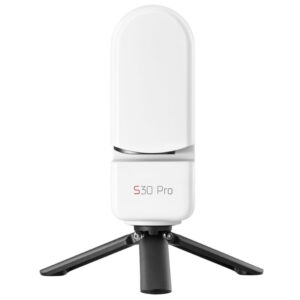
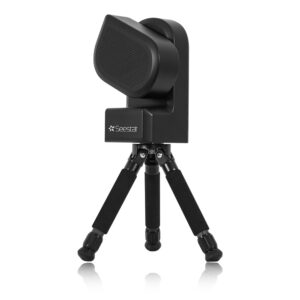
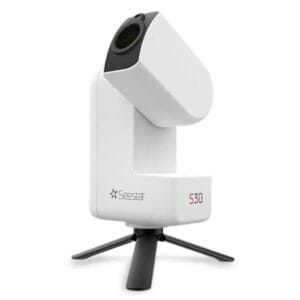
Who does not need a moon filter? heb je een smart telescope, like the Seestar S30 Pro or the DWARF 3? Then the app handles the exposure digitally, and a moon filter doesn't make sense. This way, we keep the advice honest.
Frequently asked questions about moon filters
Is a moon filter necessary to safely view the moon?
No. Looking at the moon is safe for your eyes, with or without a filter. A moon filter only makes observing more comfortable and allows more detail to be seen. Note: this does not apply to the sun. A special solar filter is always required for that.
Which transmission should I choose: 13% or 25%?
Choose the 25% for telescopes with an aperture of up to about 150 mm, and the 13% for larger telescopes. Don't want to choose? Then go with a variable polarizing filter: it lets you adjust the brightness continuously.
Does a moon filter fit any eyepiece?
Almost always. Virtually every 1.25-inch eyepiece has a filter thread on the bottom. Do you have 2-inch eyepieces? Then choose the 2-inch version of the filter.
Does a moon filter also work for planets?
A little. A polarizing filter, for example, can reduce the glare from Venus. For more detail on Jupiter, Saturn, or Mars, color filters are a better choice. You'll find those in the same category. Moon and planet filters.
Make the most of every moonlit night
A moon filter costs less than a good eyepiece, but you'll see the difference on every clear night. Order before 11:59 PM and it will be delivered quickly, in the Netherlands and Belgium. Want to know when the moon is at its most beautiful? Our lunar calendar List all the phases and full moons of 2026. Still looking for your first telescope? Start with our Telescope Buying Guide for Beginners.