The stars and planets in April 2026 mark a particularly pivotal point for anyone who enjoys looking upward. As iconic winter constellations like Orion and Taurus definitively disappear below the western horizon, a window opens to the deep universe that often remains hidden during the humid summer months. For the owner of a Dobson telescope is this the moment to use it. The stability of the atmosphere in early spring often offers high transparency, which is essential for transforming the faint light spots of distant galaxies into recognizable structures. In this guide, we delve into this month's phenomena, from the mysterious appearance of a new comet to technological developments surrounding Artemis Mission II.
The April 2026 Stargazing: Galaxy Season and the Power of the Mirror
When we talk about the April night sky, we're talking about the so-called "galaxy season." Because our own Milky Way lies low on the horizon during this period, we are, as it were, looking through the 'thin' side of our own stellar disk, straight into the infinity of space. This is the period when a Dobson telescope really comes into its own with a large aperture. In constellations like Leo, Virgo, and Coma Berenices, there are clusters of thousands of galaxies waiting to be discovered. The light from these objects has often traveled for millions of years before reaching your telescope's mirror, making an April session a form of time travel.
An important aspect of successful observing in April is the temperature of your optics. Although the evenings are becoming more pleasant, the mirror of a telescope is often still warm from the day or from being stored indoors. When you take the telescope outside, it creates turbulent airflow in the pipe because the warm air from the mirror rises. This significantly distorts the image, making stars appear as dancing pinpricks of light rather than sharp points. It is therefore wise to place your telescope outside at least an hour before your observing session. Only when the mirror has reached thermal equilibrium with the outside air can you observe the fine structures in the spiral arms of galaxies like the Whirlpool Galaxy (M51, see image below) at high magnifications. This patience is rewarded with a contrast that you will almost never experience in the summer due to the water vapor present in the air at that time.
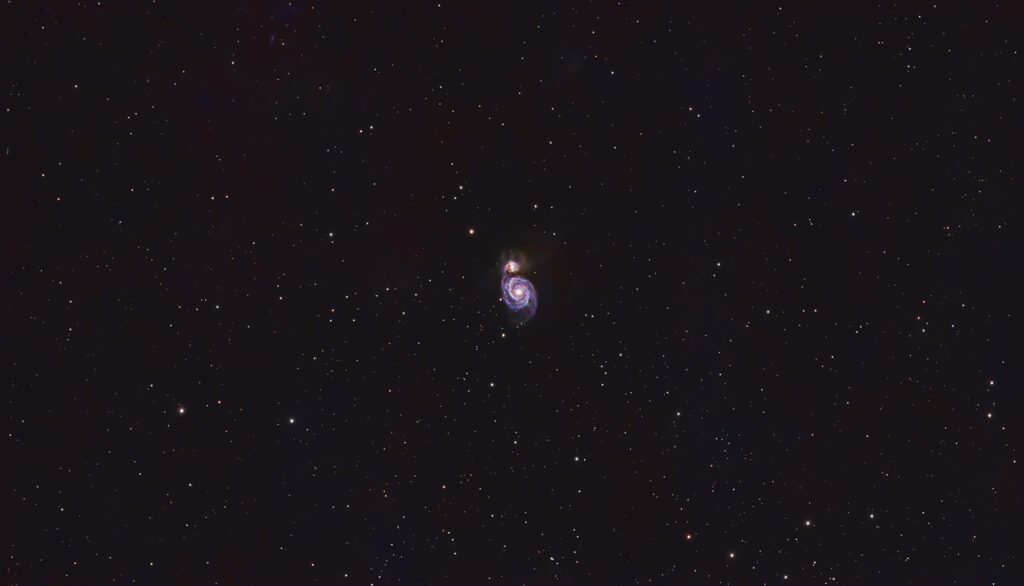
The image above was captured with the DWARF 3 smart telescope by one of our customers. The DWARF 3 is currently in stock and can be delivered the next business day, if desired.


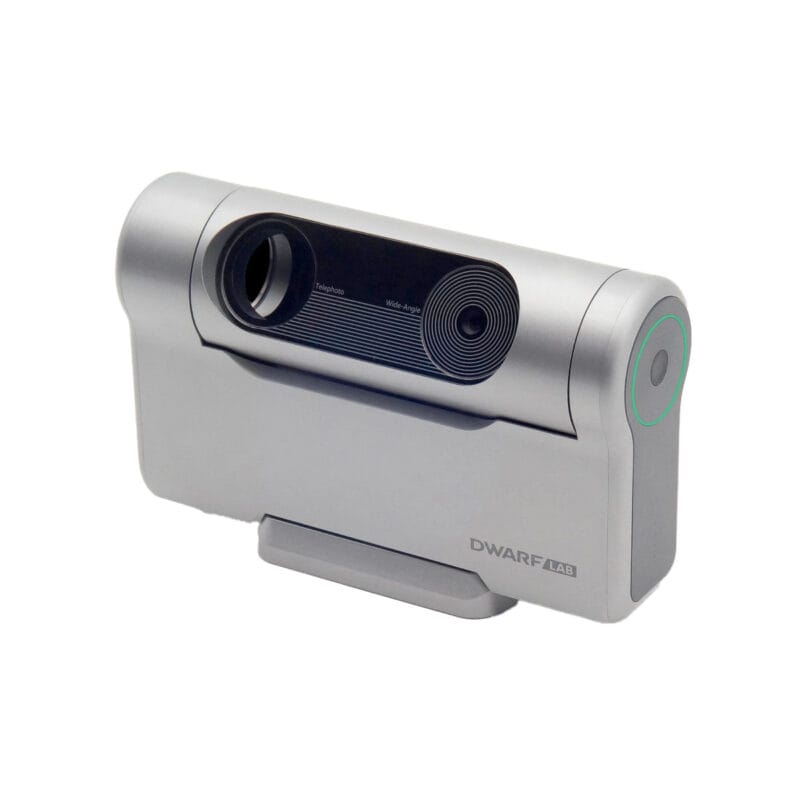
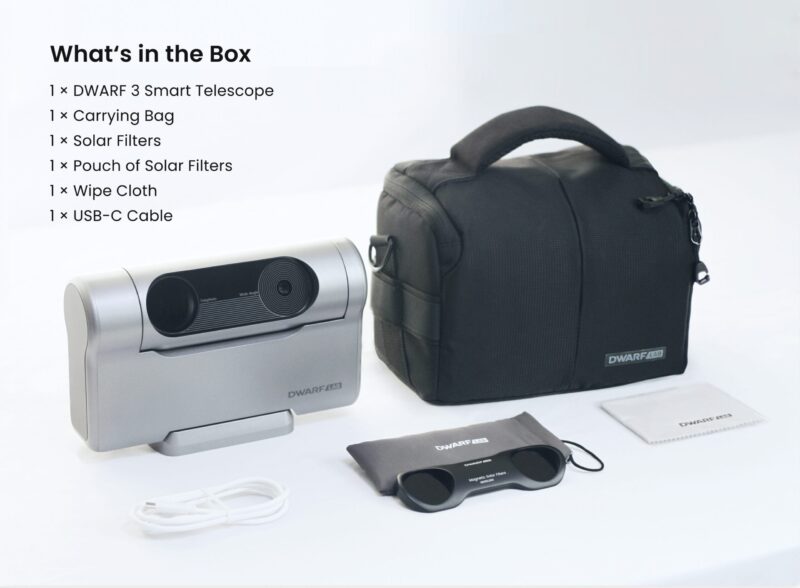
DWARF 3 smart telescope
Comes with carrying case, solar filters with storage pouch, cleaning cloth and USB-C cable. Includes DWARF 3 smart telescope with advanced imaging technology, ideal for astronomical observations as well as nature and landscape photography.
1 in stock (can be backordered)
The role of the smart scope during the Artemis II mission
April 2026 is not just a month for stargazing; it's a month for action in space exploration. The planned launch of the Artemis II mission, which will send four astronauts on a journey around the moon for the first time in over fifty years, is generating significant interest in our natural satellite. Here we see an interesting shift in the world of astronomy: the rise of the smart scope, such as the DWARF 3. For the modern observer, a smart scope offers advantages that a traditional telescope simply does not have, especially when capturing unique events.
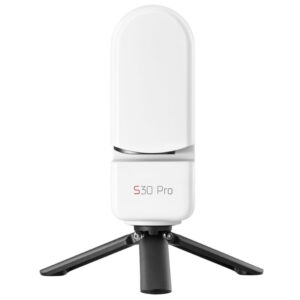
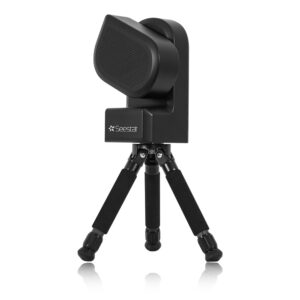
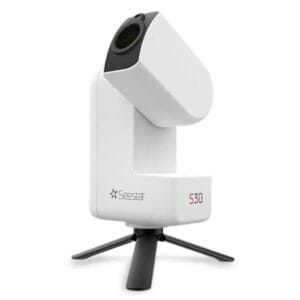
Where with a manual telescope you are completely dependent on your own searching skills and the human eye, an instrument like the Seestar S50 or the Sky-Watcher Skymax the heavy lifting.
Thanks to built-in GPS and automatic star recognition, this device knows exactly what it's looking at. As the Orion capsule of the Artemis mission makes its way through space, a smart scope By means of digital image processing, it captures weak light reflections that remain invisible to the naked eye. The device takes hundreds of short exposures and 'stacks' them in software to create one bright image. This allows you to easily share results, which nowadays plays a major role in building authority and discoverability around current astronomical themes.
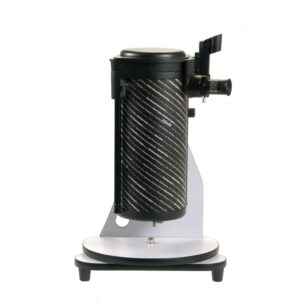
Nevertheless, the visual experience through a telescope remains special for enthusiasts. The light you capture with a large mirror is pure and unfiltered. When you point your telescope at the moon during the Artemis mission, you will see craters and mountain ranges with a depth that no screen can match. By using specific telescope accessories, Like a variable polarizing filter, you can temper the enormous brightness of the moon. This makes the subtle shadows in the craters of the 'terminator' – the boundary between day and night on the moon – visible, precisely in the area where the astronauts are flying over. Combining a smart scope for photography and a Dobsonian for visual observation is a smart approach for the serious amateur/beginner in April 2026. View our range. Sky-Watcher telescopes which we have a lot of in stock in the month of April.
Stars and Planets April 2026: Comet C/2025 R3 (PanSTARRS)
One of the most unpredictable events in the April 2026 night sky is the approach of comet C/2025 R3. This icy visitor will reach its closest point to the sun on April 20th. Expectations are high due to the comet's favorable position relative to Earth. A phenomenon known as 'forward scattering' is being discussed. This means that the dust particles in the comet's tail will reflect sunlight very efficiently towards us, similar to how dust on a windowpane glows when you look towards the sun.
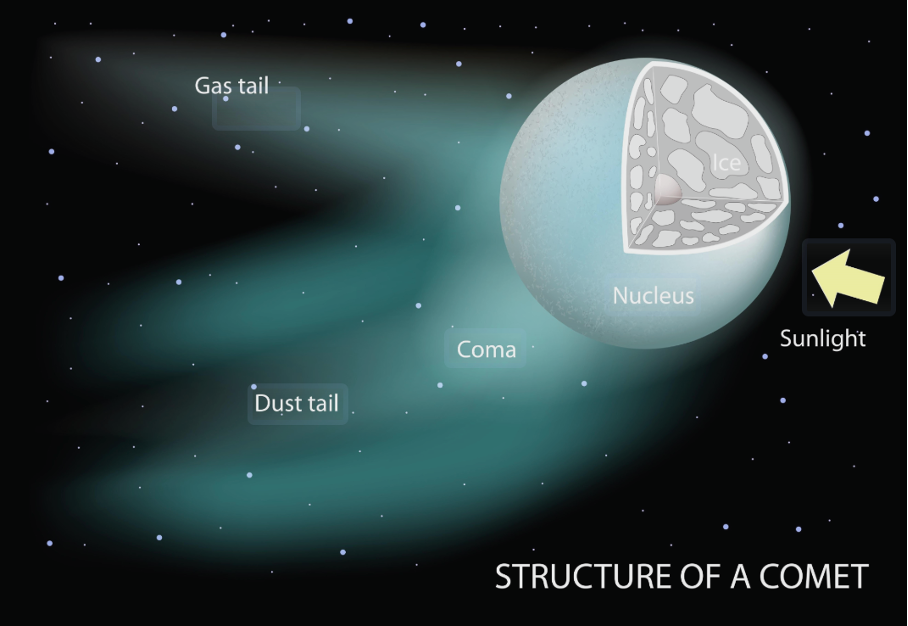
For the observer in the Benelux, this means that around April 17, during the new moon phase, we have a unique opportunity. Without disruptive moonlight, the sky is at its darkest, which is necessary to observe the faint tail of a comet. For this, you will need a eyepiece necessary with a large field of view. A so-called widefield eyepiece allows you to study not only the bright core of the comet but also the kilometers-long tail stretching across the sky. Finding such a comet requires a location with a clear eastern horizon, as it will be low to the ground just before sunrise. It is a challenging observation that demands a lot of preparation, but seeing a comet with the naked eye is an unforgettable experience.
The Lyrids and the Dynamics of Shooting Stars
Besides comets and planets, April also offers an annual tradition: the Lyrids meteor shower. In 2026, conditions for this shower will be favorable. The peak occurs on the night of April 22nd to 23rd, a time when the moon sets just in time to leave a dark sky. This window of darkness between three in the morning and the early dawn is when you have the best chance to see the fast flashes of light from the Lyrids.
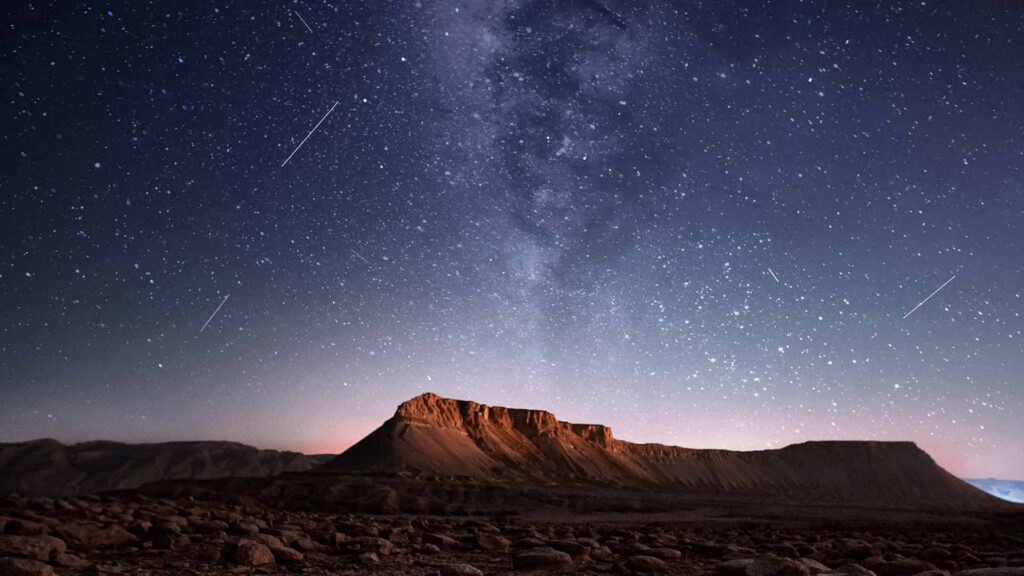
What makes the Lyrids special is their origin. They are caused by dust left behind by comet Thatcher in its orbit around the sun. When Earth passes through this cloud of dust, the particles burn up in our atmosphere at a speed of almost 50 kilometers per second. Although you don't need a telescope for meteors, a good pair of binoculars can help you study the glowing trails, also called 'trains,' for longer. These trails of gas can sometimes linger for a few seconds and slowly change shape due to the high-altitude winds. It's a beautiful example of how dynamic our night sky truly is.
The technical challenge of the planet parade in April 2026
Around April 18th, a phenomenon that often captures attention will occur: a planetary parade. Mercury, Mars, Saturn, and Neptune will appear to line up in the morning sky. While this looks impressive on paper, it presents a significant challenge for observers in Europe. The planets will be very low on the horizon, precisely in the area where the atmosphere is thickest. This causes an effect we call atmospheric dispersion, where the light from the planet is refracted into a sort of small rainbow.
To find Neptune during this parade, you'll need the full power of a Dobsonian telescope. Neptune is invisible to the naked eye and appears as a small blue disc in a telescope. It requires an accurate star chart (or app, because we live in 2026) and patience to distinguish this distant planet from background stars. Learn more about Neptune through a telescope in our Astronomy Knowledge Base.
For brighter planets like Mars and Saturn, a barlow lens a useful part of your telescope accessories. This increases the focal length of your telescope, allowing you to see Saturn's rings or the color differences on Mars' surface better, provided the atmosphere is calm enough.
Preparation and location selection for the starry sky in April 2026 in the Benelux
A successful night under the stars in April depends on your location. In a country with a lot of light pollution, finding a truly dark spot is an art in itself. Locations such as the Lauwersmeer in the north or the Boschplaat on Terschelling are recognized Dark Sky Parks and offer a view of the starry sky that you won't find elsewhere in the country. Here, you can clearly see the Milky Way and galaxies have a contrast that in a city is lost in the gray haze of street lighting.
In addition, the right equipment is important for your comfort and results. Nights in April can still be cold and humidity is often high. Dew is the astronomer's greatest enemy; it condenses on your mirrors and makes observing impossible. Good dew cap or electronic dew strips are therefore a wise investment for anyone who wants to stay outside for hours. Don't forget to use a good star chart or an app like Stellarium to find your way among the stars.
Stars and Planets in April 2026: A Month of Cosmic Encounters
The April 2026 night sky is a reminder of the universe's continuous motion. Whether you're fascinated by the technology of the Artemis II mission and the possibilities of a smart scope, or prefer to quietly explore the depths of space with a Dobsonian telescope, this month has much to offer. It's the combination of classic visual astronomy and modern digital tools that makes this period so interesting for everyone passionate about the cosmos and our wonderful hobby.
By paying attention to your observation techniques and using the right materials, you'll get the most out of these nights. The cosmos is there for everyone, but those who prepare well and understand their instruments will discover the most secrets. April 2026 invites us to look beyond our own horizons and participate in the ongoing discovery of the universe.