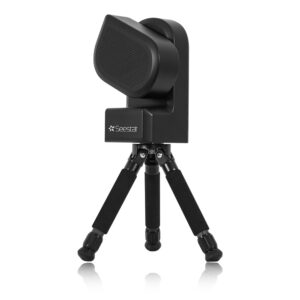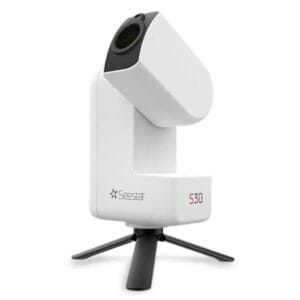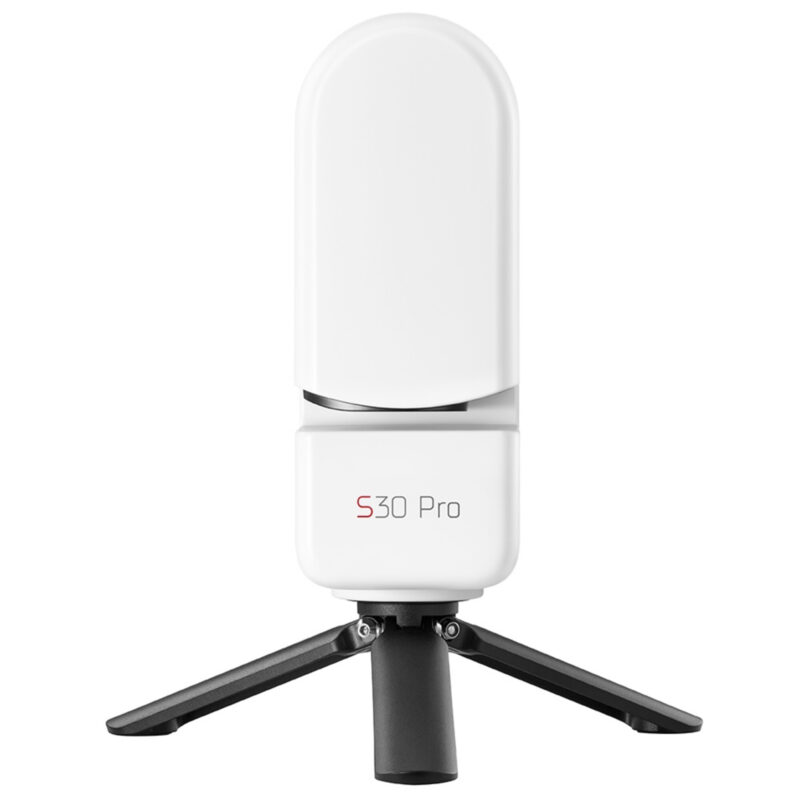
Looking for an honest Seestar S30 Pro reviewThen you've come to the right place. The ZWO Seestar S30 Pro is the new top model in ZWO's compact line and the successor to the wildly popular S30. On paper, it promises a lot: 4K image from two cameras, a quadruplet APO lens, and smarter AI. In this review, you'll read what's true about it, what you'll see with it in practice, and for whom it is and isn't the right choice, based on our own experience and what buyers tell us.
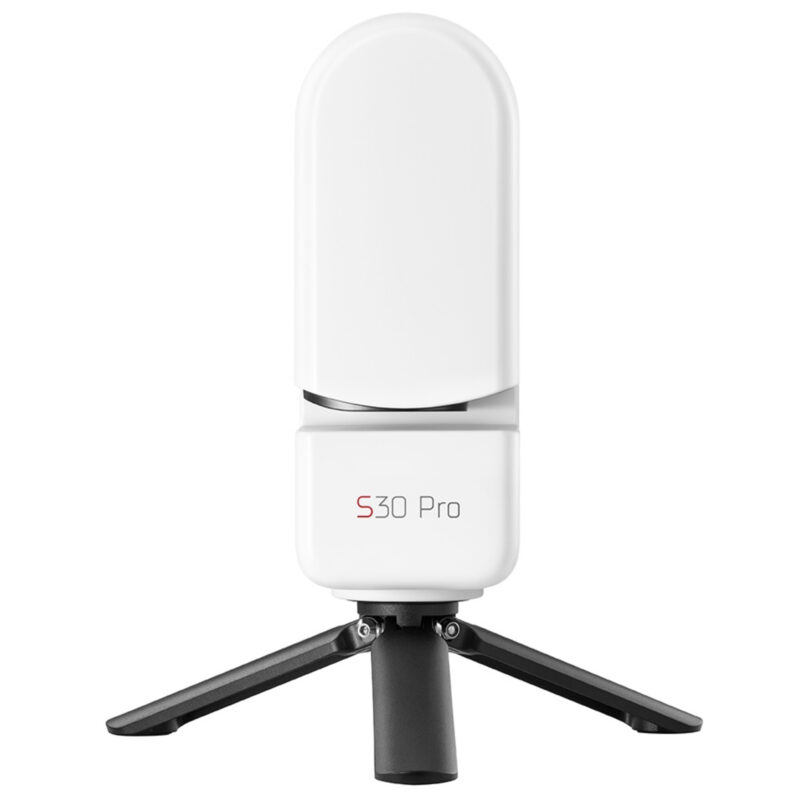
The short judgment
The Seestar S30 Pro is currently the best all-around smart telescope under €1,000. It combines the proven Seestar ease of use with technology that is a generation ahead: more detail, more creative modes, and more room to grow. The price of €749 is steep for an entry-level model, but fair for what you get. Those who simply want to dabble in astrophotography can find cheaper options; those who are serious about it will get it right the first time with the Pro. Our customers rate it 5.0 based on the first 8 reviews, and we recognize that sentiment.
Seestar S30 Pro review: The specifications
| Optics | Quadruplet APO with ED elements, 30mm, f/5.3 (160mm focal length) |
| Main Camera | Sony IMX585, 4K (8.3 MP), 1/1.2", field of view 4.6° |
| Wide-angle camera | Sony IMX586, 4K with autofocus, 63° field of view |
| Modi | Deep-sky, starry sky (Milky Way & startrails), sun & moon, landscape |
| Filters | Internal filter wheel: UV/IR-cut, dual-band (H-alpha & OIII), dark filter |
| Extras | EQ mode (up to 60s exposure), mosaic up to 8K, FITS export, ASCOM Alpaca, dew heating |
| Battery & storage | 6,000 mAh (total ± 6 hours), 128 GB internal |
| Connection | WiFi (2.4 & 5 GHz), Bluetooth, NFC |
| Weight | 1.65 kg |
| Included | Tripod, magnetic solar filter, carrying case, USB-C cable |
| Price | € 749 |
What's new compared to the Seestar S30?
The name suggests a minor upgrade. It’s not. The main sensor is an IMX585 with a light-sensitive area four times larger than that of the standard S30, and the resolution goes from Full HD to true 4K. The lens has been upgraded from a triplet to a quadruplet APO, which is especially noticeable in sharper stars toward the edge of the image. You also get an extra shooting mode for Milky Way photos and star trails, twice as much storage (128 GB), and NFC for faster pairing. For those torn between the two: the price difference mainly buys you image quality, and with a photo telescope, that’s exactly what matters.
This is how it works in practice
The setup is classic Seestar: unfold the tripod, mount the device, open the app. Within minutes, it calibrates itself, and you can choose from a database of tens of thousands of objects. The device searches, tracks, and then stacks images completely on its own. You can literally watch the image grow on your phone: each stacked shot adds color and detail. The AI post-processing (noise reduction and background correction) can be applied with a single tap and works with surprising subtlety.
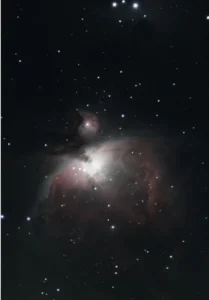
What you see: Bright nebulae like the Orion Nebula already show color and structure after fifteen minutes of stacking. Star clusters are grateful and quick. With the internal duo-band filter, even gas nebulae from a village garden with light pollution come through well. During the day, you can safely take pictures of sunspots with the magnetic solar filter; with the partial solar eclipse on August 12th just around the corner, that's a nice bonus. And the new starry sky mode with the 63° wide-angle camera creates Milky Way panoramas that simply weren't possible with the old S30.
Here's what you won't buy it for: planets. With a 30 mm aperture, Jupiter and Saturn will appear small; you'll be able to recognize the rings, but don't expect much detail. Also important: this is a photo telescope. It doesn't have an eyepiece, so you won't be able to look through a telescope "live" with your eye. If that's what you want, look at a classic Dobson read our Telescope Buying Guide for Beginners.
Pros and cons
| Plus points | Cons |
|---|---|
| 4K image quality from two cameras | 30 mm opening: not suitable for planetary detail |
| Quadruplet APO: sharp stars, beautiful colors | No eyepiece: visual perception is not possible |
| Complete package: tripod, solar filter, bag | Regularly on backorder due to high demand |
| Internal filter wheel with dual-band filter | EQ mode requires an optional wedge |
| Grows with you: FITS, ASCOM, mosaics up to 8K | €749 is a hefty starting price |
| 1.65 kg: fits in every backpack |
For whom yes, for whom no?
However, for you, if: If you want to take real astrophotographs without technical knowledge, if you're looking for a compact camera for your garden, balcony, or holidays, and if you'd rather buy it right the first time than upgrade within a year. Also interesting for advanced users: FITS export and ASCOM allow you to get more out of it than the app shows by default.
Not for you if: whether you mainly want to see planets in detail, want to look through a telescope with the naked eye, or have a budget under €500. In the latter case, the standard Seestar S30 is a great place to start; be sure to check out our comparison as well Dwarf Mini vs. Seestar S30 for the complete picture of the entry segment.
Frequently Asked Questions
Is the Seestar S30 Pro suitable for beginners?
Yes, exactly. The full automation makes it one of the most accessible ways to start with astrophotography. No technical knowledge is needed.
Does the S30 Pro replace the Seestar S50?
In practice, yes: the S50 is no longer regularly available, and the S30 Pro is now the top model in the compact line. Read our separate guide about the best alternatives to the Seestar S50.
Can I look at the sun with it?
Yes, safely, with the included magnetic sun filter. Check the filter for damage before each session and never use the device without the filter on the sun.
Conclusion: buy or not?
The Seestar S30 Pro is not a small update but a generational leap, and at this moment our standard recommendation for anyone serious about starting with a smart telescope. We give it a 4.5 out of 5: half a point deducted for limited planet performance and delivery time, the rest is compelling. Check the current price and delivery time on the Seestar S30 Pro product page, or compare it with the rest of the offers at the smart telescopes. Not sure? Call or email us, we'll give you honest advice, even if another model suits you better.