
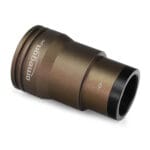
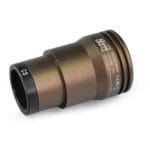


Omegon Camera veLOX 178 M Mono: monochrome uitvoering van de grootste veLOX-sensor
De veLOX 178 M gebruikt dezelfde Sony IMX178 als de kleurenversie, maar dan zonder kleurenmatrix. Elke pixel vangt het volle spectrum op, wat de gevoeligheid merkbaar verhoogt en de effectieve resolutie vergroot.
Voor wie serieus werk maakt van maan- en planeetfotografie is dat de logische route: opnemen door rood, groen en blauw filters en de kanalen later samenvoegen levert meer detail dan een kleurensensor van hetzelfde formaat.
Sensor en beeld
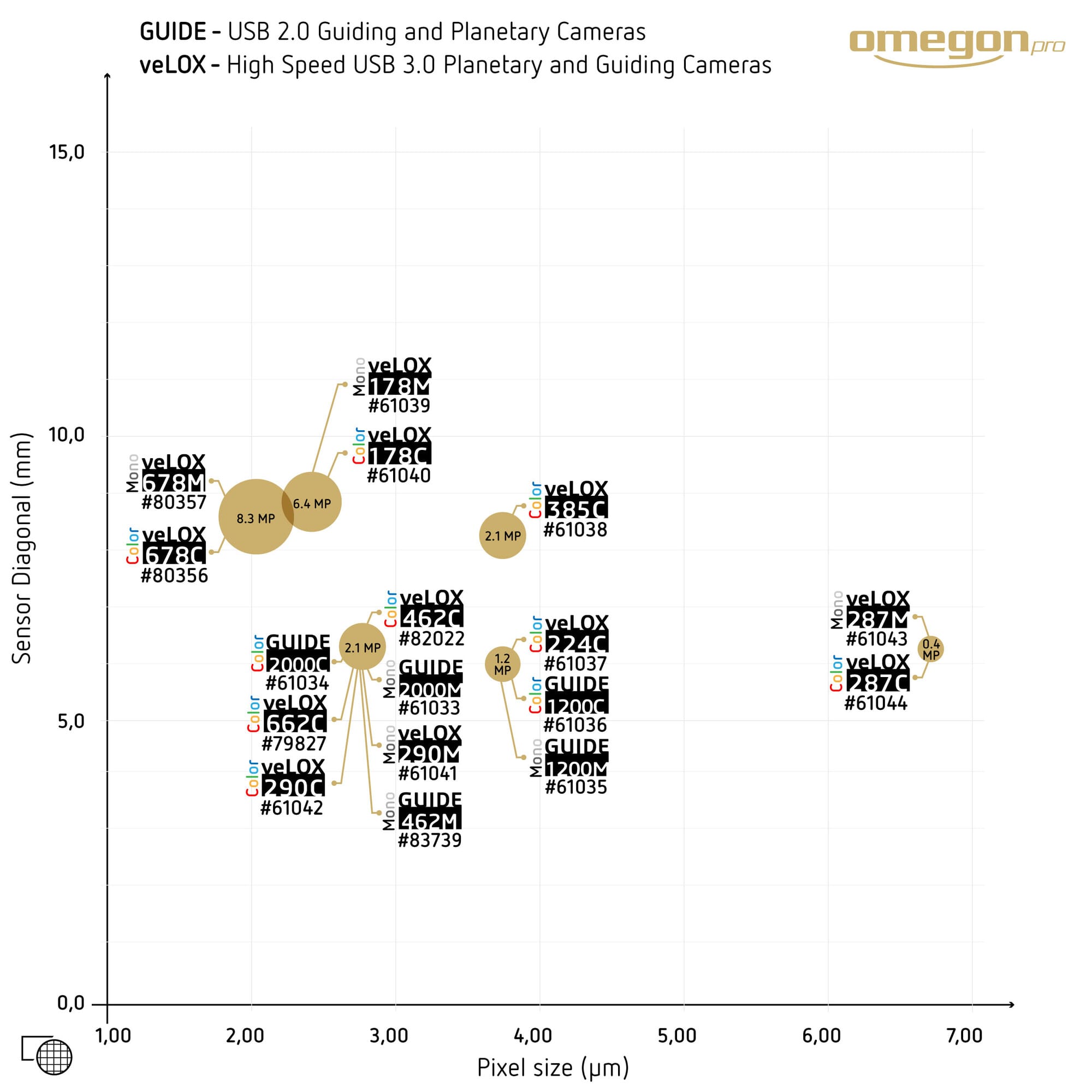
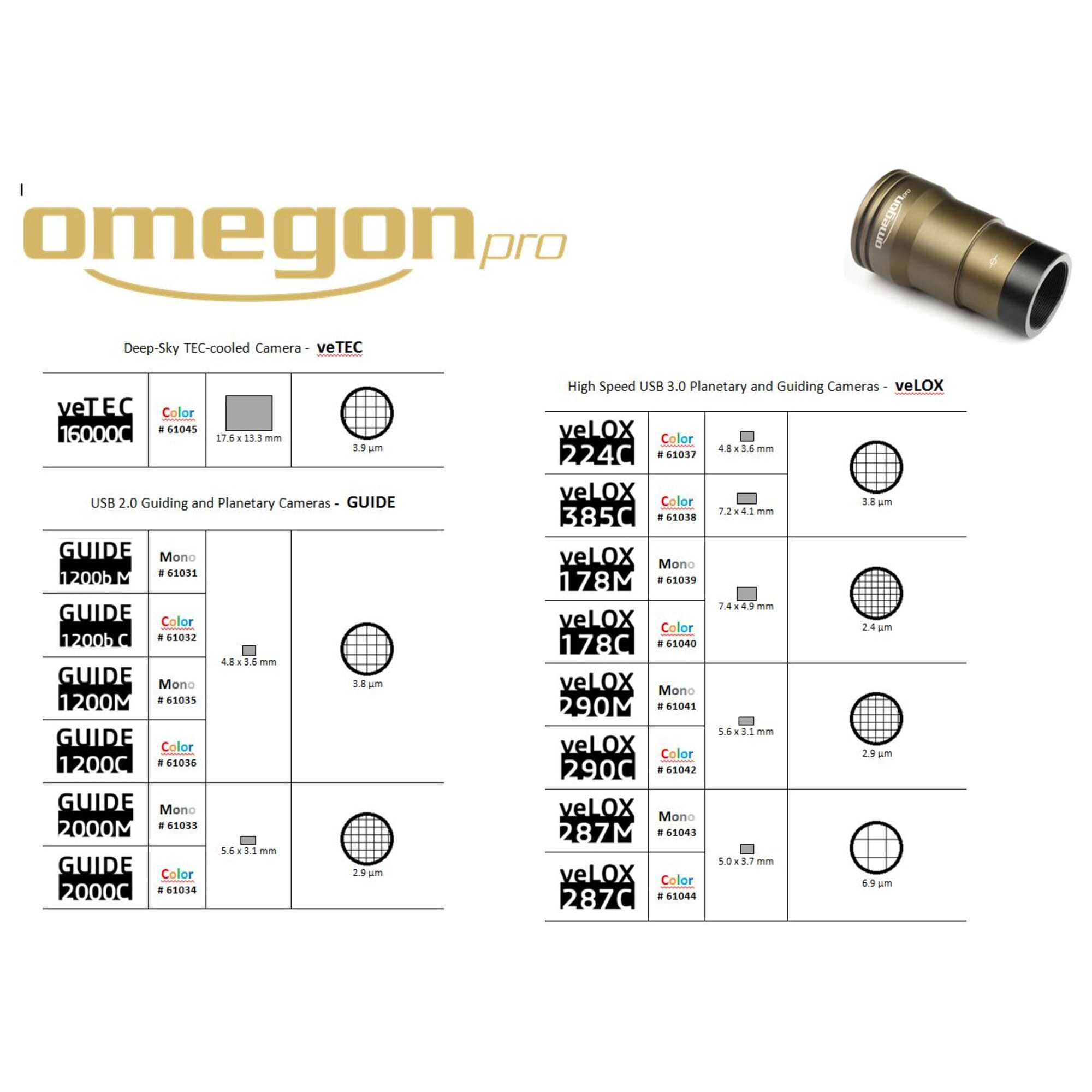
De monochrome IMX178 telt 3096 x 2080 pixels van 2,4 micrometer op een sensor van 7,4 bij 4,9 mm. De uitlezing gebeurt met 14 bit en tot 59 beelden per seconde.
In plaats van een blokfilter zit er een antireflexvenster voor de sensor. De camera is daardoor gevoelig van ultraviolet tot infrarood.
Werken met filters
Met een set RGB-filters bouw je kleurenbeelden op uit drie afzonderlijke reeksen. Een IR-passfilter maakt opnames rustiger bij matig seeing.
Voor zonnefotografie in H-alfa is deze camera een veelgebruikte keuze, mits je een geschikte zonnetelescoop of een veilig filter gebruikt.
Autoguiding met een ST4-poort
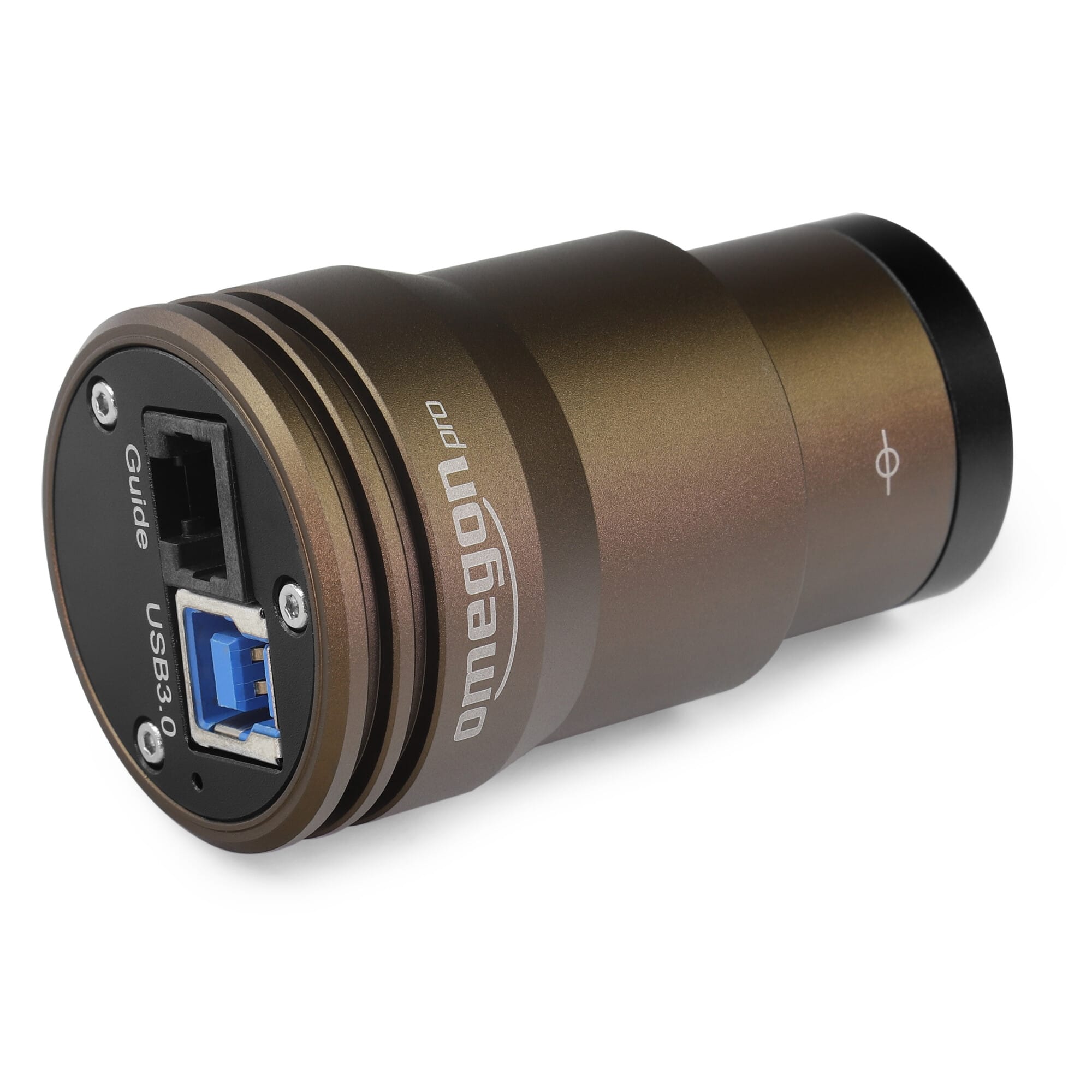
De camera heeft een ingebouwde ST4-poort. Je verbindt hem rechtstreeks met de autoguiderpoort van je montering en corrigeert de tracking tijdens lange belichtingen. Als monochrome camera vindt de 178 M sneller een bruikbare leidster dan de kleurenversie.
PHD2 herkent de camera native. Ook via de ASCOM- en INDI-drivers werkt hij samen met N.I.N.A., SharpCap en vergelijkbare programma's.
Aansluiten op je telescoop
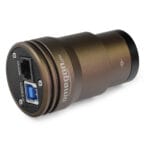
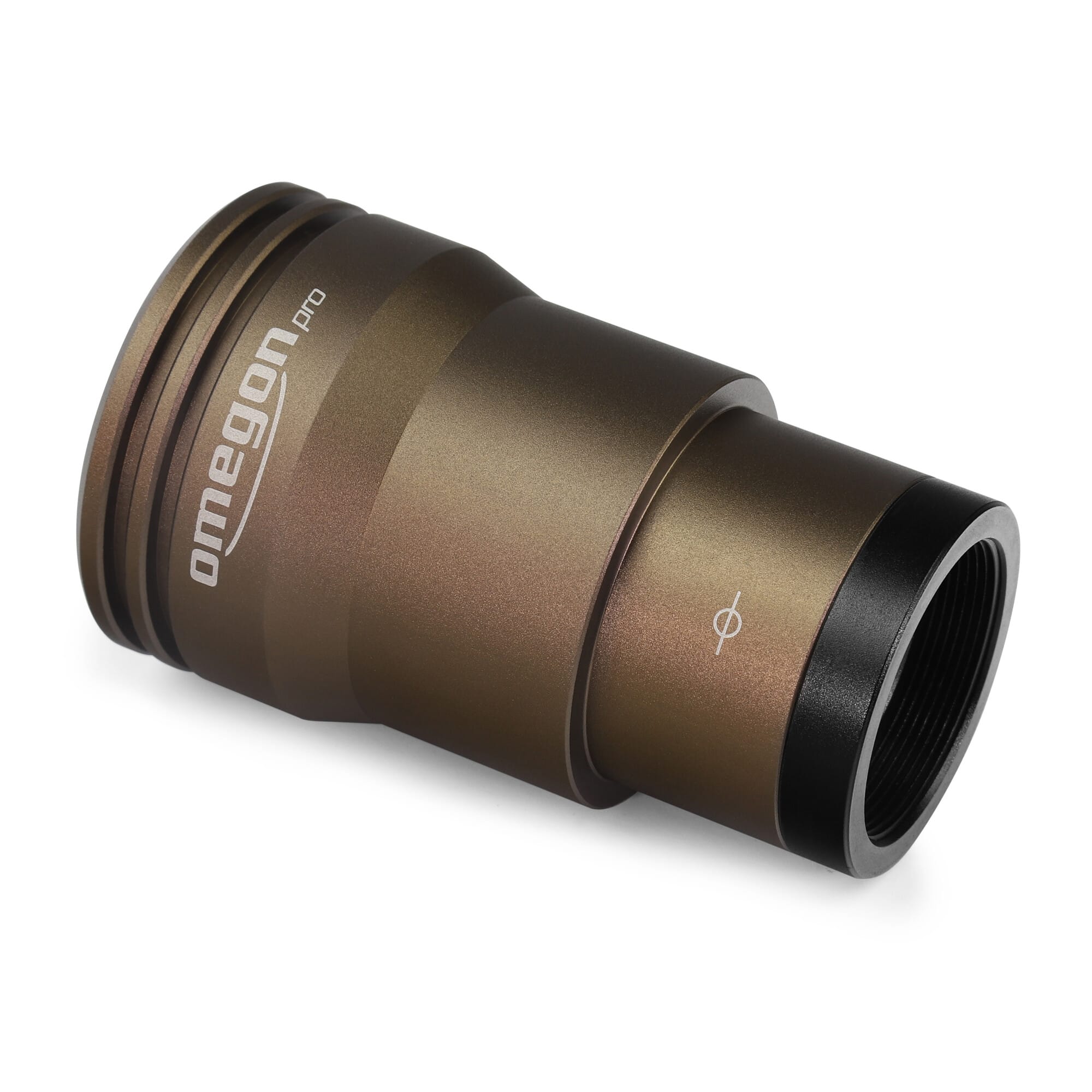
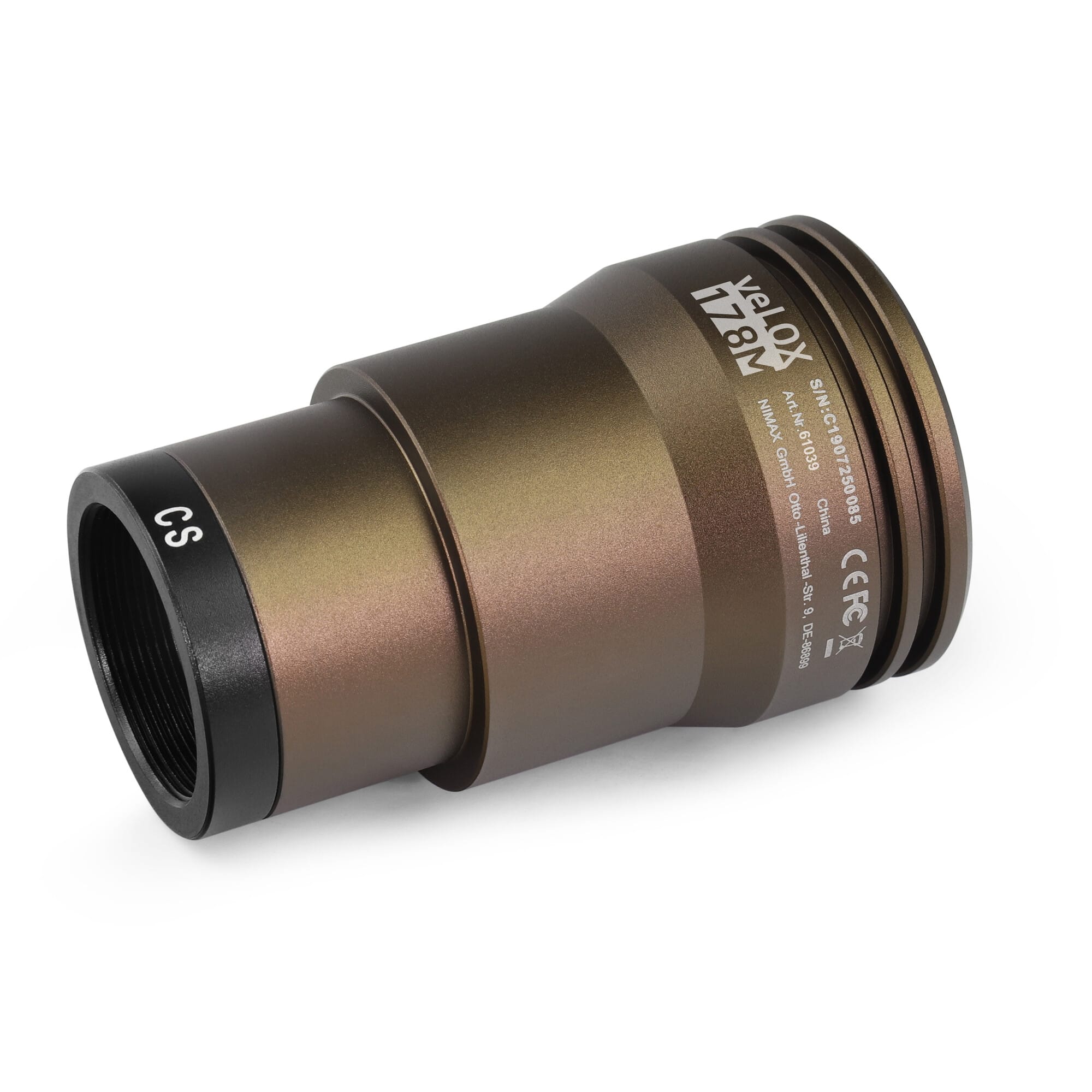
De behuizing heeft de vorm en de diameter van een 1,25 inch oculair. Je schuift de camera dus in vrijwel elke focuser. De flensafstand bedraagt 12,5 mm; met het meegeleverde verlengstuk kom je op 17,5 mm.
C- en CS-mount schroefdraad aan de voorzijde, 1,25 inch filterdraad via de meegeleverde adapter.
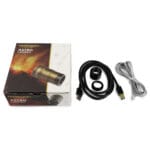
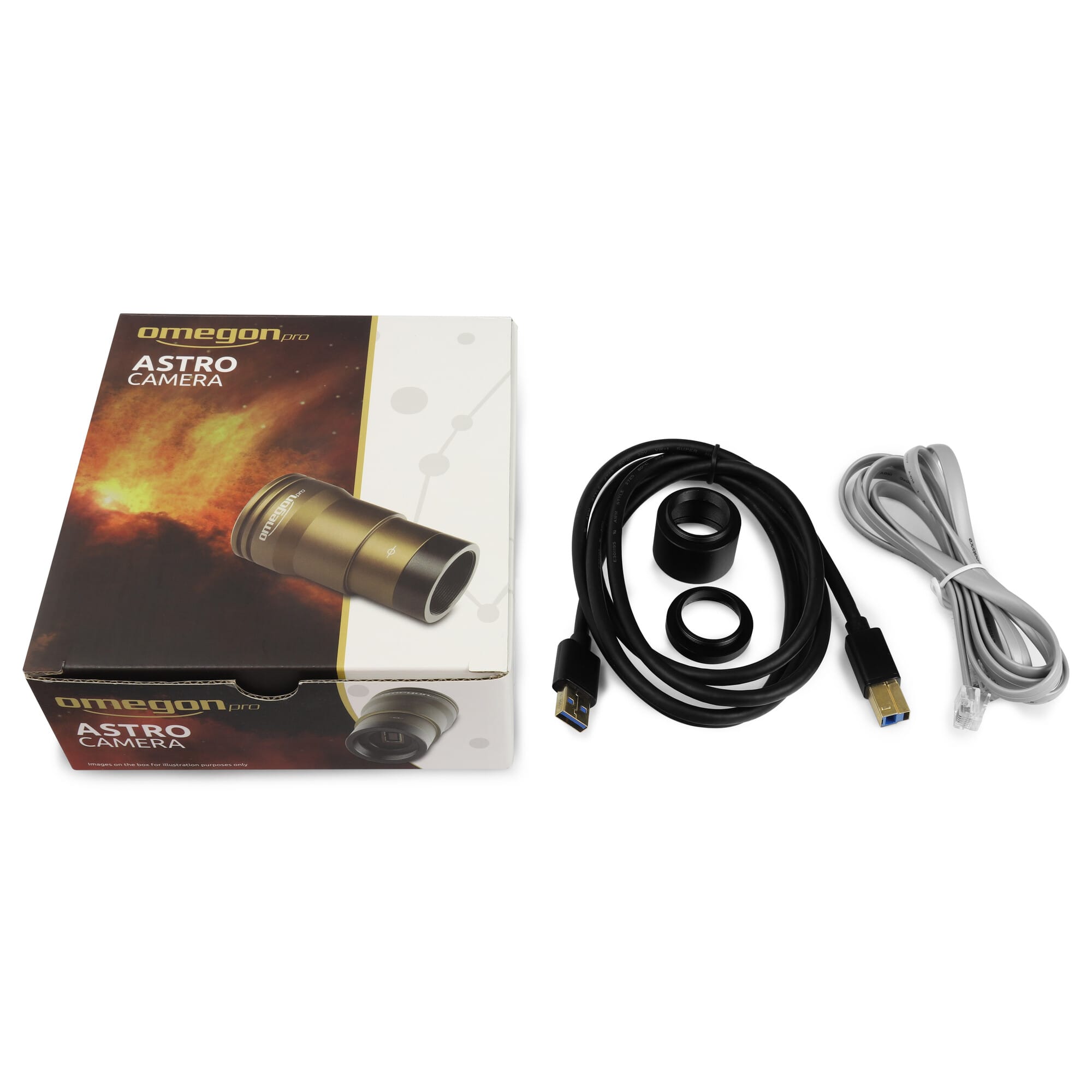
Included
- Camera in geanodiseerde aluminium behuizing
- Adapterstuk met 1,25 inch filterdraad (C-mount naar M28,5)
- Verlengstuk met flensafstand 17,5 mm
- USB cable
- ST4 cable
Featured accessories
Een UV- en IR-blokfilter hoort bij mono standaard in de tas, zeker achter een refractor. Een dispersiecorrector helpt bij lage planeetstanden.
For whom yes and for whom no
- ✓ Maan- en planeetfotografie met filters
- ✓ Zonnefotografie met de juiste apparatuur
- ✓ Autoguiding bij lange brandpuntsafstanden
- ✗ Wie direct kleurenbeelden wil zonder filterwerk
- ✗ Lange deep-sky belichtingen zonder koeling
Specifications
| Sensor | Sony IMX178 CMOS, monochroom |
| Sensor format | 7,4 x 4,9 mm, diagonaal 8,9 mm |
| Pixel size | 2,4 micrometer |
| Resolution | 3096 x 2080 pixels (6,4 MP) |
| Bit depth | 14 bit |
| Frame rate | 59 fps bij volle resolutie |
| Window | Anti-reflective coating, no blocking filter |
| Cooling | No |
| Interfaces | USB 3.0, ST4 |
| Autoguider | Yes |
| Telescope connection | 1,25 inch, C-mount en CS-mount |
| Filter thread | 1.25 inches |
| Flange spacing | 12.5 mm |
| Binning | 2x2, 3x3, 4x4 (digital) |
| Dimensions | Lengte 71 mm, diameter 41 mm |
| Weight | 90 g |
You can find more astrophotography accessories from merk at the Omegon merk Page.



Reviews
There are no reviews yet.