Observing M3 star cluster in April: here's how to find this deep-sky classic
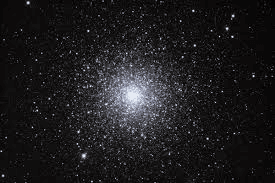
The Observing M3 star cluster in April is one of the most beautiful challenges for both novice and advanced observers. M3 is a globular cluster of more than 500,000 stars and is more than 11 billion years old. In April, it stands favorably in the sky, making this the perfect time to look for it.
What exactly is M3?
M3 (Messier 3) is a globular cluster in the constellation Hunting Hounds (Canes Venatici), not far from the bright star Arcturus in the constellation Oxherd (Boötes). Located about 34,000 light years from Earth, the cluster contains a mix of old red giants and young blue stars - a rare combination.
What makes M3 unique is the number of variable stars it contains - more than 270. This makes the cluster not only visually impressive, but also scientifically interesting. It is one of the first globular clusters discovered (1764) and remains popular among amateur astronomers.
How do you find M3 in the sky?
Finding M3 in April is relatively easy if you know where to look. The best method is to use the well-known constellations Great Bear and Ox-Herd. Follow these steps, Or very simply use apps such as Stellarium or theskylive.com/planetarium.
- Find the saucer of the Great Bear (Ursa Major).
- Follow the curve of the stem to the orange star Arcturus - this is called “arc to Arcturus.”.
- From Arcturus, draw an imaginary line to the star Cor Caroli in the Hunting Dogs.
- M3 is located about a third of that line, slightly above the center.
In a dark location, you may already see M3 as a faint blurry spot with the naked eye or binoculars. With a telescope, the globular structure really comes alive.
Image use - alt text: “Location of M3 cluster relative to Great Bear and Arcturus”
What do you need to observe M3 properly?
Although M3 is already visible with binoculars under excellent conditions, a telescope is highly recommended. Here are some observation tips:
✓ Telescope: minimum 70 mm aperture, preferably with magnification between 50x and 150x.
✓ Binoculars: 10×50 or larger can help locate M3.
✓ Location: choose a dark place, preferably without light pollution.
✓ Timing: the best time is around 10 p.m. local time, mid-April.
✓ Moon phase: Around new moon (April 27), conditions are ideal.
Want to get more out of your observation? Then use a star map app or planetarium software such as Stellarium or SkySafari to find M3 accurately.
What does M3 look like through a telescope?
Through a telescope at low magnification you can see M3 as a small nebulous sphere. At higher magnification (from 100x) you can often resolve the cluster's edge into individual star points, especially with telescopes of 100 mm or larger. M3 is not as bright as, say, M13 in Hercules, but it has a very compact and symmetrical structure that makes observation absolutely worthwhile.
The center often remains grainy, even at higher magnification. This is typical of globular clusters: the center is enormously dense and often remains out of focus without very large telescopes.

Photographing M3
M3 is also suitable for astrophotography. Even with a simple tracking mount and DSLR, you can capture the structure nicely. For best results:
- Use exposures of 15-60 seconds.
- Combine multiple photos (stacking) for more detail.
- Use a telescope with good focus and track accurately.
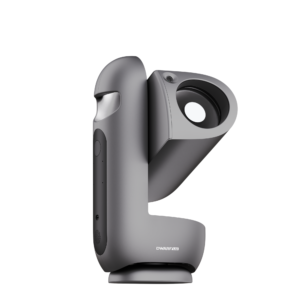
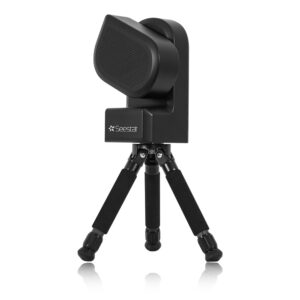
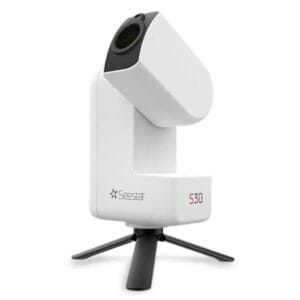
With smart telescopes like the DWARF Mini or Seestar S30 Pro, you can even automatically track and photograph M3 with minimal effort. These models are ideal for anyone who wants to capture deep-sky objects without advanced knowledge of night photography.
Summary: why M3 is a must-see in April
Observing the M3 cluster is a highlight of spring. With its rich star density, high age and relatively easy findability, M3 is an ideal target for anyone looking to make the step into deep-sky.
Want to see M3 for yourself? Check out our telescope selection guide for deep-sky objects or try using an automated model such as the DWARF Mini or Seestar S30 Pro.