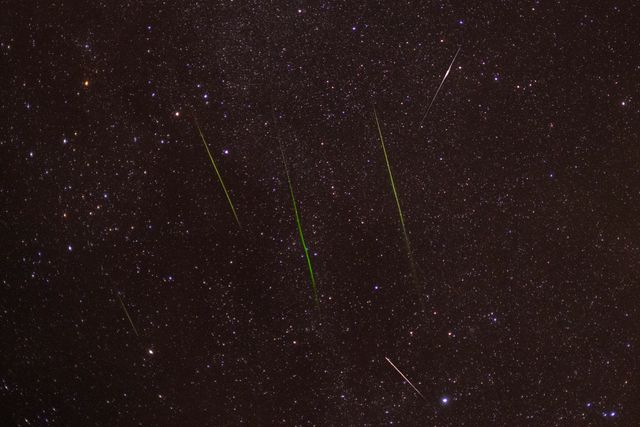
The Perseids are the meteor shower of the summer, and 2026 will be a great year. The peak falls in the Wednesday night, August 12th, to Thursday, August 13th, precisely during the new moon. Without disturbing moonlight, you can see dozens of shooting stars per hour from a dark location. This guide will tell you when, where, and how best to watch the Perseids in 2026.
When can you see the Perseids in 2026?
The swarm is active from approximately July 17 to August 24, but the maximum falls in the night of August 12 to 13, 2026. The best hours are From midnight until dawn: then the radiant, the point in the constellation Perseus where the meteors appear to originate, is high in the sky.
The exact peak moment varies by forecast: some organizations expect the maximum in the early morning of August 13, others only in the afternoon of that day (when it's light here). For the Netherlands and Belgium, that makes little difference: the night of August 12th to 13th In any case, it is the best choice, and the night before (August 11-12) is also worth it.
Why 2026 is such a good year for the Perseids
On August 12, 2026, it is new moon. So that night there's no moonlight to wash out the fainter meteors, and that makes a huge difference: in years with a bright moon, you sometimes only see a quarter of the number of shooting stars. Theoretically, at its peak, the swarm produces about 100 meteors per hour; In practice, from a truly dark location, you're more likely to see 50 to 80 per hour, and significantly fewer in the city. A peak during a new moon only happens once every few years, so 2026 will be the best Perseid year in a long time.
One evening, two spectacles: first the solar eclipse
The night of the Perseid peak already starts exceptionally before sunset: on Wednesday evening, August 12, 2026 Is there first from the Netherlands and Belgium a deep partial solar eclipse to see, with the Moon covering nearly 90% of the Sun. You can find all the details on our Page about the 2026 solar eclipse, and in our guide, you'll read how to safely watch the solar eclipse.
The perfect program for that evening: watching the eclipse around sunset, then staying outside, and enjoying the falling stars after midnight. It's no coincidence that the eclipse and the Perseid peak coincide: a solar eclipse can only occur during a new moon, and it's precisely this new moon that ensures a dark meteor shower night.
This is how you see the most shooting stars
- Find a dark place, as far as possible from city lights. Every bit less light pollution means more meteors.
- Give your eyes 20 minutes to get used to the dark, and don't look at your phone during that time.
- Lie down in a lounge chair or on a mat, with a blanket: you want to survey as much of the sky as possible.
- Don't look directly at the radiant, but a bit further away: that's where the meteor trails are longest and most beautiful.
- Take your time. Meteors come in showers, with sometimes nothing in between for minutes. Watching for an hour is more rewarding than watching for ten minutes.
Do you need a telescope for the Perseids?
No, and that's the honest answer. Meteors flash across a large part of the sky in a fraction of a second: your eyes are the best instrument for this. A telescope or binoculars, on the other hand, have a small field of view and work to your disadvantage for shooting stars.
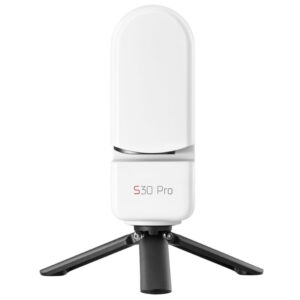
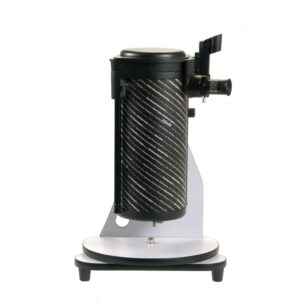
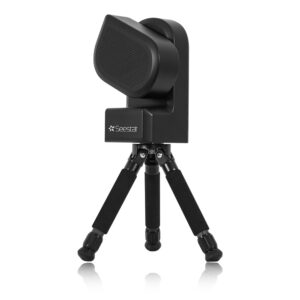
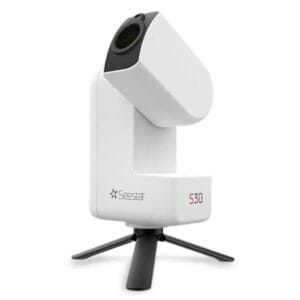
Do you want to capture the night, or get more out of such a dark, moonless sky? Then this is an ideal night for a smart telescopeWhile you're stargazing at falling stars, it automatically photographs nebulae and galaxies in that same pitch-dark sky. This way, you combine the best of both worlds in one night.
What are the Perseids, actually?
Each year in the summer, Earth crosses the orbit of comet 109P/Swift-Tuttle, which orbits the Sun roughly once every 133 years. The debris particles left behind by the comet then collide with such 59 kilometers per second into our atmosphere and burn up as streaks of light: shooting stars. The Perseids are fast, often bright meteors that regularly leave a glowing trail, and occasionally a spectacular fireball.
Frequently Asked Questions about the Perseids 2026
Around 2 AM
On the night of August 12th to 13th, 2026, from around midnight until dawn. The later in the night, the higher the radiant will be, and the more meteors you'll see.
How many shooting stars do you see per hour?
From a dark location, you can see tens of meteors per hour during the peak, 50 to 80 in optimal conditions. In the city, that number is significantly lower due to light pollution.
Which direction should you look?
The radiant is in the constellation Perseus, rising higher in the northeast as the night progresses. But meteors appear all over the sky: lie down comfortably and look as widely as possible.
Are the Perseids also well visible from Belgium?
Yes, the conditions in Belgium are exactly as favorable as in the Netherlands. Look for a spot outside the city with a clear view there as well, for example on the coast or in the Ardennes.
Questions about observation or the right equipment for that special evening of August 12th? Send us a message or stop by in Burgum, we'd be happy to help.