Very occasionally, an object appears at the edge of our solar system that breaks through everything we are used to. 1I/ʻOumuamua did so in 2017. 2I/Borisov did it again in 2019. And in 2025, it will happen for the third time: 3I ATLAS, a visitor from outside our solar system, passes by.
Since its discovery on July 1, 2025, 3I/ATLAS has become both an astronomical and cultural phenomenon. Not because of a catastrophic risk, there is none, but because of something else: 3I/ATLAS is the perfect storm of astronomy, the Internet, mysticism, speculation, astrology, AI chaos and a public that is finding it increasingly difficult to distinguish between fact and digital fantasy. The object itself is scientifically interesting; the conversations around it are perhaps even more telling. It's always the case that when something like this is discovered, people try to do anything so that the answer is less boring than ‘we know what it is’ ... the fact is, though, that we seem to know pretty little about this object anyway. What could it be? Aliens or a spaceship? Are we being watched?....
This blog is written for anyone who wants a clear story through the hype: what is 3I/ATLAS, what is odd, what is blown up, and why does this object concern millions of people worldwide?
3I Atlas: An interstellar comet, not an alien spacecraft?
Let's start with the foundation: 3I/ATLAS is astronomically a interstellar comet. That means ONLY That the object comes from outside our solar system and that it makes a one-time dip past the sun and disappears again. It follows a hyperbolic trajectory: an arc that suggests the sun has no grip on the object. The sun's grip in this context means the sun's gravity. After its passage, it will disappear again into deep space.
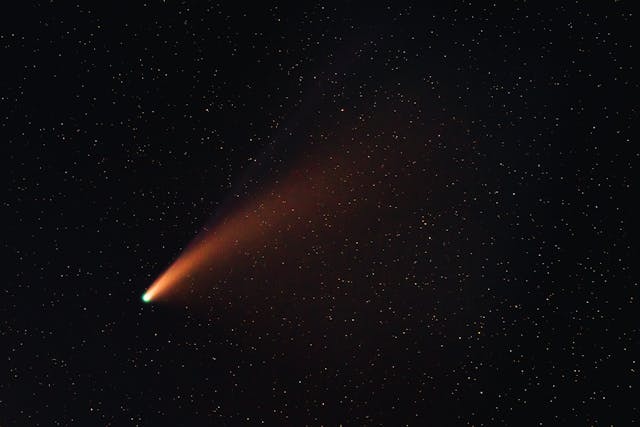
So far, nothing alien, at least, no more than the fact that it is literally comes from another galaxy or starburst chamber. Interstellar material is rare, but not unprecedented. The comet probably contains ice and dust older than our solar system, perhaps even older than the sun itself. It is thus a kind of cosmic time capsule.
But that's not why 3I/ATLAS is trending everywhere.
The hype was created by three factors:
- The object behaves differently than many comets.
- Timing in a culture hungry for mystery and thrill.
- A digital ecosystem where fact and fantasy reinforce each other.... huge.
And that is exactly where the confusion begins.
The NASA livestream that threw oil on the fire
In October and November, hundreds of thousands of people waited for NASA images of 3I/ATLAS. The Hubble images proved disappointing: a fuzzy, streaky object, barely in focus. Amateur astrophotographers had better images than two of the most powerful telescopes mankind owns, or at least it seemed that way....
That sounds suspicious, right?
Not really. It's mostly engineering: James Webb and Hubble were built to be extremely long exposures of distant, stationary objects. A comet hurtling through the image at unusually high speed is almost impossible to focus on without special tracking. Most major observatories don't have that tracking ready for interstellar visitors, because such visitors are incredibly rare.
But the context worked against NASA. The livestream that did come felt cluttered, slow and defensive. Many people saw not science, but uncertainty. And at a time when AI deepfakes are everywhere, conspiracies appear around every corner and trust in institutions is crumbling, that's enough to make a story explode.
The myths surrounding 3I ATLAS and why they don't hold up
Since 3I ATLAS surfaced in our telescopes, the object has become a kind of mirror for everything we don't understand. Every new picture, brightness change or orbit calculation was translated online into big stories: technology, signals, maneuvers, cover-ups. It was not because of the object itself, but because of the way we look at something coming from outside our solar system.
One of the first ideas was that 3I “steers” ATLAS. In fact, the orbit deviates very subtly from a perfect, gravitational curve. This is normal for comets: once ice heats up and evaporates, it acts as tiny jets of gas that give the comet a little push. You can compare it to a spinning garden sprinkler: as soon as water squirts out of certain spots, the whole thing wobbles a little. We saw that effect with Borisov, with Encke, with almost all active comets. It's part of the process. But online every anomaly became a misinterpretation that arises mainly when you don't know the physical process!
A second persistent myth revolves around the anti-tail, the fabric structure that appears to point toward the sun as seen from Earth. According to some, this would be impossible without propulsion. Yet the explanation is simple and completely natural: when dust from a comet continues to float in the same orbital plane and we look exactly in that plane, it appears to be pointing “against the direction.” It is not a motor beam, but a perspective illusion that has been seen before with several comets. It is a well-known phenomenon,. but new audiences interpret it as if it is something unprecedented.
Around the same time, a new myth surfaced: 3I ATLAS would emit a “pulse.” This idea arose because the brightness sometimes changes visibly. However, those variations are due to the rotation of the core. Active spots emitting gas and dust rotate in and out of sunlight, so we see varying brightness spots. It is similar to a rock rotating with flashlights pointed at it: some pieces light up, others disappear. Combined with varying exposure times from amateur photographers, it sometimes appears to have a rhythm, but there is no periodic signal, no pattern that persists, and nothing to indicate communication or intent.
The presence of fakes also helped the myths grow. For example, a credible AI-deep fake of Avi Loeb circulated, pasting statements he never made. That video went viral, and many people no longer saw the difference between real hypothesis and created sensation. That is the perfect illustration of how easily 3I/ATLAS turned from research object into cultural phenomenon.
The theory that NASA is withholding information is mainly rooted in disappointment with the images and with the government shutdown that had indeed very fortuitous timing with the 3I Atlas. Hubble and James Webb are not built to photograph extremely fast objects at close range in sharp focus; their exposure times and tracking methods are tailored to distant, slow-moving targets. The result is technically explicable less spectacular than hoped. The raw data is simply published publicly, as with any other object in the solar system. The idea of secrecy is mainly a reaction to images that don't live up to expectations.
All these myths have a similarity: they arise when a rare phenomenon is viewed at a time when digital imagination works faster than scientific explanation ... for the latter is often considered boring. 3I/ATLAS is not an everyday object; indeed, it has properties that are interesting and sometimes unexpected/unknown. What we see is also physics taking place under extreme conditions, on an object not formed by our sun. That produces patterns we do not yet fully understand, but that does not make it artificial; it means it is rare! We have never seen it yet, but with telescopes like the Vera Rubin, we will undoubtedly see more phenomena like this. As above, so below... Just a disclaimer: we find it very hard to believe that we are alone in the universe. That aside...
The real mystery of 3I/ATLAS is not in secret signals or aliens, but in what this interstellar object can teach us about processes beyond our own solar system. That's exciting enough without putting stories on top of it. The object has no voice, no message, no intention(hopefully!), but it does show behavior that we are still dissecting. That is precisely where the real fascination lies: in what is real, new and misunderstood, not in what we project into it.
Why this object creates such a stir
3I ATLAS came at just the right time in a turbulent cultural cycle:
- AI blurs the line between real and fake.
- The UFO/UAP discussion is wider than ever.
- Many people feel that classical physics does not explain enough.
- There is a hunger for mysticism, space, awareness and “more.”.
- Astrology and intuitive systems are enjoying a new renaissance.
- Science is less vertical; people want to experience for themselves, not just believe. Just look at the popularity of smart telescopes
An interstellar object entering our solar system from the darkness touches on all these themes at once. It is scientifically extraordinary, but it also acts as a projection screen for collective desires, fears and ideas.
3I/ATLAS looks back, symbolically at least. Astrologers see in it a kind of mirror, a sign of cosmic perspective. Scientists see a time capsule. The Internet sees ... everything at once.
What makes 3I ATLAS really interesting
When you filter out all the noise, what remains is something far more impressive than the myths: 3I/ATLAS is a rare opportunity to look directly at material that did not form in our own solar system. The ice, dust and organic compounds in this nucleus formed in an environment our Sun has never seen, probably around another star, perhaps even in an entirely different generation of star formation. In this sense, 3I ATLAS is a messenger from beyond: not technology, but physics from another cosmic chapter!
What makes this extra special is that the comet undergoes the same solar radiation as the comets we know well. That means we can compare. How does interstellar material react when exposed to the heat of a star like ours for the first time in millions or billions of years? How does it behave when it becomes active? What breaks off, what remains, how does the structure of the coma change? You get a natural experiment in which we can directly see which processes are universal and which are specific to our own solar system. Such opportunities for comparison are unprecedentedly scarce.
Right around perihelion, the moment when 3I/ATLAS came closest to the sun, this became visible. The tail became more unstable, more erratic, more complex, as if under extreme conditions the comet briefly showed how interstellar ice behaves when abruptly warmed after perhaps billions of years in total darkness. For researchers, that's more spectacular than any conspiracy: it's new data, new physics, new insights.
And then there is scale. 3I/ATLAS may pass briefly through our solar system, but its history extends much further. It is probably older than Earth and bears traces of an environment about which we know little. Yet it moves with immense speed through our corner of the Milky Way, showing us only a fraction of a fraction of its journey. To us, the moment feels big; to the comet, it is only a footnote. That asymmetry in time and meaning is perhaps what makes the object most intriguing: it confronts us with how small and local our perspective is, even when we are looking at something that literally comes from outside. After all, we really only see a very small part of the Milky Way....
In all that lies the real wonder of 3I/ATLAS: not in what it may be hiding, but in what it reveals openly, a chance to take a peek into the physical reality of a world that is not our own.
3I Atlas reaches closest point to Earth - what to expect?
Retrieved from December 19, 2025 3I/ATLAS passes Earth at its closest point. With a distance of about 1.8 AU, more than 270 million kilometers, about slightly beyond the distance of us and the planet Mars, the object is well outside any zone that would be relevant to impact scenarios. The passage is therefore completely safe and has no direct impact on our planet.
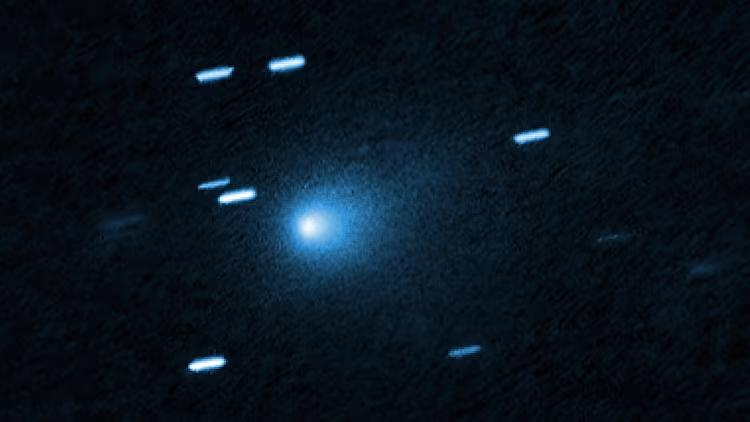
Those hoping for a spectacular comet in the sky should temper expectations. 3I/ATLAS remains a dim object, even for large amateur and semi-professional telescopes. This is not an apparition visible to the naked eye or a tail that travels through the night like a lightsaber. The comet is of particular interest to those with experience in deep-sky photography and longer exposures; for them, in fact, the interstellar object represents a rare and intriguing target. This is not for beginners unfortunately!
What makes this passage special is that you are literally looking at matter that comes from outside our solar system and never returns after this one encounter. For astrophotographers, this is not a natural spectacle, but an opportunity to capture an object that tells more about the Milky Way than about our own neighborhood. It's science, history and mystery in one frame.
Those wishing to follow 3I/ATLAS can use software such as Stellarium or from astrophotographers who accurately track its position and regularly share new images. This keeps the comet accessible to anyone who wants to consciously witness its passage, without needing an exceptionally powerful telescope to keep abreast of its journey through our part of space.
What we don't know yet and why 3I ATLAS is indeed strange
Although 3I/ATLAS is not a spacecraft, signal source or dangerous visitor, the object does contain features that are genuinely interesting. Not because they suggest extraterrestrial life, but because they show how little experience we actually have with interstellar material. Every comet that comes from outside our solar system confronts us with physics we only partially understand. 3I/ATLAS is no exception; it exposes those very blind spots with painful precision.
One of the most interesting points is the structure of the tail, especially around perihelion. The coma and dust orbits changed faster and more chaotically than in many known comets. This does not mean that something artificial is happening, but rather that the composition, density and internal structure are different from comets formed in our solar system. Interstellar ice has been exposed to billions of years of cosmic radiation, collisions and extreme temperatures. How that material reacts when suddenly heated by the sun is still not a foregone conclusion.
In addition, there are subtle anomalies in the orbit that are within the realm of natural cometary dynamics, but still raise questions. Core rotation, active jets and mass distribution are probably irregular; this is normal for comets, but interstellar material may have different physical properties than what we are used to. Current models are primarily based on comets formed by our own star, not by an unknown star at an unknown distance. The fact that some parameters do not fit so well as a result does not make 3I/ATLAS an anomaly in the sense of “inexplicable,” but rather in the sense of “not yet fully understood.”.
Brightness changes also remain the subject of research. They appear to be related to the rotation of the core and to active spots rotating in and out of sunlight. Still, the pattern is less tight than you see in many local comets, indicating that the jets may be coming from deeper layers or that the surface structure is more complex than expected. This is not a signal in the digital sense, but it is an indication that the internal structure of 3I/ATLAS is different than our models predict.
Perhaps most importantly, this object does not bear the same history as the comets we know. Everything about 3I/ATLAS, from the structure of its ice to the way it responds to light and heat, is the result of billions of years in an environment we cannot reconstruct. That unknown origin immediately makes any anomaly more intriguing, because we have no frame of reference to compare it to “normal” comets. And that's exactly where science begins: in noting that something doesn't quite fit a model, without concluding that it must immediately be something supernatural.
With 3I/ATLAS, we are in that valuable in-between space. The object does nothing outside the laws of nature, but it does things that we do not yet fully understand. That does not make it threatening, but rather special, because it forces us to revise our assumptions, improve our models and expand our view into physics that often eludes our view. In that respect, 3I/ATLAS is exactly what an interstellar visitor should be: not an explanation, but a question. And a question that we are likely to return to a lot in the years to come.
Why 3I ATLAS is important
The significance of 3I/ATLAS does not lie in danger that it will wipe us out or secrecy. The object is not threatening, it is not an alien ship, and it is not being kept hidden. The reason it has become such a big topic has to do with something much deeper: this is one of the rare moments when you see, in real time, how science, culture and digital imagination touch and reinforce each other. Interstellar objects force us to look beyond the everyday worldview. They remind us that our solar system is not a closed bubble, but an open crossroads where occasionally something enters that challenges our understanding.
3I/ATLAS also shows how little we still know about space beyond our own planetary system. The object behaves largely as a comet should, but with details we cannot yet fully explain. At the same time, it shows how difficult it is for even the largest observatories to provide perfect images of an object moving at lightning speed through our telescopes. And perhaps even clearer than that: it shows how quickly an ordinary astronomical phenomenon can turn into a global story once social media, mysticism, AI and uncertainty are mixed together.
In that field of tension, 3I/ATLAS takes on a different meaning. It does not change the world, but it does change our perspective. Not because it is itself trying to tell us something, but because we are looking for something in it..... This comet is a passerby; a fragment from another unknown world that touches us briefly and then disappears among the stars. Yet the discussion it causes lingers because 3I/ATLAS raises exactly the kind of questions that don't disappear when the object itself is long gone.
Perhaps that is ultimately the real value of this object: not what 3I/ATLAS is objectively, but what it releases in us. It holds up a mirror to us in which wonder, fear, curiosity and interpretation come together. And that is precisely why it remains worth following this object, even as it slowly moves back toward the void.
What we think of the 3I Atlas situation
3I/ATLAS does not change the world, but it does change something in us. Not because it carries a message, but because we seek meaning in everything that comes from outside. It is a passerby from another corner of the Milky Way, a piece of cosmic history that randomly streaks through our solar system, and yet this encounter feels anything but random to us. That ultimately makes the story less a matter of astronomy and more a matter of humanity: we are the ones asking questions, making connections and trying to understand.
What makes 3I/ATLAS extra special is that it will not be the last interstellar object we see ... it is probably an early announcement of what is to come. Indeed, our telescopes are improving dramatically. The Vera C. Rubin Observatory, fully operational as of late, is going to scan the sky every night with a depth and speed we have never had before. Objects that until now slipped imperceptibly past us will soon become regular discoveries. Interstellar visitors will no longer be exceptions, but regular reminders that we live in the midst of a dynamic, unknown world.
In this sense, 3I/ATLAS is primarily a starting point. It shows how little we know, how limited our perspective sometimes is, and how quickly an unexpected discovery awakens our curiosity. The object comes, passes by and disappears again, but the questions it raises remain. That is precisely what makes this passage valuable: not the comet itself, but the realization that we are at the dawn of a new era in which we will see visitors like this more often, more quickly and more clearly.
Want to know where 3I/ATLAS is now, or try to capture this interstellar object yourself? Then check out our deep-skyguides and recommended astrophotography equipment on Telescoop.nl, the best way to consciously experience this unique passage as well as look ahead to all the objects to come next.