
Adapters
Not sure what suits your setup? We are stargazers ourselves and happy to help.
Send us a WhatsApp messageWe reply on weekdays between 9:00 and 17:00.
Showing 41–60 of 260 resultsSorted by popularity
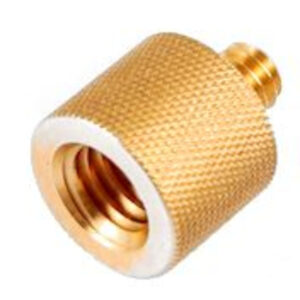
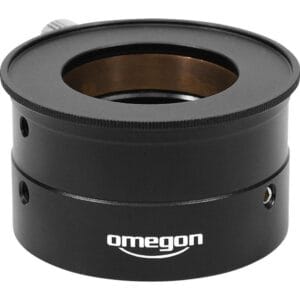
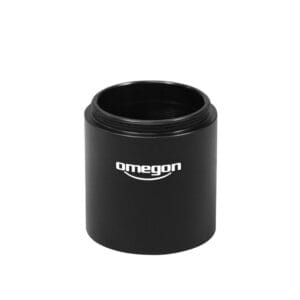
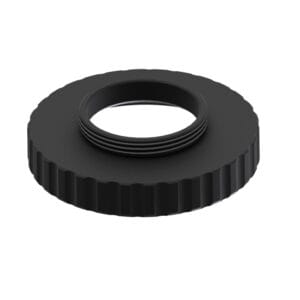


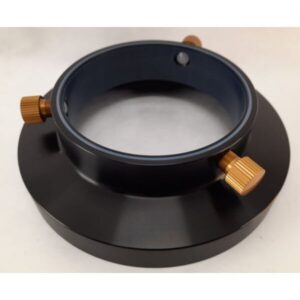
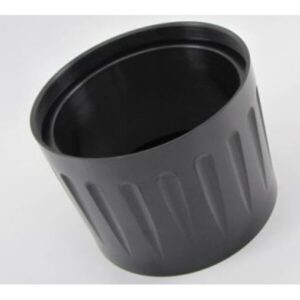
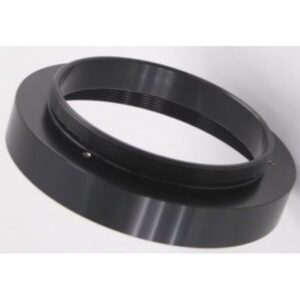
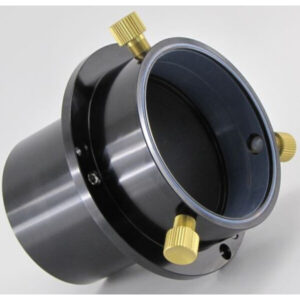
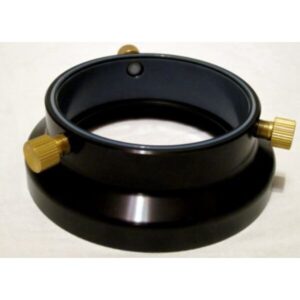
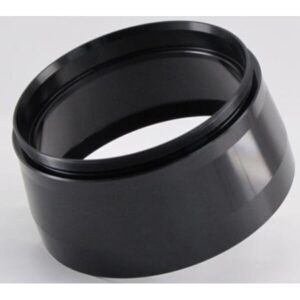
Showing 41–60 of 260 resultsSorted by popularity
Telescope adapters: the indispensable links for any astronomical setup
Anyone starting out in astronomy often thinks in big parts: the telescope, the mount and the camera. But once you want to connect these components together, you find that the world of astronomy is full of different sizes, threads and connections. This is where the right telescope adapters come into view. You can think of them as the connectors that make your equipment work seamlessly together. Whether you want to pair an SLR camera with a refractor telescope, or install a modern filter wheel: without the right adapter your hobby literally stands still.
At telescoop.nl, we consider adapters as the “glue” of your setup. They are small parts that make a huge difference in the final image quality. An ill-fitting ring creates slack, which can skew your camera a fraction. In the world of astrophotography, where we work with micrometers, that's the difference between a sharp picture and one with distorted stars at the edges. The goal of a good adapter is simple: make a rock-solid connection without disrupting the optical axis of your system.
Why standard sizes are rarely standard
In astronomy, you come across a forest of terms: t-2, m42, m48, c-mount, 1.25-inch and 2-inch. This is because manufacturers have developed their own standards over the decades. A camera from zwo has a different connection than an SLR from canon or nikon. In addition, focusers on telescopes often have different diameters to maximize light input.
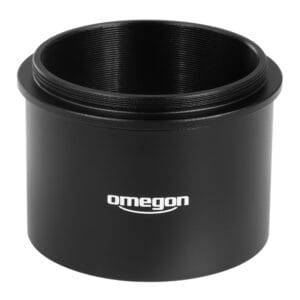
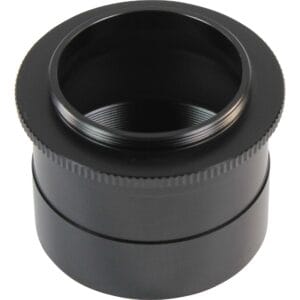
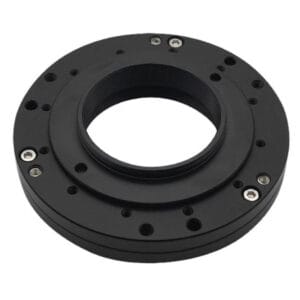
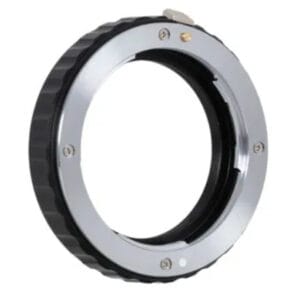
The most common coupling is the t-2 connection. This is a universal thread of 42 millimeters with a pitch of 0.75 mm. If you want to use an SLR camera, you need a so-called t-ring. You click this ring onto the bayonet mount of your camera, after which you are left with the universal t-2 thread to connect to your telescope. For modern full-frame sensors, however, m48 adapters are increasingly being chosen. These have a larger aperture (48 mm), which is essential to avoid vignetting (dark corners). Using the right adapter ensures that the full sensor of your camera is utilized.
The importance of the right distance: the back focus
One of the biggest challenges for the beginning astrophotographer is determining the correct distance between the optics and the camera's sensor. We call this the back focus. Many telescopes use a corrector, field flattener or reducer to flatten the field of view. These optical elements work optimally only when the sensor is at a very specific distance-often exactly 55 millimeters.
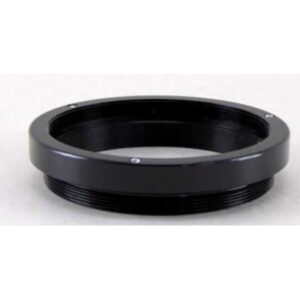
This is where spacer rings and spacers come into play. Since a camera itself already has an internal distance from the front to the sensor, you must bridge the remaining number of millimeters with adapters. It is a precise job where you sometimes use rings only 0.5 or 1 millimeter thick to get the exact size. If you make a mistake here, you will see it immediately in your photos: the stars in the corners will become elongated instead of nicely rounded. Building such a “little train” of adapters requires some math, but once it's in place, you never have to look back.
Materials and build quality of adapters
You may be wondering why one adapter costs a few euros and the other is considerably more expensive. The difference is in the choice of material and the way the threads are cut. Cheap parts are often made of molded plastic or soft aluminum with a coarse thread. This may work in the short term, but heavy use will cause the thread to jam or create grit that ends up on your lens or sensor.
Qualitative adapters are usually made of anodized aluminum or stainless steel. Anodized aluminum has a hard protective coating that prevents scratches and keeps parts from freezing together in cold weather. Some adapters even have a brass clamping ring on the inside. This protects the insert tube of your precious eyepiece or camera from scratches from the locking screws. Nothing is a waste like an expensive camera with deep scratches in the housing because an adapter was not properly finished.
Visual observation versus photography
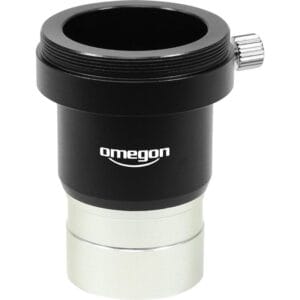
Not every adapter is intended for photography. Even if you are looking only through an eyepiece, you often need couplers. Consider the transition from a large 2-inch focuser to standard 1.25-inch eyepieces. A good transition sleeve will keep your eyepiece exactly in the center of the beam. There are even adapters that allows you to clip a smartphone in front of the eyepiece. While this is often an intermediate step for serious photography, it is a great way to quickly share a photo of the moon.
For those using a filter wheel or filter tray, proper connections are also critical. Filters often need to be placed as close to the sensor as possible to avoid reflections, but then again, they should not be so close that they touch the sensor. With the right spacers, you ensure a safe and light-tight seal, so that no false light from lampposts ruins your shot.
Practical tips for using adapters
In practice, you sometimes encounter surprises. A adapter that runs smoothly during the day can suddenly freeze solid in the freezing cold of a winter night. This is because metals shrink with cold.
Fixed is fixed: Never tighten screw threads extremely tight. Use your feel; once the resistance increases, it is often enough.
No pliers: Should a ring ever get stuck, never use pliers. This will deform the metal and the adapter immediately unusable. A rubber mat or a special adapter wrench often provides enough grip.
Maintenance: Keep the threads clean. Dust acts like sandpaper. A blower or soft cloth is usually enough to keep things going.
Frequently asked questions about adapters and couplers
What is the difference between m42 and t-2? Although they both have a diameter of 42 millimeters, the pitch of the thread is different. T-2 has a pitch of 0.75 mm, while the old m42 photolens thread has a pitch of 1.0 mm. If you force these onto each other, you will destroy the threads of both parts. So always check which type of thread you need.
Can I stack unlimited adapters? In theory, this can be done to achieve proper backfocus, but each coupler is a potential point where deflection (flexure) can occur. Especially with heavy cameras, it is better to have one longer adapter use instead of five short rings. The shorter the chain, the more stable it will be.
Making the right choice at telescoop.nl
At telescoop.nl, we know that finding the right adapter sometimes feels like looking for a needle in a haystack. There are so many possible combinations that it can be difficult to determine exactly what you need for your specific setup. That's why we've organized our assortment conveniently and are always ready to take a look at your configuration. Whether you're looking for an adapter for an antique telescope or the perfect backfocus kit for a high-end astro-camera, we have the parts you need.
Good adapters are the silent heroes of your hobby. They make sure your equipment is safely secured, your image is sharp and you can enjoy the night sky without worry. By choosing quality and proper sizing, you'll avoid frustration in the dark and get the most out of your telescope.
When you order from us, we understand the rush. When the weather forecast is good, you don't want to wait. If you order before 11:59 p.m., we'll make sure you get the adapters within 48 hours in most cases. So you can get right back out there and do what really matters: explore the universe.