
Seekers
Find celestial objects at a glance
With a good viewfinder or red-dot finder, you can point your telescope at any object in the sky at lightning speed. From optical 8×50 finders to compact LED pointers. Available directly from stock and delivered within 48 hours.
Showing 21–40 of 47 resultsSorted by popularity



Showing 21–40 of 47 resultsSorted by popularity
A good viewfinder helps you find celestial bodies easily and track them accurately. From red-dot viewfinders to optical viewfinders - we offer a wide range of options to enhance your observations.
Seekers
A good viewfinder is the difference between endless searching in the dark and having your target object in view within seconds. Viewfinders provide a rough guideline for your telescope position, then you can quickly find details with the main eyepiece. Choose a simple red-dot viewfinder or a bright rifle scope for better visibility in low light.
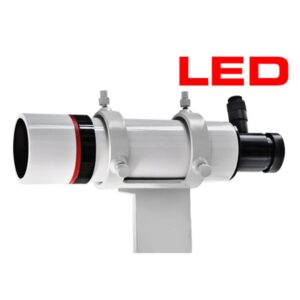
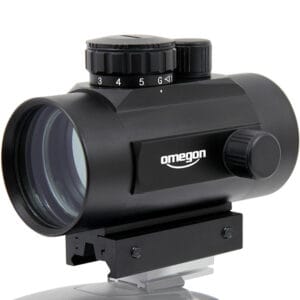
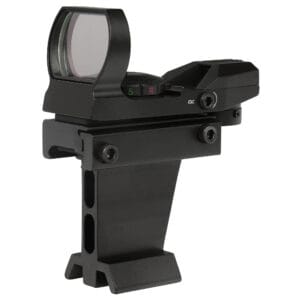
Red-dot viewfinders: Project a bright red dot onto a transparent screen; ideal for beginners and quick location determination.
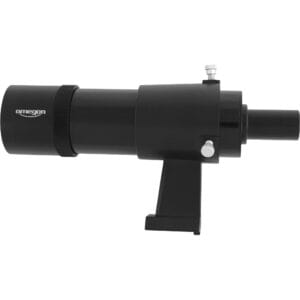
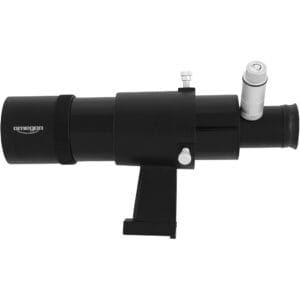
6×30 rifle scopes: small binoculars (6× magnification) with 30 mm objective lens for a wider and brighter field of view.
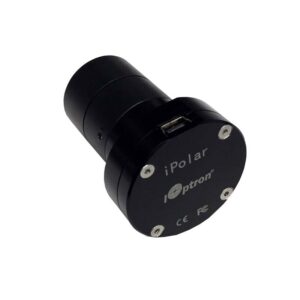
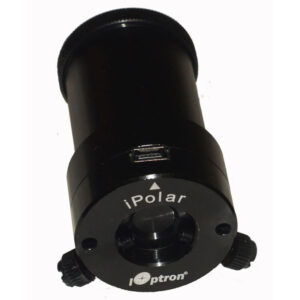
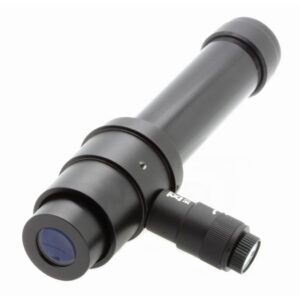
Polarization seekers: equipped with crosswires and level especially for accurate polar alignment of equatorial mounts.
Rigel-spotters: Additional LED lighting around the eyepiece for map reading and instrument illumination.
Our viewfinders are easy to mount, offer fast coarse-focus and are compatible with most dovetail bridges. There is a suitable viewfinder for every telescope to make the start of your evening under the stars smooth.
Frequently Asked Questions about Searchers
What is a red-dot viewfinder?
A reflex finder that projects a red dot on a glass screen to point your telescope roughly.When do I use a 6×30 rifle scope?
For objects that fit into a slightly larger field of view or if you want to see more detail in front of the telescope.How do I mount a viewfinder on my tube?
Usually with a dovetail bracket; screw on the viewfinder plate and slide the viewfinder in.Why do I need a polarizer?
For quick and precise alignment of your mount to the pole star in astrophotography.Does a red-dot work in a full moon?
Yes, the dot is bright enough to project next to the moon or bright planets.How do I adjust a rigel spotter?
Aim the LED lights at your planisphere or map without shining directly into your eyes.Is a 6×30 better than a red-dot?
You really see the target object with 6×30; red-dot is simpler and does not lose image.Can I disconnect the viewfinder during transport?
Yes, most come with a quick release plate for easy removal.How do I calibrate a viewfinder?
During the day, aim at a distant object, center in main eyepiece and adjust the viewfinder via screws.Does a viewfinder need batteries?
Only red-dot and Rigel spotters; rifle scopes and polarizers are mechanical.Does it matter where I mount the viewfinder?
Choose a position that stays clear of your hands and cables during movement.How large is the field of view of a 6×30?
Approximately 7-8°; enough to coarsely locate constellations.Is there a 90° finder?
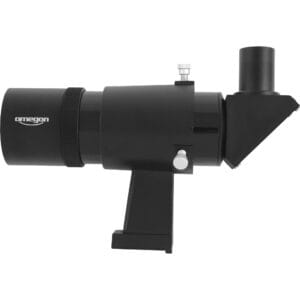
Yes, for use at high elevations, a 90° prism finder is possible.Can I use a smartphone as a viewfinder?
With a special holder, you mount your phone on the focuser for live view.How do I maintain my rifle scope?
Clean lenses with lens pen and microfiber cloth; store in dry case.Why do I see duplicate images in a red-dot?
Usually due to non-parallel viewing lines; move the viewfinder a little farther from the tube.Does a polarizer also work in the south?
Yes, you then point it at the pitch of Sigma Octantis or an aurora reference.How firmly does a dovetail tracket sit?
High-quality brackets offer virtually no backlash; CNC-machined aluminum is optimal.Can I use multiple viewfinders at the same time?
Yes, with a double dovetail rail you mount both red-dot and scope.How do I protect the viewfinder from condensation?
Use small dew-shields or heating ribbons to prevent dew.
 Dutch
Dutch English