
Celestron telescopes are heard by many star enthusiasts/experienced viewers (or even observatories/astro-clubs) and evoke recognition. For over sixty years, the brand has been building telescopes that bring the heavens closer, from compact beginner models to high-end instruments that allow you to photograph the deepest nebulae. But with so many series and models, it's natural for many people to wonder: which Celestron telescope really suits me?

In this comprehensive overview, we take a look at the five main Celestron series, from the accessible PowerSeeker and AstroMaster to the smart StarSense Explorer, the automated NexStar and the professional EdgeHD line. Each series has its own character, target audience and optical strengths.
Celestron AstroMaster - the first serious step Of Celestron telescopes
For many stargazers, the AstroMaster series is where hobby turns into passion. These telescopes are just above the entry-level segment and offer a solid step up in image quality, light output and stability.
The best-known model, the AstroMaster 130EQ, is a Newton reflector with a 130-mm mirror and 650-mm focal length. That combination produces a bright and wide image, ideal for moon, planets and bright deep-sky objects. Users who switch from a PowerSeeker notice the difference immediately: contrasts are stronger, colors more subtle and sharpness at the edges much better.
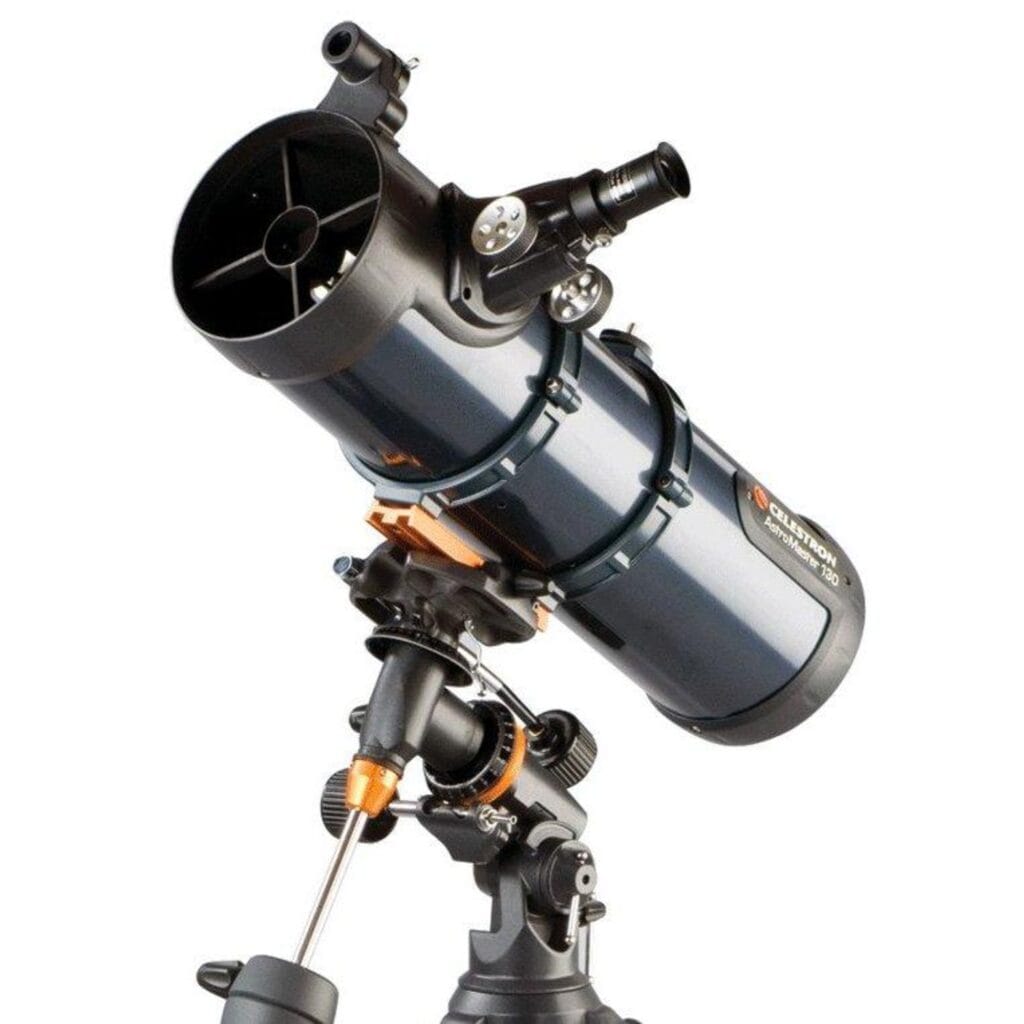
Still, this is not a perfect instrument out of the box. There are versions with spherical mirrors instead of parabolic mirrors, which can limit image sharpness at high magnification. The included accessories are basic, and the tripod is sometimes a bit too light for the tube. But with a few upgrades, a more solid eyepiece and a better viewfinder, the AstroMaster turns into a surprisingly capable telescope.
What can you really see with it? Under average Dutch skies, it delivers razor-sharp lunar images and clear bands on Jupiter, including its four Galilean moons. Saturn shows its ring structure, and in dark sky conditions the Orion Nebula and the Andromeda Nebula also become visible. Don't expect color explosions, but do expect real depth and texture, something often lacking in smaller telescopes.
The AstroMaster is designed for those who have outgrown their first telescope and want more control over what they see. The equatorial mount (EQ) takes practice, but it also offers precision: once properly aligned, you can track celestial bodies smoothly as the earth rotates. It's a scope you learn to understand, not one that does everything for you, and that's exactly what many hobbyists appreciate about it.
Celestron StarSense Explorer - The StarSense app as your guide
Where the AstroMaster is primarily mechanically and optically oriented, the StarSense Explorer series brings digital intelligence to the night sky. The concept is as simple as it is brilliant: you place your smartphone in the cradle, open the StarSense app and let your camera scan the sky. The software recognizes star patterns, determines your position and displays arrows that guide you to your chosen object.
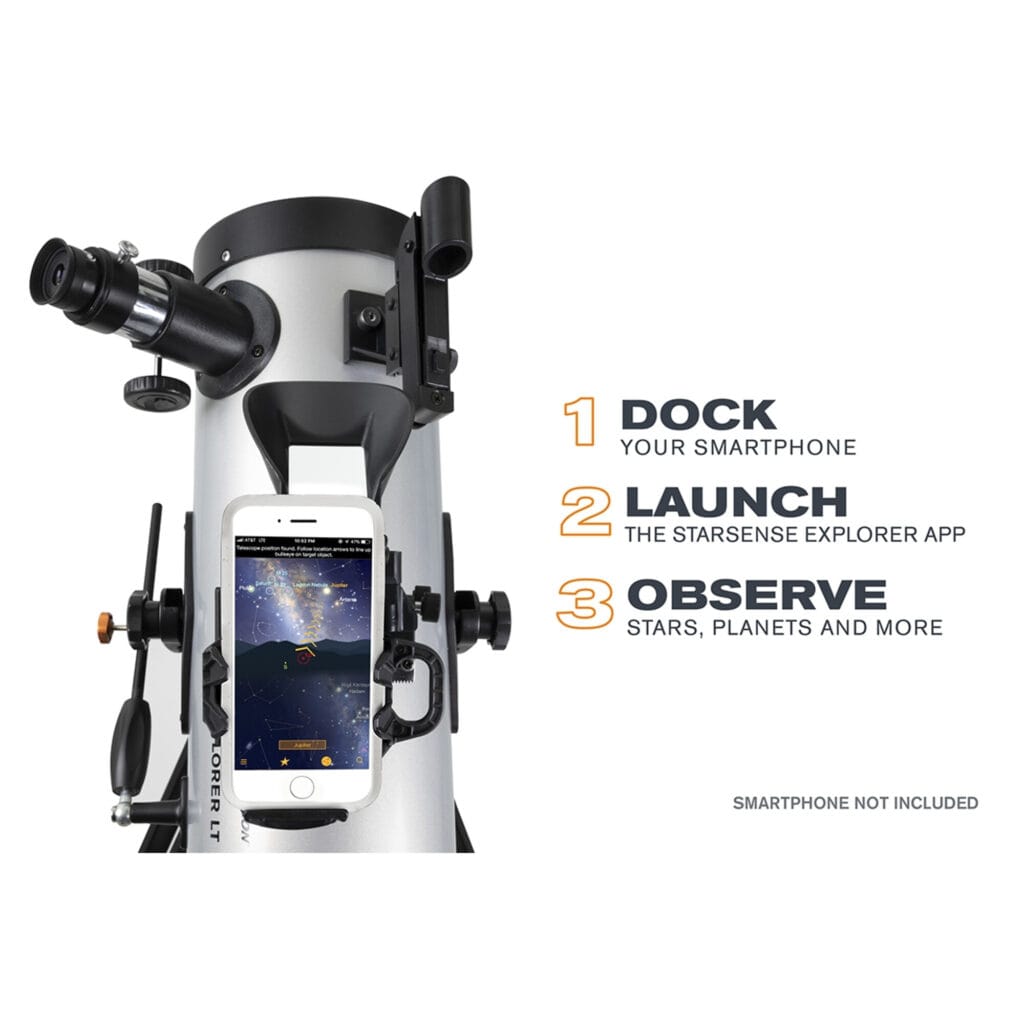
No more fiddling with star charts or spending hours searching for objects, the app does the job. Within minutes, it points you to Saturn, the Orion Nebula or the Pleiades. For many beginners, this is exactly what they need: instant gratification.
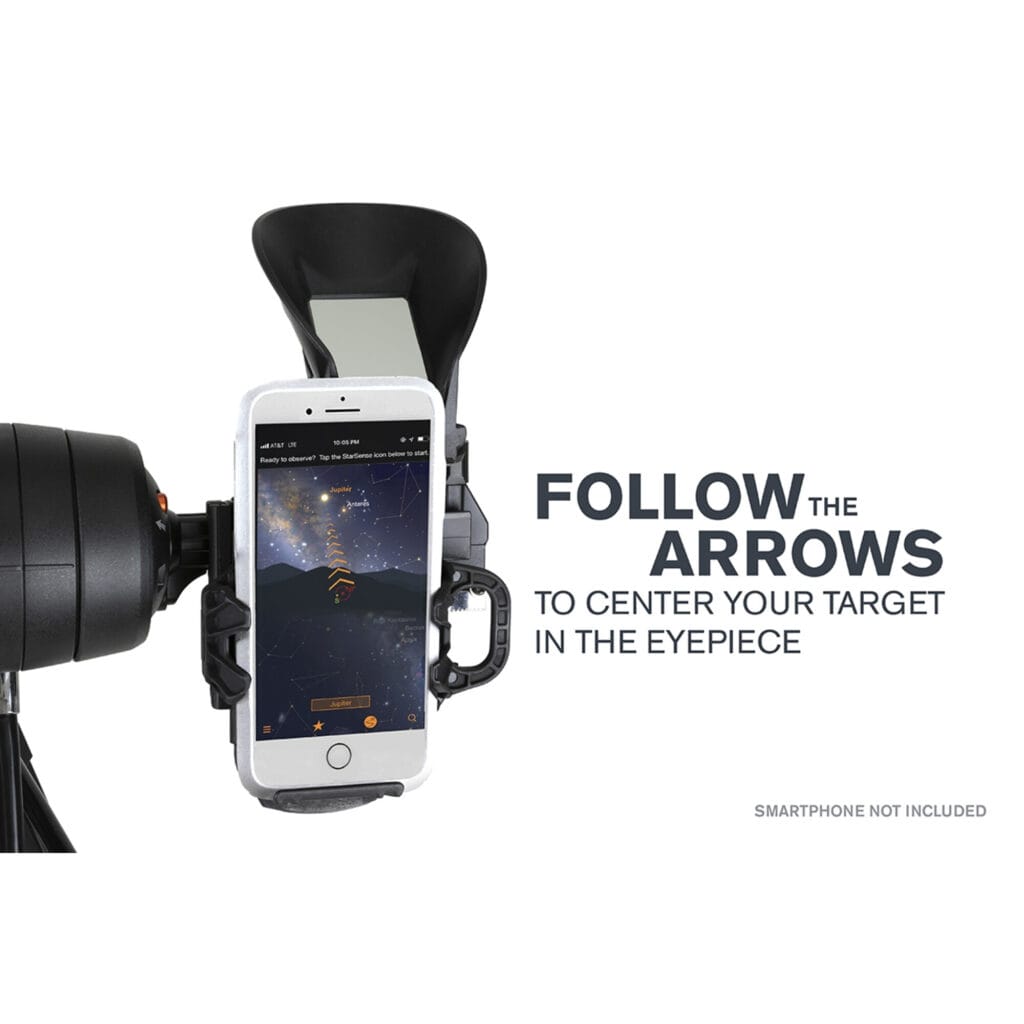
The StarSense Explorer models, such as the DX 130AZ, usually use a Newton reflector or refractor with an aperture between the 70 and 130 mm. The optics are solid, but the real difference is in the user experience. Thanks to the app, you no longer have to “guess” where something is. Especially in urban areas with light pollution, where few stars are visible, this is a gamechanger.
In practice, it means seeing more faster. Users report effortlessly finding multiple objects in one evening that are otherwise difficult to locate. The moon, Jupiter and Saturn remain classics, but with some patience and dark skies, you can also find deep-sky objects such as M13 (the Hercules cluster).
There are limitations, of course. The tripods are lightweight, which can cause some vibration at higher magnifications, and the app works best with recent smartphones with good cameras. But if you want to keep the barrier to stargazing low, this is one of the most user-friendly systems on the market.

The StarSense Explorer is especially ideal for families, youngsters and beginners who don't have the time or inclination to learn how to align mounts. You put it down, pair your phone, and within a few minutes you are on your way through the universe. So instant results, perfect for beginners or people who have little time/no desire to discover everything on their own without help.
Celestron telescopes: the PowerSeeker - competitive prices
The PowerSeeker-series is the most inexpensive line within Celestron and is designed to enable a first introduction to the night sky. The idea is nice: anyone should be able to get started. In practice, however, it is a category of mixed reputation.
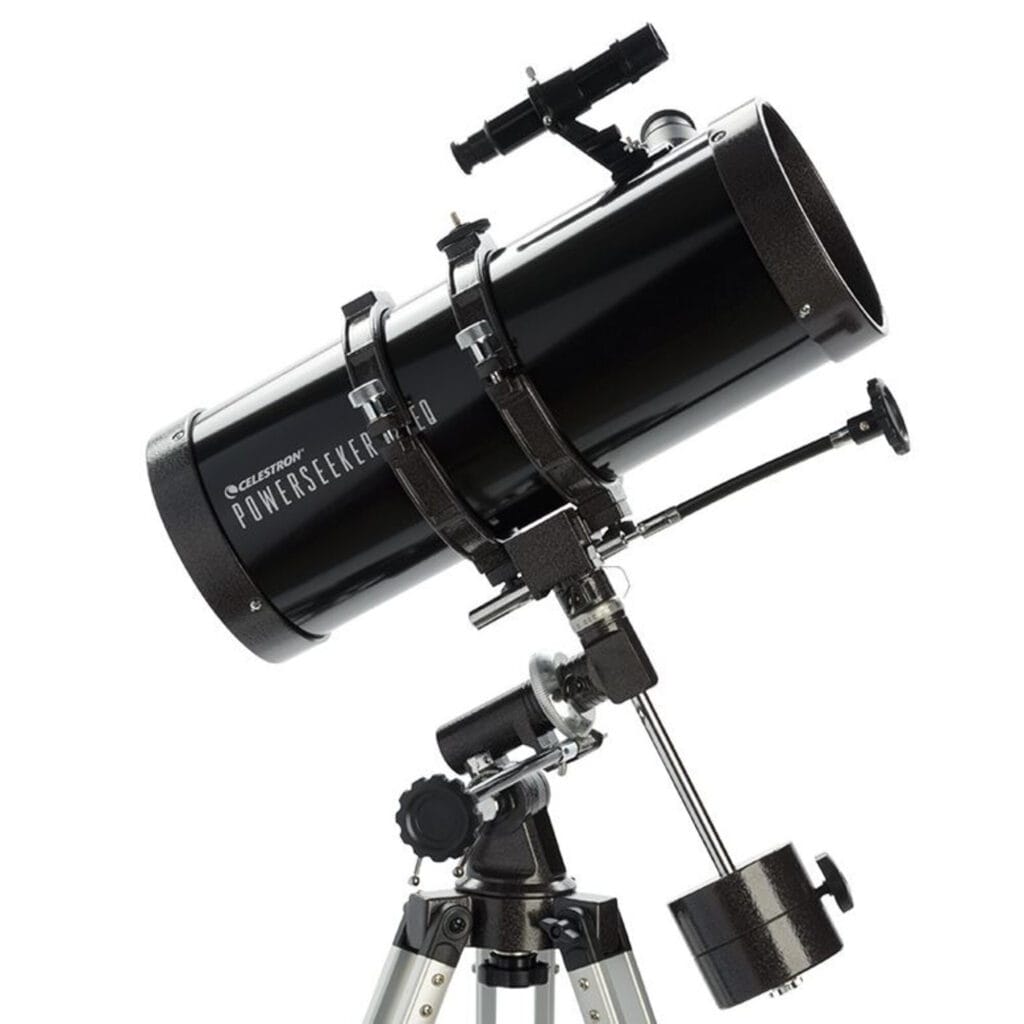
The PowerSeeker 127EQ is the best-known model, a 127 mm Newton reflector with equatorial mount. On paper it sounds impressive: lots of aperture, solid construction and low price. But many users find that the weak mount and standard eyepieces limit performance. The optics are reasonable, but stability is often the problem, especially at magnifications above 100×.
Still, it is important to remain honest: within its price range, the PowerSeeker does what it promises. The moon is beautifully visible, Jupiter shows its moons, and with a little practice you can distinguish Saturn's rings. It is a viewer that inspires wonder in those who have never looked through a telescope before.
However, those hoping for deep nebulae or detailed planetary images will find that this system quickly reaches its limits. Many reviewers therefore recommend investing a little more in an AstroMaster or StarSense Explorer.
The PowerSeeker is especially suitable for children or families who want to explore stargazing without a large investment. Think of it as a stepping stone: a way to discover if the hobby suits you. With better eyepieces and a solid tripod, you can extend the fun, but for serious observing or photography, this is not the end station.
Celestron NexStar - automatic, precise and future-proof
Once you get the hang of it, you often long for convenience and precision. For that, there is the NexStar series, a line of telescopes with built-in motors, automatic tracking and a database of tens of thousands of celestial objects.
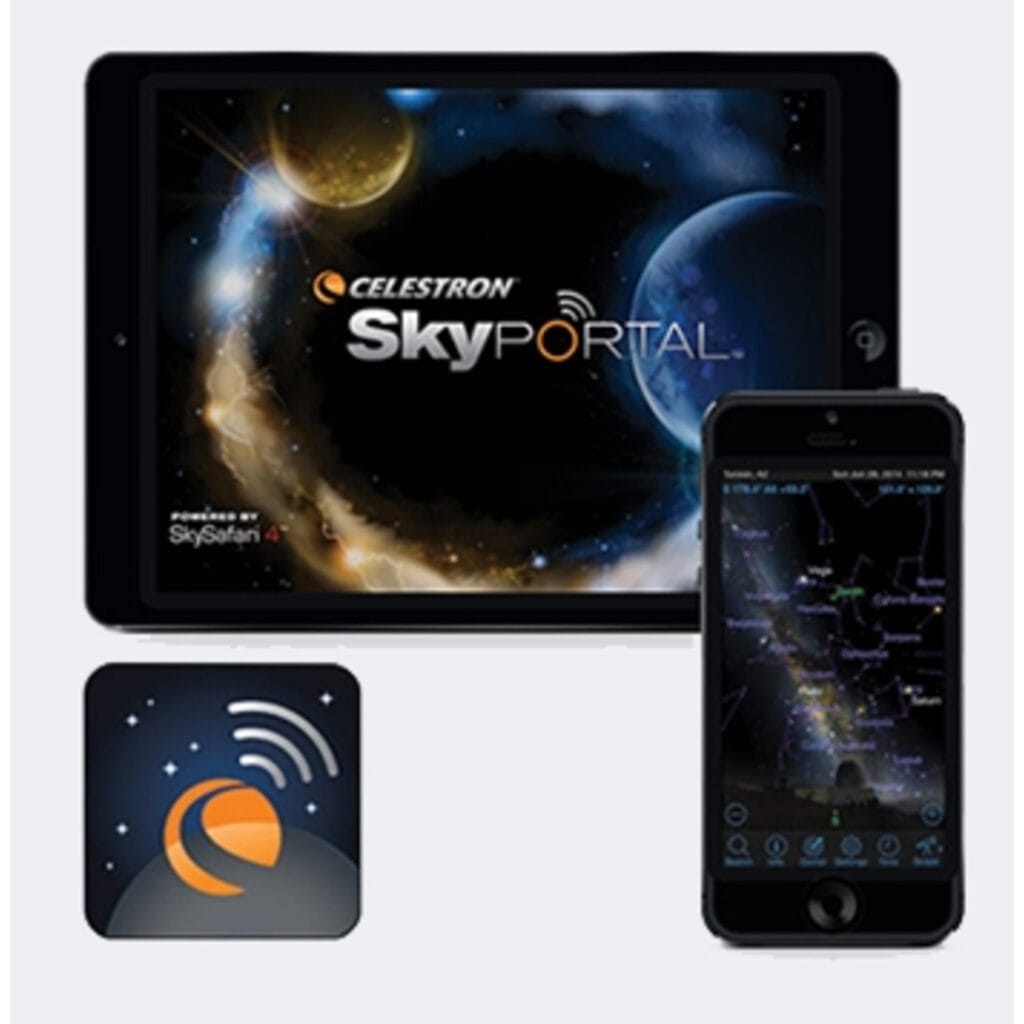
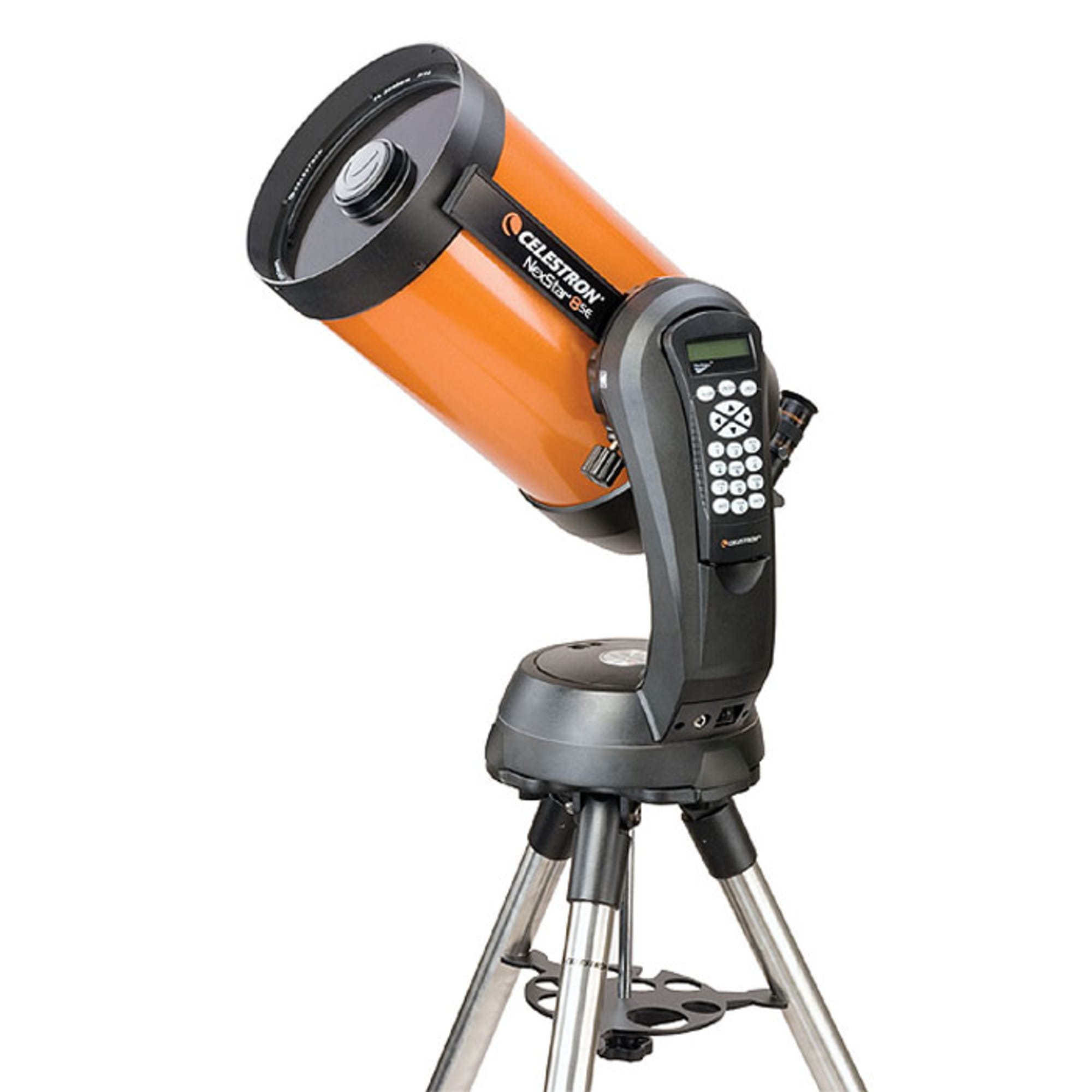
The best-known model, the NexStar 8SE, is a modern classic. The recognizable orange tube houses a 203 mm Schmidt-Cassegrain optic with a focal length of 2,032 mm. That produces sharp, high-contrast images of both planets and deep-sky objects. Thanks to the GoTo system, you no longer have to search by yourself: you enter the desired object on the hand controller, and the telescope automatically aims.
This is a huge step up from manual models. For those observing from the garden, it means seeing much more in a shorter time. Planets stay neatly in focus, star clusters float slowly by, and even small nebulae become visible with surprising detail.
The NexStar Series is also modular. You can upgrade later with Wi-Fi modules, camera connections or even autoguiding for astrophotography. The more expensive models, such as the NexStar Evolution, have a built-in battery and Wi-Fi control via smartphone or tablet.
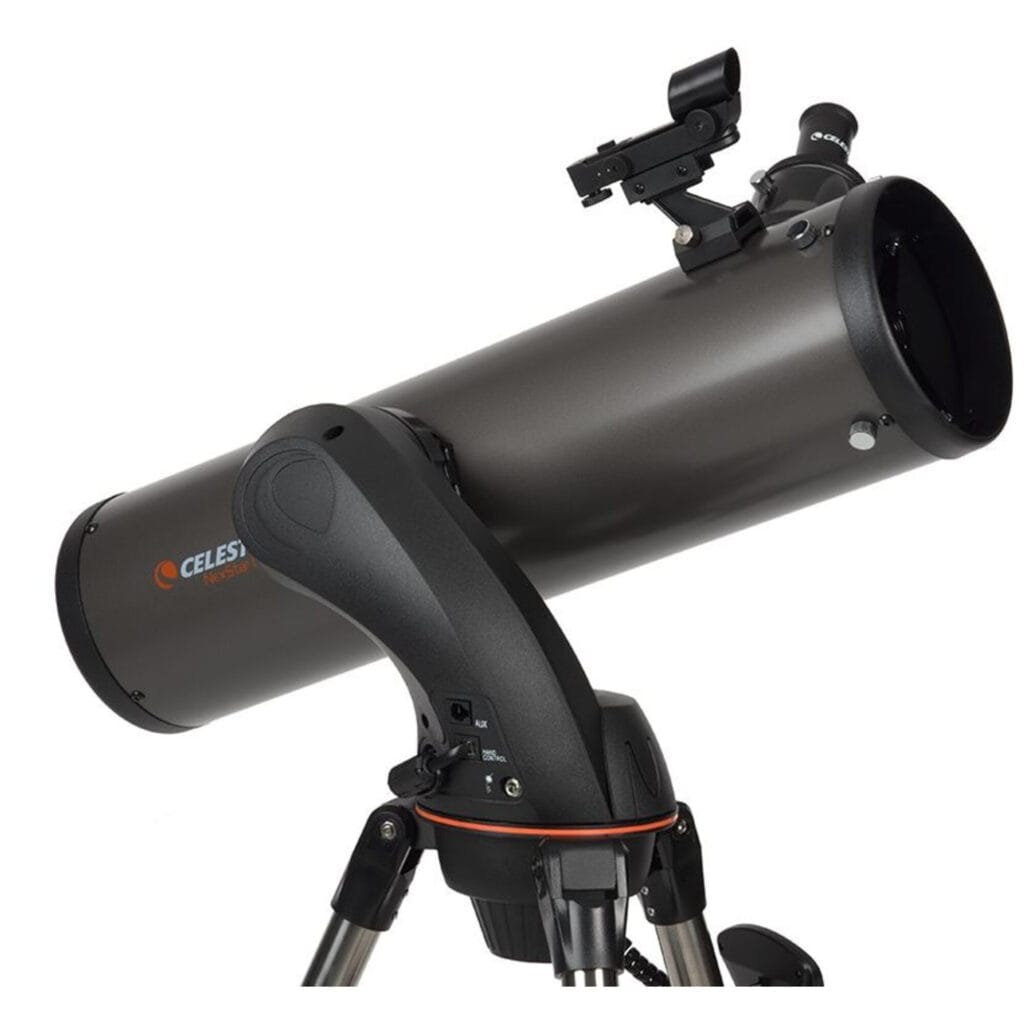
Of course, all this brings complexity. GoTo systems must be aligned, require power, and are more prone to balance problems. But the rewards are great: once set up, the telescope automatically tracks any object you want to view or photograph.
For serious hobbyists, this is often the logical next step. You get professional precision without the need for a fixed setup. And with 8 inches (203 mm) of aperture, you capture enough light for truly impressive observations.
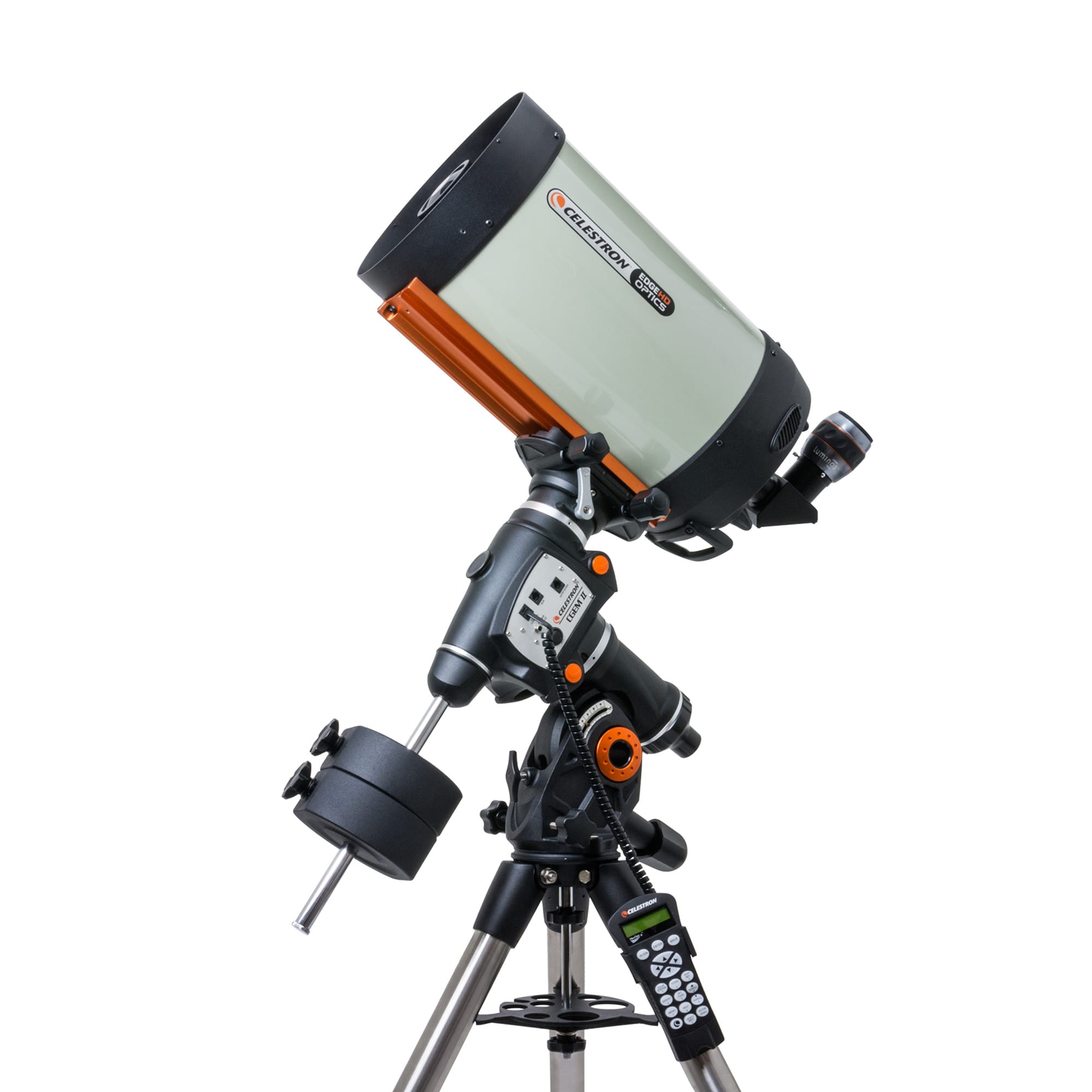
Celestron EdgeHD - the top class of precision and flat image
At the top of the range we find the EdgeHD line, Celestron's crowning achievement of decades of optical craftsmanship. These are Schmidt-Cassegrain telescopes with a unique optical corrector system that provides a completely flat field of view, perfect for astrophotography.
The EdgeHD 8, 9.25, 11 and 14 are famous among advanced observers and photographers. The difference with standard SCTs is that the EdgeHD delivers sharp images not only in the center, but all the way to the edge of the field of view. This means that stars do not distort, even with large sensors or long exposure times.
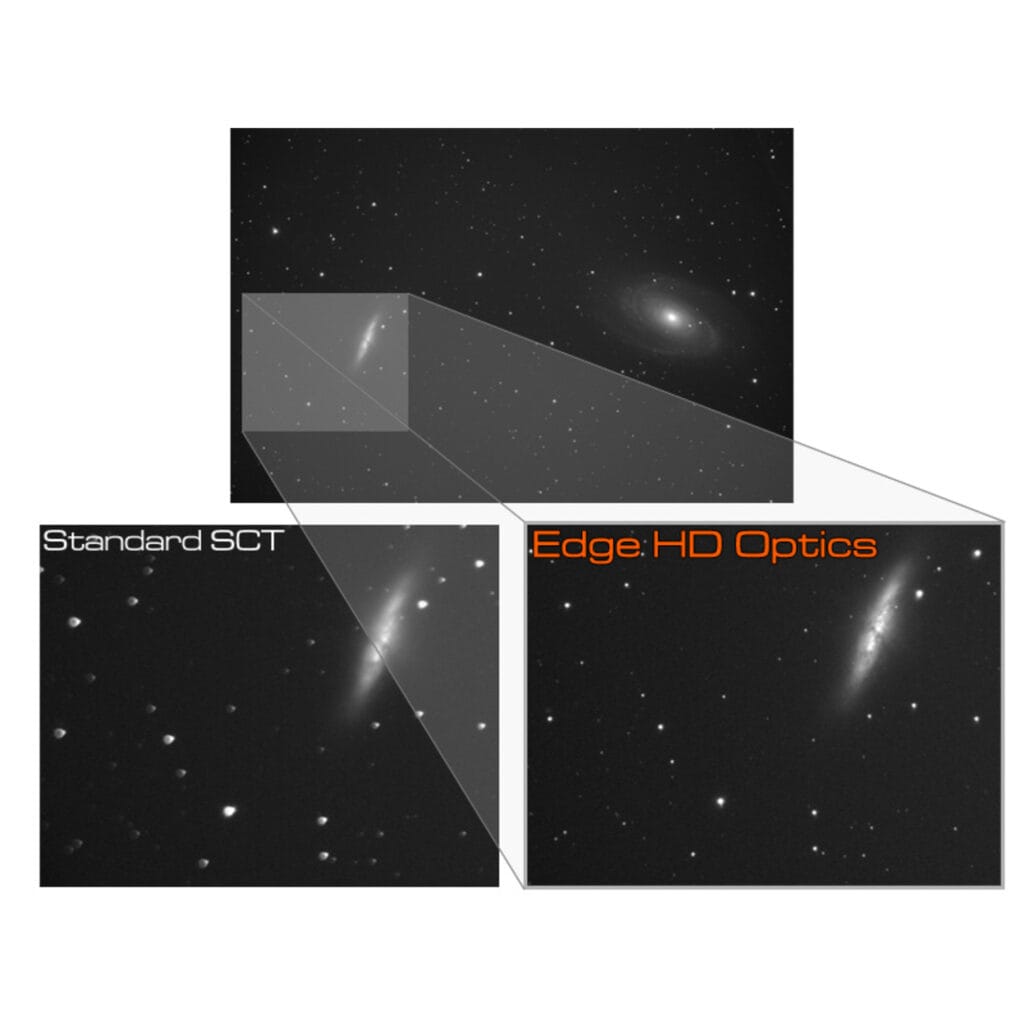
With an aperture of 9.25 inches or more, this telescope collects an enormous amount of light. With it, not only the planets become visible in detail, but also distant galaxies such as M81, M82 or the Whirlpool Nebula. Users on CloudyNights prices the contrast effect: “The image quality of the EdgeHD is first-rate. Your challenge is tracking and guiding at a 1400-mm focal length.” We can confirm this!
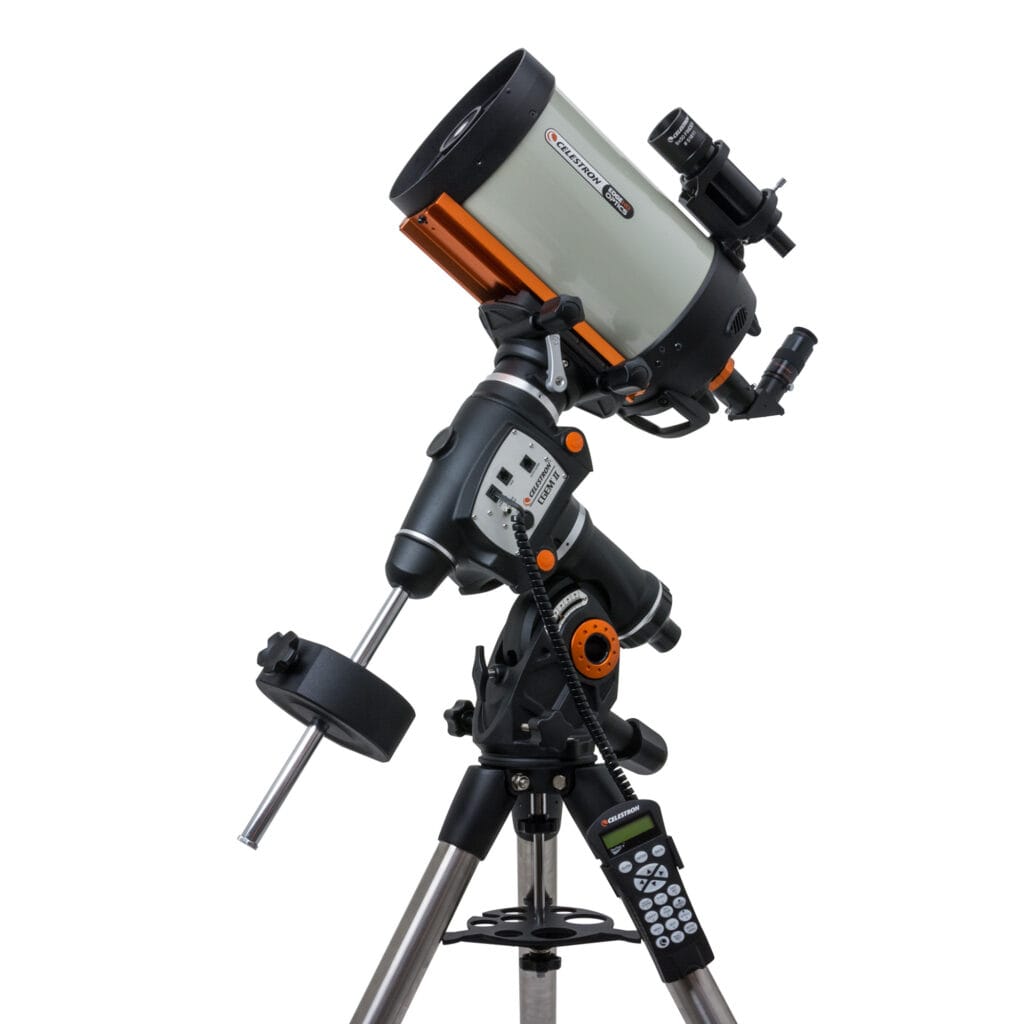
But this class requires preparation. The tube is heavy, the mount must be sturdy, collimation must be accurate, and cooling plays a big role. An EdgeHD belongs on a decent equatorial mount, preferably in a fixed mount or in a place where you can build up quietly.
The results justify the effort. With a good camera, you produce images of planetary nebulae and galaxies that are close to what you see in magazines. Visually, the image is incredibly contrasty, as if space becomes tangible.
For the average beginner this is overkill, but for the advanced amateur astrophotographer it is a dream instrument.
One brand, five worlds
What connects these series is not price or technology, but philosophy. Celestron builds telescopes that grow with their user.
- The Celestron PowerSeeker Lets you taste the cosmos.
- The Celestron AstroMaster teaches you to really observe.
- The Celestron StarSense Explorer takes you without a threshold.
- The Celestron NexStar automates the process so you have more time to watch.
- And the Celestron EdgeHD opens the door to professional photography.
Each step in that line represents a different stage in a stargazer's journey. And what makes this approach special: you can get in at any level, depending on your ambition and budget.
Celestron telescopes are also compatible with a wide range of accessories, from filters and eyepieces to adapters, cameras and motor focusers. This allows you to slowly build out your system without having to start from scratch.
Making the right choice between Celestron telescopes
When choosing a telescope, it is tempting to think in terms of magnification. But the real measure is light output and stability. A larger aperture means more light, thus more detail. And a solid mount means more peace of mind in the image, thus more fun.
Anyone starting out would do well to first gain experience with a simple scope. The StarSense Explorer is ideal for this purpose: little frustration, much satisfaction.
Those who want to grow after that will find a logical next step in the AstroMaster or NexStar SLT.
And those looking to make the leap to photography will eventually arrive at the EdgeHD, where technology and imagination come together.
Also important is your location. Under urban skies, a large telescope is not necessarily better: light pollution limits what you can see. Then a portable, quick to set up scope is often more valuable than a heavy tube that you rarely use.
Celestron telescopes: our conclusion
Stargazing is one of the few hobbies in which you can literally grow infinitely.
The first time you see the craters on the moon, the shadow of Io over Jupiter, or the faint glow of the Orion Nebula remains a moment you don't forget.
Celestron has made it its mission to make that experience accessible to everyone, from curious beginner to dedicated astrophotographer.
Whichever telescope you choose, the goal remains the same: wonder.
And that is exactly what Celestron, series after series, consistently delivers.
View the current offerings from Celestron telescopes on Telescope.co.uk and find the viewer that suits your way of looking at the universe.






 Dutch
Dutch English