
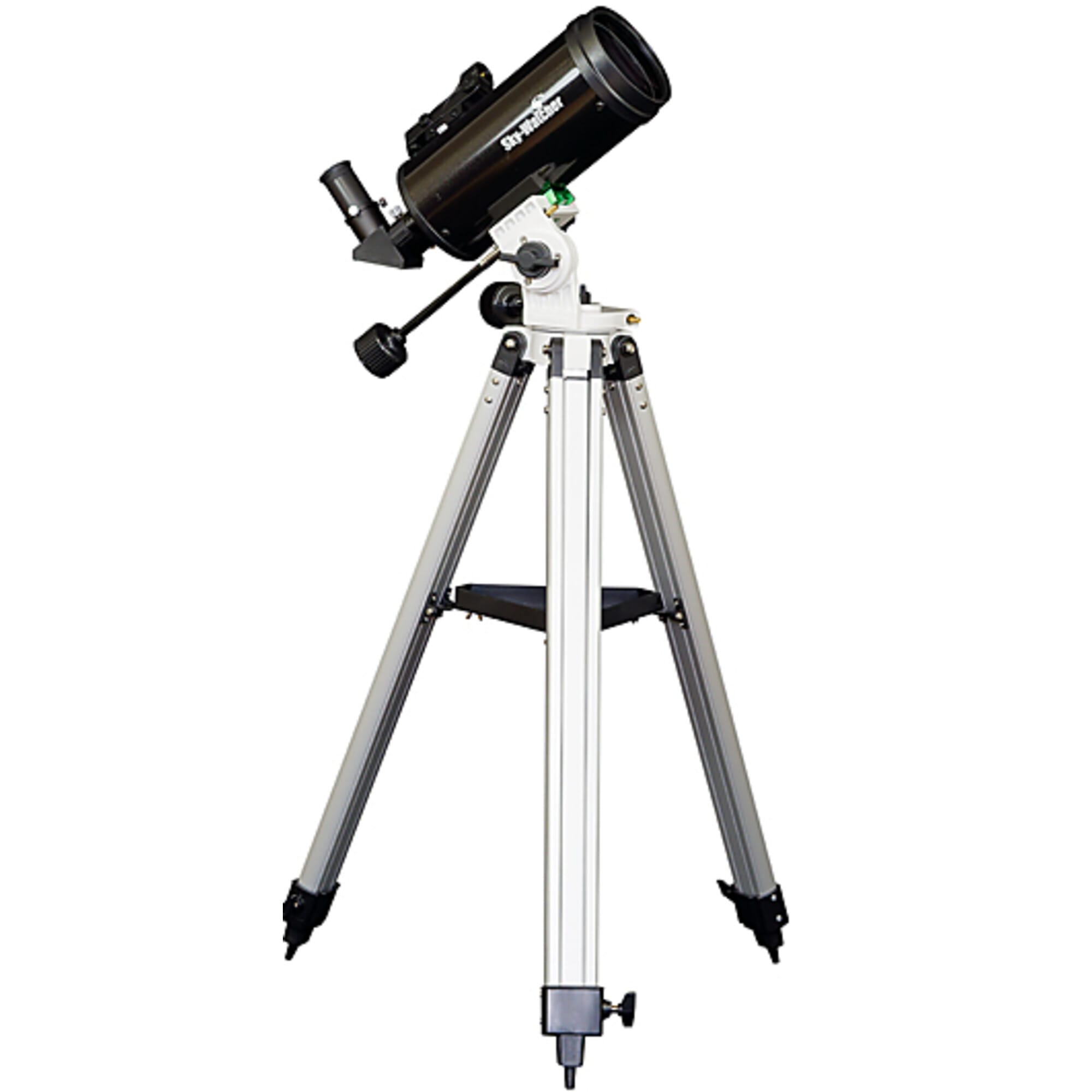
Often customers call us asking ‘why can't I see anything through my telescope? Every beginner knows the moment: you set everything up, aim expectantly at the moon or Jupiter, look through the eyepiece ... and see nothing. No star, no light, just black or fog. It's frustrating, but perfectly normal. Even experienced observers have experienced this. In this guide, you'll read exactly Why you don't see anything through your telescope AND what you can do about it right away.
The simple causes that everyone forgets
The most obvious reason is that the dust cap is still on the tube. In fact, many telescopes have two caps: a large one and a small one in the middle (for solar filters). Make sure both are removed before you start. Also check the eyepiece itself; some have a transparent lens cap that is almost unnoticeable but completely blocks the image.
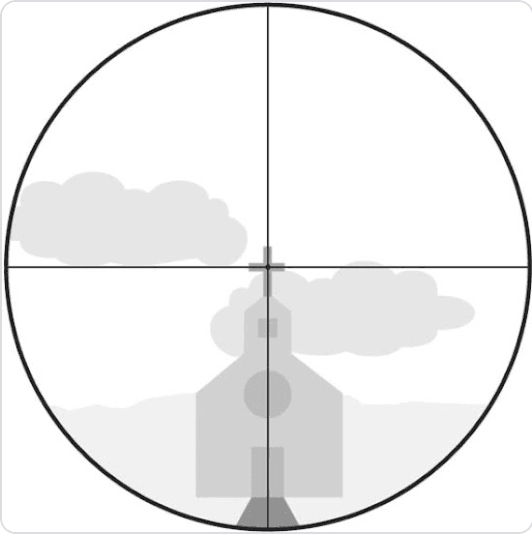
Are you still not seeing anything? Then it could be because of your finder. The finder scope helps you locate objects, but if it is not aligned with the main optic, you are literally looking past your target. Solve that during the day: point your telescope at something far away, such as a lamppost or chimney, and center that same point in both the finder scope and eyepiece.
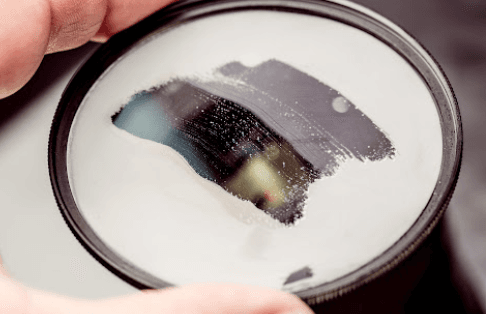
Sometimes the picture is not black but milky or foggy. That means there is condensation on the lens. The lens or mirror cools down outside faster than the air, causing moisture to precipitate. You solve that by letting the telescope acclimate outside for at least half an hour. Use a dew cap or, even better, a heating ribbon. Neither in the house? A simple hand warmer with a rubber band around the tube works surprisingly well.
When focusing fails
You turn the focuser, but everything remains blurry. In that case, you are probably using too much magnification. Unfortunately, many telescope sellers advertise through Bol.com or Amazon telescopes with huge magnifications. The harsh reality is, the higher the magnification, the smaller the field of view and the darker the image. High magnifications are fine, but then you have to sell the right equipment with them. This is not done (but in our case, fortunately, it is :-)).
The atmosphere itself begins to vibrate with it at high magnifications, causing details to disappear. So the ‘atmospheric conditions’ must be favorable enough to handle high magnifications. Always start with a eyepiece of 20-25 mm. Once the object is visible and in focus, you can switch to a shorter eyepiece. A simple rule of thumb: the maximum useful magnification is about twice the aperture of your telescope in millimeters.
Still no sharp image? Then check whether your focuser is turning in the right direction. On some telescopes, the direction is reversed: turn both ways in small steps while looking at a bright star, often the focus point turns out to be closer than you think.
If it's not because of the telescope
Sometimes the cause is simply the air itself. On nights with strong turbulence, the image shakes constantly, no matter how good your telescope is. You can easily judge the seeing: do the stars twinkle violently, then the sky is turbulent. If they are stable and bright, then conditions are good.
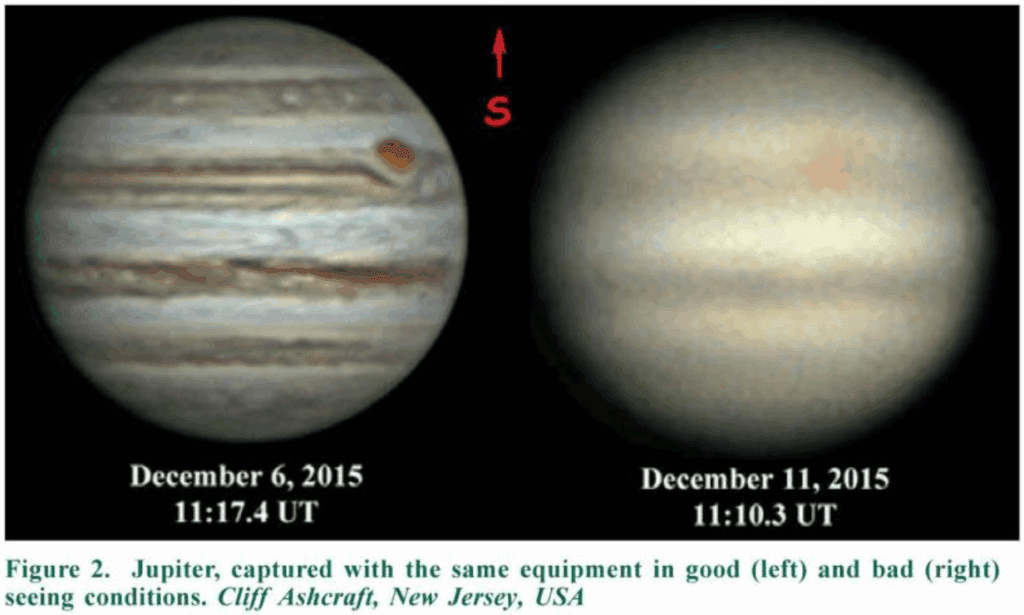
There is little you can do about it except wait or move higher. An embankment, hill or balcony already gives better results than a garden surrounded by hot roofs. The less air between you and the stars, the quieter the image.
Helpful tricks you rarely read in manuals
- A simple fan on low setting, a few feet behind the telescope, helps against condensation and warm air currents around the tube.
- If necessary, stick a thin layer of reflective radiator film on the outside of the telescope to dampen temperature differences.
- Keep eyepieces warm in your jacket pocket, cold lenses fog up as soon as they hit the air.
- While observing, point occasionally to the ground or a dark patch of grass; this reduces cooling of the lens by the cold sky.
- And afterwards, don't store your telescope immediately inside in a warm living room, but first in a cool, dry room for an hour. This will prevent moisture from settling on the inside.
In brief
The question “why can't I see anything through my telescope” almost never has to do with a defect. In the vast majority of cases, it is one of these things:
- A cap or lens hood that is still in place.
- A viewfinder that is not properly aligned.
- Condensation on the lens or mirror.
- Too high magnification or wrong direction of focus.
- Poor seeing due to troubled sky.
By checking these steps one at a time, you will have a picture again within minutes. A telescope is not a frustrating puzzle, but a precise instrument that requires patience, preparation and a little experience.
Those who follow this routine will not only have better vision but also more confidence after a few evenings.
And if you want to make sure your equipment is performing optimally, check out our page telescope accessories - From dew heating to quality eyepieces that make focusing easier.


 Dutch
Dutch English