
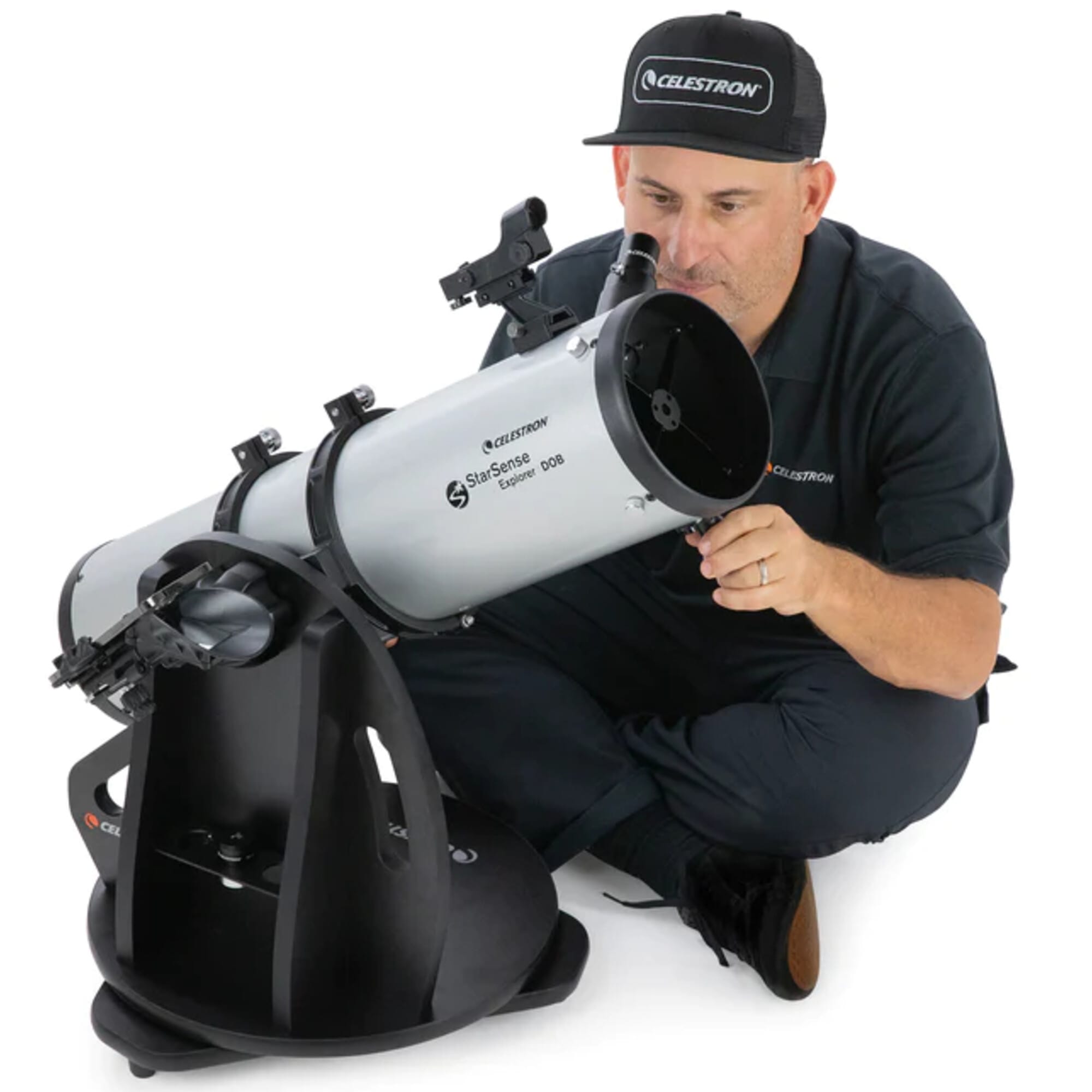
A beginner's telescope choosing seems easy, but many people actually get lost in the range. What makes a telescope suitable for beginners? In this article, we explain why a Dobson telescope is often the best choice for beginners and what to look out for when making your first purchase.
What is a good beginner's telescope?
A good beginner's telescope should do three things:
- Giving you quick success experiences (such as seeing the craters on the moon or the rings of Saturn)
- Being user-friendly without technical frustrations
- Fit within your budget without compromising on optical quality
Most experts on forums such as Reddit, Cloudy Nights, Telescoop.com and Astroforum mention one type over and over again as the best starter model: the Dobson telescope. But why?
Why a Dobson is the ideal beginner telescope
The Dobson is known as the “best value for money” telescope. The design is simple: a Newton mirror telescope on a stable wooden swivel base. No motors, no electronic fuss. Just point and look. That makes it perfect for beginners.
The optical performance of a Dobson is impressive, especially compared to tripod models in the same price range. You look directly at the universe with a large mirror, without lenses that cause light loss. Operation is intuitive: up, down, left, right, as if you were moving binoculars, but more powerful.
Most models have an aperture of 130 to 200 mm. With these, you can see more than just the moon. Think of Jupiter with its moons, Saturn with its rings, and under dark skies even nebulae like Orion or galaxies like Andromeda. With a little practice, the night sky becomes recognizable - and that's where the magic begins.
Want to know what you can see with it? Check out our blog page here and find out what Jupiter looks like through a telescope!
Self-seeking or help via your phone?
Not everyone feels like going out with a star chart. Fortunately, there are two clear directions you can take as a beginner:
1. Prefer help via an app?
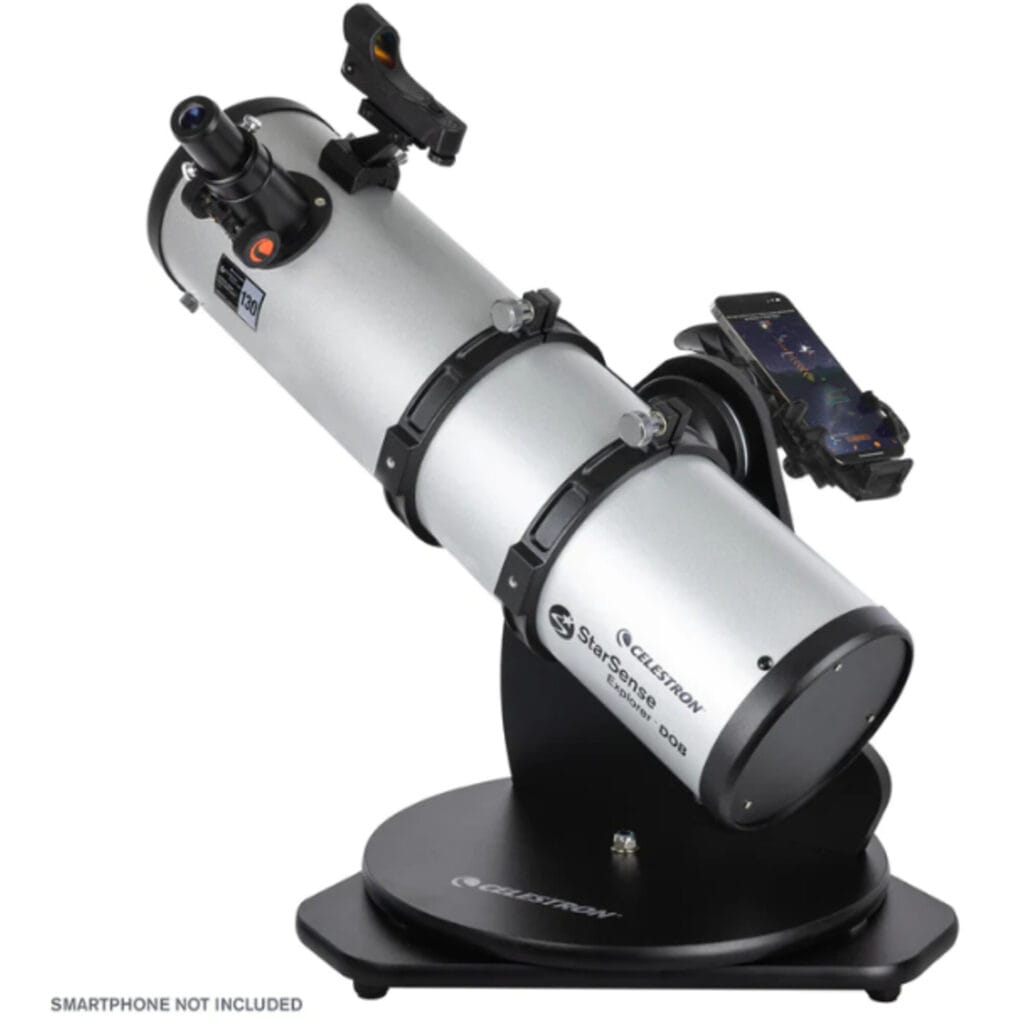
Then the Celestron StarSense Explorer Dobson 130/650 a smart choice. This telescope combines the classic Dobson setup with an app that guides you to celestial objects via your phone. No motors, but digital help with aiming. It's an ideal mix of analog viewing and digital convenience.
2. Rather discover for yourself?
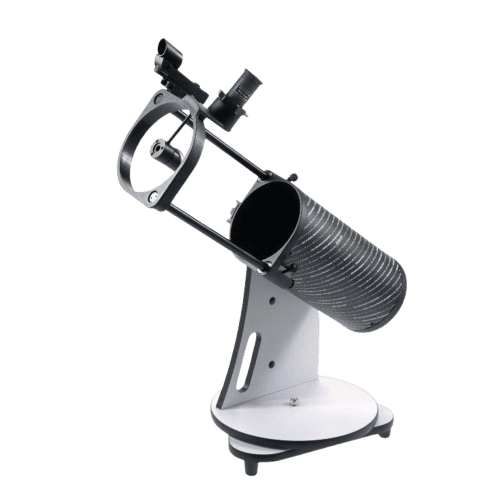
Those who prefer to learn to find stars the traditional way are better off choosing a Sky-Watcher Heritage 130/650 or 150/750. These compact tabletop models are light, powerful and perfect for beginners who really want to learn the craft of ‘star-hopping. Combine it with a reflex finder such as the Telrad finder that we offer, and you'll find objects surprisingly quickly even without experience.
Both choices are good. It depends mostly on how you want to start: guided or exploratory.
What you see with a beginner's telescope
A 130 to 200 mm telescope will let you see a surprising amount. The moon shows shadowy craters and mountain ranges. Jupiter shows its cloud bands and four largest moons. Saturn surprises almost everyone at first sight with its rings. Even the brightest nebulae and galaxies are visible, as subtle, gray-blue spots. No colorful photos like NASA images, but yes, with your own eyes.
Note that light pollution plays a big role. From a city you see less than in a dark place, but even on your balcony the moon or Jupiter is impressively bright. This does not apply to planets, by the way; light pollution has virtually no influence on those.
What to avoid as a beginner
Many beginners make the same mistake: they buy a telescope based on marketing. Words like “500x magnification!” or “includes 5 eyepieces!” sound attractive, but often produce frustration. A wobbly tripod, unusable lenses and blurred images make such a telescope disappear into the closet after one viewing. Rather choose a decent entry-level model, with or without digital assistance, and a limited number of good accessories that really add something.
Dobson or smart telescope?
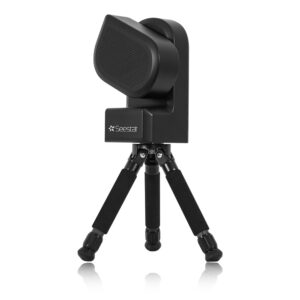
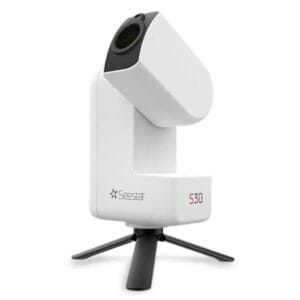
More and more beginners are choosing a smart telescope such as the Seestar S50. These models automatically find objects and take pictures directly through your phone. You no longer have to do anything yourself. Ideal if you mainly want to enjoy visually and find sharing on social media important. But: you learn less about the sky itself, and you no longer have an optical eyepiece to look through. It's also a special experience, it's just what you want for yourself.
A classic beginner telescope such as a Dobson offers just that real observational feeling. You see directly with your eyes what is in the sky, learn to recognize objects, and build skills that will later come in handy with larger telescopes or astrophotography.
Which beginner telescope do we recommend?
At Telescoop.co.uk, the following models are proven favorites:
- Sky-Watcher Heritage 130/650 - lightweight, powerful and competitively priced
- Celestron StarSense Explorer Dobson 130/650 - Manual aiming with digital help
- GSO Dobson 200/1200 Deluxe - maximum performance for those who really want to invest
- Seestar S50 - fully automated and app-driven for those who prefer to take pictures
These telescopes have been carefully selected based on advice from the community as well as our own experience with customers.
Conclusion: a beginner's telescope should inspire, not frustrate
The right beginner's telescope will have you admiring the moon in the first five minutes. And after just a few evenings of star-hopping, you'll feel right at home under the sky. Whether you choose traditional searching or clever app help: if the image is stable and the optics clear, you'll want to go out again and again. That's where the hobby really begins.


 Dutch
Dutch English