

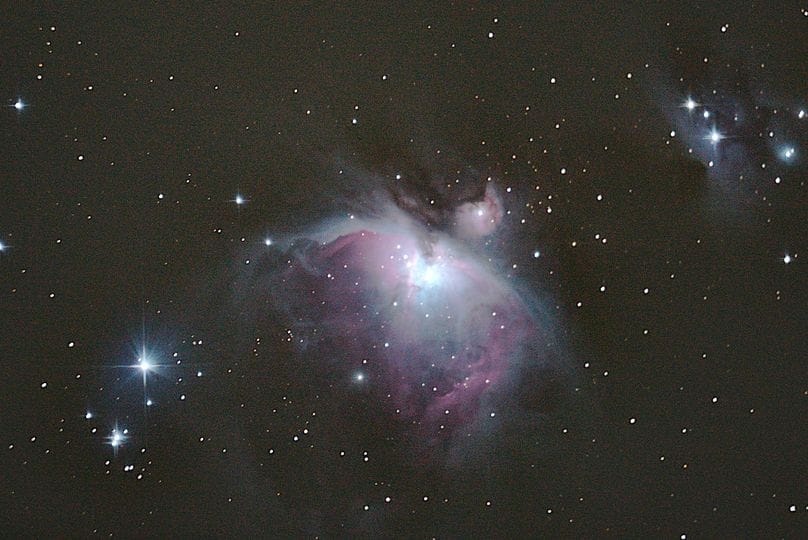
Viewing the Orion Nebula through a telescope is one of the most impressive experiences you can have as a stargazer. The Orion Nebula, also known as Messier 42 or M42, is a huge cloud of gas and dust where new stars are born. Even with a simple telescope you can see its characteristic foggy glow, while larger telescopes reveal complex structures and groups of stars.
When do you see the Orion Nebula best?
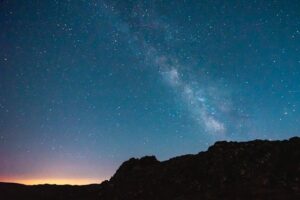
The Orion Nebula is located in the constellation Orion, which stands high in the sky especially during the winter months. Between November and February M42 is easiest to observe around 9:00-23:00 pm. The darker the surroundings, the better. In urban areas with a lot of light pollution, you usually only see a faint spot, but under dark skies the nebula really comes alive.
What do you see of the Orion Nebula through a telescope?
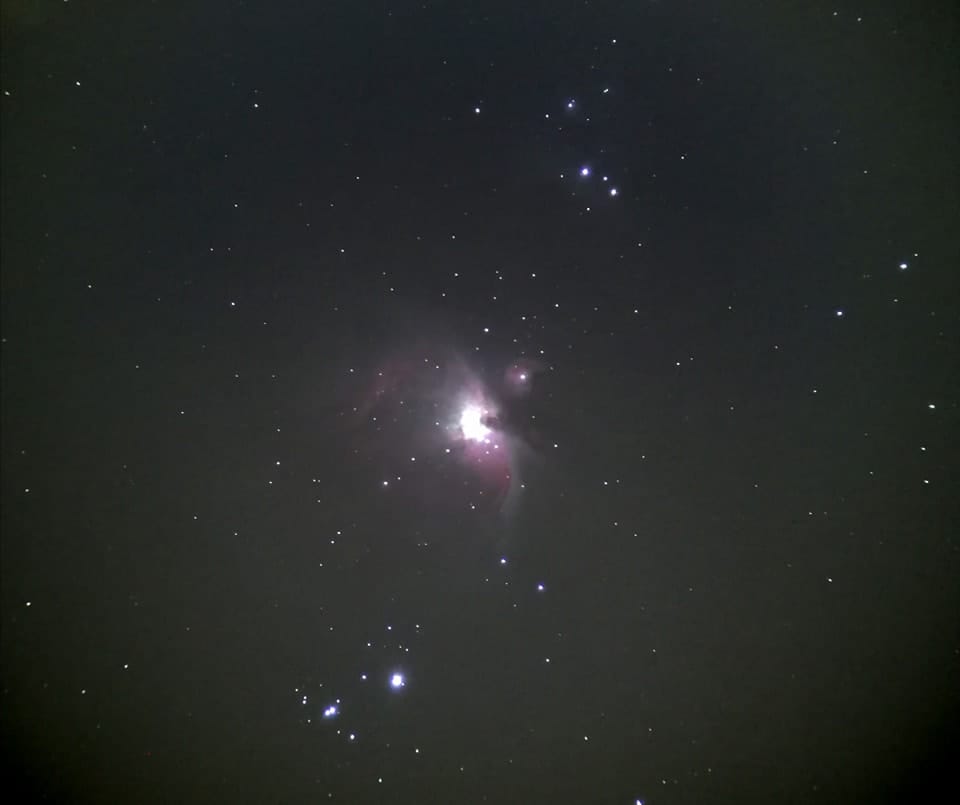
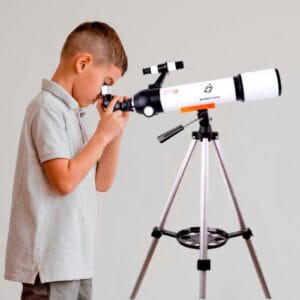
Even a small 60-70 mm telescope shows the Orion Nebula as a foggy, luminous cloud in the sword of Orion.
- With a medium-sized telescope (130-150 mm) you can already see many more details: dark bands of gas, the wing-like structure and the famous Trapezium Cluster, a group of young stars illuminating the center of the nebula.
- With a large telescope (200 mm or more) the Orion Nebula really comes into its own. You can see depth, contrast and jagged structures of gas and dust stretching for miles.
Important to know: your eyes see colors much more subtly than a camera. Where photos from the Hubble or James Webb telescope show bright shades of red, green and blue, you usually see a greenish or bluish glow with hints of red.
How do you find the Orion Nebula (M42) in the sky?
The Orion Nebula is easy to find once you know where to look:
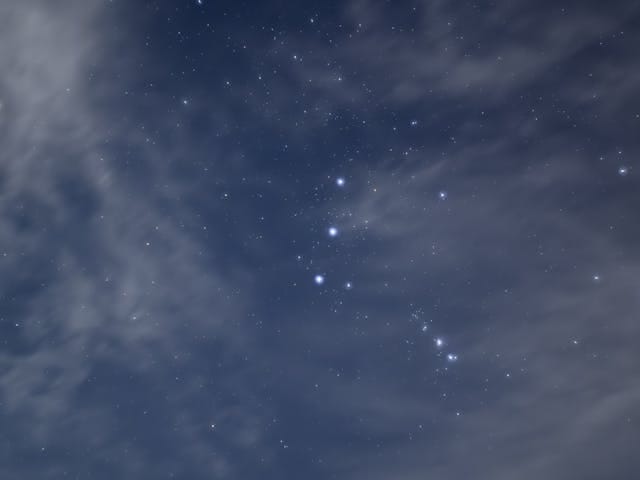
- Find it constellation Orion: three bright stars in a row form the Belt of Orion.
- Look below the belt: there hangs the so-called Sword of Orion.
- In the middle of that sword you don't see a star, but a hazy spot: that's the Orion Nebula.
With a star chart or an app such as Stellarium or SkySafari, you can easily locate it.
Do you see colors in the Orion Nebula?
Yes, but subtle. The human eye is not very sensitive to color in the dark. Still, you often see a greenish tint due to ionized oxygen (O III). Sometimes, under perfect conditions, a reddish glow due to hydrogen gas (Hα) also appears.
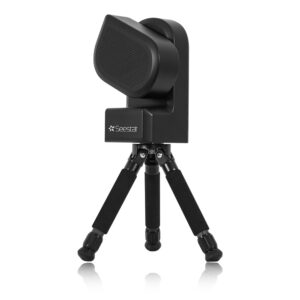
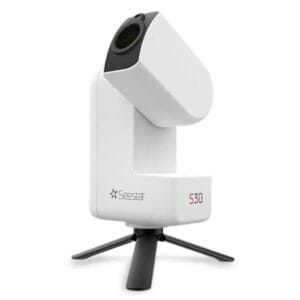
Astrophotography reveals much more. A simple smartphone mount on your telescope can already produce surprising results when using longer exposure times. With a smart telescope such as the Seestar S50 colors are automatically stacked and processed, making M42 look almost like pictures from star atlases.
Can you see the Orion Nebula without a telescope?
Yes, you can. Under dark skies, the Orion Nebula is even visible to the naked eye as a hazy spot in the sword of Orion. With binoculars you can already see it much more clearly, especially the wing-like shape. Still, the real magic only appears once you use a telescope.
Which telescope is suitable for the Orion Nebula?
Because the Orion Nebula is a bright deep-sky object, you don't need an extremely expensive telescope to admire it. Some good choices:
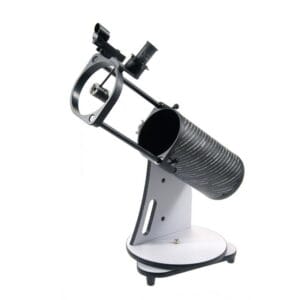
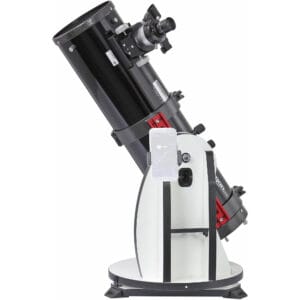
- Sky-Watcher Heritage 130/650: compact Dobson, ideal for beginners who want to catch a lot of light right away.
- Seestar S50: smart telescope that automatically finds and photographs M42. Perfect if you also want to share images.
- Dobson 200 mm (8 inch): serious deep-sky telescope that shows the nebula with unprecedented detail and contrast.
Unsure which viewer is right for you? Check out our telescope decision tree and see at a glance which one to choose!
Scientific research on M42
The Orion Nebula lies at about 1,350 light years distance, making it the closest large star-forming region. Astronomers study M42 intensively to understand how stars and planetary systems form. Recent images of the James Webb Space Telescope have revealed structures never before seen, including protostars and complex gas streams (source: NASA).
Conclusion
Seeing the Orion Nebula through a telescope is an experience you won't soon forget. Whether you look with a simple beginner's scope or a large Dobson, M42 always reveals something special: a vibrant nursery of stars just a fraction of the cosmic distance away.
Want to discover the Orion Nebula for yourself? Check out the recommended telescopes and accessories below and experience M42 from the comfort of your own garden or balcony.

 Dutch
Dutch English