
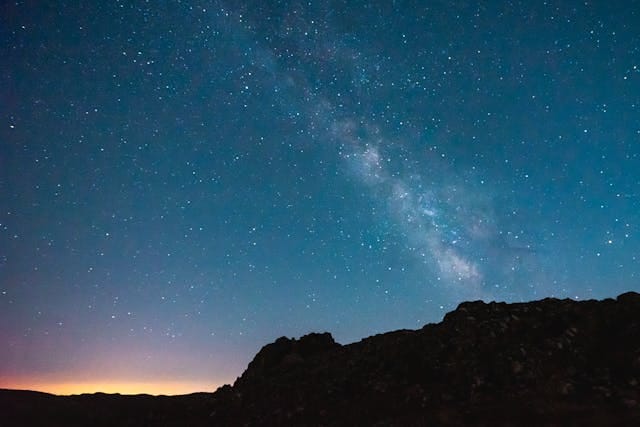
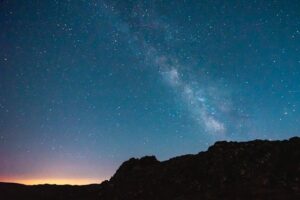
The starry sky october 2025 promises to be one of the most beautiful of the year. The nights are getting longer and darker, and the autumn sky is known for its rich mix of meteor showers, planets and bright galaxies. In this month, you can enjoy the Orionids, possibly two comets, brilliant planets like Jupiter and Saturn, and iconic deep-sky objects like the Andromeda Nebula and the Orion Nebula. In this overview, find out what's happening in the sky and how to get the most out of your observing evenings.
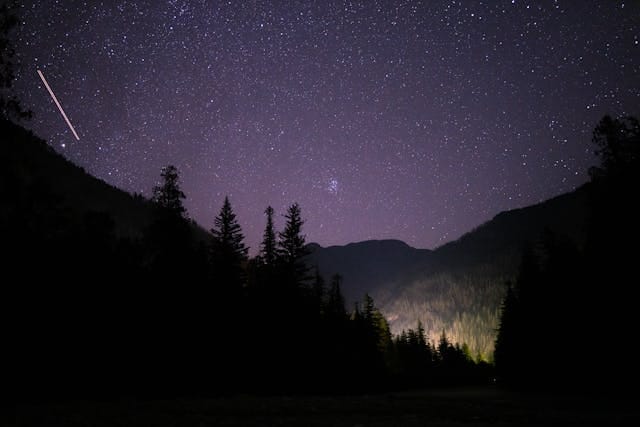
Starry sky October 2025 at a glance
–October 6 is the Full Moon: bright and imposing, but less suitable for deep-sky objects
–Oct. 8: Draconids: meteors shortly after sunset, but bothered by moonlight
–Oct. 20/21: Orionids + New Moon: best nights of the month
–Mid-October: comets SWAN & Lemmon: chance of visibility with binoculars
–End of October: 3I/ATLAS: rare interstellar comet seen only with telescope
–Oct. 29: Mercury greatest elongation: low in the west, unobstructed view needed
–Jupiter & Saturn: beautifully visible throughout the month
Meteors, comets and the role of the moon
The starry sky october 2025 is all about shooting stars. At October 8 reach the Draconides their peak. This swarm is known for short but sometimes spectacular bursts right after sunset. Unfortunately, the full moon is interfering considerably this year, so you will only see the brightest ones.
Much more favorable are the Orionids, which is around Oct. 20 and 21 are visible. This meteor shower comes from the famous comet Halley and often produces dozens of shooting stars per hour. Because the moon is new that night, the sky is pitch black making it perfect for a night under the stars.
As if that were not enough, two comets may appear: C/2025 R2 (SWAN) and C/2025 A6 (Lemmon). Their brightness is uncertain, but with binoculars or a small telescope, chances are you can spot them around the dark nights after Oct. 20.
And then there's a rare guest: 3I/ATLAS, only the third interstellar object ever discovered. In late October, it will be the closest to Earth. Don't expect a spectacular appearance, at magnitude 11-13 it is too dim for the naked eye (unless it suddenly makes a turn toward Earth....) but with a telescope you can try to capture it. Scientifically, this is unique: material from outside our solar system passing through once.
The moon phases are crucial:
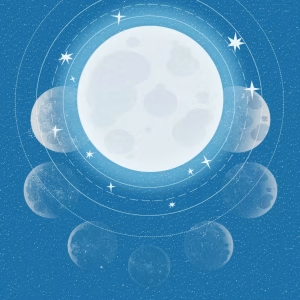
- Oct. 6: Full Moon: spectacular sight, but little chance for capturing deep-sky objects due to light pollution from the full moon, however, no impact on planets!
- Oct. 21: New Moon: darkest night of the month, ideal for Orionids, comets and galaxies.
-> Read more about the full moon here!
Planets in the starry sky October 2025
Planet lovers need not be bored this month. Jupiter stands prominently in the sky and with a telescope shows its four Galilean moons and characteristic cloud bands. In good conditions, even the Great Red Spot can be seen.
Saturn remains one of the highlights. Its rings are already visible with a telescope from 90-100 mm aperture, but with larger scopes you can also see the Cassini separation. Together with Jupiter, it forms a beautiful duo for autumn nights.
Mercury reached at Oct. 29 its greatest eastern elongation. That means it is farthest from the Sun after sunset and thus visible. Look for a spot with a clear horizon toward the west, because the planet is low and disappears quickly.
Venus and Mars play a smaller role this time, but can still be found in the evening or morning sky with the help of a star chart or app. They are less spectacular than Jupiter and Saturn, but fun to grab as a bonus.
Galaxies and deep-sky objects in the night sky October 2025
Autumn is the season for deep-sky observations. High in the sky is the Andromeda Nebula (M31), the nearest large galaxy. Under dark conditions, you can already see it with the naked eye, but with binoculars or a telescope, its structure really comes to life. With a medium-sized telescope, even the companion galaxies M32 and M110 can be distinguished.
In addition, the Pleiades (M45), an open cluster that is a magnificent sight even in simple binoculars. Further into the late evening, the Orion Nebula (M42), a nursery of new stars that shows its nebulous structure and subtle color tones in a telescope.
For those seeking more of a challenge, the Double cluster in Perseus and various NGC galaxies in Cassiopeia and surrounding areas are wonderful objects to explore. Around the new moon of Oct. 21, conditions are ideal to see these fainter objects in their full glory.
Practical tips for observing
Want to make the most of the starry sky October 2025? Then choose a dark location outside the city, away from light pollution. Bring a lawn chair or mat for meteor watching and use a red flashlight so you don't lose your night vision.
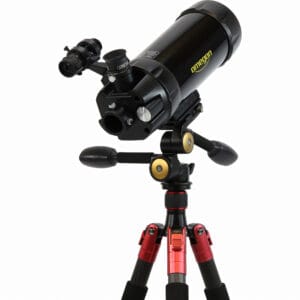
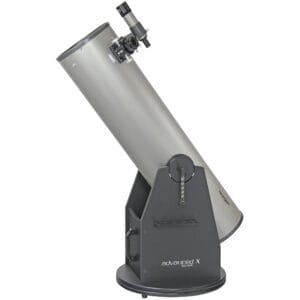
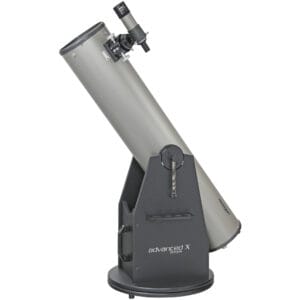
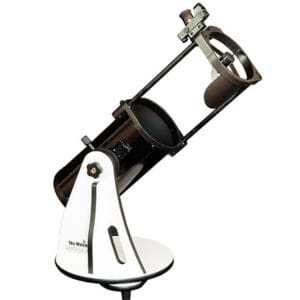
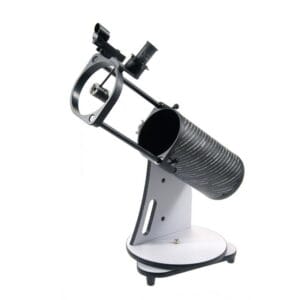
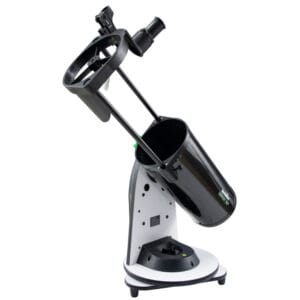
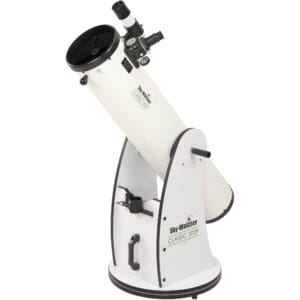
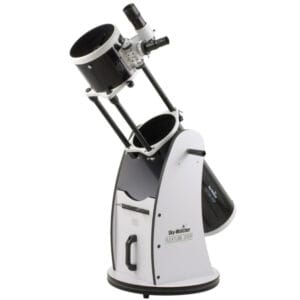
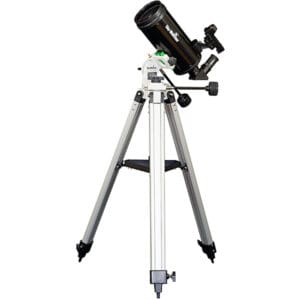
A binoculars is often enough to admire the Pleiades and Andromeda, but for planets and nebulae a telescope much more detail. Still unsure which instrument is right for you? Then check out our telescope selection guide.
For exact times and visibility, check sources such as Time and Date or NASA's monthly skywatch updates.
Look up yourself in October
The starry sky october 2025 promises to be one of the most beautiful of the year. The Orionids, Jupiter and its moons, Saturn's rings and the Andromeda Nebula make this month unique. Around the new moon of Oct. 21, the sky is at its darkest, so the perfect time to get started on your own.
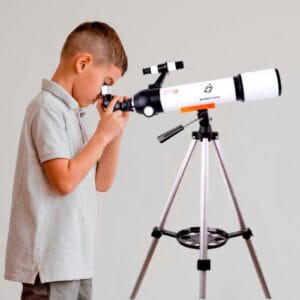
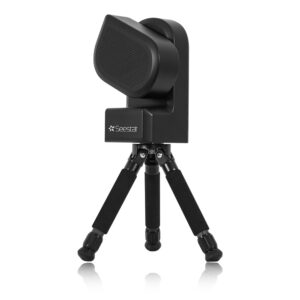
With a simple telescope view Saturn's rings, experience the Pleiades and Andromeda as if they were coming to life, and with a larger telescope get your planets and nebulae closer than ever. If you really want to take advantage of this October, now is the time to get the right scope or smart telescope and experience the sky for yourself.
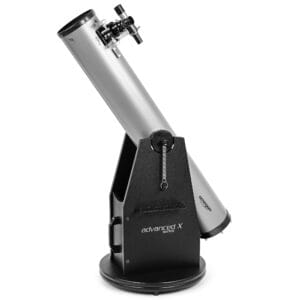
- Price range: € 589,00 through € 1.379,00 Select options This product has multiple variants. The options may be chosen on the product page



 Dutch
Dutch English