

Stargazing for children often begins with a simple question: “What are all those lights in the sky?” Parents explain that they are stars and planets, but for a child, they remain dots. The difference between holding or losing wonder is in one thing: what your child actually sees. With the naked eye, Jupiter appears as a white dot. Through a child-friendly telescope you suddenly see the moons around it. That very moment makes stargazing magical and educational for children.
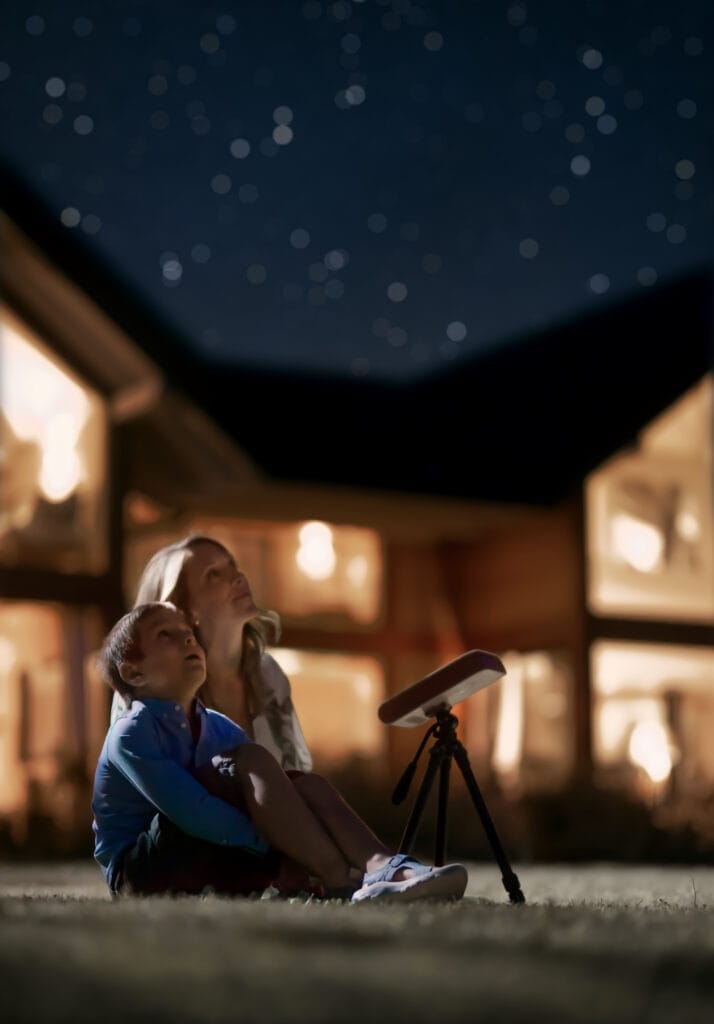
How to make stargazing really fun and practical with kids
Stargazing with children is not only about what you see, but about how you look. Many parents begin enthusiastically, but soon find that it becomes too cold or too complicated. Yet with a few simple choices, you can create an evening that children will remember for a long time.
It begins with the right moment of looking. You don't have to wait until deep into the night. The best time is often shortly after sunset, when the sky turns dark blue and the first stars appear. Then children are still awake and curious, and the sky is dark enough to see something without being really late.
The moon is usually the best start. Children immediately recognize what they see: craters, spots, shadows. Jupiter often comes next as a surprise, and with a small telescope you can already see four small dots next to the planet, its moons. And when Saturn is visible, that's when it really stops: that thin, light ring is something you never forget when you see it for the first time.
When setting up the telescope, make sure it is at rest and stable. Set it up on a hard surface, preferably tiles or solid grass. Leave the telescope outside for a few minutes so that the lenses or mirrors get the same temperature as the outside air; this prevents the image from shaking or blurring. Don't plan too much, either. A few strong observations do much more than a whole list of objects. It's all about the fun of watching, not about how many you can check off.
Even if you live in the city, you can get off to a good start. Turn off lights in the garden or on the balcony and let your eyes get used to the dark. The moon and bright planets are perfectly visible there. If you want to go a little further, you can take a family drive to a dark spot on the outskirts of town. Fifteen minutes outside the built-up area already makes a big difference in what you see.
Apps such as SkySafari or Stellarium make it extra fun. Children can point the phone at the sky themselves and discover what's there. This way they learn the names of stars and planets naturally ... a bit like deciphering a map of space together.
What makes stargazing really special is repetition. If you look together once a month, for example at the full moon or on the first clear night of the week, a kind of ritual develops. Over time, children will recognize recurring constellations: Orion in the winter, the Summer Triangle in the summer, the Pleiades in the fall. Thus the sky slowly becomes familiar, almost like a seasonal book that can be read over and over again.
So stargazing with kids doesn't have to be grand or complicated. With a little preparation, a simple telescope and the patience to really spend some time looking together, you'll give them something they'll probably never forget: the feeling that those dots in the sky suddenly turn out to be worlds.
Why stargazing affects children permanently
Children learn by experiencing. When they see craters on the moon or discover Saturn's rings with their own eyes, the night sky changes from something abstract to something tangible. And the nice thing is, you can even have them draw what they've seen. That makes it extra educational.
In addition, stargazing contributes to:
- Curiosity: each dot raises questions.
- Scientific understanding: children playfully learn about distances, planets and shadows.
- Shared memories: watching an evening together lingers, just like the first time cycling or swimming.
The problem: dots that quickly get boring
Many parents enthusiastically begin stargazing for children, but find that interest quickly wanes. Why? Because children often see no more than dots through the naked eye or binoculars. To them, that quickly feels boring.
The result: the very moment that should arouse curiosity turns into disappointment. And that is a shame, because the universe has so much more to offer.
The solution: a child-friendly telescope
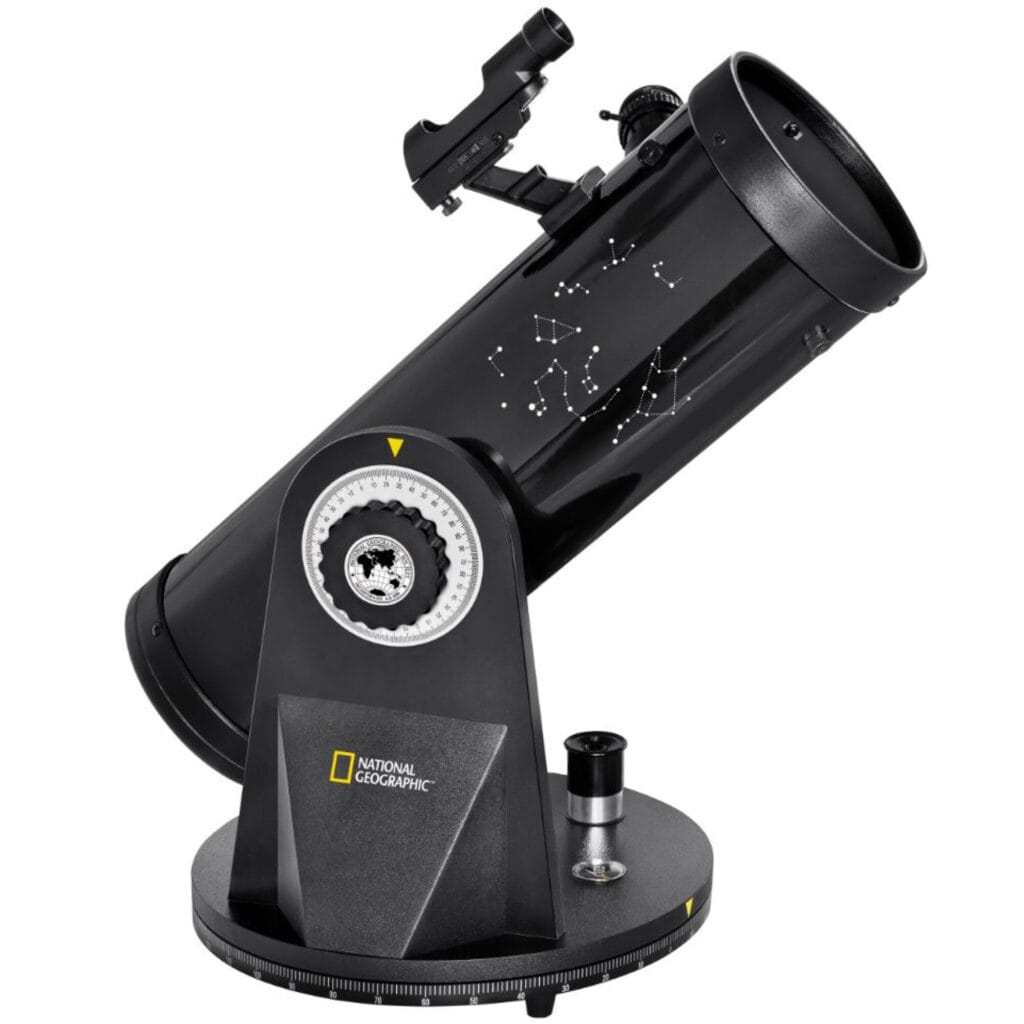
A simple telescope makes the difference between a speck and a discovery. Consider:
- The moon: craters, mountains and shadows that children immediately recognize.
- Jupiter: the four largest moons orbit the planet visibly.
- Saturn: the rings can be clearly seen even with a small aperture.
- Star clusters: like the Pleiades, sparkling like a diamond spread.
A telescope opens up a new world and keeps children enthralled. It ensures that their first experience of stargazing does not stop at a dot, but culminates in wonder.
Which telescope suits which age?
Parents often ask: “But which telescope should I choose for my child?” Therefore, concrete advice:
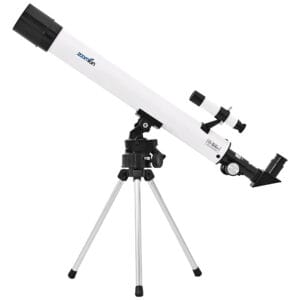
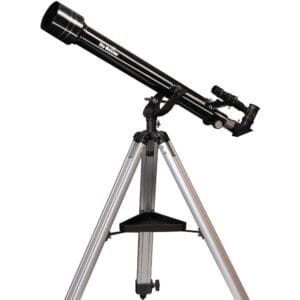
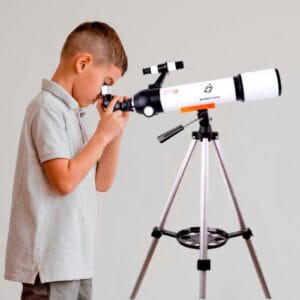
- 6-10 years: a simple refractor such as the Celestron 70mm. Light, sturdy and easy to set up. Perfect for exploring the moon and planets.
- 10-14 years: the Celestron StarSense Explorer. This one uses an app that helps find objects, children learn to recognize the sky through play.
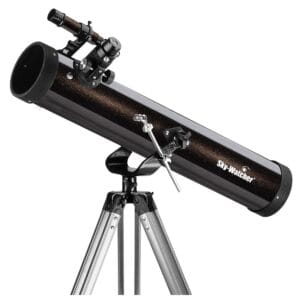
- From 14 years of age: for teenagers who want to see more, a compact Dobson such as the Sky-Watcher Heritage 130/650 a fantastic choice. With this you can see nebulae and galaxies in addition to planets.
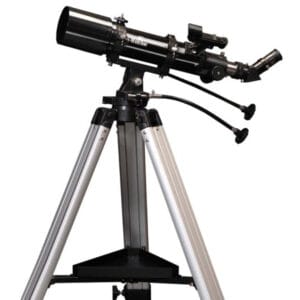
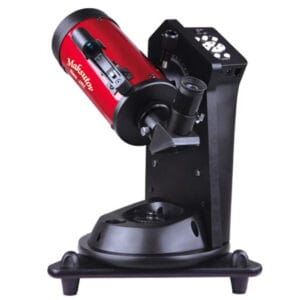
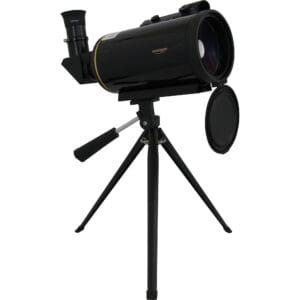
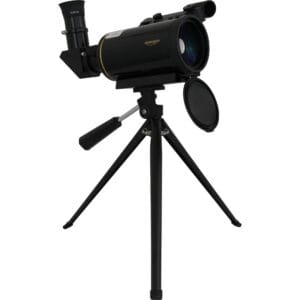
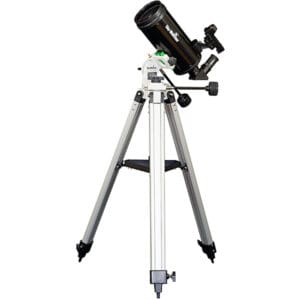
Prefer a telescope on a tripod and is your child interested in planets? Then a Maksutov that fits within your budget is the best option.
That way you don't just pick any telescope, but one that suits your child's age and interest.
Choosing the right moment
For stargazing with kids, you don't necessarily need a rare event. There are year-round objects guaranteed to impress. The moon for example, is often visible and constantly changing shape: sometimes a narrow crescent, sometimes a full sphere with sharp craters. Also, the bright planets return regularly, Jupiter with its moons, Saturn with its rings, or Venus showing phases like the moon. In addition constellations see themselves alternating by season: Orion in winter, the Summer Triangle in summer. And there are perennial favorites like the Pleiades or the Orion Nebula that are visible every year.
By introducing children to these fixed objects step by step, you build a rhythm. It ensures that stargazing is not a one-time activity, but a lasting source of wonder. A telescope makes all the difference: instead of dots, they see real worlds full of details. That is an experience they want to repeat over and over again.
Why invest now?
Many parents hesitate: “Is this really the right time to buy a telescope?” The answer is yes, because precisely because children hold curiosity for only a short time. Without a tool, that interest fades quickly. With a telescope, you give them immediate results: seeing the moon, Saturn or Jupiter changes their perspective in seconds.
In addition, beginner's binoculars are affordable and durable: they grow with you from elementary school to teenager. And with educational accessories, such as the Celestial Buddies hug planets, you make the experience even more tangible.
So ... stargazing for kids: where to start?
Stargazing for children is more than pointing out dots: it is a chance to turn curiosity into lasting wonder. With a child-friendly telescope, your child will see details that would otherwise remain hidden: craters, rings and moons. That one first “wow moment” can be the spark for a lifelong interest in science and space exploration.
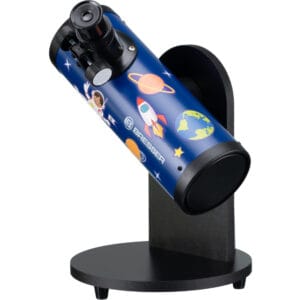
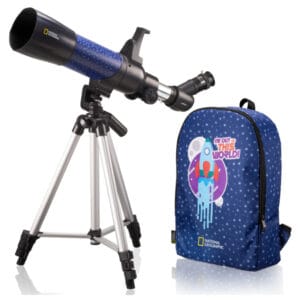
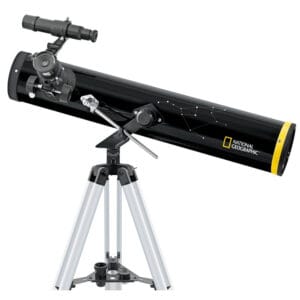
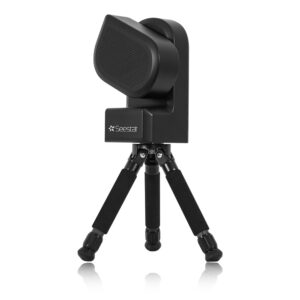
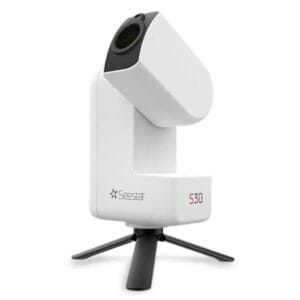
Want to make that experience possible today? Check out our selection of child-friendly beginner telescopes and educational accessories Below. Ordered before 11:59 p.m., delivered within 48 hours.



 Dutch
Dutch English