
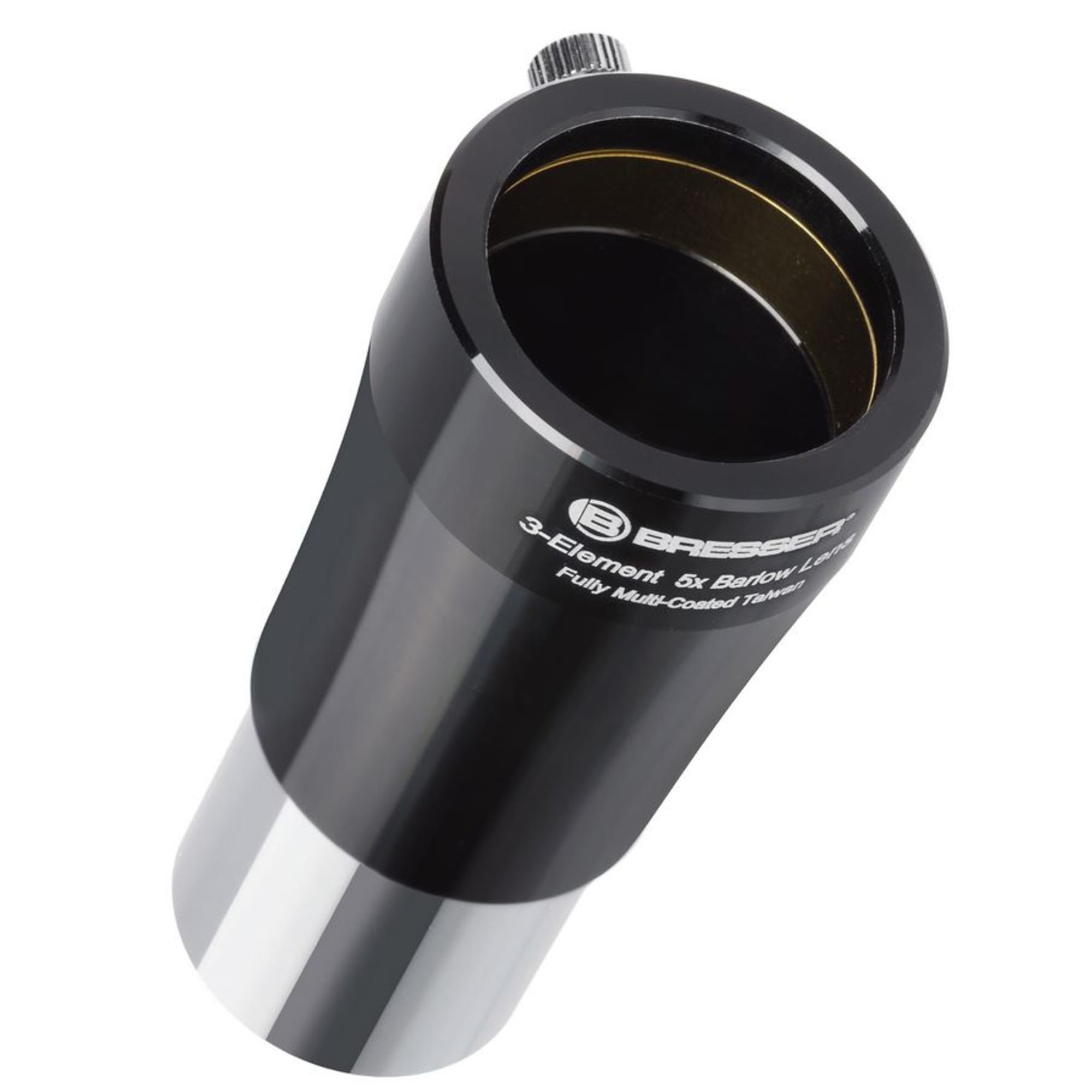
A Barlow lens telescope sounds to many beginners like some kind of magical accessory. You slide it between the eyepiece and the focuser, and suddenly the magnification is doubled or even tripled. A 10 mm eyepiece that normally gives 100x magnification turns into 200x with a 2x Barlow. Convenient, because this makes it seem like you suddenly have a lot more possibilities with just a few eyepieces. Yet the story is more nuanced. A Barlow can expand your set of eyepieces, but does not always provide gains in image quality. Cheap ones often provide blurry, high-contrast images.
How a Barlow lens telescope works optically
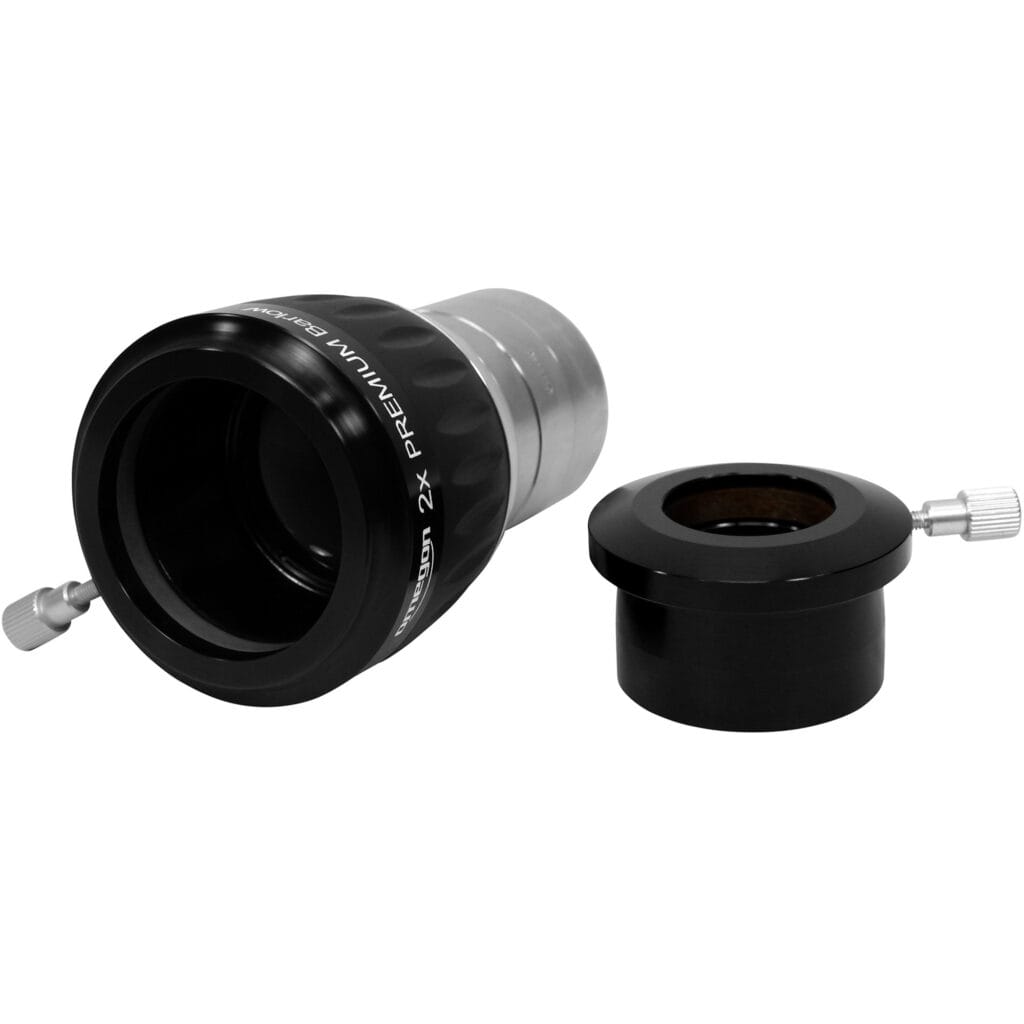
Optically, a Barlow is a negative lens. Where an eyepiece focuses light to enlarge the image, the Barlow does the opposite: it spreads the light out slightly, effectively lengthening the focal length of the telescope. That longer focal length provides additional magnification without the need for a new eyepiece. If you place a 2x Barlow in front of a 25 mm eyepiece, that eyepiece behaves like a 12.5 mm. Thus, one accessory transforms several eyepieces into a whole range of new focal lengths.
When is a Barlow useful and when is it not?
A Barlow lens telescope is especially useful for planetary observations. With a 2x or 3x Barlow, you can visualize more details on Jupiter or Saturn without immediately investing in extra short eyepieces. But there is a limit: you can't keep enlarging infinitely. If the atmosphere is shaky or your telescope's aperture is limited, that extra magnification will mainly produce a larger, blurrier image. For deep-sky objects, a Barlow usually backfires, because you actually lose light and brightness.
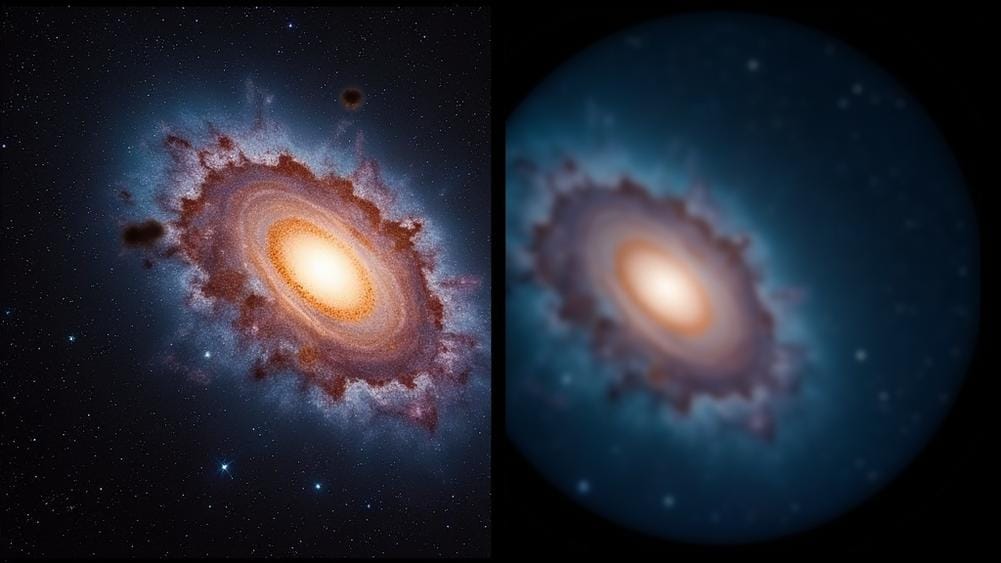
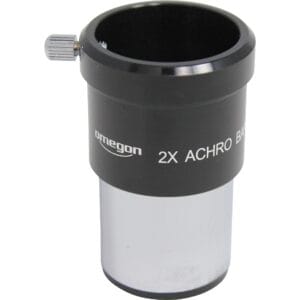
The difference is also in the quality of the lens. An achromatic Barlow (usually 2-lens design) corrects color errors reasonably well, but an apochromatic variant (3-lens) gives a sharper image and is especially interesting for those who photograph. Cheap entry-level binoculars often come with a simple Barlow that is more marketing trick than functional addition.
Common misunderstandings
A Barlow lens is not a substitute for a good eyepiece. It only multiplies what is already there. If you use a mediocre 10 mm eyepiece, a 2x Barlow will not suddenly give you the sharpness of a top-of-the-line 5 mm. Another misconception is that you should always take a 3x Barlow “to get closer.” In reality, a 2x is more versatile: it gives enough magnification for planets without immediately exceeding the limits of your telescope.
In addition, a Barlow changes the light path. This means that focus is sometimes more difficult to achieve, especially with smaller telescopes. For photography, a good Barlow can actually be valuable: it makes the focal length longer and helps in capturing details, for example in close-ups of the Moon.
Practical advice on purchasing
A good way to determine if a Barlow lens is useful for you is to look at your current set of eyepieces. For example, if you only have a 25 mm and a 10 mm, then a 2x Barlow will effectively give you a 12.5 mm and a 5 mm. This immediately gives you a complete range for both deep-sky and planets. If you already have a 6 mm and a 12 mm in your case, then a Barlow adds less. This way you avoid double investing in magnifications you already own.
Those considering a Barlow lens telescope should first choose a good 2x Barlow with achromatic double lens. This effectively doubles your eyepieces and gives usable results with most telescopes. For advanced observers and astrophotographers, an apochromatic 3x Barlow may be of interest, but only if telescope aperture and seeing permit.
A smart strategy is to combine a couple of decent eyepieces with one good Barlow. This gives you an instantly versatile set without having to buy ten separate eyepieces. At Telescoop.nl you will find several models that fit 1.25” and 2” focusers. Check them out below:
 Price range: € 12,90 through € 49,90 Select options This product has multiple variants. The options may be chosen on the product page




 Dutch
Dutch English