
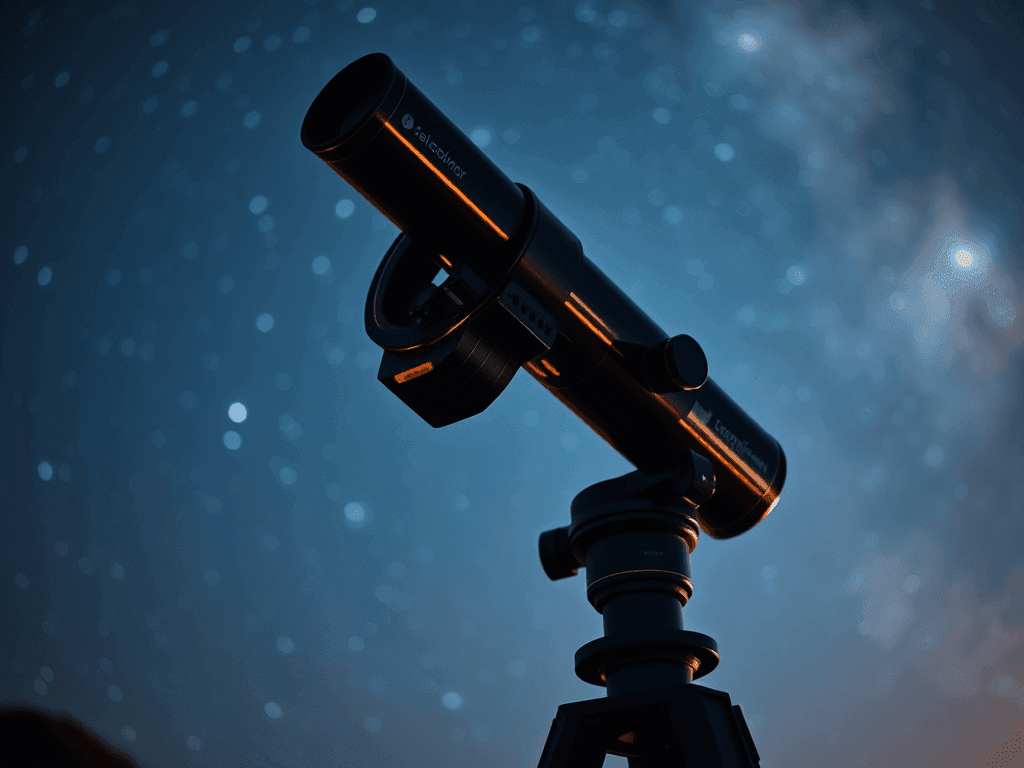
Stargazing is not necessarily a hobby you see passed by very often. This is largely because people think it's a complicated hobby. Although your complexity is still there, it is becoming more accessible for beginners to get an ‘easy’ start.
Telescopes have undergone a tremendous evolution over the past centuries, from simple lenses to advanced technologies that let us explore our universe to the farthest corners. Today's modern telescopes are not only more powerful, but also much more user-friendly and versatile than ever before. Innovations such as AI technology, automated search functions, and mobile connectivity make stargazing accessible to everyone from novice enthusiasts to seasoned astronomers. In this article, discover the latest trends and innovations that are shaping the future of telescopes.
1. AI and automation: Smart Telescopes
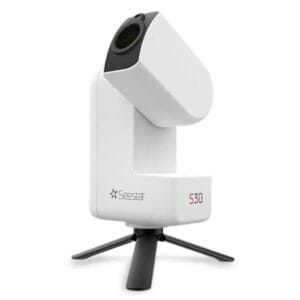
One of the biggest innovations is the integration of AI into telescopes. Smart telescopes can now automatically point themselves and even recognize stars and planets. This is a gamechanger for beginners, as the search for specific stars or planets no longer needs to be done manually. An example of this is the AI-driven Finder TW2, which helps beginners and advanced observers find objects in the night sky quickly.
AI enables users to make complicated observations with minimal effort and even offers image optimizations that improve clarity and detail. This not only makes the experience richer, but also opens up new opportunities for astrophotography, making photos of deep-sky objects such as galaxies and nebulae sharper.
2. Improved image quality through advanced sensors
The image quality of telescopes has improved dramatically in recent years, mainly due to the use of advanced sensors such as CMOS and CCD sensors. These are the same sensors used in professional cameras, but in telescopes they provide razor-sharp images of the night sky. For astrophotographers, this means that even smaller, portable telescopes can now capture impressive images.
Thanks to these sensors, the cost of high-end equipment is becoming more accessible, opening the market for amateur astronomers who want more than just observing. Many brands, such as StellarVision, now offer affordable telescopes with high-end sensors that are user-friendly and ideal for home use.
3. Portability and design: Telescopes for home and travel
Another notable trend is the development of portable telescopes that are easy to carry. With lightweight but rugged materials, it is now possible to make powerful telescopes that are still manageable. These portable models, often including tripod and carrying case, are ideal for people who want to stargaze in remote places without much light pollution, such as nature reserves or mountainous areas.
For beginners and people who primarily watch at home, there are also compact telescopes that can be placed on a balcony or in a garden without compromising image quality. The emergence of lightweight and easy to set up telescopes makes stargazing more accessible to everyone.
4. Light pollution technology: better view of the starry sky
Light pollution is a well-known problem when observing the night sky. Manufacturers are working on technologies to reduce its impact. Consider filters that block light pollution or special coatings that block ambient light. This provides a better and brighter viewing experience, even in urban areas. Innovations in this area give users clearer vision without having to travel to remote locations.
In addition, telescopes are appearing with built-in light filters that automatically adjust based on light conditions. This makes it easier to enjoy the same telescope in different environments without manual adjustment.
5. The smartphone combined with the telescope
An increasingly popular trend is the ability to link telescopes to a smartphone or tablet. Apps allow users to control telescopes directly and save objects to observe later. This type of technology is especially attractive to beginners, who can learn to navigate faster and learn more about the night sky.
Apps often offer additional information about the objects being observed, such as details about planets, constellations and deep-sky objects. For families with children, this can be a fun way to learn about the cosmos together and develop new hobbies.
6. Innovative mounting systems for improved stability
Stability is crucial when observing and photographing the night sky. The new generation of telescopes uses innovative mounting systems, such as alt-azimuth mounts and GoTo mounts. These types of systems make it easier to track objects in the sky and provide a more stable image, which is especially useful when using higher magnifications.
Mounts with built-in motors and automation allow telescopes to easily track the movements of stars and planets, so you can observe longer without making manual adjustments.
7. Telescopes for specific user groups
Whereas in the past telescopes often had a universal design, there are now more and more models aimed at specific users. Think child-friendly telescopes with simple controls and lightweight materials, or high-resolution professional telescopes for scientific research. There are also specialized telescopes for astrophotography with features such as high ISO sensitivity and additional accessories for capturing images.
These user-specific models ensure that everyone, regardless of experience or area of interest, can enjoy stargazing and observing the universe.
Conclusion
The future of telescopes is diverse and exciting, with innovations making telescopes increasingly accessible and advanced. Whether you're a beginner who wants to start stargazing easily, or an experienced astrophotographer looking for the latest features, technological advances within the telescope industry offer something for everyone. From AI to portability and improved image quality, these trends make it possible to experience the cosmos in a completely new way.



 Dutch
Dutch English