
Moon and planets April 2025: what can be seen in the sky?
The moon and planets april 2025 provide a series of striking conjunctions and observing moments. Whether you are just starting out in stargazing or have been a telescope enthusiast for years, this is a month to get up early or stay up late. In this guide, we list all the special encounters in the sky.
April 1: Moon near Jupiter during twilight
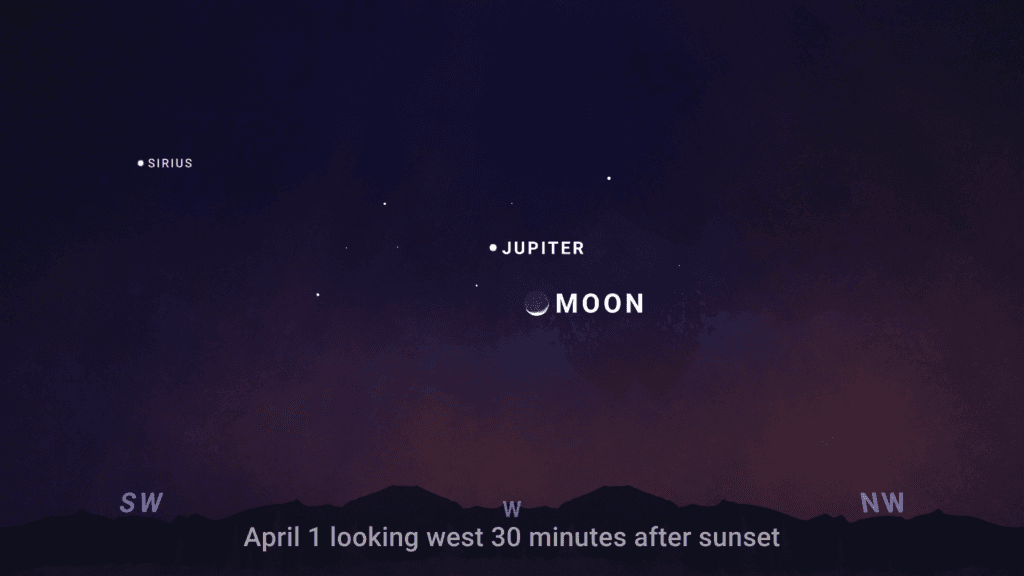
The month starts immediately with a beautiful conjunction between the crescent moon and Jupiter. On April 1, look west about 30 minutes after sunset. The two celestial bodies are close together and make a perfect target for binoculars or telescopes.
Tip: The moon is still young then and shows much of the earth's glow - ideal for photography with a smartphone adapter.
Jupiter is still well visible after sunset around this time of year, although it slowly disappears earlier below the horizon as April progresses. So this encounter is one of the last good observing moments of Jupiter in the evening sky before the summer season.
Tip: The moon is still young then and shows much of the earth's glow - ideal for photography with a smartphone adapter.
April 4 & 5: Red planet Mars near the moon
In the early morning of April 4 and 5, the moon approaches Mars. The planet is somewhat fainter in the sky than, say, Jupiter or Venus, but is recognizable by its reddish color. This is a good time to find Mars visually if you have trouble distinguishing it from the background stars.
Mars moves slowly through the constellation Aquarius and on these days forms a visual triangle with the moon and the bright star Fomalhaut, low on the southeastern horizon. Mars is relatively low in the sky in April, so an unobstructed view without obstacles is recommended.
April 24 & 25: Venus and Saturn near the moon
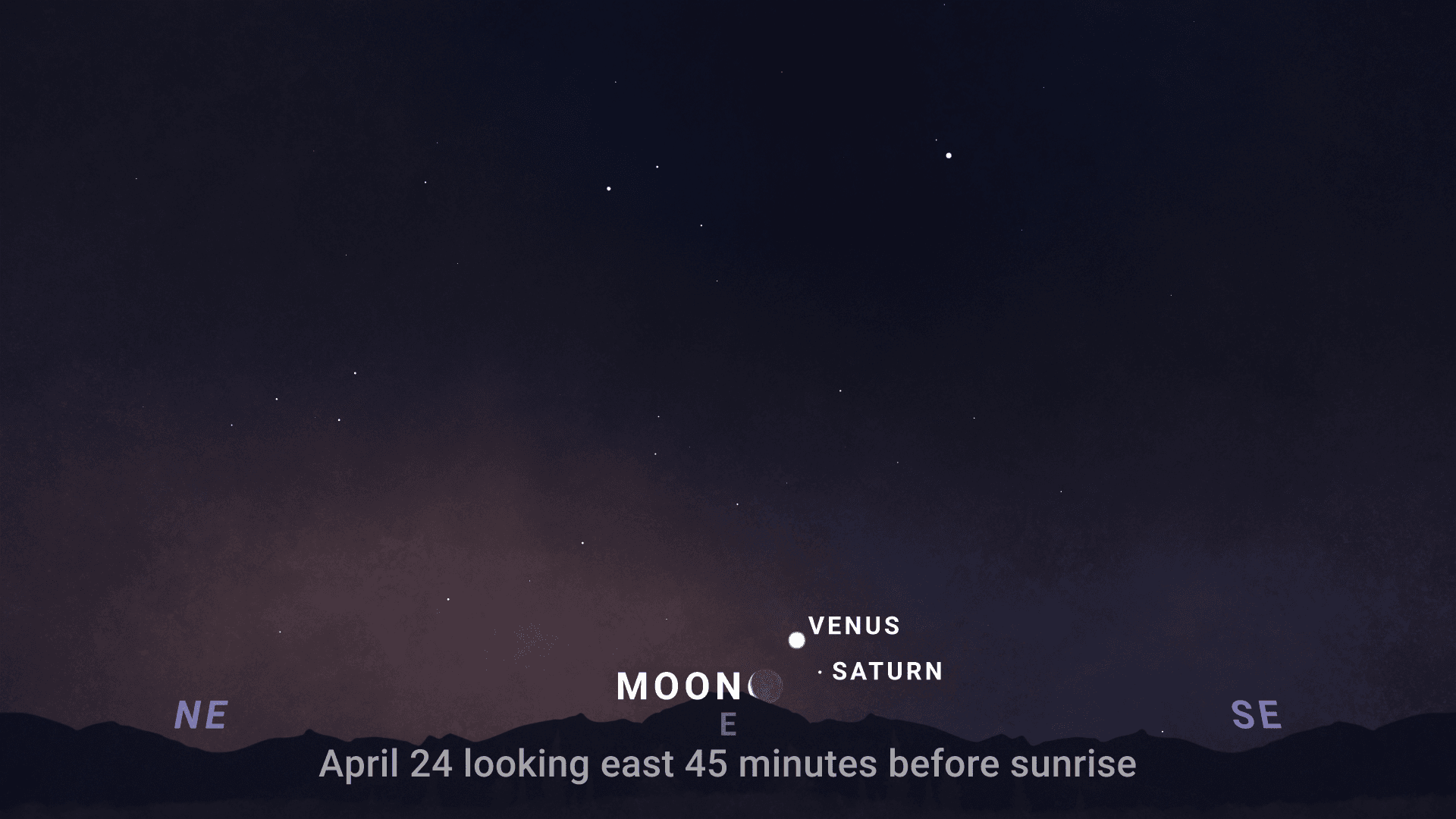
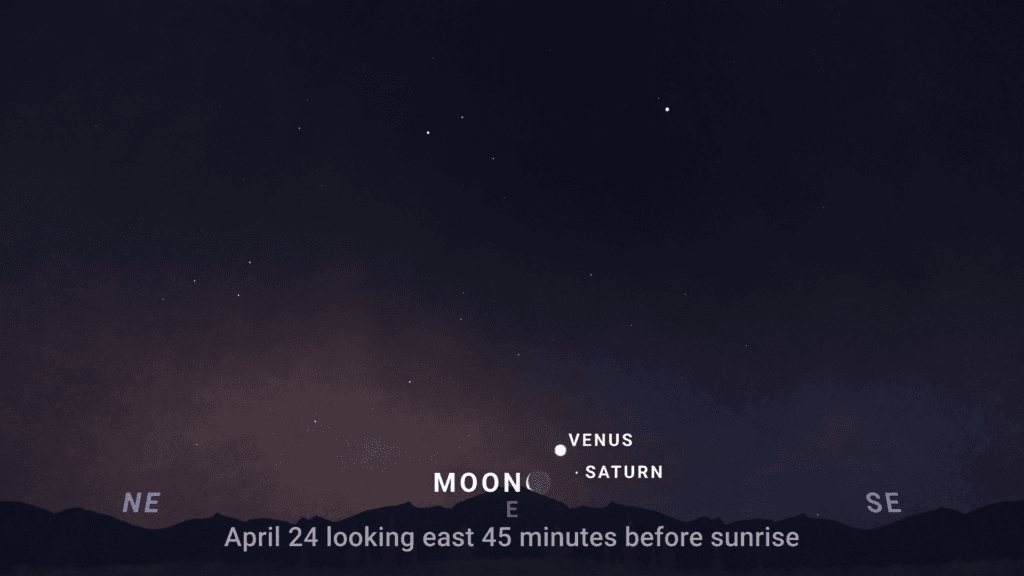
Perhaps the most beautiful moment of the month: on April 24, Venus, Saturn AND the crescent moon shine together in the morning sky. Look toward the east about 45 minutes before sunrise. Venus is bright and easy to spot; Saturn is just below and the moon completes the trio.
Photo tip: Use a telescope with a smartphone mount to highlight the contrast between the three. Venus and Saturn are not always visible at the same time as the moon - don't miss this.
In addition to these three celestial bodies, on clear mornings Mercury is also briefly visible, just above the horizon, slightly south of the trio. This makes the moment extra special: four celestial bodies within one field of view, provided you use a wide angle.
Other objects of interest: M3 and Arcturus
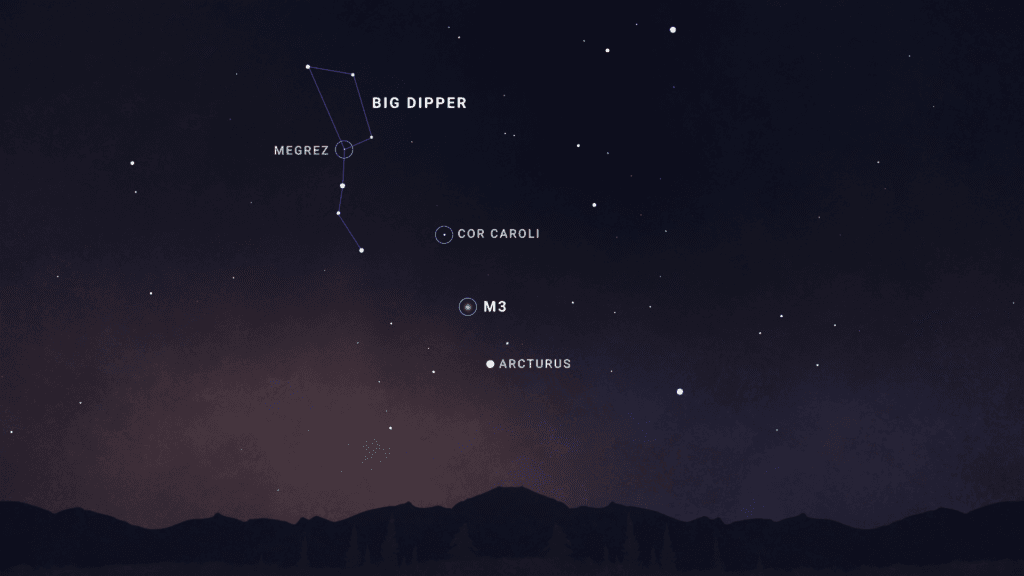
Also visible in April is the globular cluster M3 near the bright star Arcturus. This deep-sky gem is one of the oldest structures in our galaxy and makes a wonderful target for telescopes from 70 mm aperture up.
You find M3 by following the familiar “arc to Arcturus” from the Great Bear's stalk. Once you find Arcturus, look slightly to the west and slightly upward - there M3 appears as a fuzzy patch. Under dark skies, M3 is already visible with binoculars, but with a telescope you can clearly see the globular nature of this cluster.
Want to know more? Read our separate guide: M3 star cluster observing in April (to be written).
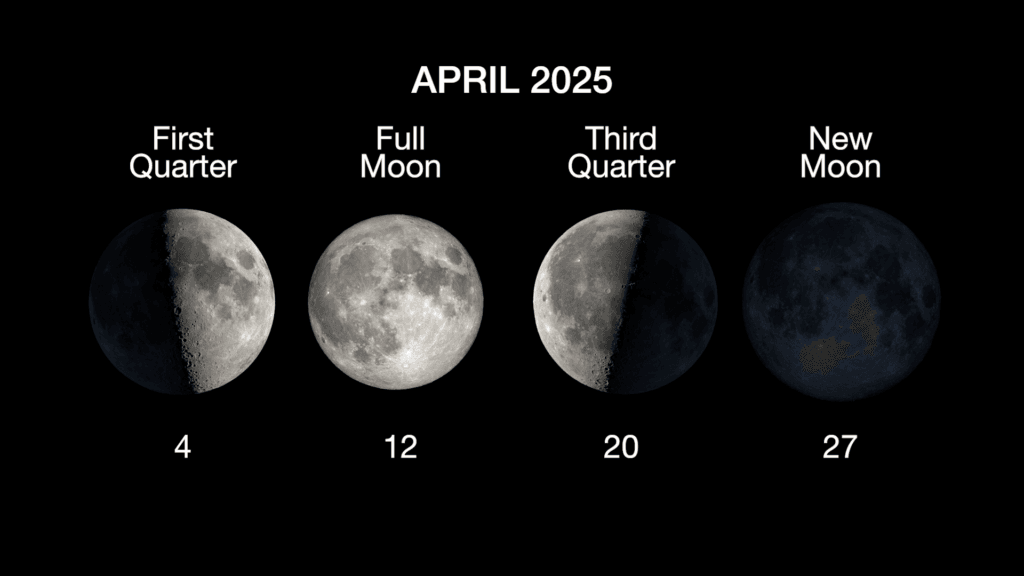
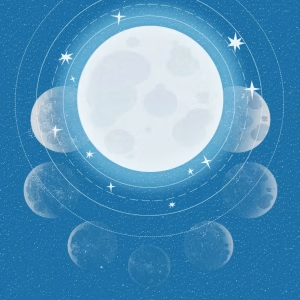
Lunar phases in April 2025
The Moon has the following phases this month:
- First quarter: April 4
- Full moon: April 12
- Last quarter: April 20
- New Moon: April 27
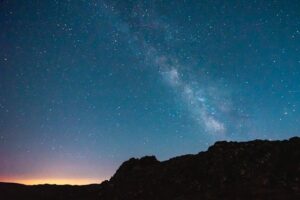
With a new moon, the sky is darker - ideal for spotting deep-sky objects such as M3.
Around the full moon, lunar observations are most interesting. Craters such as Tycho and Copernicus are beautifully visible then. Use a moon filter if necessary to increase contrast and avoid glare.
Conclusion: April will be a top month for sky shows
With four notable moon-planet conjunctions, the visibility of M3, and bright conditions around New Moon, April offers everything you need for exciting observations. Whether you are a beginner or have been photographing for years, this is the time to get your telescope ready.
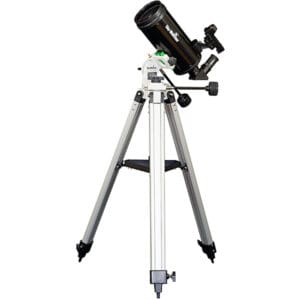
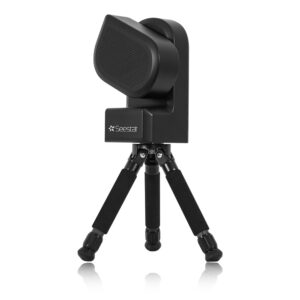
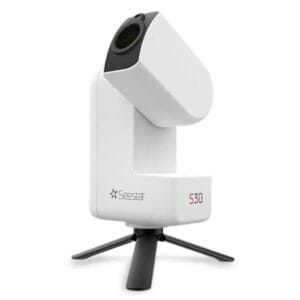
Want to know which telescope is best for you for these observing occasions? View our telescope choice guide for stargazing Or discover smart models such as the Seestar S50 and DWARF 3.

 Dutch
Dutch English