
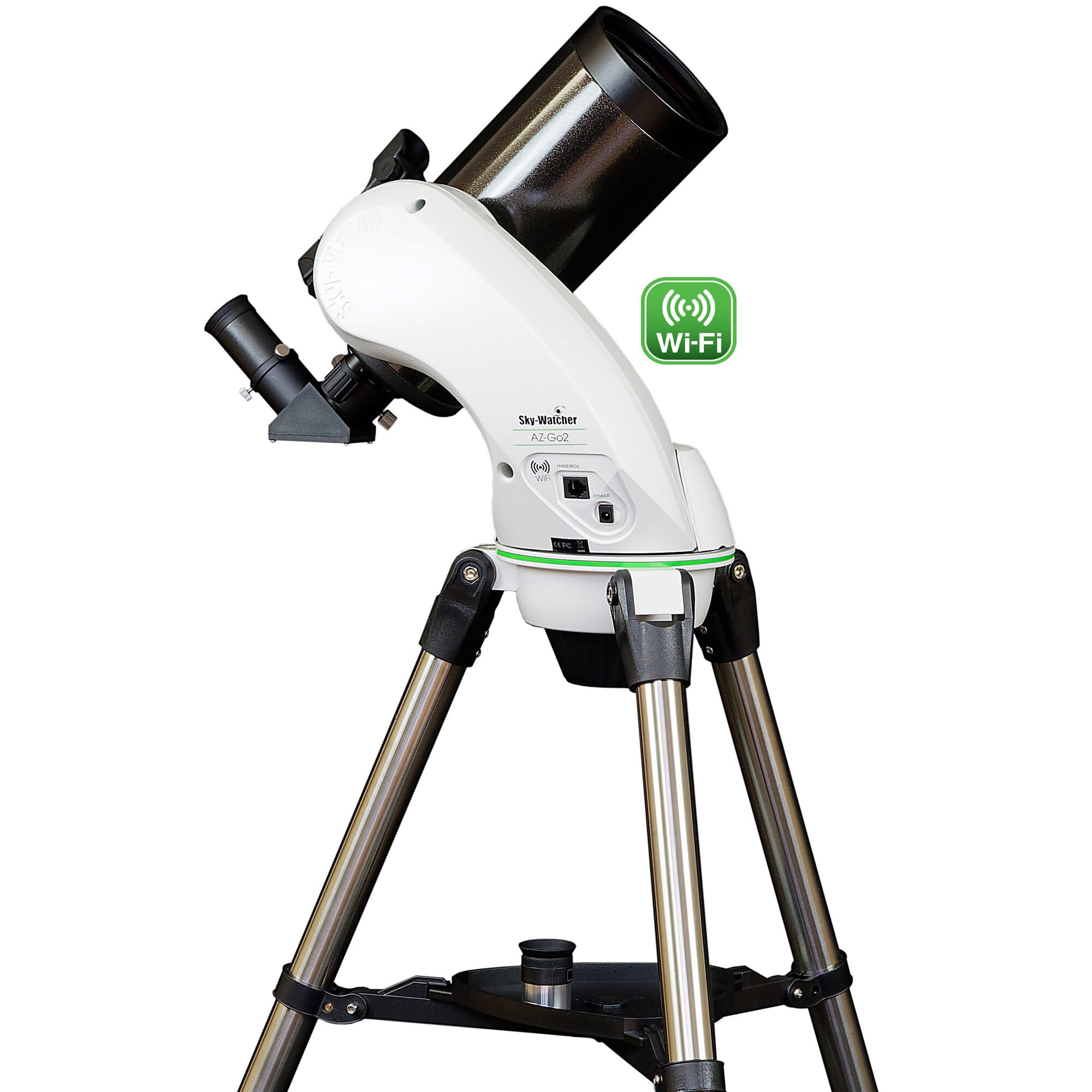
A maksutov telescope is popular with stargazers who especially want to see planets and the Moon. Its particular design provides sharp, high-contrast images on which you can discern even fine details, such as the rings of Saturn or cloud bands on Jupiter. But why is this type so good for planets, and are there any drawbacks?
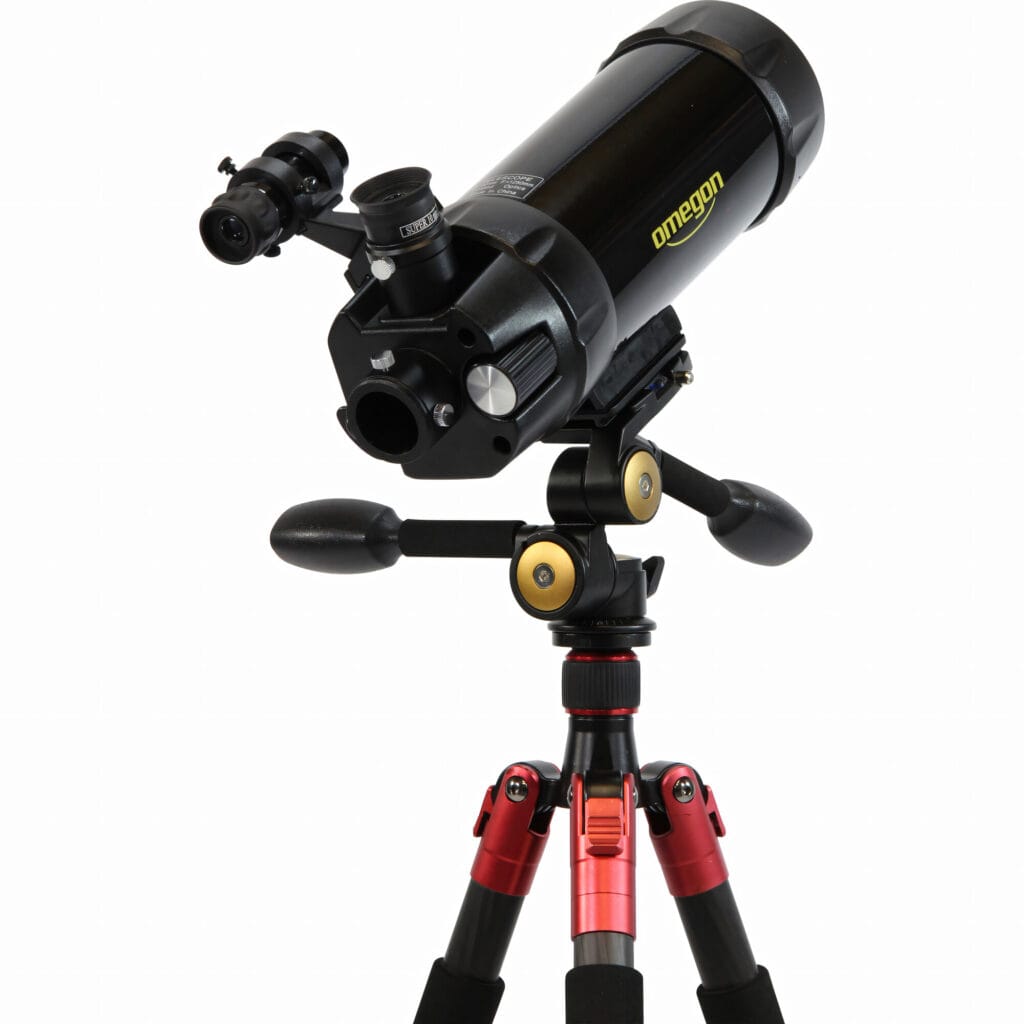
What is a Maksutov telescope and how does it work?
A Maksutov telescope is a combination of a mirror and a lens. At the front is a thick, round lens that we call the corrector plate mention.
- Long focal length
Most Maksutov telescopes have a focal length of f/12 to f/15. That means they have a built-in ‘zoom,’ so to speak. Planets come into focus large and detailed as a result, without the need for extreme eyepieces.
- Long focal length
- What does that corrector plate do?
It ensures that the light is neatly focused so that stars and planets come into focus. Without this lens, some parts of the image would become slightly distorted - that's called spherical aberration. With this lens, that problem is solved.
- What does that corrector plate do?
- Why is the tube completely closed at the front?
Because the corrector plate seals the entire aperture, no dust or moisture gets in and the air currents in the tube remain stable. As a result, you see less vibration in the image.
- Why is the tube completely closed at the front?
Why is a Maksutov telescope suitable for planets?
- High magnification without loss of quality
The long focal length makes it easy to zoom in considerably on planets, and details remain sharp.
- High magnification without loss of quality
- Lots of contrast
The small central mirror in the center blocks little light, keeping the image clear. This helps to see fine details, such as the separation in Saturn's rings or subtle colors on Mars.
- Lots of contrast
- Compact size
Relative to magnification, Maksutovs are small and easy to carry. Ideal if you want to observe outside the city.
- Compact size
Maksutov telescope vs other types
Refractor (lens viewer)
- Sharp and clear image, but large models are expensive and heavy.
Newton reflector
- Lots of aperture for a low price, good for deep-sky, but less optimal for extreme magnification without additional tools.
Schmidt-Cassegrain
- Versatile, but has a larger mirror in the center, so contrast may be slightly lower than a Maksutov.
The maksutov telescope is thus especially strong at showing small, bright objects such as planets and the Moon, without the drawbacks of color distortion that can occur with cheaper lens scopes.
What are the disadvantages of a Maksutov telescope?
- Longer cooling time
The thick lens on the front needs to reach the same temperature as outside. Therefore, put your telescope outside at least half an hour before use.
- Longer cooling time
- Smaller aperture at higher magnifications
Because Maksutovs tend to have a somewhat smaller diameter, they capture less light. Therefore, for very faint deep-sky objects, they are less suitable.
- Smaller aperture at higher magnifications
- Smaller field of view
You see less ‘environment’ around a planet. Large nebulae or star fields usually don't fit in one image.
- Smaller field of view
What models are popular for planetary observation?
- Sky-Watcher SkyMax 127: Handy, but strong enough to see Saturn's rings sharply.
- Omegon Maksutov 150/1800: More opening for extra light and detail.
- Celestron C90 Mak: Compact, light and ideal for carrying.
Tips for observing planets with a Maksutov telescope
- Choose the right eyepiece
- 6-10 mm for lots of detail on planets.
- 12-20 mm for a brighter image and more overview.
- Choose the right eyepiece
- Use filters
- Light blue (82A) to increase contrast in Jupiter's cloud bands.
- Yellow to see details on Mars better.
- Use filters
- Look at the right time
- When the planet is high in the sky and the air is calm.
- Round opposition for the sharpest image.
- Look at the right time
- Let your telescope get used to the outside temperature
- This prevents heat in the tube from making the image unsettled.
- Let your telescope get used to the outside temperature
Conclusion
A maksutov telescope is ideal if you mainly want to view planets and the Moon. It delivers high magnifications with sharp images and plenty of contrast, in a relatively compact tube. The limitations such as a smaller field of view and longer cooling time are usually not a problem for planetary enthusiasts.
Wondering which Maksutov is best for you? Check out the current offer on telescope.com!



 Dutch
Dutch English